
Heatwave Triggers Nuclear Shutdowns Across France and Switzerland
Severe heatwaves force nuclear reactor shutdowns and output curbs in France and Switzerland to protect river ecosystems

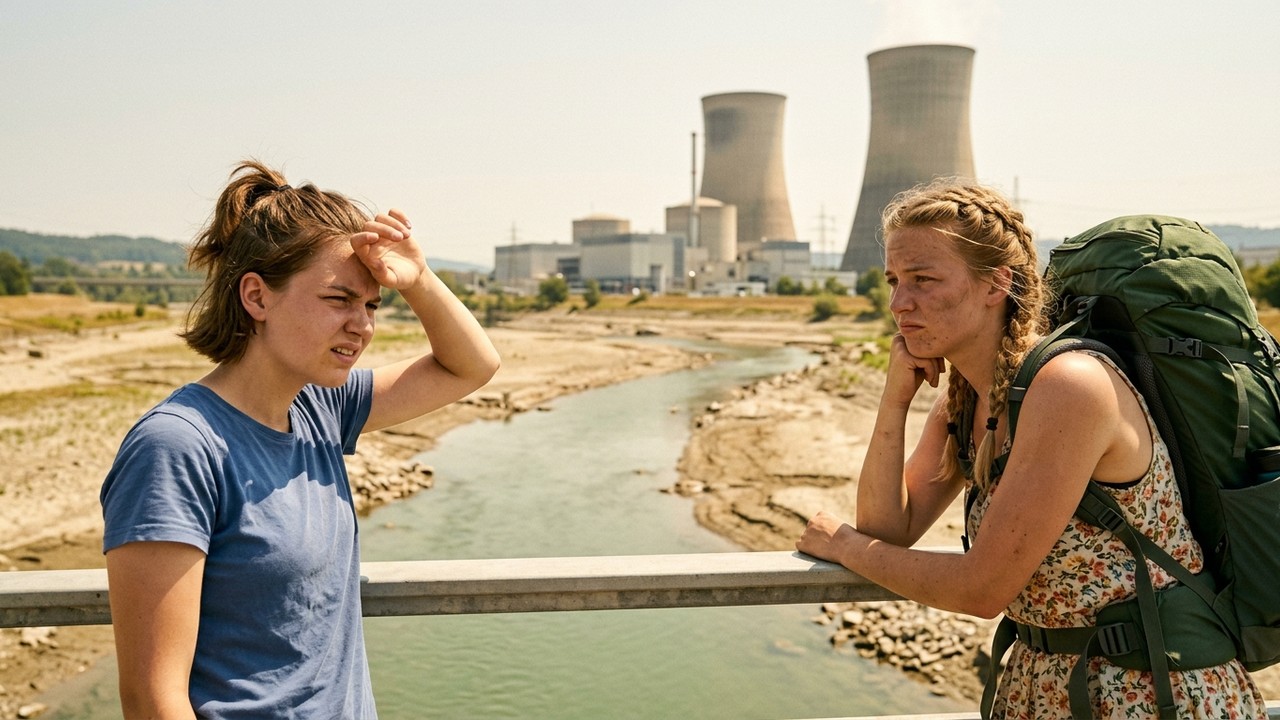
Image generated by AI
Extreme river temperatures have forced nuclear operators in France and Switzerland to curtail power generation to prevent ecological collapse. Grid stability remains intact despite significant reductions in nuclear output.
The Core Development
A severe European heatwave has pushed river temperatures beyond critical safety thresholds, triggering a coordinated reduction in nuclear power generation. To comply with strict environmental laws regarding thermal discharge, operators in France and Switzerland have been forced to throttle or completely halt reactors that rely on freshwater systems for cooling.
The crisis centers on the risk of "thermal pollution." When nuclear plants discharge heated cooling water into already warm rivers, oxygen levels drop, threatening aquatic biodiversity. To prevent mass fish kills and ecosystem failure, regulatory bodies have mandated production cuts.
Key Facts Breakdown
- Affected Regions: Northern and Eastern France; Switzerland.
- Impacted Facilities:
- France: Nogent-sur-Seine and Bugey (Rhône corridor).
- Switzerland: Beznau (Aare River).
- Primary Driver: Rising river temperatures exceeding environmental limits for thermal discharge.
- Environmental Risk: Oxygen depletion in waterways, specifically threatening cold-water species like trout.
- Grid Status: Electricity supply remains stable via hydropower, cross-border imports, and remaining operational nuclear units.
- Operational Response: Staged power reductions followed by full shutdowns when thresholds are breached.
Impacted Infrastructure
| Country | Facility / System | Action Taken | Primary Water Source |
|---|---|---|---|
| France | Nogent-sur-Seine | Output Curtailed / Shutdown | Seine River |
| France | Bugey | Output Curtailed / Shutdown | Rhône River |
| Switzerland | Beznau | Production Scaled Back | Aare River |
Why This Matters
This event exposes a systemic vulnerability in Europe’s energy architecture: the reliance on "once-through cooling." While efficient, this method makes nuclear baseload power inversely proportional to ambient temperature. As heatwaves intensify, the very moments when electricity demand peaks (due to air conditioning) are the moments when nuclear generation capacity is most likely to drop.
Industry observers note that this is no longer a rare anomaly but a recurring operational constraint. The shift from "occasional" to "frequent" interventions suggests that current thermal management infrastructure is insufficient for the new climate reality. The priority of ecological preservation over maximum energy output is a non-negotiable regulatory stance in the EU, meaning energy security must now be solved through diversification rather than simply pushing reactors to their limits.
Industry Outlook
Expect an accelerated shift toward alternative cooling technologies, such as mechanical draft cooling towers, to decouple power generation from river temperatures. Market trends suggest that energy planners will increase reliance on flexible hydropower and expanded interconnectivity between European grids to buffer the volatility of river-dependent nuclear fleets. Future infrastructure investments will likely prioritize "climate-hardened" generation to avoid the recurring summer production dips seen in the Rhône and Aare river basins.
Related Travel Guides
Disclaimer
This article is for informational and educational purposes only. It does not constitute legal, financial, or professional advice. While we strive to provide accurate and up-to-date information, travel policies, regulations, and conditions change rapidly. Always verify information with official sources before making travel decisions. Nomad Lawyer makes no representations about the accuracy, reliability, completeness, or suitability of the information provided. Readers should consult qualified professionals for advice specific to their circumstances. The views expressed in this article are those of the author and do not necessarily reflect the views of Nomad Lawyer.
Preeti Gunjan
Contributor & Community Manager
A passionate traveller and community builder. Preeti helps grow the Nomad Lawyer community, fostering engagement and bringing the reader experience to life.
Learn more about our team →