
Ethiopian Airlines Nears Boeing 777-8F Deal as African Cargo Leader Accelerates Global Fleet Expansion
Ethiopian Airlines advances negotiations for next-generation Boeing 777-8F freighters, building on confirmed orders for five 777 freighters and nine 787-9 Dreamliners.

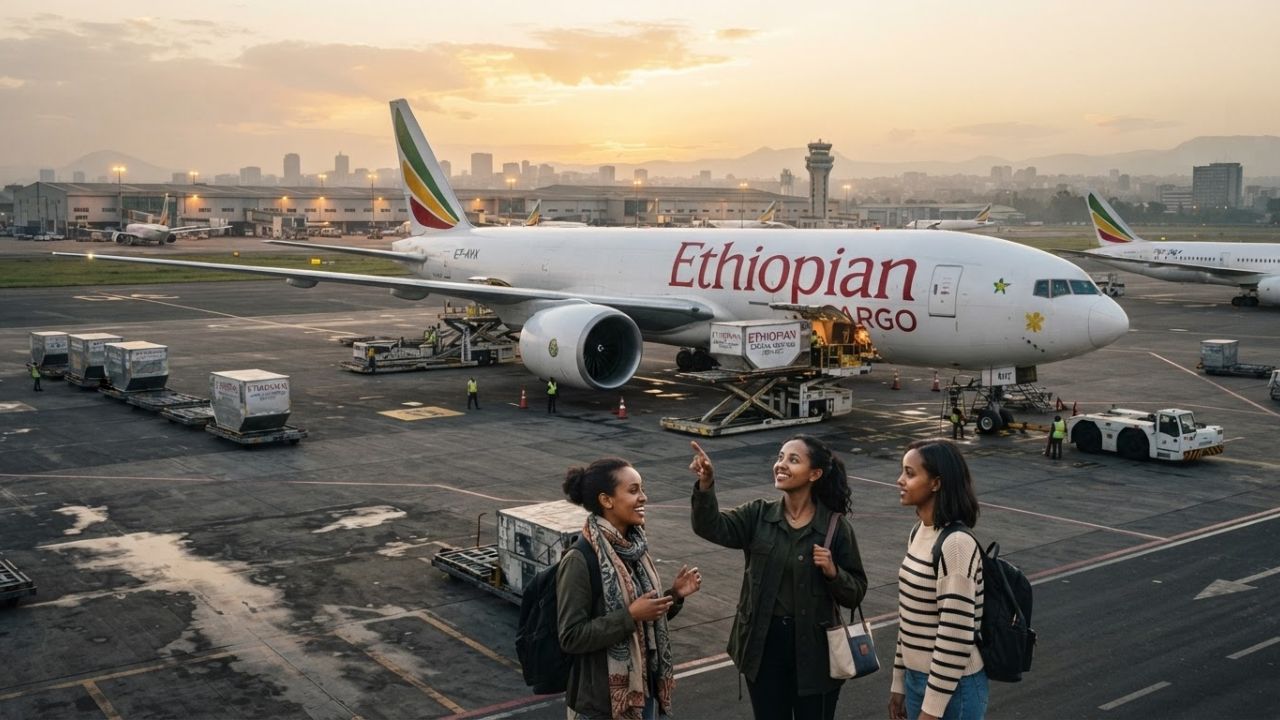
Image generated by AI
Ethiopian Airlines is moving toward finalizing a landmark widebody freighter agreement with Boeing that includes the next-generation Boeing 777-8F, solidifying Addis Ababa’s role as Africa's primary logistics gateway connecting the continent with Asia, Europe, the Middle East, and the Americas.
The planned cargo fleet expansion builds on a long-standing partnership between the African aviation leader and the American planemaker. By combining near-term commitments for five additional current-generation Boeing 777 Freighters with the pending induction of the advanced 777-8F platform, Ethiopian Cargo and Logistics is positioning itself to capture surging cross-border e-commerce, perishable agricultural exports, and temperature-controlled pharmaceutical supply chains.
The Local Trend Revealed: Addis Ababa as a Global Logistics Crossroads
Operating from its high-altitude continental crossroads at Addis Ababa Bole International Airport (ADD), Ethiopian Airlines has built a diversified multi-division aviation group covering passenger transport, cargo logistics, multi-fleet maintenance repair and overhaul (MRO), and pilot training academies.
The carrier's cargo division represents a central pillar of its commercial resilience. Benefiting from Ethiopia's strategic geographic position between manufacturing centers in East Asia, consumer markets in Western Europe, and rapidly expanding economies across Sub-Saharan Africa, Ethiopian Cargo operates scheduled freighter networks that bypass congested non-African transfer hubs.
Recent industry developments confirm that Ethiopian Airlines is advancing toward commercial closure on a purchase package featuring the twin-engine Boeing 777-8F freighter. The aircraft incorporates structural and aerodynamic technologies from the 777X passenger series, delivering higher payload capabilities alongside double-digit improvements in fuel efficiency.
Fleet Integration: Bridging Current Assets with 777X Innovation
The airline's fleet modernization strategy balances immediate commercial demand with long-term technological adoption:
| Aircraft Programme | Strategic Role in Ethiopian Fleet | Order / Commitment Status | Primary Operational Mission |
|---|---|---|---|
| Boeing 777-8F | Next-generation large widebody freighter | In final commercial negotiations | Ultra-long-haul transcontinental freight & heavy cargo |
| Boeing 777 Freighter | Current mainline dedicated cargo workhorse | 5 additional aircraft on order | High-capacity agricultural exports & regional trunk routes |
| Boeing 787-9 Dreamliner | Long-range passenger and belly-hold cargo | 9 aircraft confirmed in January 2026 | Global intercontinental passenger and freight routes |
The pending addition of the 777-8F allows seamless crew commonality and maintenance synergy with Ethiopian's extensive operating fleet of Boeing 777 passenger and cargo aircraft. Powered by advanced GE9X engines, the 777-8F delivers substantial fuel burn reductions that shield the carrier against volatile global jet fuel expenses while meeting international emissions targets monitored by the International Civil Aviation Organization (ICAO).
This freighter initiative follows Ethiopian's major fleet announcement in January 2026, when the carrier confirmed an order for nine Boeing 787-9 Dreamliners to expand its global passenger footprint.
Economic Value: Fueling African Exports and Cold-Chain Corridors
Expanding dedicated widebody freighter capacity directly powers national and continental economic growth across Africa:
- Horticultural and Agricultural Exports: Ethiopia is one of the world's leading exporters of fresh-cut flowers, alongside specialty Arabica coffee and fresh produce. Dedicated freighters transport millions of rose stems daily under specialized climate-controlled conditions to auctions in Amsterdam, Liege, and Dubai within hours of harvest.
- Global Pharmaceutical Distribution: Ethiopian Cargo operates a dedicated, GDP-certified life sciences cold storage terminal at Bole International Airport, enabling rapid, temperature-sensitive transit of vaccines and medicines across Sub-Saharan Africa.
- Cross-Border E-Commerce: The rise of online trade linking Chinese manufacturing hubs like Shenzhen and Guangzhou with African urban consumers relies heavily on Ethiopian’s scheduled cargo corridors via Addis Ababa.
Community & Environmental Value: Advanced Technology Lowers Emissions
Operating heavy twin-engine cargo aircraft represents a sustainable evolution over older three- and four-engine freighters. The 777-8F lowers fuel consumption and greenhouse gas emissions per revenue ton-kilometer by up to 20%, supporting the African Airlines Association's (AFRAA) regional sustainability roadmaps.
At the community level, Ethiopian Airlines serves as the country’s largest formal employer and economic driver. Expanding air cargo throughput creates specialized logistics jobs in freight handling, customs brokering, aeronautical engineering, and cold-chain warehousing, channeling foreign exchange earnings directly into the national economy.
Visitor Insider Tips: Transiting Addis Ababa with Ethiopian Airlines
For passenger travelers connecting through Addis Ababa Bole International Airport, understanding local transit perks enhances the journey:
- Complimentary Stopover Hotel Program: If your scheduled international connection with Ethiopian Airlines exceeds 8 hours (and is under 24 hours) with no earlier flight available, the airline provides a complimentary transit visa, hotel accommodation, meals, and airport shuttle transfers. Collect your hotel voucher at the Interline Desk before immigration in Terminal 2.
- Stay at the Ethiopian Skylight Hotel: Located just five minutes from the airport gates, this 5-star property is owned by Ethiopian Airlines and offers comfortable soundproofed suites, outdoor pools, and multiple dining venues for transit travelers.
- Traditional Coffee Ceremony: During layovers in Bole International Airport or the city center, experience a traditional Ethiopian coffee ceremony (Buna). Freshly roasted beans are ground and brewed in a clay pot (jebena) over hot coals, accompanied by burning frankincense and toasted popcorn.
- Explore Lucy at the National Museum: If taking advantage of a full-day stopover in Addis Ababa, take an authorized taxi to the National Museum of Ethiopia to view the fossilized skeleton of "Lucy" (Dinkinesh), dating back 3.2 million years.
- Local Culinary Etiquette: Savor authentic Ethiopian cuisine served on a shared platter of spongy sourdough flatbread (injera). Tear off pieces of injera with your right hand to scoop up spicy chicken stew (doro wat) or savory lentil puree (misir wat).
Tourism and Logistics Outlook: Powering Africa’s Global Connectivity
As negotiations for the Boeing 777-8F freighter advance toward formal completion, Ethiopian Airlines demonstrates the operational ambition that has kept it at the forefront of African aviation for decades.
By pairing modern widebody passenger fleets with next-generation cargo aircraft, Ethiopian Airlines reinforces Addis Ababa Bole International Airport as an indispensable hub of international commerce, providing African enterprise with direct, efficient links to world markets.
Related Travel Guides
Disclaimer
This article is for informational and educational purposes only. It does not constitute legal, financial, or professional advice. While we strive to provide accurate and up-to-date information, travel policies, regulations, and conditions change rapidly. Always verify information with official sources before making travel decisions. Nomad Lawyer makes no representations about the accuracy, reliability, completeness, or suitability of the information provided. Readers should consult qualified professionals for advice specific to their circumstances. The views expressed in this article are those of the author and do not necessarily reflect the views of Nomad Lawyer.
Raushan Kumar
Founder & Lead Developer
Full-stack developer with 11+ years of experience and a passionate traveller. Raushan built Nomad Lawyer from the ground up with a vision to create the best travel and law experience on the web.
Learn more about our team →