
Ethiopia's Ashendye Festival at Lalibela Drives Heritage Tourism to 12th-Century Rock Churches

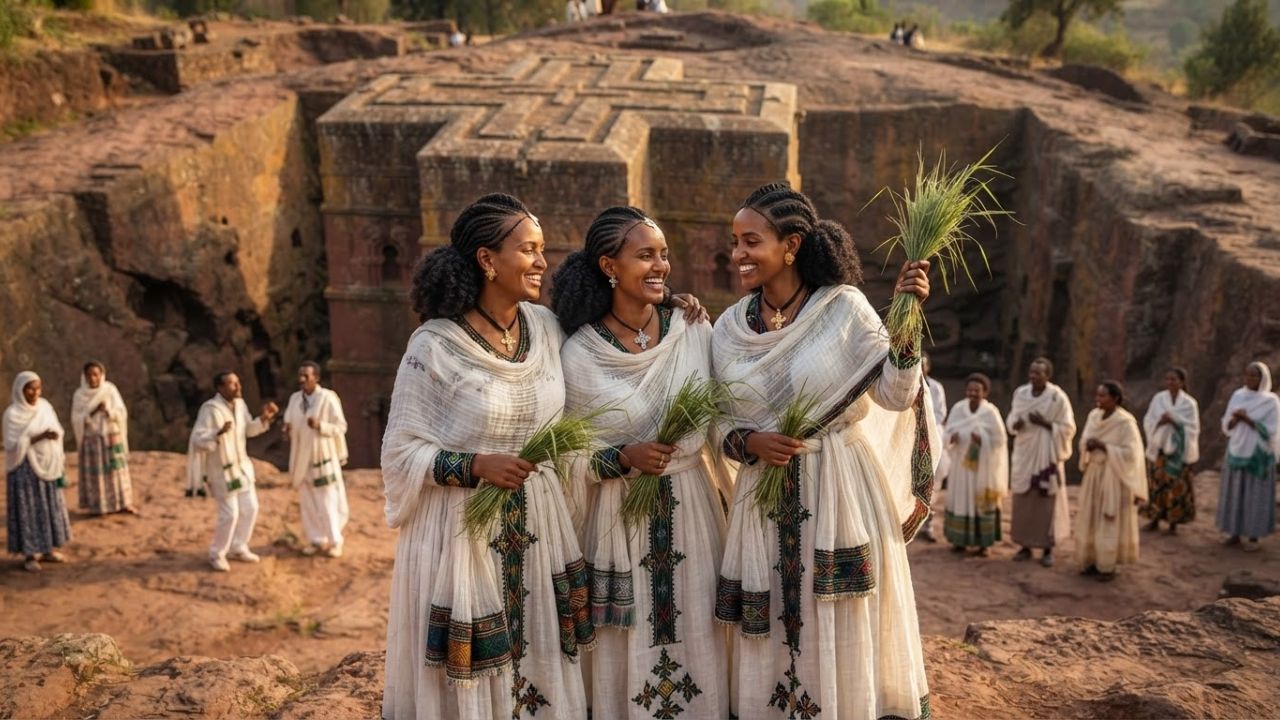
Image generated by AI
The celebration of the annual Ashendye festival at the UNESCO World Heritage Church of St. George (Bete Giyorgis) in Lalibela, Ethiopia, is driving a surge in international heritage tourism and community-led travel across the Horn of Africa.
LALIBELA, Ethiopia — Thousands of international heritage enthusiasts, cultural documentarians, and Orthodox pilgrims have gathered in the historic town of Lalibela to celebrate the Ashendye festival. Marking the conclusion of Filseta—the solemn two-week Ethiopian Orthodox fasting period dedicated to the Virgin Mary—the annual festival transforms the 12th-century rock-hewn church complex into a vibrant cultural showcase.
Centered around the cross-shaped monolithic Church of St. George (Bete Giyorgis), young women and girls wearing traditional embroidered cotton dresses (Habesha kemis) carry tall green ashendye grass while performing traditional songs and ceremonial dances.
The event highlights how living cultural traditions and ancient architectural wonders are reshaping global travel preferences toward authentic, community-focused heritage tourism in East Africa.
Ashendye Celebrations Elevate Lalibela's Heritage Tourism Profile
The Ashendye festival represents one of Ethiopia’s most significant intangible cultural heritage events. Beyond its religious and social importance, the festival serves as a primary catalyst for regional tourism recovery.
International travelers increasingly seek destinations that combine physical historic monuments with active living traditions. By aligning travel itineraries with the conclusion of the Filseta fast, tour operators offer visitors an immersive cultural experience that contrasts with standard sightseeing.
The influx of high-yield heritage travelers injects vital revenue directly into the local economy, benefiting family-owned guesthouses, local guides, transport providers, and traditional craft merchants throughout the Amhara Region.
Cultural & Architectural Benchmark Matrix for Lalibela and Ashendye
The reference table below summarizes the core architectural parameters, festival traditions, cultural significance, and community impacts associated with Lalibela’s Ashendye celebrations:
| Cultural & Architectural Element | Official Designation & Historical Origin | Specific Practice / Attribute | Direct Community & Tourism Impact |
|---|---|---|---|
| Church of St. George (Bete Giyorgis) | 12th-Century Monolithic Rock-Hewn Church | Carved downward from a single volcanic tufa block | Anchors UNESCO World Heritage site tourism |
| Ashendye Festival (Ashenda) | Annual Ethiopian Cultural & Religious Event | Celebrates young women & cultural empowerment | Drives peak seasonal international visitor arrivals |
| Fasting Period Precursor (Filseta) | 14-Day Ethiopian Orthodox Fasting Period | Solemn devotion dedicated to the Virgin Mary | Precedes festival music, dancing & communal feasts |
| Traditional Festival Attire | Habesha Kemis & Ashendye Grass | Handwoven cotton dresses & fresh green grass | Supports local textile weavers & artisan craft markets |
| Economic Beneficiaries | Family Guesthouses & Community Guides | 100% localized financial circulation | Strengthens rural hospitality without corporate chains |
| Conservation Framework | UNESCO Carrying Capacity Management | Structural monitoring of ancient volcanic rock | Prevents over-tourism wear on 800-year-old structures |
12th-Century Monolithic Architecture of the Church of St. George
Lalibela’s eleven monolithic churches represent a monumental achievement of medieval civil engineering. Among these, the Church of St. George (Bete Giyorgis) is widely regarded as the masterpiece of the complex.
Excavated downward 12 meters into a single block of volcanic tufa during the reign of King Gebre Mesqel Lalibela in the late 12th century, the building forms a perfect Greek cross when viewed from above.
The interior features hand-carved pillars, arches, bas-reliefs, and subterranean drainage catacombs that have resisted weathering and seismic activity for over eight centuries.
For heritage travelers, observing the church during sunrise as white-robed Orthodox priests lead morning chants provides an unforgettable architectural and spiritual encounter.
Ashendye Festival: Filseta Fasting End, Traditional Attire, and Cultural Dances
The Ashendye festival (also known locally as Ashenda or Shadey) holds deep cultural meaning for Ethiopian women.
Following two weeks of strict vegetarian fasting during Filseta, young women gather in village squares and church courtyards adorned with intricate hair braving (shuruba), silver jewelry, and vibrant Habesha kemis dresses.
Carrying bundles of freshly harvested ashendye grass—symbolizing growth, rebirth, and joy—the women play traditional drums (kebero), sing call-and-response melodies, and receive gift offerings from community members.
The festival provides a platform for female cultural expression, leadership, and communal solidarity, attracting international anthropologists and travel photographers.
Community-Led Tourism Model Empowers Local Craft Merchants and Guesthouses
Unlike mass commercial resort travel, tourism in Lalibela operates beneath a community-centered economic model.
International travelers lodge in locally owned guesthouses, hire resident certified guides, and purchase hand-carved wooden crosses, traditional leather goods, and woven textiles directly from family workshops.
This localized economic model ensures that tourism dollars directly fund local education, municipal water access, and heritage preservation initiatives.
Local tourism associations emphasize that community ownership protects Lalibela’s cultural integrity, ensuring that annual festivals remain authentic spiritual events rather than commercialized spectacles.
Heritage Conservation and Carrying Capacity Challenges for Monolithic Ruins
The growing popularity of Lalibela’s religious festivals presents ongoing heritage conservation challenges.
Because the monolithic churches are carved from soft volcanic rock, heavy foot traffic, moisture accumulation, and physical contact can accelerate surface erosion.
UNESCO preservation teams, in coordination with the Ethiopian Heritage Authority and the Ethiopian Orthodox Tewahedo Church, monitor visitor carrying capacities during peak festival days. Designated walkways, protective shelters, and timed-entry protocols are utilized to safeguard the physical integrity of the ancient structures for future generations.
Practical Implications for International Heritage Travelers
For international travelers planning a trip to Ethiopia, timing a visit to coincide with major cultural events like Ashendye offers an unparalleled travel experience.
From a logistics standpoint, travelers are advised to book domestic flights into Lalibela Airport (LLI) and secure guesthouse reservations several months in advance due to high regional demand.
Conscious travel planners emphasize that visitors should dress modestly when entering active Orthodox churches and request permission before photographing festival participants.
Heritage Traveler Guide: Visiting Lalibela During Ashendye
Travelers visiting Lalibela for the Ashendye festival should consider these practical recommendations:
- Book Ethiopian Airlines Domestic Transfers Early: Reserve domestic connecting flights from Addis Ababa (ADD) to Lalibela (LLI) well in advance of August festival dates.
- Hire Certified Local Community Guides: Engage official resident guides trained by the Lalibela Tourism Office to gain deep historical and theological context.
- Observe Ethiopian Orthodox Etiquette: Remove shoes prior to entering church interiors and dress in modest, light-colored clothing during religious services.
- Purchase Local Handwoven Crafts: Support community artisans by purchasing authentic handwoven cotton scarves and wood carvings directly from village markets.
Related Travel Guides
Disclaimer
This article is for informational and educational purposes only. It does not constitute legal, financial, or professional advice. While we strive to provide accurate and up-to-date information, travel policies, regulations, and conditions change rapidly. Always verify information with official sources before making travel decisions. Nomad Lawyer makes no representations about the accuracy, reliability, completeness, or suitability of the information provided. Readers should consult qualified professionals for advice specific to their circumstances. The views expressed in this article are those of the author and do not necessarily reflect the views of Nomad Lawyer.
Raushan Kumar
Founder & Lead Developer
Full-stack developer with 11+ years of experience and a passionate traveller. Raushan built Nomad Lawyer from the ground up with a vision to create the best travel and law experience on the web.
Learn more about our team →