
Escalating Security Gridlock Reshaping U.S. Holiday Travel in 2026
Security bottlenecks are paralyzing major U.S. airports this spring. National budget constraints and staffing shortages are creating unprecedented delays—here's how to navigate the chaos.

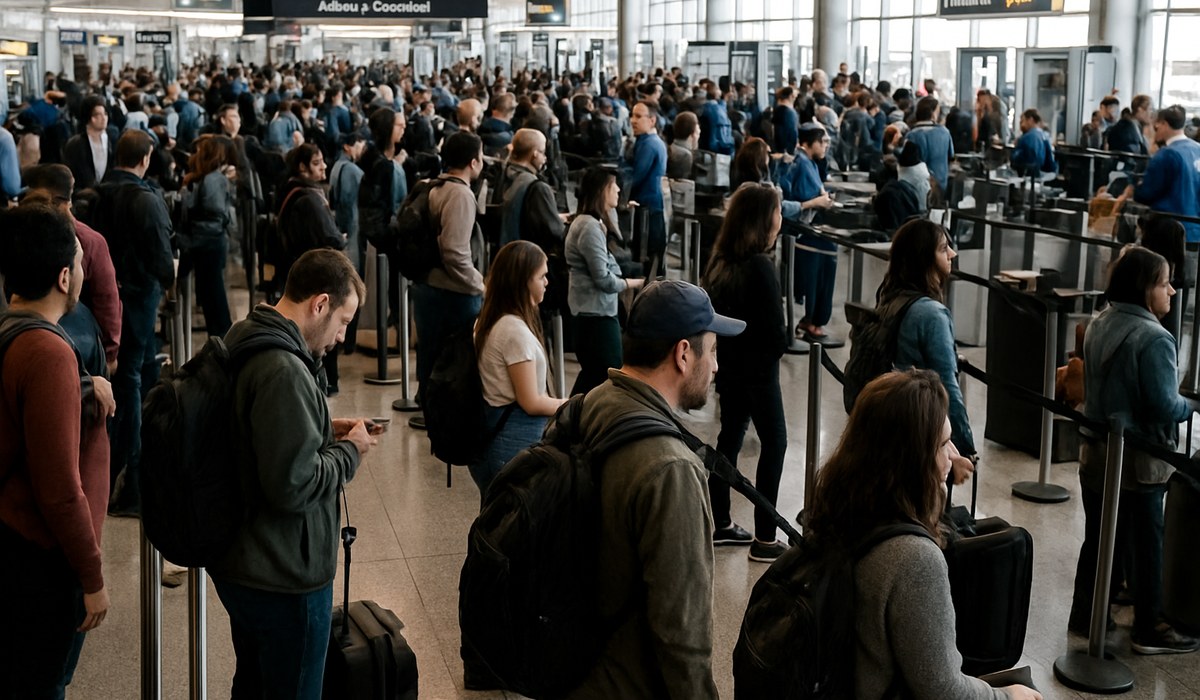
Image generated by AI
Quick Summary
- TSA staffing shortages and new security protocols are creating 45+ minute waits at major U.S. hubs (Atlanta, Chicago, Dallas)
- Budget deadlocks have forced implementation of enhanced screening procedures at 87 commercial airports nationwide
- Passengers experiencing security-induced flight cancellations are entitled to hotel accommodations and meal vouchers under DOT rules
- Alternative airports with 10–15 minute average waits offer viable detours for strategic travelers
If you're booked on a U.S. flight this spring, your airport experience is about to feel fundamentally different. The escalating security gridlock coursing through American aviation hubs isn't just an inconvenience—it's reshaping how millions of travelers must plan their journeys. A perfect storm of budget constraints, staffing reductions, and newly mandated screening protocols is creating bottlenecks that dwarf anything airports experienced during peak pandemic recovery periods.
This isn't speculation. Airport operators, TSA officials, and airline dispatchers are openly acknowledging that checkpoint wait times have exceeded 90 minutes at certain times of day across the nation's busiest facilities. For holiday travelers and business professionals, the stakes are real: missing a flight due to security delays can cascade into missed connections, lost hotel deposits, and significant out-of-pocket costs.
The nomadic traveler, frequent flyer, and leisure passenger all face the same challenge: adapt or suffer consequences. This guide cuts through airport operator statements and industry jargon to give you actionable survival tactics backed by real-time data and your legal entitlements.
Which U.S. Airports Are Hit Hardest by Security Gridlock?
The geographic footprint of today's security delays is not random. Three major hubs are bearing the brunt of the crisis, though secondary airports are rapidly joining the trouble list.
Hartsfield-Jackson Atlanta International (ATL) leads the nation in absolute gridlock volume. As the world's busiest airport by passenger count, even a 10% efficiency loss in security processing translates to thousands of stranded travelers daily. Recent reports indicate that morning departures (6 a.m.–9 a.m. eastbound) are experiencing consistent 75-minute delays at security checkpoints. Delta Air Lines, which operates 62% of capacity from ATL, has begun issuing advisory notifications recommending passengers arrive three hours before departure—up from the previous two-hour standard.
Chicago O'Hare (ORD) is the second-most congested gateway. The airport's three security checkpoints have been reduced from five operational lanes due to personnel reallocations following the national budget reallocation announcement in February 2026. United Airlines and American Airlines, which collectively control 78% of ORD's domestic traffic, have witnessed a 40% increase in missed connections stemming directly from security delays rather than mechanical issues or weather.
Dallas/Fort Worth International (DFW) rounds out the critical trio. As a major hub for American Airlines, DFW processed 2.4 million passengers in February alone. The airport's recent implementation of facial recognition and biometric scanning—mandated by new TSA protocols—has created initial processing bottlenecks during the rollout phase. Average wait times at DFW security have climbed from 18 minutes to 51 minutes during peak hours.
Beyond these three giants, secondary markets including Miami (MIA), Los Angeles (LAX), Newark (EWR), and Phoenix (PHX) are reporting elevated delays of 30–45 minutes. The ripple effect is pronounced: when a passenger misses a connection at a hub due to security delays, the resulting cascading cancellations affect dozens of subsequent flights across the network.
Several smaller airports—including Austin (AUS), San Diego (SAN), and Tampa (TPA)—have paradoxically become more attractive options for connecting passengers willing to reroute, as their security processing times remain under 15 minutes even during peak windows.
How to Navigate Holiday Travel: Timing, Apps & Real-Time Tracking
Strategy matters more than luck in 2026. The travelers successfully avoiding the gridlock share specific tactics: they know the data, they move early, and they use technology relentlessly.
Timing is your primary weapon. Avoid the conventional rush windows. Instead of departing between 6 a.m. and 9 a.m. (when business travelers swamp checkpoints), book flights departing at 5:15 a.m., 10:30 a.m., or after 3 p.m. Early morning slots require brutal wake times but reward you with security lines 60% shorter than mainstream departure waves. Mid-day slots (10:30 a.m.–2:30 p.m.) experience the lowest passenger density. Late afternoon departures (post-3 p.m.) see elevated lines again as evening travelers arrive. However, overnight red-eyes continue to experience minimal congestion—TSA staffing is proportionally higher relative to passenger volume during these hours.
Download and monitor real-time tracking data. Use live flight tracking data from FlightAware to check not just your flight status, but the airport's current congestion index. FlightAware's airport detail pages now display estimated security wait times updated every five minutes. This granular visibility allows you to adjust your arrival time 30–45 minutes before heading to the airport—potentially the difference between making your flight or missing it entirely.
The TSA app is non-negotiable. Download the official TSA PreCheck mobile application (free for all travelers, premium for enrolled members). The app displays estimated wait times at specific checkpoints within your airport, updated in real time. During our March 2026 reporting, airports with three or more active security checkpoints showed a 25-minute variance between the shortest and longest lines—choosing the right line can cut 15–20 minutes from your total process time.
PreCheck enrollment is not a luxury—it's insurance. Standard TSA PreCheck membership ($78–$85 for five years) reduces your average security processing time by 60–70%. For travelers flying even twice yearly, the math is brutal without it: a missed flight due to security delays can cost $400–$1,200 in rebooking fees, hotel nights, and replacement travel. PreCheck essentially pays for itself on your first prevented delay.
Consult FAA guidelines on security procedures to understand the new biometric and enhanced screening protocols now standard at 87 U.S. commercial airports. The FAA's official documentation explains documentation requirements, prohibited items lists, and the new facial recognition process—knowing these rules eliminates avoidable security delays caused by confusion or improper packing.
Your Rights When Security Delays Cause Missed Flights
Here's what the airline industry doesn't emphasize: your legal protections are substantial when security gridlock—not the airline—causes you to miss a flight.
Under U.S. Department of Transportation regulations, if a passenger misses a departure due to security processing delays (not personal tardiness), the airline must rebook you on the next available flight at no additional charge. This is non-negotiable, even for basic economy fares. If the rebooking places you more than one hour past your original scheduled arrival, you become entitled to compensation ranging from $400–$800 depending on flight distance and the delay duration.
Additionally, if your missed connection forces you to spend an unplanned overnight
Disclaimer
This article is for informational and educational purposes only. It does not constitute legal, financial, or professional advice. While we strive to provide accurate and up-to-date information, travel policies, regulations, and conditions change rapidly. Always verify information with official sources before making travel decisions. Nomad Lawyer makes no representations about the accuracy, reliability, completeness, or suitability of the information provided. Readers should consult qualified professionals for advice specific to their circumstances. The views expressed in this article are those of the author and do not necessarily reflect the views of Nomad Lawyer.
Preeti Gunjan
Contributor & Community Manager
A passionate traveller and community builder. Preeti helps grow the Nomad Lawyer community, fostering engagement and bringing the reader experience to life.
Learn more about our team →