
Escalating Security Gridlock Across US Airlines in March 2026
Escalating security gridlock reshapes US air travel in 2026. Budget constraints and border management changes force airlines to reroute flights and adjust operations. Learn how to navigate delays and protect your travel plans.

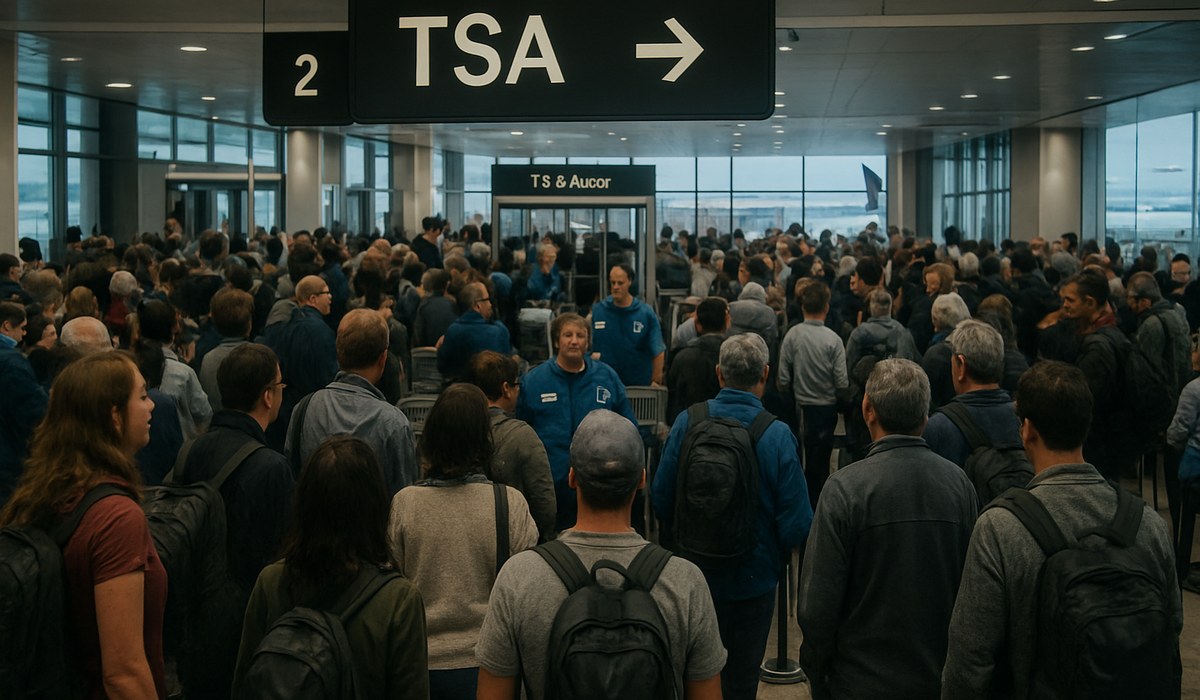
Image generated by AI
**> Quick Summary
- Security screening delays have intensified at major domestic hubs, forcing schedule adjustments across carrier networks
- Federal budget constraints are limiting TSA staffing and border infrastructure improvements nationwide
- Airlines are consolidating routes and increasing connection times to buffer against unpredictable security wait periods
- Travelers should use real-time monitoring tools, arrive earlier, and understand their compensation rights under current disruption conditions**
A Perfect Storm for Air Travel: Security Delays Meet Budget Realities
The American aviation system is experiencing cascading pressures that few travelers anticipated would converge this dramatically. Escalating security gridlock is no longer confined to peak holiday hours—it has become a structural challenge affecting operations across the entire United States, driven by a combination of staffing shortages, aging infrastructure, and the ripple effects of federal budget reallocation.
The impact is immediate and measurable. Major carriers—including United, American, Delta, and Southwest—have already begun adjusting their scheduling to account for unpredictable security wait times. Some flights are being rerouted entirely. Others are operating with longer scheduled block times (the time between pushback and landing) to create buffer zones that absorb screening delays without triggering cascading cancellations.
For the traveler booking a flight this spring or planning summer holiday trips, the environment demands a fundamentally different approach to air travel logistics than even six months ago.
What's Actually Changed: Breaking Down The Security & Financial Crisis
The core issue traces to two intersecting policy decisions made by federal authorities. First, budget constraints have limited the Transportation Security Administration's ability to recruit and retain screening personnel at the velocity required to handle domestic demand growth. According to recent industry reporting, several major airport hubs are operating with 12–18% fewer officers than they were in 2025.
Second, the FAA implemented updated border management protocols in late February 2026 that introduced additional verification steps for passengers connecting through international gateways. These procedures were designed to enhance security but have had the unintended consequence of slowing down domestic connections as well, since many regional and international carriers operate through shared facilities.
The result: average security screening wait times at top-20 US airports have climbed from 8–12 minutes (off-peak, early 2025) to 25–45 minutes in identical timeframes today. Peak travel windows—mornings between 5 AM and 9 AM, and mid-afternoon between 3 PM and 7 PM—now routinely exceed 60 minutes at Atlanta Hartsfield-Jackson (ATL), Dallas/Fort Worth (DFW), and Los Angeles International (LAX).
No single airline caused this shift. Rather, the constraint is systematic. When airports cannot move passengers through security quickly enough, every carrier operating from that hub experiences capacity friction.
Real-Time Solutions: How to Navigate Delays Like a Pro
The first tool every traveler should bookmark is FlightAware, which now includes integrated TSA wait-time data for 47 major US airports. The platform displays real-time screening queue lengths, allowing you to make informed decisions about departure timing.
Three actionable steps:
-
Check live screening data 60–90 minutes before your flight. If your airport is showing +45-minute waits, add 30 minutes to your typical airport arrival buffer. Arriving excessively early is inefficient; arriving informed is professional.
-
Use terminal-specific entry points where available. Many large hubs now offer multiple security checkpoints with varying demand. FlightAware's heat map functionality shows which entry points have the shortest queues in real time.
-
Enroll in expedited programs if you fly more than twice annually. TSA PreCheck and Clear both remain operational, though Clear wait times have also increased due to the volume surge. The cost-benefit analysis still favors PreCheck ($85 for five years) if you're a regular business traveler.
Many carriers now offer dynamic pricing on advance seat selection if you book earlier and accept fixed check-in times. This is not a penalty—it's an incentive to commit to departure schedules that allow the airline to manage boarding more predictably.
Border Management Shifts: What International Travelers Need to Know
If you're flying internationally from a US hub, the new protocols create a compounding delay effect. The enhanced verification procedures apply to all passengers transiting through border control zones, even if they're continuing to a domestic connection.
Here's the practical impact: a passenger on a connecting flight from Chicago (ORD) to London (LHR) with a planned 2-hour connection now faces a real risk of missing that second flight due to security verification extending 35–50 minutes beyond historical norms.
What changed specifically:
- All passengers are now required to present both a boarding pass and a government-issued ID at the security checkpoint, even if flying domestically (this was already standard, but verification protocols have been tightened).
- International connecting passengers must pass through an additional verification station if their onward flight is to a country that recently changed visa reciprocity agreements.
- Mobile devices are now subject to secondary screening for passengers with recent stamps from 31 nations—a policy designed to detect fraudulent documentation but that adds 5–12 minutes per passenger.
The FAA estimates these procedures reduce total international passenger throughput by approximately 18% during peak hours, which is why you're seeing carriers like United and American consolidating their transatlantic flight windows and increasing aircraft size on core routes.
Holiday Travel Strategy: Rebook, Reschedule, or Reconsider
If you're planning to travel during the traditional summer holiday window (June–August 2026) or the Christmas period (December 20–January 2), now is the moment to make decisive changes to your booking strategy.
Rebook early-morning flights. Departures between 5:30 AM and 7:30 AM consistently experience the shortest security wait times. If you've booked a 10 AM departure, contact your airline today about shifting to an earlier slot on the same route. Most carriers are offering this change without fees.
Consider hub-bypass routing. Instead of flying your preferred direct or single-connect route through an obvious hub, look at less-congested alternatives. For example, rather than routing through Dallas (DFW) or Chicago (ORD), flying through a secondary city like San Antonio (SAT) or Pittsburgh (PIT) may offer superior on-time performance and shorter security queues.
This strategy aligns with broader industry consolidation. Several carriers have already announced that they're consolidating operations at heavily congested hubs. Major Airlines Permanently Closing Las Vegas Routes in 2026 exemplifies how carriers are restructuring networks to match current operational constraints.
Real example of recent disruption impact: United States Airlines Flight Diverted to Detroit After Passenger Disruption shows how operational stress is manifesting in unexpected ways across the system. When security delays create time pressures, the entire chain of operational decision-making becomes more fragile.
What Affected Passengers Should Do Now
If your
Disclaimer
This article is for informational and educational purposes only. It does not constitute legal, financial, or professional advice. While we strive to provide accurate and up-to-date information, travel policies, regulations, and conditions change rapidly. Always verify information with official sources before making travel decisions. Nomad Lawyer makes no representations about the accuracy, reliability, completeness, or suitability of the information provided. Readers should consult qualified professionals for advice specific to their circumstances. The views expressed in this article are those of the author and do not necessarily reflect the views of Nomad Lawyer.
Kunal K Choudhary
Co-Founder & Contributor
A passionate traveller and tech enthusiast. Kunal contributes to the vision and growth of Nomad Lawyer, bringing fresh perspectives and driving the community forward.
Learn more about our team →