
Emirates Cuts 14% of International Flights in June 2026: Fuel Crisis and Uneven Recovery Force Major Schedule Overhaul
Emirates slashes international operations by 14% in June 2026, removing nearly 500,000 seats as persistent fuel costs and geopolitical disruptions reshape global aviation capacity.

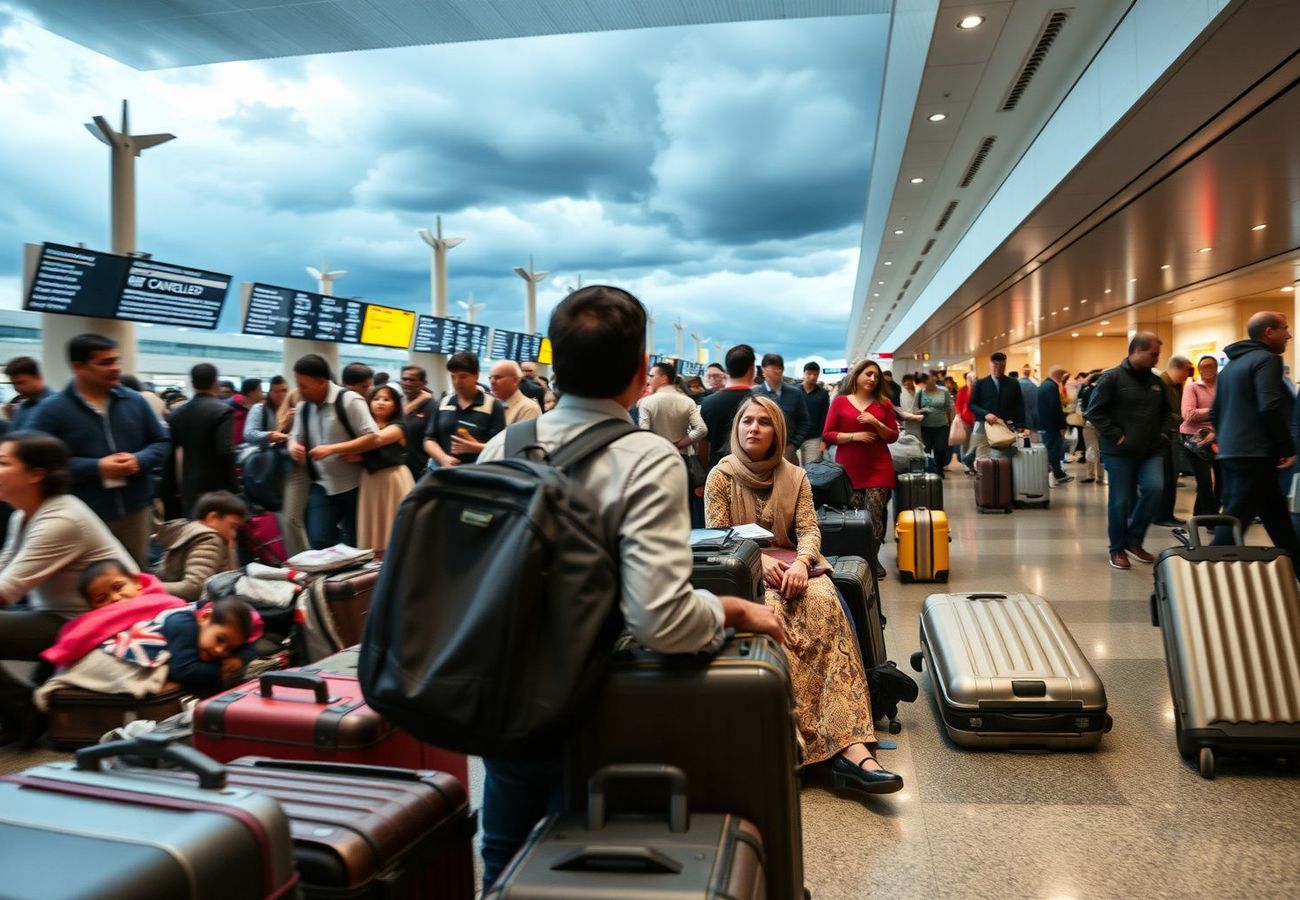
Image generated by AI
Emirates is pulling back hard. The carrier has slashed its international flight operations by 14 percent in June 2026, yanking nearly 500,000 seats from its global network in a striking acknowledgment that even record profits can't outrun the brutal mathematics of sustained high fuel costs and fragmented market recovery.
This isn't panic. It's calculation.
The airline moved from approximately 237 daily departures last June down to roughly 200 this month—a deliberate recalibration across a network that still bleeds red in certain corridors while thriving in others. The reduction doesn't mean mass route exits. Instead, Emirates has surgically trimmed frequency on flagship long-haul services where demand has softened or where operating margins have compressed beyond acceptable thresholds.
The Routes Taking the Biggest Hit
London saw the sharpest cuts. Emirates reduced service to all three major London airports—Heathrow, Gatwick, and Stansted—in moves that signal softening British travel demand or, more likely, the airline's refusal to operate profitable-on-paper services that burn cash when fuel surcharges are factored in.
Other major European and Asian hubs didn't escape scrutiny either. Amsterdam, Vienna, Beijing, and Brisbane all saw reduced frequency. These aren't minor secondary routes; they're arteries in the global aviation network, pumping both business travelers and leisure passengers.
Yet the airline maintains a critical balance: it's cutting frequency, not presence. Emirates continues serving 138 destinations worldwide—only four fewer than before regional disruptions accelerated. The message is unmistakable: we're here, but we're here on our terms.
The Financial Paradox Nobody Wants to Talk About
Here's where the story gets uncomfortable. The Emirates Group reported record profits for the financial year ending March 31, 2026. The airline itself achieved its highest-ever earnings, riding waves of premium cabin demand and sustained international travel appetite.
And yet it's slashing capacity.
This isn't a company in distress announcing belt-tightening. This is a company choosing profitability over growth, choosing margin over market share. When fuel costs exceed $1,560 per tonne—still well above pre-disruption benchmarks despite recent easing from peaks above $1,800 per tonne—even record revenues can get hollowed out by operating expenses.
Reddit: "Strong financials but cutting flights? That's a red flag for the rest of the year. If even Emirates is tightening capacity, demand must be weaker than they're publicly admitting." — r/aviation
Recovery Is Real. But It's Incomplete.
Operations out of Dubai hub are running at roughly 80 percent of pre-disruption levels. That number matters because it tells you the regional aviation market hasn't snapped back to baseline. The recovery is genuine—the airline isn't in freefall—but it's uneven, inconsistent, and slower than industry leaders were predicting six months ago.
Capacity restoration is expected to continue gradually in coming months, but Emirates isn't betting the airline on it. The approach is cautious by design: adjust schedules based on real-time demand signals and airspace availability rather than faith in macro trends.
Other Global Carriers Are Playing the Same Defensive Game
Emirates isn't alone in this contraction. Swiss International Air Lines has extended its suspension of Dubai services. KLM Royal Dutch Airlines and Cathay Pacific continue operating reduced or selectively cancelled Gulf-route schedules. The pattern is unmistakable: international carriers are avoiding aggressive Gulf commitments and preferring tactical adjustments over strategic expansion.
This isn't temporary caution. This is the new operating model.
Middle East Aviation's Sharp Demand Correction
The regional market has experienced a notable slowdown. Passenger demand dropped sharply year-over-year, while available seat capacity fell simultaneously. This dual contraction is the aviation equivalent of defensive positioning—carriers cutting supply in response to declining demand, trying to maintain yields rather than chase volume.
The result is a softer regional traffic environment than growth projections from earlier in 2026 had suggested. The momentum that was supposed to carry through summer? It's stalling.
Jet Fuel: The Invisible Hand That Controls Everything
Long-haul operators face a fuel-cost bind that short-haul carriers barely understand. Jet fuel represents a massive percentage of intercontinental operating costs. When prices hover at elevated levels—as they have for months—fuel becomes the primary lever airlines pull when adjusting profitability.
At $1,560 per tonne, costs remain punitive. Airlines have learned the hard way that waiting for normalization is a sucker's bet. The strategic choice is to cut capacity now, protect margins, and avoid the trap of operating marginally profitable flights in hope of future fuel-price relief.
This discipline is painful for travelers seeking seats and damaging for airports dependent on traffic, but it's financially sound for Emirates and its peers.
What's Next for Global Aviation Through 2026
The sector continues stabilizing in a fragile equilibrium. Demand for international travel—especially premium—remains robust. But external pressures keep full capacity restoration off the table.
Expect carriers to maintain flexible scheduling strategies through the remainder of 2026. Expect route adjustments based on monthly or quarterly conditions rather than long-term fixed plans. Expect resilience prioritized over growth.
For Emirates, for Swiss, for KLM, for Cathay Pacific: the game is sustainability first, expansion second. The age of unqualified capacity growth is hibernating, possibly indefinitely.
The profitable airline of 2026 isn't the one flying the most seats—it's the one that knows when to hold back.
Related Travel Guides
UAE Aviation Crisis: 12 Flight Cancellations and 153 Delays Hit Dubai and Sharjah on June 4, 2026
American Airlines Suspends 6 Domestic Routes in Summer 2026 Due to Soaring Jet Fuel Costs
2027 Music Meets Meditation: Hapag-Lloyd's Europa Wellness Voyage
Disclaimer
This article is for informational and educational purposes only. It does not constitute legal, financial, or professional advice. While we strive to provide accurate and up-to-date information, travel policies, regulations, and conditions change rapidly. Always verify information with official sources before making travel decisions. Nomad Lawyer makes no representations about the accuracy, reliability, completeness, or suitability of the information provided. Readers should consult qualified professionals for advice specific to their circumstances. The views expressed in this article are those of the author and do not necessarily reflect the views of Nomad Lawyer.
Preeti Gunjan
Contributor & Community Manager
A passionate traveller and community builder. Preeti helps grow the Nomad Lawyer community, fostering engagement and bringing the reader experience to life.
Learn more about our team →