
Emirates Debuts World-First Electric Premium Economy Seats on Airbus A350
Emirates introduces the world's first electrically powered Premium Economy seats with adjustable privacy screens and wireless charging on the Airbus A350.

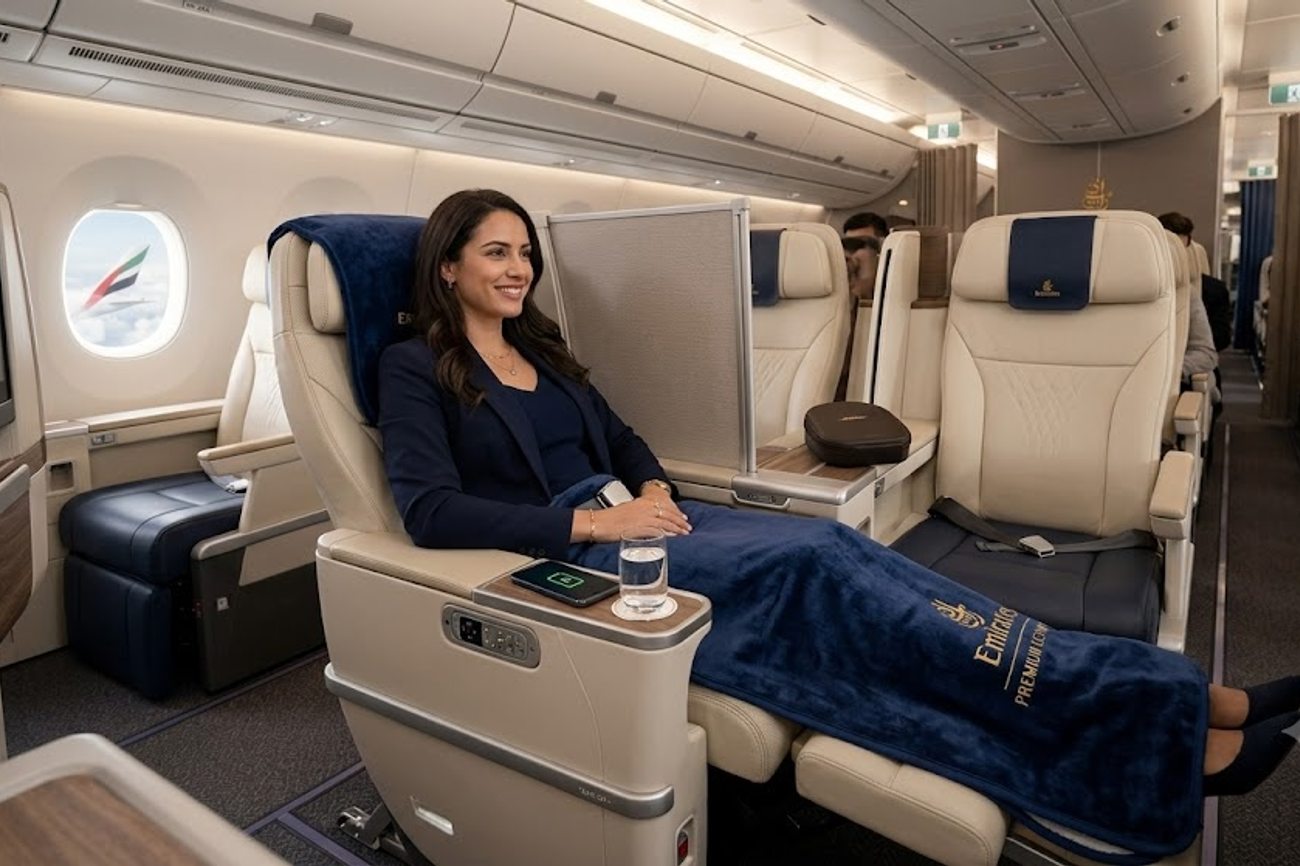
Image generated by AI
Emirates is redefining long-haul cabin standards with the introduction of a new Premium Economy product deployed on its newly delivered Airbus A350 aircraft. The centerpiece of this upgrade is the world’s first electrically powered seat in this cabin class, featuring a full-height adjustable privacy divider that passengers can raise, lower, and lock via electric controls.
Historically, adjustable privacy screens have been reserved for Business and First Class cabins. By integrating this technology into Premium Economy, Emirates allows passengers to create a secluded environment for sleep or work without the price point of a Business Class ticket.
The cabin architecture on the Airbus A350 utilizes a 2-3-2 configuration, totaling 28 seats. Each seat provides a 20-inch width and a seat pitch of up to 39 inches, offering a substantial increase in personal space over standard Economy.
Hardware and Technical Specifications
The new seating system incorporates electric controls with dedicated "lounge mode" and "meal mode" presets. The seat reclines into a cradle position, engineered to provide increased comfort without encroaching on the legroom of the passenger seated behind.
To address long-haul fatigue, Emirates has integrated the U-Dream headrest by Safran Seats. This leather headrest features adjustable side wings to support the head and neck during sleep, complemented by a manually deployable leather footrest.
Digital Integration and Connectivity
The Airbus A350 Premium Economy cabin introduces several firsts for the airline's mid-tier offering:
- Power: Wireless charging capabilities integrated into the seat, alongside USB-C ports.
- Utility: A tray table featuring a built-in phone holder, enabling the use of personal devices as secondary screens.
- Entertainment: 13.3-inch 4K HDR screens providing access to the full inflight entertainment suite.
While these upgrades bring the experience closer to Business Class, Emirates maintains a clear distinction: Business Class continues to offer fully lie-flat beds and guaranteed direct aisle access for all passengers.
Transit Schedule & Route Specifications
| Parameter | Specification |
|---|---|
| Aircraft Model | Airbus A350 |
| Cabin Configuration | 2-3-2 Layout |
| Total PE Seats | 28 |
| Seat Width | 20 inches |
| Seat Pitch | Up to 39 inches |
| Screen Specs | 13.3-inch 4K HDR |
| Charging Ports | Wireless + USB-C |
| Headrest Model | Safran U-Dream |
Traveler Logistics Guide
From a ground-level perspective, the introduction of these seats on the A350 changes how passengers should approach booking and transit.
Booking Connections: When booking multi-leg journeys via Dubai (DXB), verify the aircraft type. Not all Emirates routes utilize the A350; ensure your flight segment specifically lists the A350 to guarantee the electric seat and privacy screen experience.
Optimal Layover Management: For those upgrading to Premium Economy, utilize the Dubai airport's digital transit tools to monitor gate changes. Since the A350 is often deployed on high-demand long-haul routes, boarding sequences are strict. Arrive at the gate 45 minutes prior to departure to ensure seamless boarding.
Digital Transit Policies: Passengers transiting through the UAE should ensure their travel documents are updated via the official UAE government portals to expedite customs. For those connecting to other destinations, check if your destination requires ETIAS (for Europe) or similar digital authorizations to avoid delays after landing.
Infrastructure Impact Assessment
This move signals a strategic shift in the "middle-market" of aviation. By investing in Business Class-lite features, Emirates is capturing a growing demographic of corporate and leisure travelers who find Economy insufficient but Business Class cost-prohibitive. This strengthens Dubai's position as a global hub by offering a highly competitive product that forces other carriers to accelerate their own cabin refreshes to remain viable on long-haul corridors.
Related Travel Guides
Disclaimer
This article is for informational and educational purposes only. It does not constitute legal, financial, or professional advice. While we strive to provide accurate and up-to-date information, travel policies, regulations, and conditions change rapidly. Always verify information with official sources before making travel decisions. Nomad Lawyer makes no representations about the accuracy, reliability, completeness, or suitability of the information provided. Readers should consult qualified professionals for advice specific to their circumstances. The views expressed in this article are those of the author and do not necessarily reflect the views of Nomad Lawyer.
Preeti Gunjan
Contributor & Community Manager
A passionate traveller and community builder. Preeti helps grow the Nomad Lawyer community, fostering engagement and bringing the reader experience to life.
Learn more about our team →