
Emirates Deploys Next-Gen Airbus A350 on Dubai to Kuala Lumpur Route Starting September 2026
Emirates enhances Malaysia connectivity by introducing the Airbus A350 on flights EK344 and EK345, featuring expanded Premium Economy and advanced cabin technology.

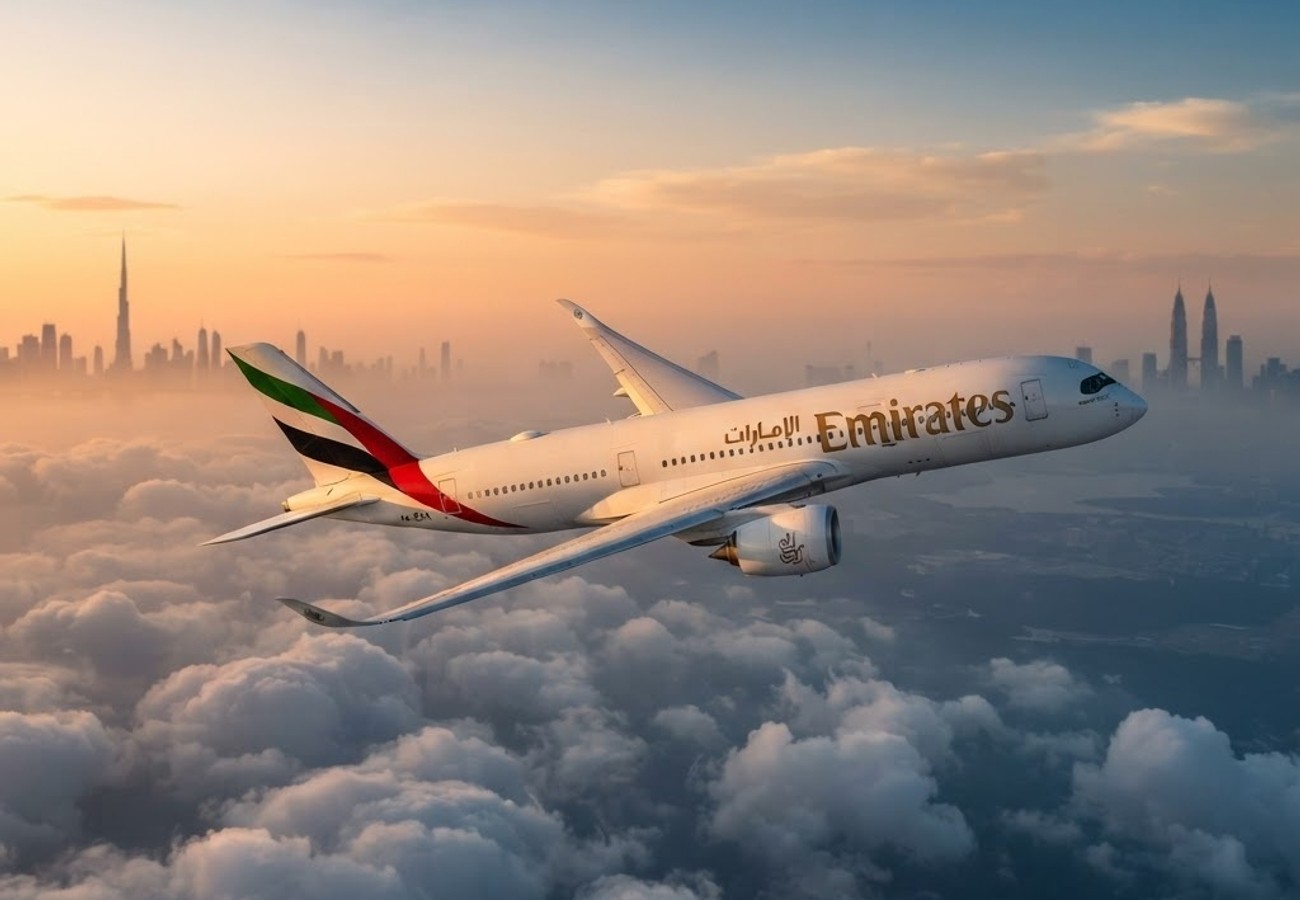
Image generated by AI
Emirates is upgrading the Dubai–Kuala Lumpur corridor with the introduction of the next-generation Airbus A350 starting 1 September 2026. The deployment increases daily Premium Economy capacity to 52 seats and introduces advanced cabin tech, including wireless charging and electronic window blinds.
The strategic deployment of the Airbus A350 on the Dubai (DXB) to Kuala Lumpur (KUL) route marks a significant shift in Emirates' Southeast Asian fleet distribution. Effective 1 September 2026, the aircraft will operate flights EK344 and EK345, providing a modernized alternative for passengers moving between the UAE and Malaysia.
This fleet upgrade allows Emirates to offer a tiered aircraft experience on the route. While the A350 handles the new premium-focused services, the airline will maintain upgraded Boeing 777 aircraft for flights EK346 and EK347, alongside the continued operation of the Airbus A380. This multi-aircraft strategy ensures that Kuala Lumpur remains a high-capacity gateway for traffic flowing toward Europe, Africa, and the Americas via the Dubai hub.
Fleet Specifications and Route Allocation
The A350 integration specifically targets the growing demand for "mid-tier" luxury, significantly expanding the footprint of the Premium Economy cabin.
| Flight Number | Aircraft Model | Key Cabin Features | Seat Configuration (Business) | Premium Economy Capacity |
|---|---|---|---|---|
| EK344 / EK345 | Airbus A350 | Wireless Charging, Electronic Blinds, Lie-flat beds | 1-2-1 (32 seats) | 28 seats per flight |
| EK346 / EK347 | Boeing 777 (Upgraded) | Standard Long-haul Config | Varies | Standard |
| Various | Airbus A380 | Double-deck, High Capacity | Varies | Varies |
Advanced Cabin Infrastructure
The Airbus A350 brings specific technological upgrades designed to reduce passenger fatigue on long-haul journeys. The Business Class cabin is configured in a 1-2-1 layout, ensuring every passenger has direct aisle access. These seats convert into fully lie-flat beds, a necessity for the duration of the Dubai-Kuala Lumpur leg.
Beyond seating, the aircraft introduces:
- Integrated Power: Wireless charging facilities are standard across premium cabins, removing the need for external cables.
- Smart Windows: Electronic window blinds replace manual shades. When activated, these blinds display the airline’s Ghaf tree design.
- Environmental Control: The A350's advanced cabin pressure and humidity controls are designed to mitigate jet lag and dehydration compared to older airframes.
Traveler Logistics Guide: Navigating the DXB-KUL Corridor
From a ground-level perspective, the best way to leverage this fleet upgrade is to align your booking specifically with flights EK344 or EK345 if you are prioritizing the Premium Economy experience. With 52 total Premium Economy seats available daily on the A350, these will likely be the first to sell out during peak travel windows.
Connection Strategies at Dubai International (DXB): For passengers connecting from Kuala Lumpur to North America or Europe, the A350's arrival timing is designed to sync with the primary departure waves at DXB. To ensure a seamless transit:
- Digital Transit: Utilize the Dubai Airports app to monitor real-time gate changes, as A350s may be routed to different concourses than the A380s.
- Lounge Access: Business Class passengers on the A350 maintain full access to the Emirates lounges in Dubai, which provide essential respite before subsequent long-haul legs.
- Layover Optimization: For those with layovers exceeding 8 hours, consider the "Dubai Connect" service, which provides hotel and transit arrangements for passengers with long gaps between flights.
Infrastructure Impact Assessment
The introduction of the A350 strengthens the Malaysia–Dubai travel corridor by diversifying the product offering. By providing three distinct flagship aircraft (A350, B777, A380) on a single route, Emirates is catering to three different market segments: the ultra-high-capacity tourist (A380), the corporate traveler (A350), and the standard international transit passenger (B777).
This move is expected to boost corporate travel between Kuala Lumpur and the Middle East, as the A350’s 1-2-1 Business Class configuration is more conducive to productivity and privacy than older high-density layouts. Furthermore, the expansion of Premium Economy addresses a critical gap in the market for travelers who require more comfort than Economy but cannot justify the cost of Business Class.
A new era of connectivity for Malaysia begins this September.
Related Travel Guides
Disclaimer
This article is for informational and educational purposes only. It does not constitute legal, financial, or professional advice. While we strive to provide accurate and up-to-date information, travel policies, regulations, and conditions change rapidly. Always verify information with official sources before making travel decisions. Nomad Lawyer makes no representations about the accuracy, reliability, completeness, or suitability of the information provided. Readers should consult qualified professionals for advice specific to their circumstances. The views expressed in this article are those of the author and do not necessarily reflect the views of Nomad Lawyer.
Preeti Gunjan
Contributor & Community Manager
A passionate traveller and community builder. Preeti helps grow the Nomad Lawyer community, fostering engagement and bringing the reader experience to life.
Learn more about our team →