
How the C-17 Globemaster III Executes a 25,000-Foot Tactical Descent Using Inflight Reverse Thrust
The United States Air Force’s premier tactical airlifter relies on a specialized thrust-vectoring and externally blown f

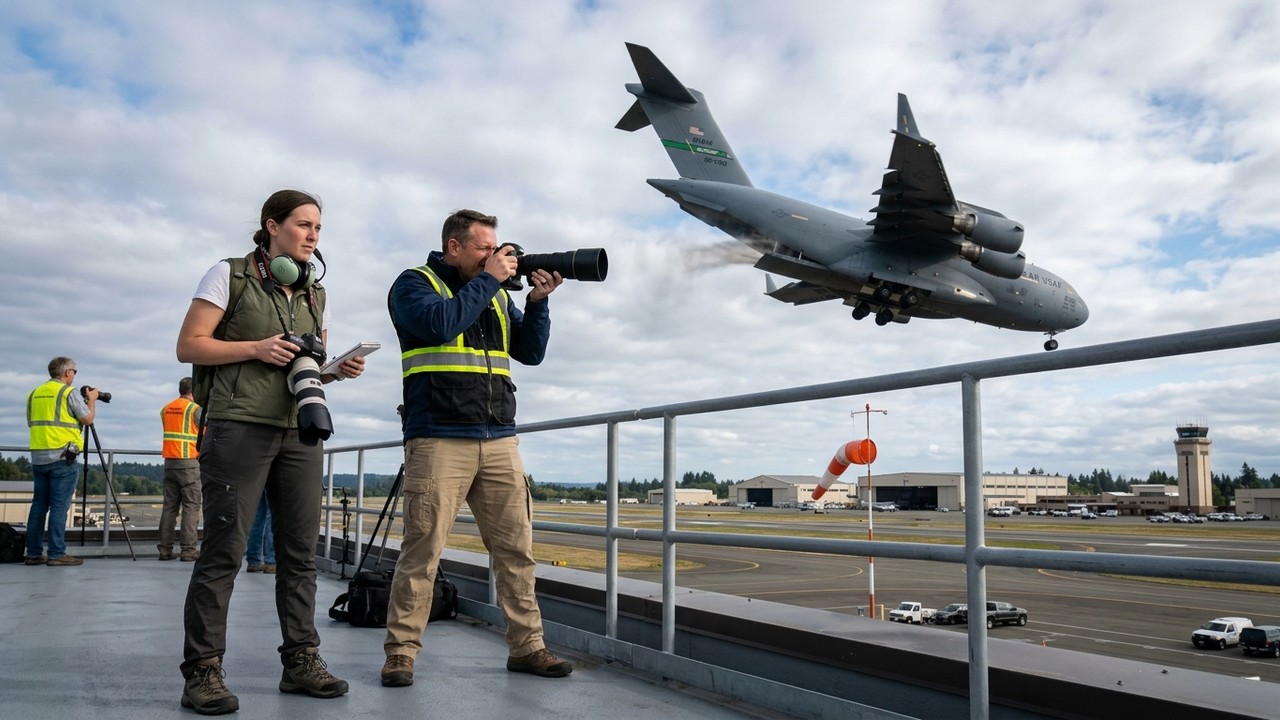
Image generated by AI
The Boeing C-17 Globemaster III does not merely transport cargo; it is engineered to insert and extract heavy payloads in highly contested environments. By engaging reverse thrust across all four Pratt & Whitney turbofan engines while still at high altitude, the aircraft can shed 25,000 feet of altitude in roughly two minutes. This rapid tactical descent allows the airlifter to remain above the effective envelopes of most ground-based air defenses until the final approach, then punch through low-level threat zones at speeds and angles that commercial airliners cannot replicate.
High-Altitude Infiltration and Descent Dynamics
Maintaining cruise altitude above 25,000 feet provides a critical defensive buffer. Man-Portable Air Defense Systems like the FIM-92 Stinger generally lose effectiveness past 12,000 to 15,000 feet, while anti-aircraft artillery struggles to track targets above 10,000 feet. Operating at these heights also complicates ground-based radar acquisition and operator tracking, particularly when a target is moving vertically at high velocity.
When the flight crew advances the thrust reversers, the C-17 generates aerodynamic drag without risking wing stall. This configuration produces descent rates reaching 15,000 feet per minute—four to five times steeper than standard commercial operations. The rapid vertical transition minimizes the aircraft’s exposure time in low-altitude corridors where Man-Portable Air Defense Systems, mortars, and small-arms fire pose the greatest risk. Once the ramp opens and cargo rolls onto the drop zone, the aircraft can disengage reverse thrust and prepare for immediate departure.
Engine Architecture and Thrust Vectoring
Powering the Globemaster III are four Pratt & Whitney F117-PW-100 turbofans, each delivering 40,440 pounds of thrust. These engines evolved from the commercial PW2000 family that powers the Boeing 757, but feature reinforced combat-hardened components, a 5.9-to-1.0 bypass ratio, and optimized fuel efficiency for transoceanic transit.
Unlike conventional reverse thrusters that deflect airflow sideways, the C-17’s translating sleeve directs 100 percent of the fan bypass air upward and forward at a 45-degree angle. Deploying the reverser slides the outer cowl backward to expose precisely angled cascade vanes. This upward thrust vector pushes the aircraft’s nose down, accelerating the descent while simultaneously pressing the landing gear harder into unpaved surfaces for maximum braking efficiency. The forward-directed airflow also clears the flight deck of ground debris and maintains unobstructed pilot visibility during low-level operations.
Externally Blown Flaps and Low-Speed Control
The C-17’s ability to operate from short, unimproved strips relies heavily on its externally blown flap (EBF) system. As double-slotted titanium flaps lower, they channel the core exhaust from the high-mounted engines downward across the wing’s trailing edge. This aerodynamic design generates massive powered lift, enabling stable flight at approach speeds as low as 115 knots and allowing the aircraft to rotate and climb from remarkably short distances.
During steep tactical descents, the upward thrust of the reversers could theoretically induce airflow separation and stall characteristics. The EBFs counteract this by bending the core exhaust downward, maintaining attached airflow over the lower wing surface. This balance prevents turbulence-induced shaking and allows the aircraft to arrest vertical descent rates precisely at touchdown. When reverse thrust disengages, the flaps instantly restore full lift capacity, supporting rapid acceleration for takeoff in contested zones.
Ground Operations and Tactical Maneuverability
Survivability extends beyond the flight envelope. A stationary cargo aircraft on a forward runway is highly vulnerable to indirect fire, drones, and rocket-propelled grenades. The C-17’s design minimizes ground exposure by enabling rapid payload offload and immediate repositioning. The aircraft can execute tight 180-degree turns on dirt strips as short as 90 feet, back up on slopes up to two percent, and taxi effectively on unprepared terrain.
Pneumatic and hydraulic systems grant exceptional ground agility. The nose gear cranks up to 63 degrees left or right, far exceeding the typical 45-degree limit of commercial jets. Pilots can perform a “star turn” by applying reverse thrust to two engines on one wing while keeping the opposite wing in forward thrust, spinning the aircraft into a new heading. Heavy-duty landing gear features six wheels per main bogie and two on the nose, distributing weight to prevent sinking into soft ground. Redundant, four independent 4,000-psi hydraulic systems and a reinforced titanium airframe ensure that the aircraft retains critical flight controls and structural integrity even after sustaining combat damage.
| Specification | Metric / Value |
|---|---|
| Engine Type | Pratt & Whitney F117-PW-100 (4×) |
| Thrust per Engine | 40,440 lbs |
| Derived Power Plant | PW2000 series (Boeing 757 family) |
| Bypass Ratio | 5.9:1.0 |
| Reverse Thrust Vector | 45 degrees upward and forward |
| Maximum Descent Rate | Up to 15,000 ft/min |
| Cruise Speed | 450 kts (Mach 0.74 / 833 km/h) |
| Service Ceiling | 45,000 ft (13,716 m) |
| Minimum Approach Speed | 115 kts (213 km/h) |
| Maximum Payload | 170,900 lbs (77,519 kg) |
| Strategic Range (Max Payload) | 2,420 nm (4,482 km) unrefueled |
| Maximum Fuel Load | 244,854 lbs (111,064 kg) |
| Minimum Turn Radius Strip | 90 ft (dirt/unpaved) |
| Nose Wheel Deflection | Up to 63 degrees |
| Landing Gear Configuration | 6 wheels (main bogies) / 2 wheels (nose) |
| Hydraulic Systems | 4 independent, 4,000-psi |
| Primary Airframe Structure | Reinforced titanium |
Key Takeaways
- The C-17 Globemaster III uses inflight reverse thrust to shed 25,000 feet of altitude in approximately two minutes, keeping it above common MANPADS and artillery threats.
- Descent rates reach 15,000 feet per minute, driven by a 45-degree upward thrust vector that pushes the nose down and improves braking on unprepared runways.
- Externally blown flaps redirect core exhaust downward, generating powered lift for 115-knot approaches and preventing stall during steep tactical descents.
- Ground maneuverability includes 90-foot turns, 63-degree nose wheel deflection, and rapid “star turn” execution using selective engine reverse thrust.
- Four independent 4,000-psi hydraulic systems and a titanium-reinforced airframe ensure flight control and structural survivability under combat conditions.
FAQ
Why does the C-17 deflect reverse thrust upward instead of sideways? Upward and forward deflection at a 45-degree angle pushes the aircraft’s nose down, accelerating tactical descents while clearing ground debris from the engines and maintaining clear pilot visibility during low-level operations.
How does the C-17 avoid stalling during its steepest descents? The aircraft’s externally blown flaps channel high-velocity core exhaust downward across the wing’s lower surface. This maintains attached airflow, counters the upward thrust vector, and prevents turbulent separation that could trigger a stall.
What altitude range protects the C-17 from ground-based air defenses? Operating above 25,000 feet keeps the aircraft beyond the effective range of most Man-Portable Air Defense Systems (12,000–15,000 feet) and anti-aircraft artillery (~10,000 feet), while also complicating ground radar tracking during rapid vertical movements.
How quickly can the C-17 turn around on a forward airstrip? The aircraft can execute a complete 180-degree turn on a dirt strip as short as 90 feet. Pilots achieve this by applying reverse thrust to two engines on one wing while keeping the opposite wing in forward thrust, combined with a nose wheel that cranks up to 63 degrees.
What happens to the engines and flight controls if the C-17 sustains combat damage? Four independent 4,000-psi hydraulic systems and a titanium-reinforced airframe provide extensive redundancy. Critical flight controls, landing gear, and thrust reversers remain operational even after partial structural or system damage, allowing the aircraft to exit hostile airspace.
Related Travel Guides
Disclaimer
This article is for informational and educational purposes only. It does not constitute legal, financial, or professional advice. While we strive to provide accurate and up-to-date information, travel policies, regulations, and conditions change rapidly. Always verify information with official sources before making travel decisions. Nomad Lawyer makes no representations about the accuracy, reliability, completeness, or suitability of the information provided. Readers should consult qualified professionals for advice specific to their circumstances. The views expressed in this article are those of the author and do not necessarily reflect the views of Nomad Lawyer.
Raushan Kumar
Founder & Lead Developer
Full-stack developer with 11+ years of experience and a passionate traveller. Raushan built Nomad Lawyer from the ground up with a vision to create the best travel and law experience on the web.
Learn more about our team →