
Embraer Delivers 2,000th E-Jet as Azul Linhas Aéreas Expands Brazil Aviation Network in 2026
Embraer celebrates a historic milestone with the delivery of its 2,000th E-Jet, an E195-E2 destined for Azul, signaling a surge in regional connectivity across Brazil.

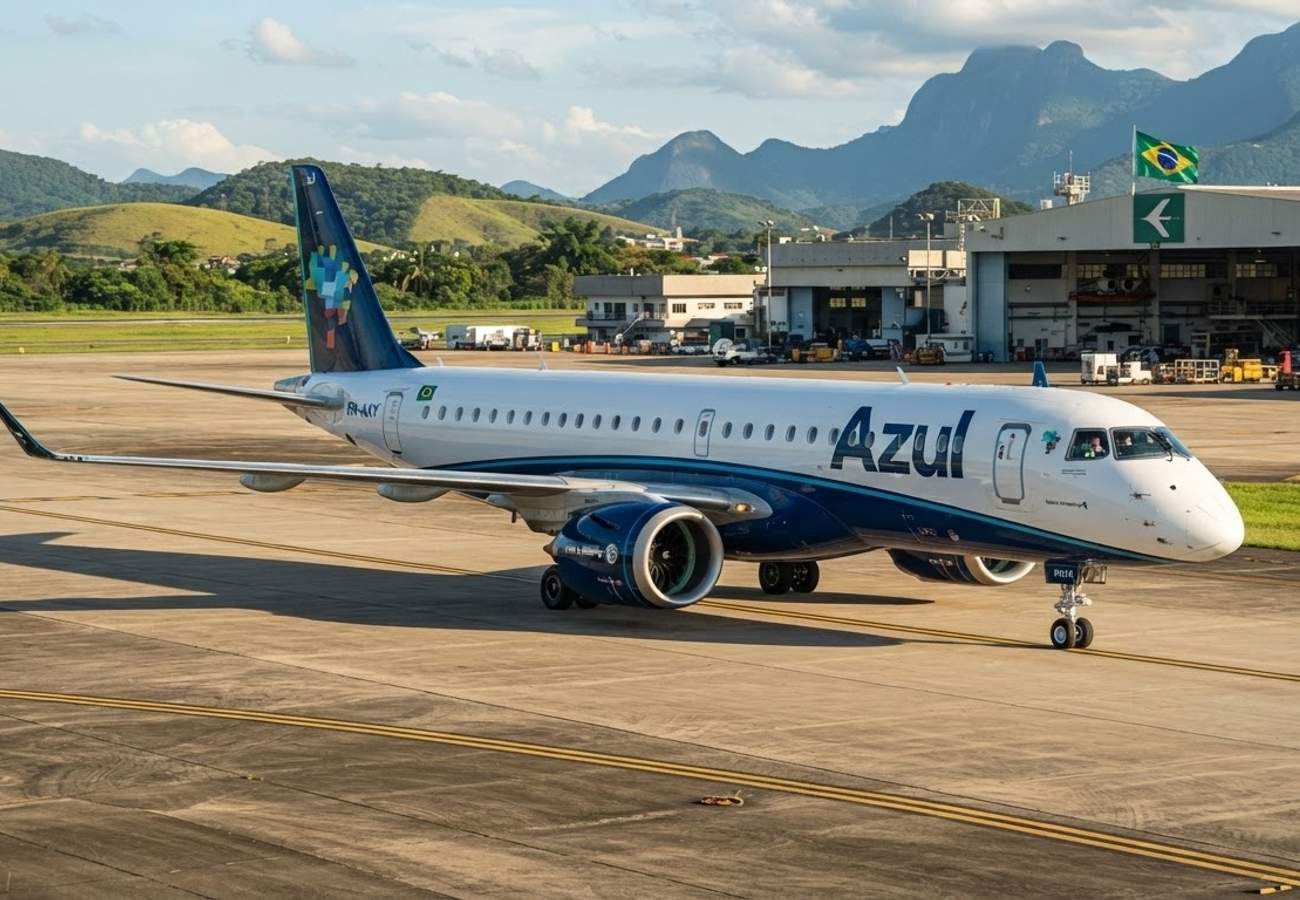
Image generated by AI
[São José dos Campos, September 4, 2026] — Brazil’s aerospace sector has reached a historic production peak as Embraer officially delivered its 2,000th E-Jet on September 2, 2026. The landmark aircraft, an E195-E2, was handed over to Azul Linhas Aéreas, reinforcing the carrier's dominance in regional connectivity and highlighting the critical role of mid-size jets in the post-pandemic aviation recovery.
The delivery ceremony took place in São José dos Campos, the heart of Embraer’s commercial aircraft operations. This milestone confirms the E-Jet program's status as one of the top three most-produced commercial jet families globally. With a footprint spanning every continent, the 2,000 aircraft delivered to date have clocked approximately 48 million flight hours and transported over 2.8 billion passengers.
Next-Generation Efficiency in the E195-E2
The selection of the E195-E2 as the 2,000th unit is a strategic signal of Embraer’s pivot toward high-efficiency, sustainable aviation. Designed for the 80 to 146-seat market, the E2 family is engineered to significantly lower fuel consumption and reduce carbon emissions per seat compared to previous regional jet generations. This evolution is particularly vital for airlines operating under stringent environmental regulations and rising operational costs.
Industry data indicates that Embraer's commercial order backlog remains strong, with the E2 series capturing a larger portion of new contracts. This trend suggests that the aviation industry is moving away from oversized aircraft for regional routes, favoring the flexibility and lower overhead of mid-size jets as networks are refined for 2026 and beyond.
Azul's Fleet Modernization and Investment Strategy
Azul Linhas Aéreas has emerged as the world's primary operator of the E195-E2, utilizing the aircraft to replace aging first-generation Embraer 190 and 195 models. This transition is part of a multi-billion-real investment program aimed at enhancing fleet efficiency and expanding reach into medium-density markets.
Public filings and trade reports from 2024 and 2025 reveal a rapid acceleration in delivery schedules. During a single year, Azul integrated more than a dozen E195-E2s to fast-track its modernization efforts. By the close of 2025, the carrier had taken delivery of at least 38 E195-E2 aircraft, with the 2,000th E-Jet further solidifying this aircraft as the core of Azul's domestic and short-haul international operations.
While Azul has maintained a significant commitment to the E2 platform, investor materials suggest the airline has refined its order book to better align with current market volatility. This balanced approach allows the carrier to pursue growth while managing debt and capacity more conservatively.
Expanding Air Access to the Brazilian Interior
The deployment of the E195-E2 is fundamentally tied to the unique geography of Brazil. Azul has leveraged the aircraft's specific capacity—roughly 136 seats in its current configuration—to serve secondary and regional cities that cannot support larger narrowbody or widebody jets.
By operating from major hubs in Campinas, Recife, and Belo Horizonte, Azul is connecting remote economic centers to the rest of the country. Aviation analysts point out that the E195-E2 makes routes viable that would otherwise be economically impossible, effectively integrating Brazil's interior with its primary financial hubs.
Beyond domestic borders, the aircraft is increasingly used for short-haul international flights to neighboring South American countries. This strategy not only boosts inbound tourism to Brazil but also provides passengers in smaller Brazilian cities with direct access to international destinations without needing to transit through São Paulo or Rio de Janeiro.
Economic Ripple Effects on Brazil's Aerospace Ecosystem
The production of 2,000 E-Jets represents a massive industrial achievement for Brazil. The manufacturing plants in São José dos Campos support thousands of specialized roles in supply chain management, advanced engineering, and aerospace manufacturing. Embraer remains one of the nation's most significant high-technology exporters.
Azul's continued investment in domestically produced jets creates a virtuous cycle within the local economy. The procurement of E195-E2 aircraft injects billions of reais into a local supplier network that includes manufacturers of avionics and interior components.
| E-Jet Program Metric | Value |
|---|---|
| Total Aircraft Delivered | 2,000 |
| Total Flight Hours | ~48 Million |
| Total Passengers Carried | 2.8 Billion+ |
| E195-E2 Seat Capacity (Azul) | ~136 Seats |
| E2 Market Segment | 80 to 146 Seats |
The Future of Mid-Size Aviation
The 2,000th delivery is more than a corporate trophy; it is a validation of the "right-sizing" trend in global aviation. As airlines move past the immediate recovery phase of the pandemic, they are seeking aircraft that offer a middle ground between small regional turboprops and large mainline jets.
Embraer is continuing to iterate on the E2 family to further lower noise footprints and fuel burn, ensuring the aircraft remains competitive as global emissions standards tighten. For Azul, the E195-E2 provides a tool to scale capacity based on real-time demand while keeping unit costs low in a market where passengers are highly sensitive to fare increases.
With new E2 customers appearing across Africa, North America, Europe, and the Middle East, the operational success of the fleet in Brazil serves as a global case study. The delivery of the 2,000th jet confirms Brazil's dual role as both a premier manufacturer and a leading operator of sophisticated aerospace technology.
Why This Matters For the frequent traveler in South America, this expansion means more direct flight options and shorter travel times between regional cities, reducing the reliance on cumbersome hub-and-spoke transfers. From a logistical standpoint, the shift toward the E195-E2 reduces the risk of flight cancellations caused by "under-filled" aircraft, as the mid-size capacity is easier for airlines to optimize. For the broader industry, it proves that the regional jet market is not shrinking but evolving toward higher efficiency and environmental sustainability.
Brazil continues to cement its status as a global aerospace powerhouse through the synergy of Embraer's innovation and Azul's aggressive network expansion.
Related Travel Guides
Disclaimer
This article is for informational and educational purposes only. It does not constitute legal, financial, or professional advice. While we strive to provide accurate and up-to-date information, travel policies, regulations, and conditions change rapidly. Always verify information with official sources before making travel decisions. Nomad Lawyer makes no representations about the accuracy, reliability, completeness, or suitability of the information provided. Readers should consult qualified professionals for advice specific to their circumstances. The views expressed in this article are those of the author and do not necessarily reflect the views of Nomad Lawyer.
Preeti Gunjan
Contributor & Community Manager
A passionate traveller and community builder. Preeti helps grow the Nomad Lawyer community, fostering engagement and bringing the reader experience to life.
Learn more about our team →