
Eight Western Nations Issue Russia Travel Bans Over Ukraine Drone Threats, Airport Closures, and Fuel Shortages in 2026
Germany joins US, UK, Canada, Australia, New Zealand, France, and Austria in escalating Russia travel warnings as Ukraine war drone attacks trigger airport closures, fuel shortages, and arbitrary detention risks across Moscow and St. Petersburg.

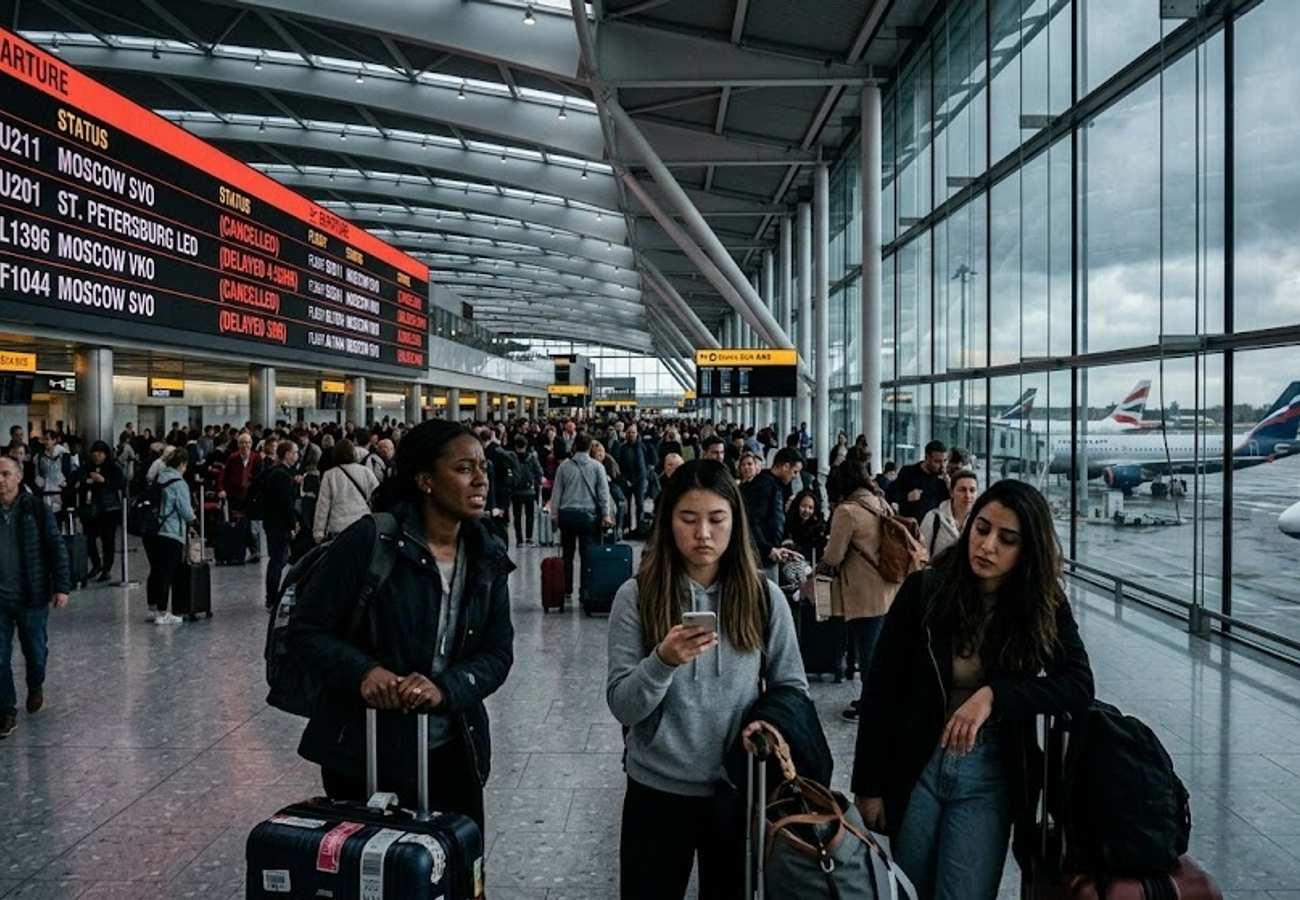
Image generated by AI
A Unified Warning: Eight Nations Draw the Line on Russia Travel
Germany has officially joined seven other Western nations—the United States, United Kingdom, Canada, Australia, New Zealand, France, and Austria—in issuing hardened travel warnings against Russia. The shift signals something deeper than geopolitical posturing: the Russia-Ukraine conflict has transformed Russia from a niche travel destination into an operationally unpredictable and genuinely dangerous country for civilians.
The timing matters. The Federal Foreign Office in Berlin now warns that Moscow, St. Petersburg, Leningrad Oblast, and western Russian territory face escalating drone attacks, arbitrary detention, airport closures lasting several hours, fuel supply interruptions, and severely limited consular support. This isn't a border-region advisory anymore—it's a nation-wide operational crisis.
Travel management companies, corporate security teams, airlines, insurers, and MICE planners are scrambling to update protocols. The advisory directly impacts itinerary planning, evacuation insurance, supplier reliability, and staff safety frameworks.
The Global Alignment: What Each Nation Is Actually Warning
Reddit: "I was supposed to visit Moscow in September. Just checked my government's advisory—it literally says 'do not travel.' There's no way I'm going." — r/travel
The advisory language across these eight nations reveals a coordinated assessment of identical threats. Here's what each government is telling its citizens:
United States (Level 4 – Do Not Travel): Terrorism, unrest, wrongful detention, and drone attacks in Moscow, Kazan, St. Petersburg, and cities near the Ukrainian border.
United Kingdom: Advises against all travel due to Russia's continued invasion of Ukraine, drone attacks, Russian air defence activity, severely limited return flights, and minimal government support for stranded Britons.
Canada: Cites armed conflict, terrorism risk, drone strikes, explosions, financial restrictions, and limited flight options as core reasons to avoid all travel.
Australia: Places Russia under a "do not travel" warning due to dangerous security conditions, military conflict spillover, and arbitrary detention risk.
New Zealand: Warns against travel, citing disrupted commercial flight availability and restricted access to financial services.
France: Issues a high-risk alert specifically for Moscow, Ukraine-border regions, St. Petersburg, and Leningrad Oblast, with emphasis on air traffic interruptions and logistics strikes.
Austria: Regional caution for Ukraine-border areas with wider warnings about Moscow drone attacks, airport closures, and mobility disruption.
Germany (the newest alignment): Now warns against all Russia travel, identifying the same drone debris, airport closure, fuel shortage, rail disruption, and arbitrary detention risks as the other seven nations.
The Aviation Crisis: Why Airspace Closures Matter Most
The most immediate threat to travelers is airspace instability. When airports close "for security reasons," the impact cascades across dozens of flight schedules within hours.
EASA (European Union Aviation Safety Agency) maintains an active Conflict Zone Information Bulletin for Russian airspace covering airspace west of 60 degrees east longitude—essentially all of European Russia, including the Moscow, Rostov-on-Don, St. Petersburg, Yekaterinburg, and Samara flight information regions. The advisory remains in force through 31 July 2026.
Germany's advisory specifically warns that airport closures in western, central, and southern Russia can trigger hundreds of cancelled flights and chaotic airport conditions lasting several hours. The UK Foreign Office adds that airspace closures during drone attacks create frequent, unpredictable delays, diversions, and cancellations for flights serving Moscow and other major hubs.
The consequence: European aircraft have almost no direct air corridor into Russia. Russian domestic aviation to southern airports remains severely restricted. Transfer buffers are now essential—if you're already in Moscow, your exit route is uncertain.
The EU Air Safety List: Twenty-Two Russian Airlines Are Banned
On top of airspace restrictions, the European Commission updated its Air Safety List in June 2026, banning 154 airlines from EU skies, including 22 airlines certified in Russia due to serious safety deficiencies. This matters because Russian carriers operating domestic flights inside Russia may not meet international standards, creating a hidden risk layer for travelers already in the country.
Corporate travel teams and TMCs must now screen Russian domestic suppliers against the EU Air Safety List before booking any onward domestic connections.
Drone Attacks, Fuel Shortages, and Rail Vulnerability
Beyond aviation, the advisory identifies a multi-layered ground and mobility crisis.
Drone attacks are no longer confined to border regions. Germany warns of drone incidents in Moscow, St. Petersburg, and across western Russia. The United States confirms drone attacks and explosions have struck large cities including Kazan.
Fuel shortages are real. Germany's advisory explicitly warns of fuel supply limits affecting both transportation networks and daily logistics. In a country where ground mobility is already strained by Western sanctions and infrastructure damage, fuel rationing adds friction to evacuation planning.
Rail disruption is another factor. Germany states that rail, ferry, and flight traffic between Germany and Russia is suspended. The advisory also warns that attacks on rail infrastructure "cannot be excluded," making overland evacuation routes unreliable for corporate teams or large groups needing rapid extraction.
What This Means for Travel, Insurance, and Corporate Mobility
For travel management companies, the escalation is operational and legal:
- Airline operations: Direct Russia flights are now suspended for most European carriers. Rerouting through Central Asia or the Middle East adds 8-12 hours and requires layover risk management.
- Travel insurance: Standard policies may not cover claims arising from "known conflict zones." Evacuation insurance costs are spiking, and some insurers are excluding Russia altogether.
- Corporate travel policy: Companies must now flag Russia as a restricted destination and enforce no-travel protocols, with exceptions only for essential personnel in pre-approved roles.
- Consular access: Germany, the UK, and most other Western nations have reduced or withdrawn embassy staff in Moscow. If a traveler is detained, consular assistance is minimal.
- Financial services: New Zealand's advisory specifically warns of restricted access to financial services—meaning credit cards, ATM withdrawals, and wire transfers are unreliable.
Reddit: "My company just sent out a memo: anyone traveling to Russia after today needs written approval from the CEO and must sign a liability waiver. It's that serious now." — r/digitalnomad
The Arbitrary Detention Wildcard
Every advisory mentions arbitrary detention as a core risk. Since 2022, Western nationals in Russia have faced unexplained arrests, lengthy interrogations, and visa complications. The reduced consular footprint means government support is minimal if detention occurs.
This is not theoretical. Travel companies and corporate security teams now assume that any arrest in Russia carries a multi-month resolution timeline with limited external intervention.
The Bottom Line: Russia Is Now Off-Limits for Most Travelers
The alignment of eight Western nations on Russia travel bans signals that the geopolitical and operational risks have converged. Whether you're a business traveler, leisure tourist, or digital nomad, the official message is clear: the infrastructure, safety systems, and exit routes that normally make travel feasible no longer exist reliably in Russia.
Airlines have pulled back. Airports close unpredictably. Fuel is rationed. Consular support is withdrawn. Detention risk is real. And getting out, if an emergency strikes, is uncertain.
For 2026 and beyond, Russia remains a no-travel zone for most Western civilians, backed by coordinated advisory warnings from every major Western democracy.
The world's eight wealthiest democracies rarely speak with one voice on travel warnings—but Russia in 2026 is that rare exception.
Related Travel Guides
Disclaimer
This article is for informational and educational purposes only. It does not constitute legal, financial, or professional advice. While we strive to provide accurate and up-to-date information, travel policies, regulations, and conditions change rapidly. Always verify information with official sources before making travel decisions. Nomad Lawyer makes no representations about the accuracy, reliability, completeness, or suitability of the information provided. Readers should consult qualified professionals for advice specific to their circumstances. The views expressed in this article are those of the author and do not necessarily reflect the views of Nomad Lawyer.
Preeti Gunjan
Contributor & Community Manager
A passionate traveller and community builder. Preeti helps grow the Nomad Lawyer community, fostering engagement and bringing the reader experience to life.
Learn more about our team →