
Economy Class Airline Redesign: Japan Airlines Sacrifices Capacity for Comfort in 2026
Japan Airlines defies airline industry norms by deliberately sacrificing economy class airline revenue seats to deliver premium passenger comfort on long-haul aircraft throughout 2026, bucking the profit-maximization trend.

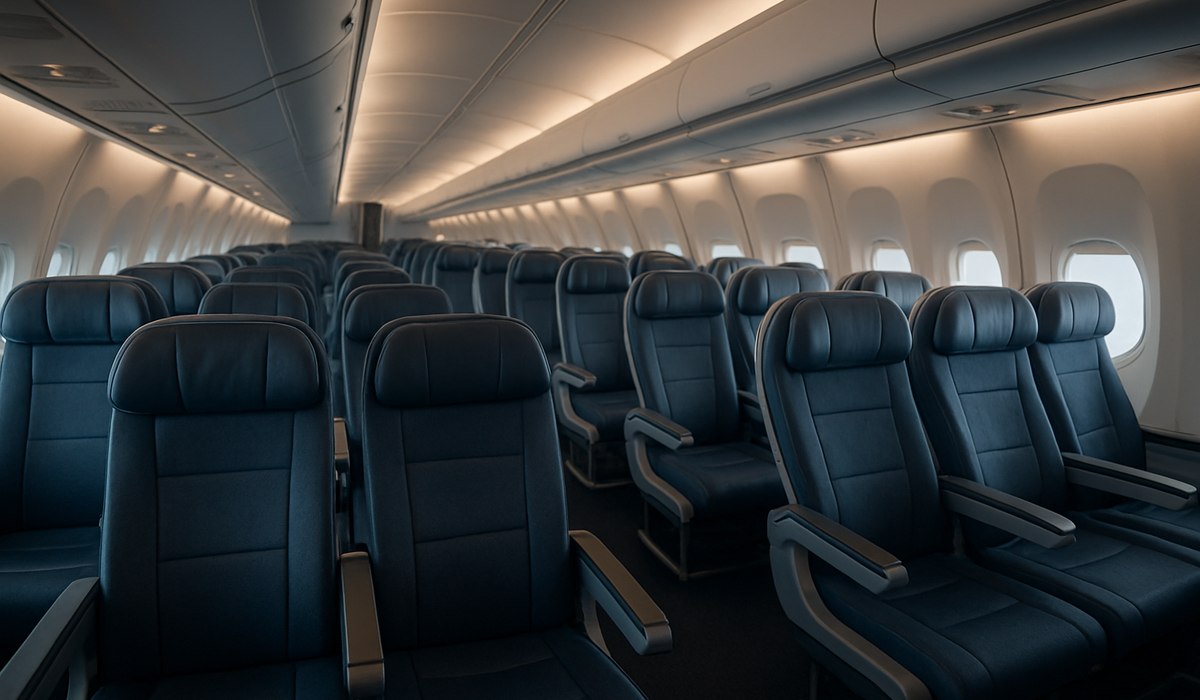
Image generated by AI
Japan Airlines Embraces Long-Haul Comfort Strategy Over Maximum Capacity
Japan Airlines (JAL) is fundamentally reimagining how legacy carriers approach long-haul economy class in 2026. Rather than adopting the passenger-density maximization strategies that dominate the modern airline industry, JAL deliberately sacrifices revenue-generating seats to provide demonstrably superior passenger comfort on its flagship wide-body aircraft. This counter-intuitive business decision positions the Tokyo-based carrier as a distinctive competitor in an industry obsessed with yield management and load factors.
The economy class airline market operates on a deceptively simple principle: squeeze more bodies into the cabin, collect more revenue per flight. JAL's 2026 strategy directly challenges this conventional wisdom. By maintaining nine-abreast seating on Boeing 777-300ER aircraft and deploying eight-abreast configurations on select 787 Dreamliners—where nine-abreast has become the industry standard—JAL sacrifices meaningful passenger capacity on every rotation. This decision carries measurable financial consequences, yet JAL has committed to this approach across critical long-haul routes.
JAL's Counter-Intuitive Strategy: Choosing Comfort Over Capacity
Airline revenue models traditionally operate as a zero-sum calculation. Every centimeter of additional legroom means fewer rows per aircraft. Wider seat pitch translates directly to reduced passenger counts per departure. The economics seem immutable: comfort improvements cost money in lost ticket revenue.
JAL's 2026 positioning rejects this framework entirely. The carrier's decision to maintain nine-abreast economy on the 777-300ER represents deliberate departure from the ten-abreast standard adopted by most international carriers. On the 787 Dreamliner, JAL's eight-abreast layout sacrifices the additional row that nine-abreast configurations provide. These choices aren't accidental or forced by aircraft limitations; they represent calculated strategic decisions that sacrifice capacity for passenger experience.
This economy class airline differentiation strategy appeals to a specific demographic: experienced long-haul travelers willing to pay modest premiums for significantly improved comfort. JAL's market research evidently suggests this segment generates sufficient incremental revenue to offset the reduced seat-mile capacity. The wager fundamentally assumes that superior passenger experience creates brand loyalty and justifies higher ticket prices—a hypothesis that contradicts much of industry orthodoxy in 2026.
How Nine-Abreast and Eight-Abreast Configurations Compare
The difference between competitive seating configurations appears mathematically modest yet translates into meaningfully distinct passenger experiences on transpacific and transatlantic routes.
Boeing 777-300ER configurations vary considerably across international carriers. Nine-abreast arrangements provide approximately 17-18 inches of seat width per passenger. Ten-abreast layouts compress this to roughly 16-17 inches. JAL's nine-abreast choice on the 777-300ER means passengers get wider seats, genuinely improved armrest access, and reduced shoulder-contact situations during extended flights. For passengers spending 12-14 hours airborne, this difference accumulates into substantial comfort improvement.
The Boeing 787 Dreamliner presents starker contrasts. Industry standard deployment implements nine-abreast cabins, delivering seat widths approaching 16.5 inches. JAL's eight-abreast configuration widens individual seats to approximately 18-19 inches. This represents a measurable, not theoretical, difference. Eight-abreast arrangements also reduce crowding in lavatories, aisles, and boarding processes—creating cascade benefits beyond simple seat metrics.
These configuration choices carry specific financial implications. A 777-300ER typically accommodates 350-380 passengers in ten-abreast economy. JAL's nine-abreast layout reduces this to approximately 280-310 passengers, sacrificing 70+ revenue seats per aircraft. The economic class airline market calculates that improved comfort commands sufficient price premium to compensate for this capacity sacrifice.
The Financial Trade-Off: Why JAL Can Afford This Approach
Revenue sacrifices on the scale JAL accepts demand specific financial circumstances. Not every airline possesses sufficient pricing power or brand strength to offset reduced seat-mile capacity. JAL's strategy viability rests on several supporting factors.
Japanese carriers historically maintain pricing resilience, particularly on premium-tier long-haul routes. JAL passengers—primarily originating from Japan's high-income economy—demonstrate less price elasticity than economy class airline passengers on transatlantic routes. This permits JAL to maintain 5-12% price premiums on equivalent long-haul sectors compared to carriers using denser cabin configurations.
JAL also benefits from strong domestic network connectivity and substantial connecting passenger traffic. These feed traffic patterns allow the carrier to fill aircraft consistently despite reduced capacity, maintaining respectable load factors despite sacrificing seat count. The economy class airline dynamics differ substantially when connecting passengers provide consistent demand bridges.
Secondly, JAL's fleet optimization strategy emphasizes aircraft longevity and operational efficiency. Newer aircraft receive the most premium cabin configurations. Older airframes transition to higher-density deployments. This graduated approach maximizes revenue capture across different aircraft lifecycles while preserving premium positioning on flagship aircraft serving competitive long-haul markets.
Finally, JAL's 2026 strategy functions as powerful brand differentiation in a consolidated market dominated by three major airline alliances. Positioning as "the comfort economy class airline" on long-haul Asian routes generates meaningful market share gains among premium leisure travelers and high-value business passengers.
What This Means for Passengers and Competitors
JAL's 2026 initiative creates demonstrable competitive pressure throughout the long-haul aviation market. Competing carriers now face explicit choice: maintain profitable high-density configurations or sacrifice revenue chasing passenger comfort premiums.
Passengers booking JAL's long-haul flights encounter material comfort advantages. Extra seat width, improved aisle access, and reduced crowding provide genuine benefits quantifiable through passenger satisfaction metrics and repeat booking behavior. For travelers regularly flying 10-14 hour sectors, these improvements accumulate meaningfully.
Competing carriers—including ANA, United, American, and European legacy carriers—must evaluate whether customer loyalty gains from density reductions justify lost revenue. Some carriers adopt hybrid strategies: maintaining high-density configurations on premium routes while deploying reduced-capacity layouts on competitive sectors. Others defend high-density strategies as necessary for profitability and seat availability.
The economy class airline market also experiences spillover effects for premium cabin passengers. JAL's investment in economy experience signals brand-wide commitment to passenger welfare, potentially justifying elevated premium cabin pricing and capturing switching passengers from competitors perceived as prioritizing cost reduction over experience quality.
Traveler Action Checklist
If you're considering booking with Japan Airlines for long-haul travel:
-
Compare JAL's economy class fares against competitors on your specific route, accounting for the carrier's reduced-density cabin advantage in your value calculation.
-
Request seat assignments proactively on JAL's 777-300ER or 787 aircraft, as the limited seat count means premium economy-style positioning sells out faster.
-
Review detailed cabin seat maps before booking to identify wider seat locations and understand JAL's specific configuration on your departure aircraft.
-
Check baggage allowance policies across carriers, as some competitors offer generous baggage provisions offsetting comfort differences.
-
Evaluate connection alternatives, as JAL's limited seat capacity may create availability constraints on popular departure dates.
-
Monitor fare fluctuations using price tracking tools, since lower load factors may create revenue pressure inducing promotional pricing.
-
Verify aircraft assignment confirmation 48 hours before departure, as operational changes occasionally substitute different aircraft requiring seat configuration verification.
Frequently Asked Questions
Does Japan Airlines charge extra for economy class airline seats on reduced-density aircraft?
JAL incorporates the comfort improvement into base fares rather than implementing separate charges. However,
Disclaimer
This article is for informational and educational purposes only. It does not constitute legal, financial, or professional advice. While we strive to provide accurate and up-to-date information, travel policies, regulations, and conditions change rapidly. Always verify information with official sources before making travel decisions. Nomad Lawyer makes no representations about the accuracy, reliability, completeness, or suitability of the information provided. Readers should consult qualified professionals for advice specific to their circumstances. The views expressed in this article are those of the author and do not necessarily reflect the views of Nomad Lawyer.
Raushan Kumar
Founder & Lead Developer
Full-stack developer with 11+ years of experience and a passionate traveller. Raushan built Nomad Lawyer from the ground up with a vision to create the best travel and law experience on the web.
Learn more about our team →