
EasyJet Cuts 1.4 Million Winter Seats Across Europe as Aviation Fuel Expenses Surge in 2026
EasyJet is slashing approximately 1.4 million seats from its October-to-March European schedule in response to surging aviation fuel costs, matching similar winter capacity trims across low-cost carriers like Ryanair.

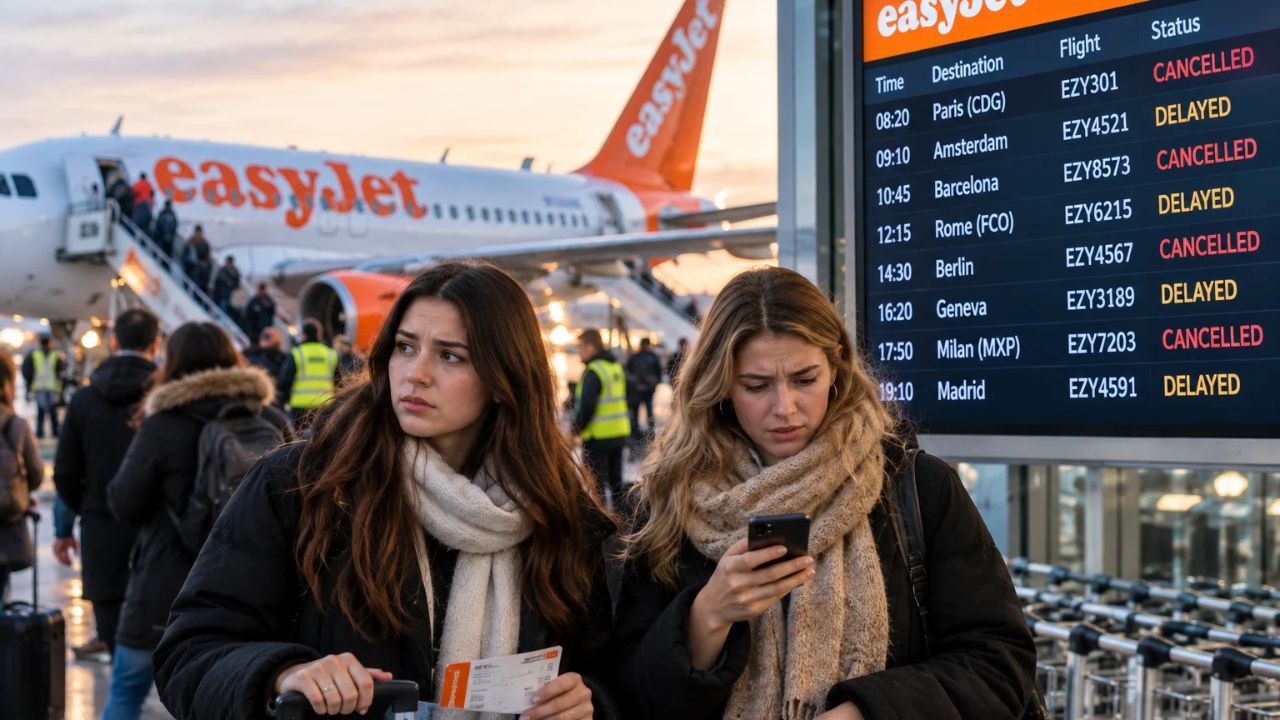
EasyJet scales back 1.4 million seats across its six-month European winter schedule amid sustained energy market pressures.
European budget carriers that once sold ten-euro winter city hops are quietly erasing over one million seats from their timetables as aviation kerosene costs double. In a decisive recalibration of its cold-season network, British low-cost giant easyJet is axing another 700,000 seats from its October-to-March flight inventory. Combined with an earlier reduction of identical scale, the carrier is eliminating roughly 1.4 million seats across Europe to protect operating margins against persistent energy market volatility.
The reduction represents an operational pruning equivalent to parking the airline’s entire continental fleet for two full days. While easyJet traditionally markets approximately 50 million seats across its six-month winter season, the targeted capacity cull signals a profound strategic shift across European airspace. Instead of absorbing loss-making mid-week departures to sustain passenger volume, low-cost operators are consolidating schedules around high-yield holiday weekends, leaving secondary routes with reduced frequencies and fewer bargain fares.
European Budget Aviation Responds to Doubling Fuel Costs
The economics of low-cost commercial flying are intensely sensitive to jet fuel pricing. Operating expenses for short-haul European carriers escalated sharply after Middle Eastern geopolitical tensions escalated in February, causing crude oil derivatives and refined aviation turbine fuel to climb to nearly twice their baseline rates. Although energy indices experienced brief corrections later in the year, jet fuel expenses remain well above historical industry projections.
The global airline sector is feeling the cumulative impact. According to warnings issued by the International Air Transport Association, surging fuel expenditures are projected to add roughly $100 billion to global commercial aviation costs this year alone. For ultra-low-cost carriers operating on razor-thin ticket yields, flying half-empty aircraft between tertiary European cities during November and January is no longer commercially viable.
EasyJet’s dual-phase reduction of 700,000 seats per tranche directly targets underperforming midweek sectors. The carrier is shielding key trunk routes connecting major metropolitan centers while paring back frequencies on routes where leisure passenger demand softens between October and March.
What Makes This Winter's Capacity Contraction Different
Seasonal capacity adjustments are standard practice in European tourism, but this winter's retrenchment reflects coordinated defensive posture among market leaders. Rather than engaging in aggressive price wars to capture off-peak market share, competitor Ryanair is executing similar capacity cutbacks across non-peak travel periods.
Ryanair management has signaled that elevated fuel costs could burden airline balance sheets for at least another 18 months, indicating that reduced seat capacity and tighter seat inventory will likely extend well into future operational cycles.
The structural difference this season lies in aircraft deployment precision. Instead of operating scheduled routes at steep discounts to satisfy slot utilization rules, carriers are selectively consolidating rotations. High-density leisure getaways to Mediterranean sun hubs and Alpine ski gateways around Christmas, New Year, and February school breaks will retain concentrated flying, while secondary inter-city city-break corridors absorb the brunt of frequency cancellations.
European Low-Cost Winter Operations Overview
| Operational Parameter | Normal Winter Operations Baseline | Adjusted Winter Schedule (2026–2027) |
|---|---|---|
| EasyJet Total Winter Capacity | Approximately 50,000,000 seats | ~48,600,000 seats (1.4M total reduction) |
| Capacity Reduction Scope | Standard seasonal tapering (1%–2%) | Two 700,000-seat tranches (~2.8% net cut) |
| Fuel Price Baseline Impact | Normalized budgeting ($750–$850/tonne) | Elevated fuel index (~double baseline projections) |
| Global Airline Cost Impact (IATA) | Baseline fleet operating expenses | +$100 Billion added industry expenditure |
| Carrier Fleet Adjustment | Equivalent to minor rotation adjustments | Equivalent to 2 full days of entire fleet operations |
| Competitor Strategic Posture | Market share expansion / fare discounting | Ryanair cutting off-peak capacity; 18-month caution |
| Passenger Fare Trajectory | Deep off-peak flash sales (€9.99–€19.99) | Higher yield discipline; tighter inventory on thin routes |
Visitor Insider Tips for Winter Travel in Europe
Navigating reduced flight frequencies and shifting seat inventory across Europe requires updated booking tactics:
- Book Peak Holiday Travel Windows Immediately: With 1.4 million seats removed from the market, seat inventory over Christmas, New Year, and February half-term will sell out faster than in previous seasons. Lock in peak holiday flights early to avoid algorithmic surge pricing.
- Leverage Cross-Border High-Speed Rail: Where regional flight connections are thinned out, high-speed rail lines regulated under the European Union Agency for Railways provide competitive journey times without baggage fees or fuel surcharges. Routes like London to Paris/Brussels via Eurostar, Madrid to Barcelona via Renfe/Iryo, or Milan to Rome via Frecciarossa offer reliable city-center-to-city-center alternatives.
- Midweek Departure Flexibility: Passengers seeking traditional budget fares should target Tuesday and Wednesday flights on high-frequency trunk routes. While secondary routes have lost mid-week flights, primary city pairs like London Gatwick to Geneva or Milan Malpensa maintain sufficient volume for competitive pricing.
- Monitor Schedule Adjustments in Advance: Because airlines have not published an exhaustive list of every route modification, download your carrier’s mobile application and enable push notifications. Under European Regulation (EC) No 261/2004, if an airline cancels a flight with more than 14 days' notice, travelers are entitled to a full cash refund or free re-routing, but not statutory cash compensation.
Economic and Environmental Context of European Air Transit
The ongoing contraction in budget airline capacity illustrates the delicate intersection of energy security, consumer habits, and regional European economies. Seasonal tourism economies in southern Europe—from the Spanish Costas to the Greek Cyclades—depend on affordable air links to sustain winter hospitality employment. When low-cost frequencies drop, regional hotels, restaurants, and car rental agencies experience shortened operating seasons.
Simultaneously, heightened fuel costs are forcing airlines to accelerate fleet modernization. Newer aircraft like the Airbus A320neo and Boeing 737 MAX burn 15% to 20% less fuel per seat than older airframes. By reducing reliance on older, less efficient jets during low-demand winter months, carriers reduce total carbon emissions per passenger-kilometer while weathering high energy tariffs.
FAQ: EasyJet Winter Flight Cuts 2026-2027
Why is EasyJet cutting 1.4 million seats this winter? EasyJet is eliminating capacity across two 700,000-seat phases to offset doubled aviation fuel expenses and protect financial margins during lower-demand winter travel months.
Which routes will be affected by EasyJet's capacity reductions? The airline has not published a single fixed list, but cuts primarily target low-demand midweek flights across secondary European city corridors rather than high-demand holiday peaks.
How will these flight reductions affect ticket prices in Europe? Tighter seat inventory reduces the availability of ultra-cheap discount tickets, placing upward pressure on fares, particularly for bookings made close to departure dates.
Are other European budget airlines reducing flights as well? Yes. Major competitors including Ryanair are implementing similar schedule adjustments across quieter winter periods, warning that high fuel prices could persist for 18 months.
As aviation fuel volatility tightens European skies, travelers who plan early and explore high-speed rail alternatives will find the smoothest paths across the continent this winter.
Related Travel Guides
American Airlines Equips Over 1,000 Aircraft With Starlink Wi-Fi in 2027 Mainline Expansion
KLM Introduces Free Starlink High-Speed Wi-Fi on All Intercontinental Flights Starting Mid-2027
The 10 Best European High-Speed Train Routes to Replace Short-Haul Flights, According To Reddit
Disclaimer
This article is for informational and educational purposes only. It does not constitute legal, financial, or professional advice. While we strive to provide accurate and up-to-date information, travel policies, regulations, and conditions change rapidly. Always verify information with official sources before making travel decisions. Nomad Lawyer makes no representations about the accuracy, reliability, completeness, or suitability of the information provided. Readers should consult qualified professionals for advice specific to their circumstances. The views expressed in this article are those of the author and do not necessarily reflect the views of Nomad Lawyer.
Raushan Kumar
Founder & Lead Developer
Full-stack developer with 11+ years of experience and a passionate traveller. Raushan built Nomad Lawyer from the ground up with a vision to create the best travel and law experience on the web.
Learn more about our team →