
American Airlines to Install High-Speed Starlink Wi-Fi Across Entire Mainline Fleet of Over One Thousand Aircraft Starting Early 2027
American Airlines expands its Starlink Wi-Fi rollout across more than 1,000 Airbus and Boeing mainline aircraft from early 2027, delivering speeds up to 1 Gbps for 165 million annual passengers.

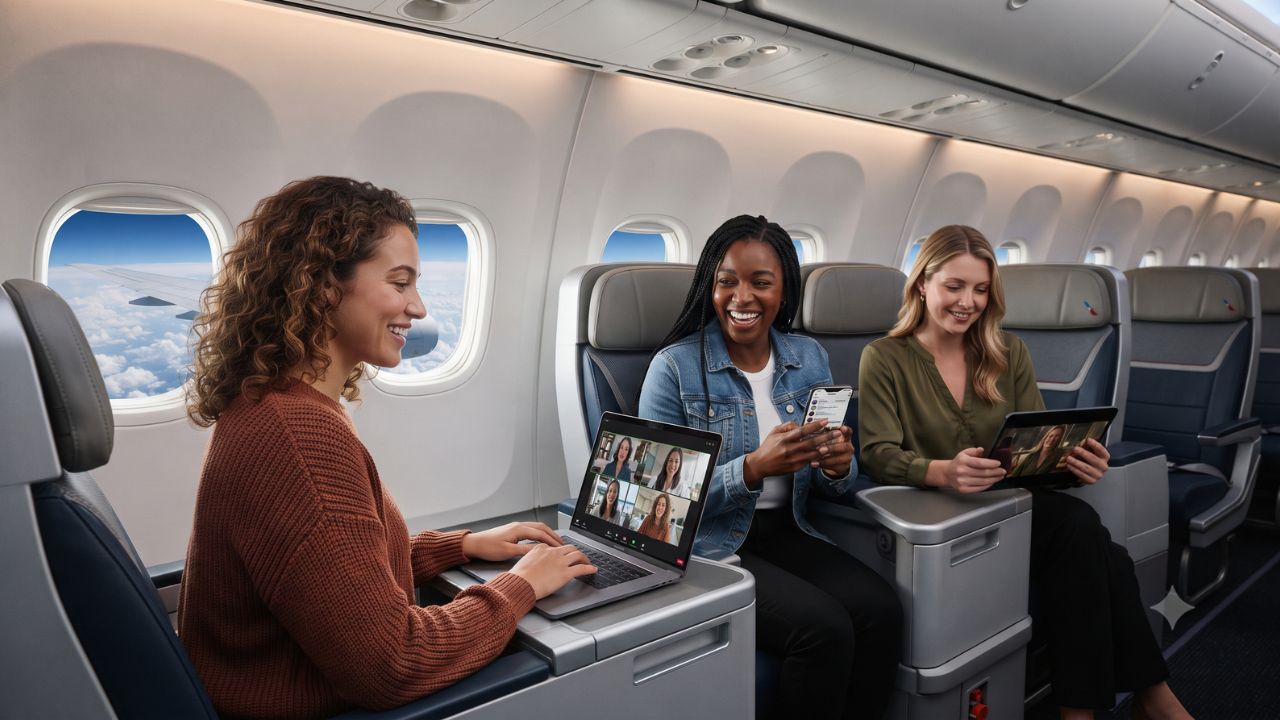
American Airlines equips over 1,000 mainline aircraft with Starlink satellite Wi-Fi starting in 2027.
American Airlines is expanding its inflight connectivity program to install SpaceX's high-speed Starlink Wi-Fi across its entire mainline fleet of more than 1,000 Airbus and Boeing aircraft starting in early 2027. The fleet-wide initiative upgrades earlier plans to deliver gate-to-gate satellite broadband speeds up to 1 Gbps per terminal for over 165 million annual passengers.
American Airlines Expands Starlink Wi-Fi Across Entire Mainline Fleet
Starting in early 2027, American Airlines will begin retrofitting its entire mainline fleet with SpaceX Starlink satellite Wi-Fi hardware. The expanded program covers more than 1,000 mainline airplanes, standardizing high-capacity internet access across all four primary fleet categories: Airbus narrowbodies, Boeing narrowbodies, and Boeing widebodies.
This strategy builds upon an earlier commitment announced in May, which initially targeted Starlink installations on more than 500 Airbus aircraft. By broadening the installation mandate to include both single-aisle domestic aircraft and long-haul dual-aisle jets, American Airlines ensures that high-speed internet will be available across its entire global route network as airframe upgrades progress.
Each participating aircraft will be outfitted with Starlink's Performance Aero Terminal. Official technical disclosures confirm that this system delivers throughput speeds up to 1 Gbps per terminal. By operating a constellation of satellites in low Earth orbit (LEO), Starlink provides lower latency compared to legacy geostationary systems. This performance boost enables passengers to stream high-definition movies, play online multiplayer games, collaborate via corporate applications, send text messages, browse social media platforms, and complete e-commerce transactions in flight.
The scale of this deployment positions American Airlines to operate one of the largest Starlink-equipped commercial aircraft fleets in global aviation. The service will benefit over 165 million mainline passengers flying with the carrier each year, with coverage expanding further as American receives delivery of more than 300 new mainline aircraft over the coming years.
Mainline Fleet Breakdown and Terminal Specifications
The integration plan standardizes hardware across four main fleet categories to eliminate performance variations between domestic shuttles and long-haul international flights.
| Fleet Category / Parameter | Mainline Fleet Count | Hardware & Connectivity Specification |
|---|---|---|
| Airbus Narrowbody Fleet | 500+ aircraft | Starlink Performance Aero Terminal (Up to 1 Gbps) |
| Boeing Narrowbody Fleet | 400+ aircraft | Starlink Performance Aero Terminal (Up to 1 Gbps) |
| Boeing Widebody Fleet | 130+ aircraft | Starlink Performance Aero Terminal (Up to 1 Gbps) |
| Total Mainline Fleet Scope | 1,030+ aircraft | Gate-to-gate low-latency satellite broadband |
| Annual Passenger Reach | 165+ million customers | High-definition streaming, work, and messaging |
| Incoming Aircraft Order Backlog | 300+ new aircraft | Direct factory and post-delivery Starlink installation |
| Initial Phase Baseline (May) | 500+ Airbus aircraft | Expanded to full Airbus and Boeing mainline fleet |
Inflight Connectivity Logistics and Productivity Guide for Travelers
For business travelers, digital nomads, and holiday passengers, consistent gate-to-gate internet changes how flight time can be structured. Implementing a few tactical travel strategies helps maximize onboard productivity and connectivity:
1. Connection Management and Layover Monitoring
With persistent gate-to-gate access active while taxiing and during descent, passengers connecting through major hubs like Dallas/Fort Worth (DFW), Charlotte (CLT), Chicago O'Hare (ORD), or Miami (MIA) can track live flight status and gate changes in real time. Travelers experiencing ground delays or tight layovers can rebook connecting flights or notify ground transport providers before stepping off the aircraft.
2. Optimizing Corporate VPNs for Satellite Transit
Low Earth orbit satellites utilize inter-satellite optical laser links and dynamic beam switching as aircraft transition across flight sectors. When connecting to enterprise networks via corporate VPNs, select modern UDP-based protocols like WireGuard or IKEv2. These handle rapid IP handshakes without dropping active terminal sessions or forcing user re-authentication.
3. Power Management for High-Bandwidth Usage
Continuous 4K video streaming, cloud synchronization, and live gaming consume significant mobile and laptop battery power. American Airlines mainline Airbus A321, A320, and Boeing 737 aircraft feature universal 110V AC power outlets and USB ports in First Class and Main Cabin Extra rows, with shared outlets across standard economy seats. Passengers should pack high-wattage USB-C GaN chargers to keep devices powered throughout long-haul flights.
4. International Digital Customs and Entry Logistics
High-speed internet during final approach allows international passengers arriving in the United States or traveling abroad to submit digital customs declarations, access Mobile Passport Control (MPC) portals, complete entry verification checks, or confirm hotel transfers before touching down.
Regional Connectivity and Fleet Infrastructure Impact Assessment
Standardizing Starlink across both narrowbody and widebody fleets addresses a persistent challenge in commercial aviation: service inconsistency across connecting itineraries. Previously, passengers transferring from a modern narrowbody jet to a widebody aircraft often experienced differing Wi-Fi speeds, pricing tiers, and login portals.
By deploying identical Performance Aero Terminal hardware across Airbus and Boeing models, American Airlines establishes a uniform service baseline. This spatial low-orbit mesh technology maintains coverage over remote oceanic and polar routes, ensuring business travelers retain real-time communication during long-haul international flights.
Furthermore, high-throughput satellite hardware creates an operational foundation for future customer-facing digital innovations. As American Airlines modernizes its passenger experience, low-latency connectivity enables direct portal integrations, real-time baggage tracking updates, and enhanced inflight entertainment options across its growing fleet of over 1,030 mainline jets.
Related Travel Guides
Air Canada Launches Embarq Business Travel Platform for Canadian SMEs
Wizz Air Delays Six Abu Dhabi Routes to January 2027 Due to EASA Airspace Advisory
Disclaimer
This article is for informational and educational purposes only. It does not constitute legal, financial, or professional advice. While we strive to provide accurate and up-to-date information, travel policies, regulations, and conditions change rapidly. Always verify information with official sources before making travel decisions. Nomad Lawyer makes no representations about the accuracy, reliability, completeness, or suitability of the information provided. Readers should consult qualified professionals for advice specific to their circumstances. The views expressed in this article are those of the author and do not necessarily reflect the views of Nomad Lawyer.
Raushan Kumar
Founder & Lead Developer
Full-stack developer with 11+ years of experience and a passionate traveller. Raushan built Nomad Lawyer from the ground up with a vision to create the best travel and law experience on the web.
Learn more about our team →