
Durban Waterfront Invests R1.9 Billion in 24-Hectare Superyacht Marina for Indian Ocean Luxury Transit
South Africa's Port of Durban is developing a 24-hectare superyacht marina backed by an R1.9 billion investment to capture high-value transoceanic luxury charters.

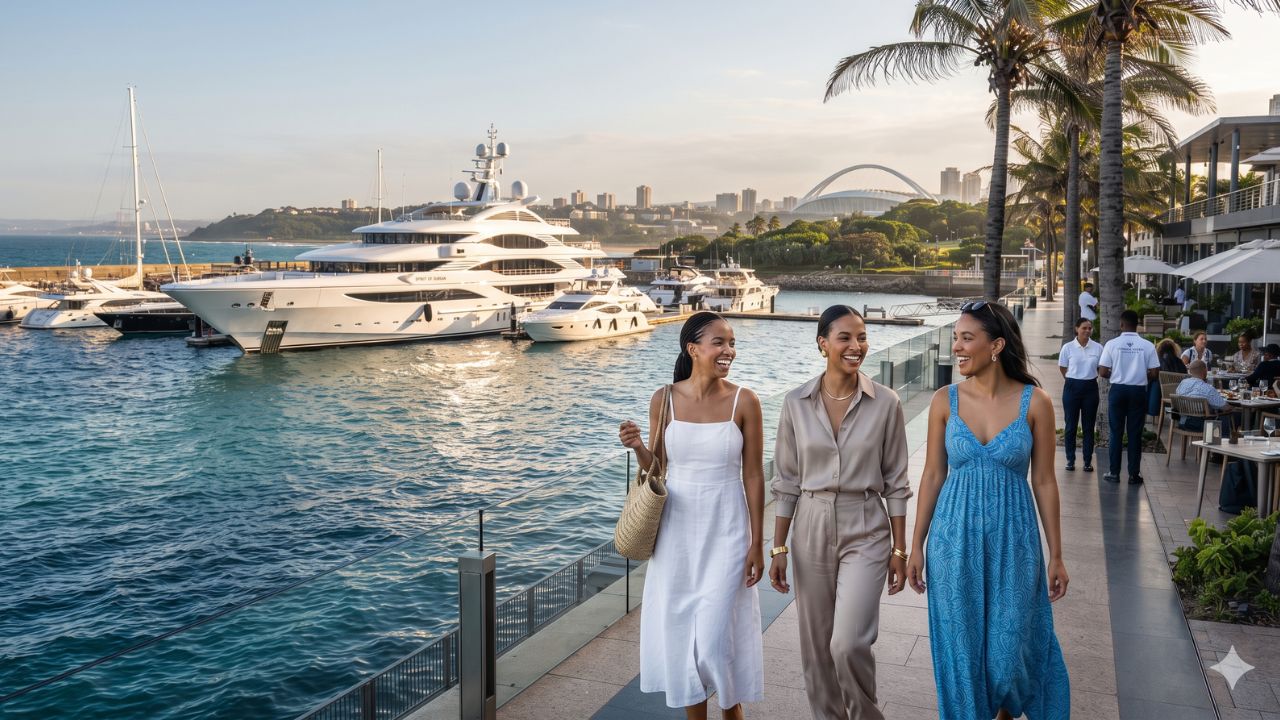
Image generated by AI
Anchored by a capital investment pipeline of R1.9 billion ($115.6 million USD), the transformation of 24 hectares of underutilized port land into a dedicated superyacht marina at the Port of Durban marks South Africa's most ambitious bid to capture a share of the $60.7 billion global luxury vessel economy. Overseen in coordination with the Presidential eThekwini Working Group and municipal maritime planners, the development targets the creation of approximately 2,500 direct and indirect jobs by 2030. Beginning in 2028, official forecasts anticipate a minimum baseline of 10 international superyacht dockings annually, generating up to $6.1 million USD (roughly R100 million ZAR) each year in marine bunkering diesel sales alone, while permanently reshaping long-haul Indian Ocean navigation corridors.
Engineering Southern Africa's Deep-Water Megayacht Gateway
For decades, long-range luxury cruising between European ports, the Middle East, and Southeast Asia avoided the southeastern African littoral due to a deficit of specialized berthing infrastructure capable of servicing vessels exceeding 60 meters (196 feet) in length. Most regional coastal facilities were engineered primarily for commercial container logistics or small leisure sailing craft, leaving transoceanic vessels without certified dry docks, high-capacity shore power installations, or precision marine engineering support.
The Durban Bay Waterfront Project directly eliminates this operational bottleneck. Working alongside Transnet National Ports Authority (TNPA), municipal planners are engineering dedicated deep-water quays, secure access-controlled pontoons, and environmental bunkering systems designed to handle megayacht fueling volumes ranging from 50,000 to 200,000 liters of marine diesel per vessel. To establish international technical credentials ahead of launch, regional authorities signed a formal Letter of Intent during maritime trade forums in Viareggio, Italy, securing the host rights for the prestigious YARE (Yachting Aftersales and Refit Experience) On Tour Symposium in Durban in November 2026.
This diplomatic and technical alignment ensures that regional shipyard and repair facilities conform to rigorous Mediterranean and Northern European maritime standards. Furthermore, academic partnerships established with the Durban University of Technology provide specialized vocational pipelines in naval architecture, marine electronics, and luxury hospitality management, ensuring that local labor forces retain high-value engineering expenditures within KwaZulu-Natal.
Commercial Multipliers and Operational Metrics Across the 24-Hectare Basin
The economics of superyacht tourism operate on high-margin expenditures that ripple across terrestrial and industrial supply chains. Beyond port docking fees, the operational profile of modern mega-vessels demands substantial annual capital deployment.
The table below details the foundational economic indicators, technical specifications, and projected revenue flows governing the Durban Bay superyacht precinct.
| Operational & Economic Metric | Quantitative Benchmark | Industrial & Tourism Relevance |
|---|---|---|
| Total Capital Investment | R1.9 billion ($115.6M USD) | Public-private waterfront regeneration pipeline |
| Marina Basin Footprint | 24 hectares | Dedicated basin for private and charter mega-vessels |
| Projected Employment Creation | 2,500 jobs by 2030 | Civil engineering, marine refit, and luxury hospitality |
| Initial Vessel Target (From 2028) | 10+ superyachts annually | Baseline international transoceanic arrivals |
| Annual Direct Bunkering Sales | Up to $6.1 million USD (~R100M ZAR) | 50,000 to 200,000 liters diesel per refueling stop |
| Annual Refit & Maintenance Capture | $2.0M to $5.0M USD per vessel | Capturing 10% annual vessel valuation servicing budgets |
| Daily Crew Onshore Spend | $3,000 to $8,000 USD per vessel | 15 to 30 professional crew members per yacht |
| Regional Safari Package Value | $15,000 to $30,000 USD weekly | High-net-worth overland charters into private reserves |
| Global Industry Output Benchmark | $60.7 billion USD (2022 baseline) | Expanding market share along Southern Hemisphere routes |
By capturing vessels that require routine maintenance during their seasonal global transits, the Port of Durban taps into the standard maritime rule where annual maintenance budgets equate to roughly 10% of a yacht's initial capital value. This provides sustained commercial revenues for local heavy engineering yards, hydraulics contractors, and precision electronics specialists without requiring vessels to make expensive return voyages to European refit facilities.
Expert Analysis: Routing Economics, Safari Synergies, and Seasonal Fleet Migration
For travelers booking this route, the direct consequence of the Durban superyacht expansion is the creation of an integrated "Sea-to-Safari" luxury corridor that unites oceanic transit with private terrestrial game reserves. Historically, high-net-worth marine voyagers faced fragmented logistical transfers when attempting to combine coastal yachting with African wildlife safaris. Under coordinated development plans promoted by eThekwini Municipality, the new marina integrates private helicopter landing pads and executive air transfers connecting vessel docks directly to premier wilderness sanctuaries across KwaZulu-Natal, including Phinda Private Game Reserve and Hluhluwe-iMfolozi Park.
The pricing pressure this creates means ultra-high-net-worth travelers who historically spent their winter seasons in the Caribbean or Southeast Asia now have a viable Southern Hemisphere alternative. With optimal sailing weather prevailing during the Southern Hemisphere summer between October and April, Durban serves as a strategic replenishment hub along the 6,000-nautical-mile Indian Ocean transit route. Yachts cruising between Cape Town, Mauritius, Seychelles, and the Maldives can utilize Durban to disembark guests for week-long private aviation excursions commanding expenditures between $15,000 and $30,000 USD per person, while professional vessel crews oversee bunkering, hull inspections, and provisioning.
According to long-range tourism strategy outlined by South African Tourism, retaining crew spending is equally impactful. With visiting yachts carrying between 15 and 30 maritime professionals whose daily discretionary onshore outlays range from $3,000 to $8,000 USD per vessel, local provisioning agents, fresh seafood suppliers, boutique hotels, and artisanal culinary producers gain recurring foreign exchange injections that bypass traditional mass-tourism channels.
From a regulatory standpoint, establishing environmental bunkering standards and strict MARPOL-compliant waste processing safeguards ensures that intensive fueling operations do not degrade fragile coastal marine ecosystems. By anchoring high-capacity infrastructure within a strictly monitored municipal precinct, Durban positions its eastern coastline as a secure, environmentally sound midpoint for long-haul maritime expeditions across the Indian Ocean basin.
Key Takeaways
- R1.9 Billion Waterfront Investment: The Durban Bay Waterfront Project allocates $115.6 million USD to construct a 24-hectare luxury superyacht marina.
- $6.1 Million Annual Fuel Sales: Direct bunkering infrastructure will dispense between 50,000 and 200,000 liters of diesel per vessel, generating roughly R100 million ZAR annually from 2028.
- Deep-Water Technical Servicing: Deep-water quays and specialized dry docks accommodate mega-vessels exceeding 60 meters, capturing refit budgets worth $2M to $5M USD per ship.
- Integrated Safari Excursions: Direct air transfers connect harbor landings to high-end wilderness lodges in Phinda and Hluhluwe-iMfolozi, yielding $15,000 to $30,000 USD per guest weekly.
- Hosting YARE On Tour 2026: Strategic diplomacy in Viareggio, Italy, secured the November 2026 YARE On Tour Symposium in Durban to inspect regional marine refit yards.
FAQ: Durban Superyacht Marina 2026
When will the Durban superyacht marina become operational?
Initial operations and international superyacht dockings are scheduled to commence in 2028, with the preceding phase highlighted by hosting the YARE On Tour Symposium in November 2026.
What size vessels can the new Durban marina accommodate?
The deep-water berthing quays and harbor infrastructure are specifically engineered to accommodate luxury superyachts and megayachts exceeding 60 meters (196 feet) in overall length.
How does the marina link with South African safari tourism?
The marina precinct integrates private air transport and helicopter links, providing seamless transfers from yacht docks to premier private game reserves like Phinda and Hluhluwe-iMfolozi within two hours.
What economic impact will the marina have on Durban?
The R1.9 billion project is projected to create 2,500 jobs by 2030, generate $6.1 million USD in annual fuel sales, and bring $3,000 to $8,000 USD daily per vessel in onshore crew spending.
Superyacht owners and international charter brokers navigating the Indian Ocean should incorporate Durban's emerging deep-water facilities into forward transoceanic cruising itineraries.
Related Travel Guides
South Africa Coastal Tourism: Top 6 Towns, Marine Wildlife Trails, and Seasonal Whale Watching
The 10 Best Luxury Coastal Reserves in South Africa, According To Reddit
Disclaimer
This article is for informational and educational purposes only. It does not constitute legal, financial, or professional advice. While we strive to provide accurate and up-to-date information, travel policies, regulations, and conditions change rapidly. Always verify information with official sources before making travel decisions. Nomad Lawyer makes no representations about the accuracy, reliability, completeness, or suitability of the information provided. Readers should consult qualified professionals for advice specific to their circumstances. The views expressed in this article are those of the author and do not necessarily reflect the views of Nomad Lawyer.
Kunal K Choudhary
Co-Founder & Contributor
A passionate traveller and tech enthusiast. Kunal contributes to the vision and growth of Nomad Lawyer, bringing fresh perspectives and driving the community forward.
Learn more about our team →