
Dublin Airport Chaos: 207 Flight Delays and 4 Cancellations Hit Aer Lingus, Ryanair, British Airways on June 5, 2026
Dublin International Airport ground to a halt with 207 delays and 4 cancellations across major carriers. Capacity strain, staffing shortages, and systemic pressures expose Ireland's aviation infrastructure limits.

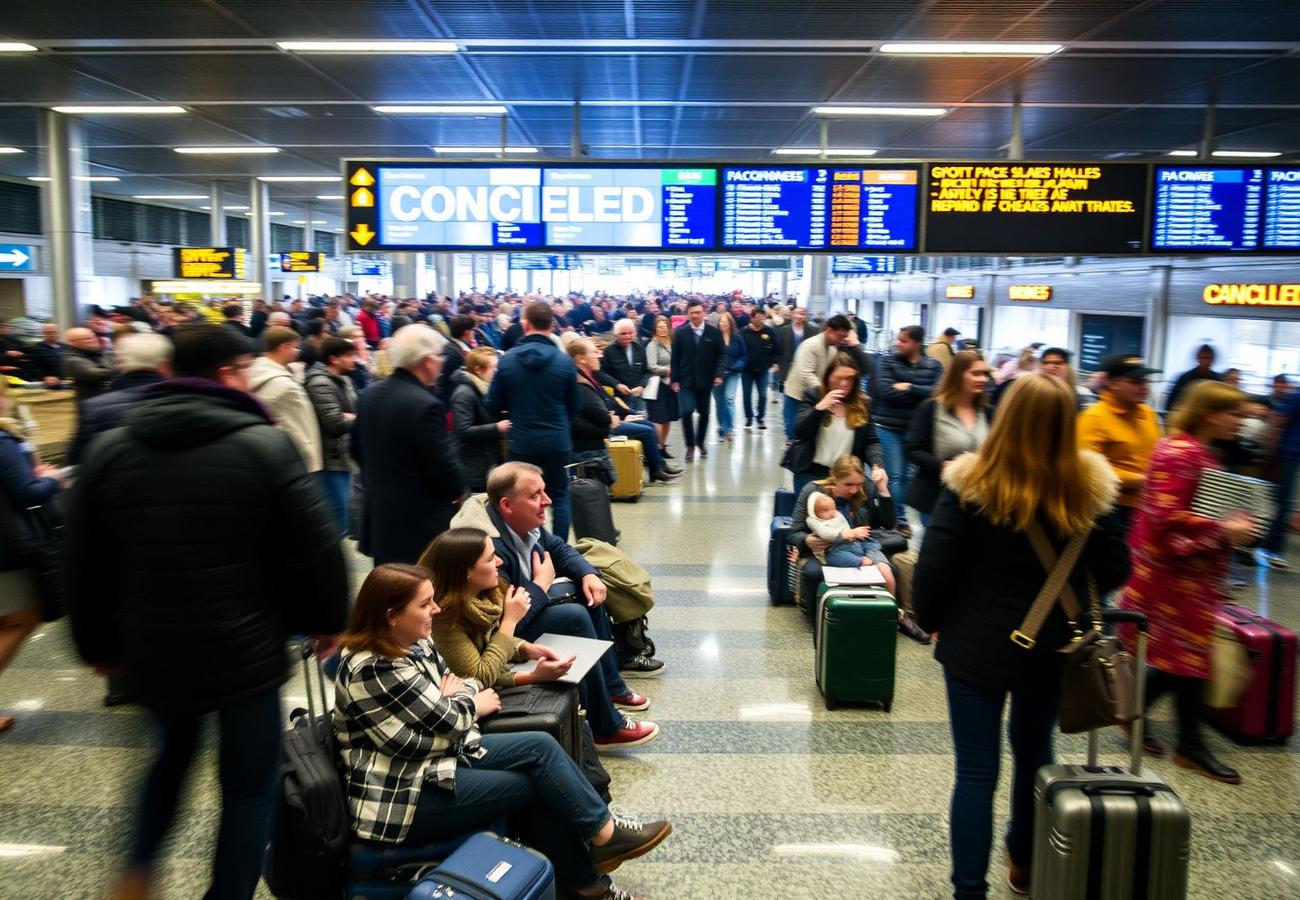
Image generated by AI
Dublin Airport Descends into Chaos: The Numbers Behind Today's Massive Disruption
207 flights delayed. 4 flights canceled. One airport grinding under unprecedented strain.
On June 5, 2026, Dublin International Airport—Ireland's largest and busiest aviation hub—experienced a systemic operational meltdown that rippled across European airspace. The disruption wasn't isolated to Dublin; its effects cascaded across London, Paris, Amsterdam, and Frankfurt as passengers missed connections and onward flights faced cascading delays. What triggered this crisis reveals deeper structural vulnerabilities in Europe's busiest short-haul corridors.
The scale was staggering: across a single operating day, more than 200 flights couldn't depart on schedule. For perspective, that's equivalent to roughly 13-15% of Dublin Airport's daily flight volume being compromised in just 24 hours.
Airline-by-Airline Breakdown: Who Bore the Brunt
The disruption wasn't evenly distributed. Aer Lingus, Ireland's national carrier, reported 46 delays and 2 cancellations—a significant blow to the airline's reputation for reliability on European routes. British Airways saw 7 flights delayed with 2 cancellations, while Ryanair, the low-cost heavyweight operating the most flights through Dublin, recorded a staggering 86 delays (though remarkably no cancellations).
Smaller operators paid an even steeper price. City Airlines and Egypt Air both recorded a 100% delay rate on their limited Dublin services. Emerald Airlines and Lufthansa also reported substantial delays, signaling that this wasn't an isolated airline failure—it was systemic infrastructure breakdown.
Reddit: "Stuck at Dublin for 5 hours waiting to board. Three different delay announcements. The airport staff looked as frustrated as we felt." — r/travel
The Capacity Crisis: Why Dublin Is Buckling Under Demand
Dublin International Airport handled a record 36.4 million passengers in 2025—its busiest year on record. That unprecedented volume underscores the airport's critical importance to Ireland's economy while simultaneously exposing its architectural limits.
The airport's infrastructure wasn't designed for this volume. Planners have publicly warned about passenger cap breaches, with 2025 representing the first year the airport exceeded its theoretical maximum capacity. This isn't just a numbers game—it's a ticking time bomb for operational reliability.
Air traffic control staffing shortages remain a persistent culprit. Industry stakeholders and unions have repeatedly warned that staffing levels at Irish air navigation services fall dangerously short of demand, particularly during peak summer travel seasons (May through September). With controllers managing more flights than they have capacity to handle safely, delays become inevitable.
Cross-Border Knock-On Effects: How One Airport Disrupts an Entire Continent
The delays at Dublin didn't stay isolated at the terminal. Because Dublin serves as a critical connection hub for European travel, late departures in Ireland cascaded into missed connections in London, Paris, Amsterdam, and Frankfurt.
Passengers with tight itineraries—a 90-minute layover in London, a business meeting in Paris that afternoon—suddenly faced rebooking nightmares. A single aircraft delayed leaving Dublin could miss its next scheduled departure window in Frankfurt, creating a domino effect that compounds throughout the day.
According to FlightAware real-time flight tracking data, this pattern of cascading delays is typical when a major European hub experiences systemic disruption. One delayed departure becomes five delayed arrivals, which become ten delayed onward flights by mid-afternoon.
Passenger Rights Under EU Law: What Compensation Are You Owed?
Here's where EU Regulation 261/2004 becomes critical. This regulation guarantees passenger compensation for delays and cancellations, though the specifics depend on three factors: flight distance, delay duration, and the cause of the disruption.
For flights over 1,500 kilometers (which covers most of Dublin's long-haul and European routes), passengers experiencing delays over 3 hours are entitled to compensation ranging from €250 to €600 depending on circumstances. Cancellations trigger higher compensation thresholds.
However—and this is crucial—compensation is often denied if airlines claim "extraordinary circumstances" (severe weather, air traffic control strikes, etc.). The burden of proof falls on passengers to document the cause and file claims, often through airline customer service portals or specialized compensation claim services.
Affected passengers should immediately check airline websites for formal delay/cancellation notices, preserve all boarding passes and booking confirmations, and consider filing claims through platforms that specialize in EU 261 compensation recovery if airlines refuse payment.
Impact on Ireland's Tourism Sector: The Invisible Cost
Tourism is Ireland's lifeblood. The sector contributes significantly to national GDP, with Dublin Airport serving as the primary entry point for international visitors discovering Irish heritage, culture, and landscapes.
But when 207 flights don't depart on schedule, first-time visitors encounter delays, missed hotel check-ins, and compressed holiday windows. A traveler who lost six hours on June 5 at Dublin Airport is a traveler who missed a sunset in Cork, a whiskey tasting in Cork, or a hiking expedition on the Ring of Kerry.
Tour operators who choreograph multi-city European itineraries—Dublin to London to Paris—rely on punctual flights. A single day of disruptions like today's forces them to restructure packages, absorb rebooking costs, and face angry customers demanding refunds or compensation.
For Dublin Airport itself, persistent disruptions threaten its competitive position as a European connection hub. Savvy travelers may reroute through London Gatwick, Amsterdam Schiphol, or other more reliable alternatives—a slow hemorrhage of market share that's difficult to reverse once competitor loyalty solidifies.
Root Causes: Staffing Shortages, Peak Demand, and Systemic Stress
The operational pressures stacking up at Dublin aren't novel—they've been building for years:
Air Traffic Control Staffing: Irish air navigation authorities have faced repeated warnings from controller unions about dangerously thin staffing levels. Each controller manages increasingly complex airspace, and fatigue reduces precision and increases the likelihood of procedural delays.
Aircraft and Crew Scheduling Constraints: With European air travel recovering to pre-pandemic levels and continuing to grow, available aircraft and trained crew are fully deployed. A single aircraft breakdown or crew illness forces cascading schedule revisions across an entire airline's network.
Peak Season Pressure: June marks the beginning of summer travel season. Families book holidays, business conferences resume international travel, and leisure demand peaks. Dublin Airport simply doesn't have the ground infrastructure—gate capacity, ground handling equipment, baggage systems—to process this volume without friction.
Airspace Congestion: Beyond Dublin, European airspace itself is congested. Holding patterns, reroutes, and traffic management initiatives (imposed by organizations like Eurocontrol) extend flight times and reduce hourly capacity.
Immediate Guidance for Travelers: How to Navigate Dublin in Coming Days
If you're flying through Dublin in the next week, assume delays are likely:
Arrive early. Plan to arrive at least 3 hours before international departures, 2 hours before EU departures. Today's chaos proves that check-in and security queues will be extended.
Monitor your flight constantly. Airline apps and FlightAware provide real-time updates. Set notifications to alert you to status changes.
Bring provisions. Airport food and beverages are expensive and often limited during high-disruption days. Pack snacks, chargers, and entertainment.
Know your rights. Carry documentation of your booking, boarding passes, and any communication from the airline about delays. If you experience a delay over 3 hours or a cancellation, document it.
Consider travel insurance. Standard airline tickets don't cover passenger costs (hotels, meals, transportation) incurred due to delays. Travel insurance with "trip delay" coverage reimburses these expenses up to specified limits.
Check alternative airports. If your destination is within 200 kilometers of Dublin, consider flying into Shannon Airport or Cork Airport (both significantly less congested) and arranging ground transportation.
Looking Forward: What Must Change
June 5, 2026, wasn't an anomaly—it was a warning. Dublin Airport handles over 100,000 passengers daily during peak season. It's operating at or beyond design capacity. Without intervention, disruptions like today's will become routine.
For Dublin Airport and Irish aviation authorities, the path forward requires:
Staffing expansion in air traffic control, with accelerated recruitment and training of controllers.
Infrastructure investment in terminal capacity, ground handling equipment, and baggage systems.
Demand management strategies, potentially including peak-pricing or incentives for off-peak travel.
Transparent communication, with government publishing real-time operational dashboards so passengers and tour operators can make informed decisions.
Without action, Ireland risks ceding its position as a premier European hub to competitors with more robust infrastructure.
When 207 flights can't leave on time, it's not bad luck—it's a system buckling under demand.
Related Travel Guides
- Massive Flight Chaos at U.S. Airports: Cancellations Hit Hawaii-Bound Travelers Hard
- Flyadeal Launches Jeddah-Dubai Route, Scales Riyadh Service to 4X-Daily: Saudi Arabia's Budget Airline Dominates UAE Connectivity in 2026
- LaGuardia Airport Plane Crash Investigation Exposes Critical Runway Collision Risks: NTSB Reveals Chain of System Failures, Control Tower Pressure, and Emergency Response Coordination Breakdown
Disclaimer
This article is for informational and educational purposes only. It does not constitute legal, financial, or professional advice. While we strive to provide accurate and up-to-date information, travel policies, regulations, and conditions change rapidly. Always verify information with official sources before making travel decisions. Nomad Lawyer makes no representations about the accuracy, reliability, completeness, or suitability of the information provided. Readers should consult qualified professionals for advice specific to their circumstances. The views expressed in this article are those of the author and do not necessarily reflect the views of Nomad Lawyer.
Kunal K Choudhary
Co-Founder & Contributor
A passionate traveller and tech enthusiast. Kunal contributes to the vision and growth of Nomad Lawyer, bringing fresh perspectives and driving the community forward.
Learn more about our team →