
Massive Flight Chaos at U.S. Airports: Cancellations Hit Hawaii-Bound Travelers Hard
Dozens of regional flights canceled across Chicago O'Hare, LaGuardia, Dallas-Fort Worth, and Atlanta spanning several days, with SkyWest, Endeavor Air, Republic Airways, and other carriers stranding thousands — and crushing connections for travelers bound for Hawaii and international destinations.

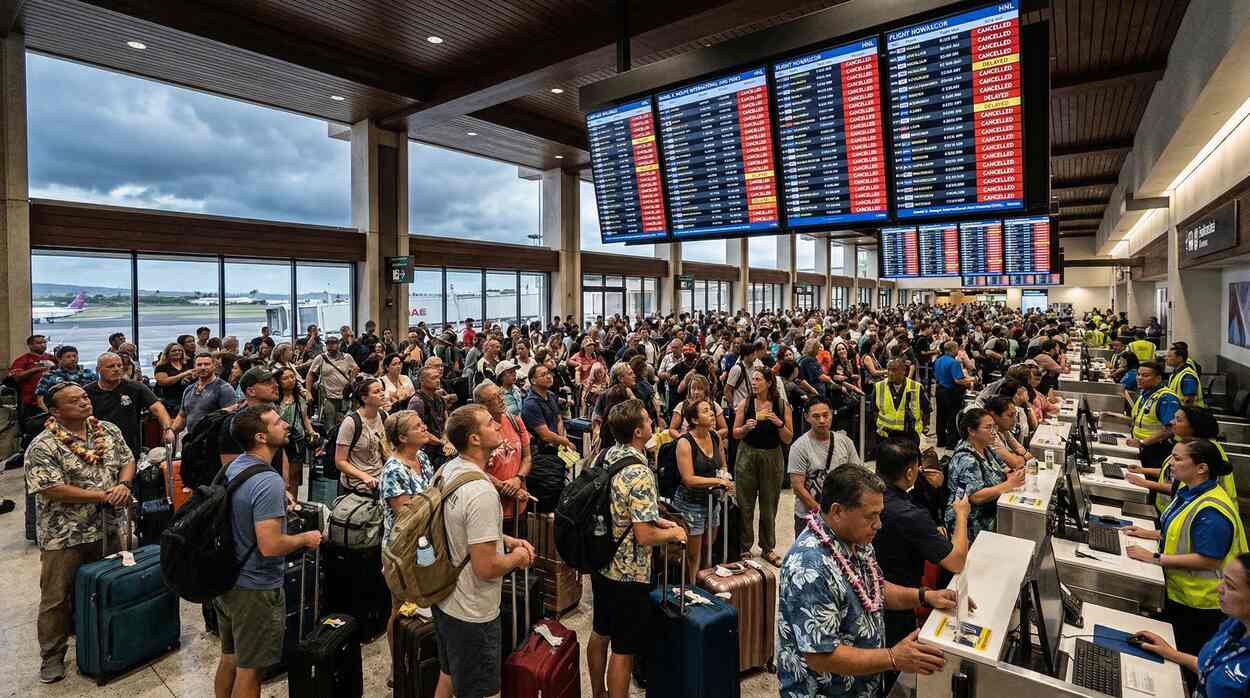
Image generated with AI
Quick Summary
- Dozens of regional flights canceled across Chicago O'Hare (KORD), LaGuardia (KLGA), Dallas-Fort Worth (KDFW), Atlanta (KATL), and other major U.S. hubs spanning multiple consecutive days
- SkyWest, Endeavor Air, Republic Airways, GoJet, Mesa, and CommutAir are among the regional carriers most severely affected, operating aircraft types including CRJ9, CRJ7, E75L, E170, E45X, and A319
- Hawaii-bound travelers face severed connections through mainland hubs, with Daniel K. Inouye International Airport (HNL) feeling the downstream ripple as feeder flights collapse
- Passengers urged to check flight status immediately, invoke their DOT passenger rights, and explore rebooking and compensation options with their carriers
A wave of flight cancellations and delays has hammered major U.S. airports across multiple consecutive days, leaving thousands of travelers stranded, vacation plans in ruins, and the broader U.S. tourism sector bracing for significant economic fallout. Airports including Chicago O'Hare International (KORD), LaGuardia (KLGA), Hartsfield-Jackson Atlanta International (KATL), Dallas-Fort Worth International (KDFW), Minneapolis/St Paul (KMSP), Philadelphia International (KPHL), and Houston Bush Intercontinental (KIAH) have all recorded significant disruptions, with the cancellations concentrated on regional carriers operating short- and medium-haul feeder services.
The crisis has been especially devastating for passengers connecting onward to Hawaii. Long-haul departures from the U.S. mainland to Daniel K. Inouye International Airport (HNL) in Honolulu depend critically on a network of regional feeder flights funneling travelers from smaller markets into hub airports. When those feeders collapse — as they have across Chicago, Dallas, Atlanta, and New York over the past several days — Hawaii-bound passengers miss long-haul connections that in many cases only depart once daily, triggering a domino effect that is stranding travelers for 24 hours or more at a time.
Which Airports Were Hit Hardest
Chicago O'Hare International Airport (KORD) emerged as the single most disrupted hub, recording cancellations across multiple days and affecting a broad sweep of regional routes operated by SkyWest (SKW), GoJet Airlines (GJS), and Endeavor Air (ENY). As one of the busiest aviation crossroads in North America — and a critical connecting point for passengers heading to Hawaii via United Airlines mainline service — O'Hare's regional network collapse sent shockwaves across the entire U.S. aviation system.
Dallas-Fort Worth International Airport (KDFW) was the second most severely affected major hub, with cancellations on JetBlue/Trans States (JIA) CRJ-series flights disrupting both domestic and international connection passengers. DFW serves as a primary gateway for travelers arriving from Latin America and Europe who connect onward to Hawaii and Pacific destinations.
LaGuardia Airport (KLGA) in New York saw sustained cancellations across several days, with Endeavor Air (EDV) and Republic Airways (RPA) both reporting grounded flights on their CRJ9 and E75L fleets — impacting New York-area travelers whose plans included Hawaii stopovers through hub airports.
Hartsfield-Jackson Atlanta International Airport (KATL) — consistently ranked the world's busiest airport — recorded multiple cancellations on SkyWest E75L services, severing connections for southeastern U.S. travelers heading to the Pacific.
Houston Bush Intercontinental (KIAH), Minneapolis/St Paul (KMSP), Philadelphia (KPHL), Charlotte/Douglas (KCLT), Nashville (KBNA), and Denver (KDEN) also reported disruptions ranging from individual flight cancellations to multi-day schedule compression across regional carriers.
Full List of Affected Flights
The following flights were confirmed canceled across the disruption period, spanning multiple days:
| Flight | Aircraft | Departure Airport | Scheduled Departure |
|---|---|---|---|
| EDV4969 | CRJ9 | LaGuardia (KLGA) | Mon 11:50AM CDT |
| SKW5332 | E75L | Chicago O'Hare (KORD) | Mon 07:45AM CDT |
| ENY4197 | E75L | Charlotte/Douglas (KCLT) | Mon 07:01AM CDT |
| SKW3716 | E75L | Hartsfield-Jackson (KATL) | Mon 06:00AM CDT |
| AAY358 | A319 | Nashville (KBNA) | Sun 09:48PM CDT |
| ENY3892 | E170 | Chicago O'Hare (KORD) | Sun 07:32PM CDT |
| SKW3811 | E75L | Hartsfield-Jackson (KATL) | Sun 07:12PM CDT |
| ENY3772 | E170 | Chicago O'Hare (KORD) | Sun 05:16PM CDT |
| EDV5022 | CRJ9 | Minneapolis/St Paul (KMSP) | Sun 05:13PM CDT |
| RPA4472 | E75L | LaGuardia (KLGA) | Sun 03:20PM CDT |
| GJS4394 | CRJ7 | Chicago O'Hare (KORD) | Sun 03:17PM CDT |
| EDV5169 | CRJ9 | Minneapolis/St Paul (KMSP) | Sun 11:42AM CDT |
| GJS4437 | CRJ7 | Chicago O'Hare (KORD) | Sun 11:29AM CDT |
| JIA5081 | CRJ9 | Dallas-Fort Worth (KDFW) | Sat 02:23PM CDT |
| EDV5169 | CRJ9 | Minneapolis/St Paul (KMSP) | Fri 11:42AM CDT |
| JIA5457 | CRJ9 | Philadelphia (KPHL) | Fri 06:00AM CDT |
| RPA4472 | E75L | LaGuardia (KLGA) | Thu 03:20PM CDT |
| RPA4695 | E75L | LaGuardia (KLGA) | Thu 06:11AM CDT |
| JIA5504 | CRJ7 | Dallas-Fort Worth (KDFW) | Wed 06:59PM CDT |
| UCA4283 | E145 | Houston Bush (KIAH) | Wed 04:45PM CDT |
| ENY3892 | E170 | Chicago O'Hare (KORD) | Tue 07:32PM CDT |
| GJS4443 | CRJ7 | Chicago O'Hare (KORD) | Tue 06:25PM CDT |
| EDV5556 | CRJ9 | Hartsfield-Jackson (KATL) | Tue 07:00AM CDT |
| JIA5504 | CRJ7 | Dallas-Fort Worth (KDFW) | Sun 06:59PM CDT |
| UCA4376 | E45X | Houston Bush (KIAH) | Sun 11:46AM CDT |
| UCA4937 | E45X | Houston Bush (KIAH) | Sun 09:00AM CDT |
| ASH6282 | E75L | Houston Bush (KIAH) | Sun 06:30AM CDT |
| JIA5247 | CRJ9 | Dallas-Fort Worth (KDFW) | Sat 06:55PM CST |
| JIA5376 | CRJ9 | Dallas-Fort Worth (KDFW) | Sat 02:43PM CST |
| EDV5474 | CRJ9 | Hartsfield-Jackson (KATL) | Sat 01:10PM CST |
| UAL2368 | A319 | Denver (KDEN) | Sat 09:02AM CST |
| ENY3588 | E170 | Dallas-Fort Worth (KDFW) | Sat 09:01AM CST |
| AAL1472 | A319 | Dallas-Fort Worth (KDFW) | Sat 06:00AM CST |
| ENY4292 | E170 | Chicago O'Hare (KORD) | Fri 07:32PM CST |
| GJS4443 | CRJ7 | Chicago O'Hare (KORD) | Fri 06:25PM CST |
| GJS4394 | CRJ7 | Chicago O'Hare (KORD) | Fri 03:17PM CST |
| JIA5376 | CRJ9 | Dallas-Fort Worth (KDFW) | Thu 02:43PM CST |
The Carriers at the Center of the Crisis
SkyWest Airlines (SKW) — operating on behalf of United, American, Delta, and Alaska Airlines — recorded multiple Embraer E75L cancellations across O'Hare and Atlanta, disrupting what are typically reliable regional connector services. SkyWest is the largest regional carrier in the United States, meaning its operational difficulties ripple far across the broader network.
Endeavor Air (ENY/EDV), operating as Delta Connection, saw repeated cancellations of its CRJ9 and E170 fleets across O'Hare, LaGuardia, Atlanta, and Minneapolis/St Paul — airports that collectively handle enormous volumes of Delta passengers connecting to Hawaii through Salt Lake City and Los Angeles.
Republic Airways (RPA) recorded E75L cancellations at LaGuardia over multiple days, affecting American Airlines and United Airlines passengers in the New York metro area.
GoJet Airlines (GJS) reported sustained CRJ7 cancellations at Chicago O'Hare, while Trans States/JetBlue (JIA) CRJ-series services at Dallas-Fort Worth were repeatedly grounded. Mesa Airlines (ASH) and CommutAir (UCA) also recorded disruptions at Houston Bush Intercontinental.
Why Hawaii Tourism Is Taking the Hit
Hawaii occupies a uniquely vulnerable position in the U.S. domestic travel network. Unlike continental destinations where travelers can drive, take a train, or accept a same-day rerouting, Hawaii is accessible only by air — and from the U.S. mainland, almost exclusively through a handful of hub airports: Los Angeles (LAX), San Francisco (SFO), Seattle (SEA), and to some extent Chicago, Houston, and Dallas.
When regional feeder flights into these hubs are canceled, Hawaii-bound passengers face a uniquely unforgiving situation:
- Long-haul transpacific flights depart at limited frequencies — often just once daily per route — meaning a missed connection typically results in a minimum 24-hour delay.
- No land alternatives exist, unlike mainland disruptions where buses, trains, or drive options can partially absorb the shock.
- Hotel inventory in Honolulu and Maui is extremely tight during peak travel periods, meaning stranded travelers scramble for limited and expensive accommodation options.
- Trip packages are often non-refundable, with lodging, tours, and activities prepaid, adding significant financial exposure on top of the disruption itself.
The cascading effect of this mainland regional carrier chaos has therefore struck Hawaii's tourism economy — which contributes over $20 billion annually to the state's GDP — at a particularly sensitive moment in the sector's ongoing post-pandemic recovery.
Impact on U.S. Tourism Hubs Beyond Hawaii
The disruptions have not been confined to Hawaii's inbound travel. New York City's tourism economy absorbed collateral damage as travelers from Atlanta, Dallas, and Nashville found their LaGuardia-bound flights grounded. Dallas-Fort Worth, a critical international gateway handling arrivals from Europe, Asia, and Latin America, saw inbound international tourists left stranded as connecting regional services collapsed. Chicago, already managing complex winter weather dynamics, saw its regional feeder network severely compromised across both weekday and weekend operations.
Government and Industry Response
The Federal Aviation Administration (FAA) has been coordinating closely with airlines and airport authorities to manage airspace constraints and prioritize rerouting of stranded passengers. The agency has emphasized the use of real-time flight tracking tools — including FlightAware and each airline's own mobile application — for passengers to stay informed of live status changes.
The U.S. Department of Transportation (DOT) has reiterated that airline companies are legally obligated to provide passengers with compensation in the form of rebooking at no additional cost, refunds where applicable, and amenity support — including meal vouchers and hotel accommodation — when cancellations are attributable to factors within the carrier's control.
Airlines across the affected network have activated irregular operations (IROPS) protocols, redeploying crews, repositioning spare aircraft, and opening customer service lines for priority rebooking. SkyWest has announced it is working to reassign all affected passengers to the next available flights on its network. Endeavor Air and Republic Airways are proactively notifying passengers via email and SMS of schedule changes and available alternatives.
What Passengers Should Do Right Now
If you are holding a ticket on any of the affected carriers — or have a connection routing through Chicago O'Hare, LaGuardia, Dallas-Fort Worth, Atlanta, Houston, or Minneapolis — here is what you need to do immediately:
- Check your flight status using your airline's mobile app or FlightAware before departing for the airport — do not assume your flight is operating
- Rebook proactively online — all major airlines have self-service rebooking tools available via app and web, which are significantly faster than airport service counters during mass disruption events
- Request written documentation of any cancellation or delay from your airline — this is essential evidence for compensation claims
- Know your DOT passenger rights: under U.S. Department of Transportation regulations, you are entitled to a full refund if your flight is canceled, regardless of the reason, if you choose not to rebook
- Keep all receipts for meals, accommodation, and alternative transportation — these form the basis of any out-of-pocket expense reimbursement claim
- Contact your travel insurance provider if you have a policy in place — trip disruption coverage may apply to accommodation and rebooking costs
Rerouting and Alternative Options
For travelers specifically attempting to reach Hawaii and facing canceled connections, the following alternative strategies may help minimize further delay:
- Reroute through Los Angeles (LAX) or San Francisco (SFO) — both airports currently offer greater availability of transpacific Hawaii services and are experiencing fewer regional disruption effects
- Consider nonstop options from alternate coastal departure points if rerouting allows — services from Seattle (SEA) and Phoenix (PHX) to Honolulu may have available capacity
- Use flexible fare options where possible — many airlines are issuing fee waivers for affected passengers that allow one-time free rebooking without change fees
For domestic travelers whose plans were disrupted, Houston, Denver, and Phoenix are reporting comparatively lower levels of disruption and remain viable alternatives for travelers who can adjust their routing.
Frequently Asked Questions
Which U.S. airports have been most affected by these flight cancellations? Chicago O'Hare International (KORD), Dallas-Fort Worth International (KDFW), LaGuardia (KLGA), Hartsfield-Jackson Atlanta (KATL), Minneapolis/St Paul (KMSP), and Houston Bush Intercontinental (KIAH) have all seen significant cancellations spanning multiple days.
Which airlines are canceling the most flights? Regional carriers have borne the brunt of the disruptions: SkyWest (SKW), Endeavor Air (ENY/EDV), Republic Airways (RPA), GoJet (GJS), Trans States/JIA, Mesa Airlines (ASH), and CommutAir (UCA) are the most affected operators. These carriers operate under major airline brands including Delta Connection, United Express, and American Eagle.
How does this affect Hawaii-bound travelers specifically? Hawaii is only accessible by air, and most mainland U.S. travelers connect to transpacific flights through hub airports like Chicago, Dallas, and Houston. When regional feeder flights into those hubs are canceled, passengers miss their transpacific connections — often resulting in a minimum 24-hour delay, since Hawaii routes typically operate only once daily.
Am I entitled to a refund or compensation? Under U.S. Department of Transportation rules, passengers on canceled flights are entitled to a full cash refund if they choose not to rebook. Airlines are also obligated to provide care support (meals, accommodation) when cancellations are within their operational control. Contact your airline's customer service team directly to initiate a claim.
What is the best strategy if my connecting flight to Hawaii was canceled? Rebook immediately through the airline's app or website, request to be rerouted through Los Angeles (LAX) or San Francisco (SFO) for transpacific connections, and keep all receipts for any additional costs incurred. If your travel insurance includes trip disruption coverage, file a claim with your insurer simultaneously.
How long will these disruptions last? Airlines are actively working to normalize schedules. However, the multi-day nature of these cancellations suggests persistent operational strain. Passengers should monitor their flight status daily and remain flexible about departure windows until confirmed otherwise by their carrier.
Related Travel Guides
Canada Hit: 92 Cancellations, 752 Delays — Toronto & Montreal Worst Affected
US Winter Storm Cancels 1,976 Flights — Chicago & Minneapolis Worst Hit
690+ US Flights Cancelled Now — Minneapolis, Chicago, Atlanta Hit Hardest
Disclaimer
This article is for informational and educational purposes only. It does not constitute legal, financial, or professional advice. While we strive to provide accurate and up-to-date information, travel policies, regulations, and conditions change rapidly. Always verify information with official sources before making travel decisions. Nomad Lawyer makes no representations about the accuracy, reliability, completeness, or suitability of the information provided. Readers should consult qualified professionals for advice specific to their circumstances. The views expressed in this article are those of the author and do not necessarily reflect the views of Nomad Lawyer.
Kunal K Choudhary
Co-Founder & Contributor
A passionate traveller and tech enthusiast. Kunal contributes to the vision and growth of Nomad Lawyer, bringing fresh perspectives and driving the community forward.
Learn more about our team →