
Aviation Updates: Massive Travel Chaos Strikes Australia as Severe Bomb Threat Forces Complete Evacuation of QantasLink Flight at Dubbo Airport
A terrifying mid-air bomb threat forces a QantasLink passenger aircraft into an emergency evacuation at Dubbo Airport, triggering a massive police lockdown and severe regional flight cancellations.

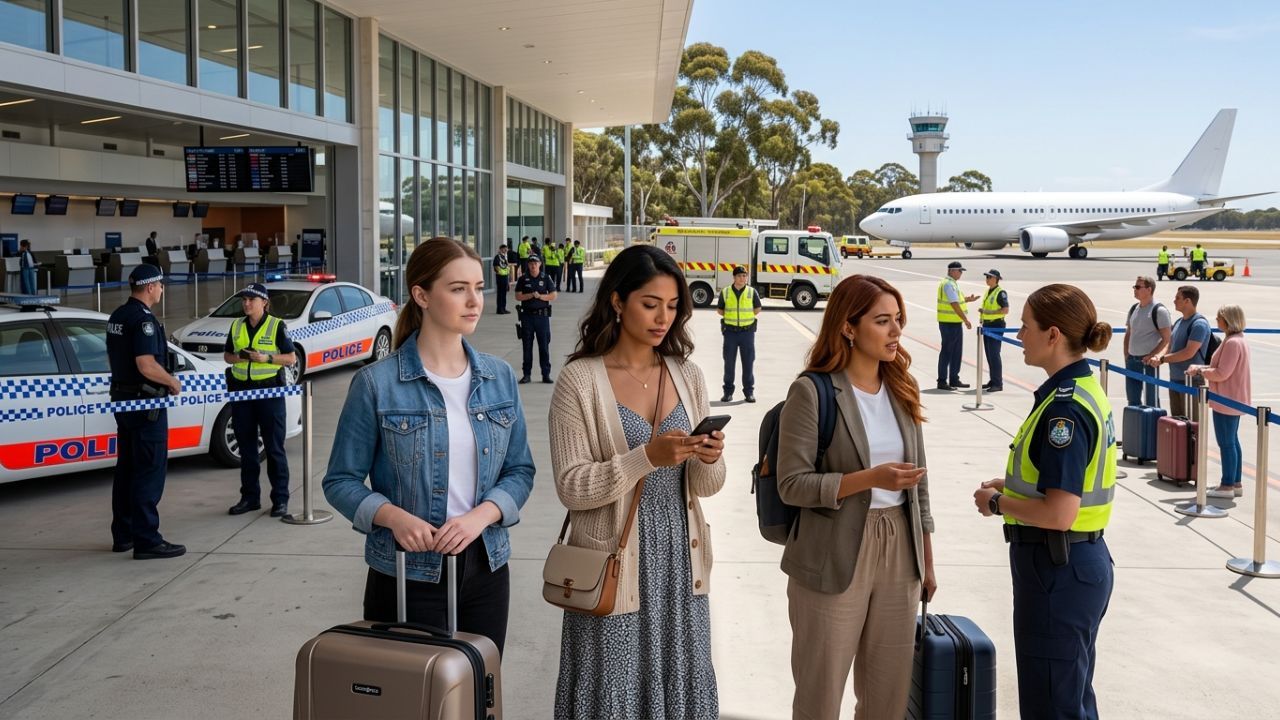
Image generated by AI
Aviation Updates: Massive Travel Chaos Strikes Australia as Severe Bomb Threat Forces Complete Evacuation of QantasLink Flight at Dubbo Airport
As a highly credible security alert triggers the immediate deployment of heavily armed police units and counter-terrorism specialists, the total lockdown of a vital New South Wales aviation hub has plunged regional Australia into sudden, terrifying travel chaos.
Image generated by AI
As high-impact airline news platforms issue urgent, real-time aviation updates regarding the escalating vulnerability of global transit infrastructure, a severe security crisis has completely paralyzed a critical Australian regional hub. Early on Monday, Dubbo Airport in New South Wales—located approximately 400 kilometers from Sydney—was thrown into a state of absolute emergency following a reported bomb threat targeting an arriving passenger aircraft. The affected aircraft, operated by the regional QantasLink service, was carrying exactly 74 passengers and crew. While the flight successfully executed a safe landing, authorities instantly initiated a full-scale emergency evacuation, physically clearing the entire terminal and violently shutting down all active airport operations. The sudden establishment of a hardened police perimeter and the immediate suspension of all incoming and outgoing services triggered a massive wave of sudden flight cancellations and severe airport disruptions, leaving hundreds of regional travelers stranded in localized travel chaos as specialized tactical units swept the airfield.
Expanded Overview: The Vulnerability of Regional Aviation
To fully understand the severity of this lockdown, aviation security experts must analyze the intense pressure placed on regional airport infrastructure during a high-level threat scenario.
Historically, major international hubs receive the bulk of counter-terrorism funding and advanced screening technology. However, the evacuation at Dubbo Airport highlights a terrifying reality: regional aviation hubs are highly sensitive targets that require the exact same level of immediate tactical preparedness. When a severe security breach occurs at a facility like Dubbo, the resulting operational failure is absolute. There are no secondary terminals or backup runways; the entire airport must be instantly locked down. Australia’s rigid aviation security framework mandates an uncompromising response: immediate aircraft isolation, total terminal evacuation, and seamless coordination with state law enforcement. The execution of these national aviation safety guidelines at Dubbo successfully minimized the physical risk to the public, but the uncompromising nature of the lockdown guaranteed that massive logistical disruptions would severely impact the regional transit grid.
Section-Wise Breakdown: The QantasLink Evacuation
The absolute epicenter of the crisis was the arriving QantasLink aircraft, which became the immediate target of the massive police mobilization.
Despite receiving the highly credible threat notification mid-flight, the flight crew executed a flawless approach, landing the aircraft safely on the Dubbo tarmac. Upon touchdown, emergency protocols were instantly activated. Working in direct coordination with aviation security personnel, the crew executed a rapid, highly controlled emergency disembarkation. All 74 individuals on board—comprising both passengers and flight crew—were swiftly evacuated from the aircraft and moved to highly secured safe areas away from the primary terminal infrastructure. Airline officials later emphasized that despite the extreme tension of the incident, passenger safety remained the absolute highest priority, and the evacuation was executed with zero reported physical injuries.
Section-Wise Breakdown: The Counter-Terrorism Lockdown
While the passengers were being secured, New South Wales law enforcement rapidly transformed the civilian airport into a hardened tactical zone.
Airport authorities initiated a full-scale, mandatory evacuation of the entire terminal building. Heavily armed police units aggressively established hard security perimeters, deploying physical barricades across all key access points to entirely restrict movement in and out of the airport zone. Once the perimeter was secured, specialist emergency services—including bomb disposal technicians and intelligence teams—began a massive, comprehensive sweep of the grounded QantasLink aircraft, the emptied terminal concourse, and the highly vulnerable baggage handling areas. Law enforcement agencies treated the incident as a tier-one aviation security breach, instantly triggering standard counter-terrorism response protocols to neutralize any potential explosive devices.
Flight Details: Emergency Incident Matrix
To fully comprehend the sheer scale of the emergency deployment, the specific operational metrics, and the passenger count involved in this severe security breach, the critical data has been consolidated into the mandatory incident matrix below.
| Incident Metric | Verified Security Data |
|---|---|
| Location | Dubbo Airport (New South Wales, Australia) |
| Operating Airline | QantasLink (Regional Service) |
| Incident Type | In-flight bomb threat & total terminal evacuation |
| Personnel Involved | Exactly 74 passengers and crew |
| Response Action | Full lockdown, terminal cleared, specialized police sweep |
| Operational Impact | Total suspension of incoming/outgoing flight operations |
Passenger Impact: Stranded in Regional Gridlock
For the hundreds of travelers attempting to navigate the New South Wales regional network on Monday, the bomb threat instantly destroyed their itineraries.
The security incident caused a massive, immediate suspension of all flight operations at Dubbo Airport. Incoming flights were forced into holding patterns or diverted to alternative airfields, while departing flights were subjected to sudden, unrecoverable flight cancellations. Passengers scheduled for travel were forcibly evacuated from the terminal and physically blocked from retrieving their luggage or rebooking their flights at airline desks. Instead, travelers were forced to rely on congested digital communication channels to contact their respective airlines for updated flight information and emergency rescheduling options, resulting in highly stressful, localized travel chaos across the Dubbo region.
Industry Analysis: Tracing the Threat Origin
From a broader intelligence perspective, the investigation rapidly shifted from physical bomb disposal to advanced digital forensics.
Following the physical clearance of the aircraft, specialist police units initiated a formal investigation designed specifically to trace the origin and nature of the bomb threat. Intelligence teams aggressively analyzed communication channels, attempting to determine whether the threat originated from a domestic source or an external, international actor. Investigators systematically examined all available data linked to the QantasLink flight, heavily scrutinizing passenger manifests, communication records, and the aircraft's internal security logs. Authorities maintained a continuous, highly visible police presence at the airport throughout the operation, ensuring the site remained secure while forensic teams worked to conclusively determine the credibility of the threat.
Conclusion: Securing the Australian Airspace
Ultimately, the severe bomb threat at Dubbo Airport stands as a terrifying reminder of the extreme volatility of modern commercial aviation. By forcing a QantasLink flight carrying 74 passengers into a highly tense emergency evacuation, the incident successfully tested the absolute limits of Australia’s regional security apparatus. The rapid deployment of New South Wales police units and the immediate lockdown of the terminal building physically guaranteed the safety of the public, proving that the national aviation security framework is highly effective. After comprehensive security sweeps confirmed that no immediate hazards were detected, aviation officials dynamically adjusted operations and successfully resumed flight services. However, as law enforcement continues their aggressive investigation into the threat's origin, the massive flight cancellations and airport disruptions experienced at Dubbo serve as a stark warning: regional aviation hubs remain highly vulnerable targets capable of instantly plunging thousands into absolute travel chaos.
Key Takeaways
- Severe Bomb Threat: Early on Monday, Dubbo Airport in New South Wales received a highly credible bomb threat targeting an arriving passenger aircraft.
- QantasLink Evacuation: The targeted aircraft, operated by QantasLink, landed safely, and all 74 passengers and crew were rapidly evacuated under strict emergency protocols.
- Total Airport Lockdown: Authorities instantly evacuated the terminal, suspended all flight operations, and established a heavily guarded police perimeter.
- Counter-Terrorism Response: Specialist police units swept the aircraft, terminal, and baggage areas while launching a formal investigation into the threat's origin.
- Flights Resumed: After comprehensive safety assessments confirmed there was no immediate danger to the public, aviation operations were eventually cleared to resume.
FAQ: Dubbo Airport Bomb Threat Emergency
What exactly happened at Dubbo Airport? Early on Monday, Dubbo Airport was completely locked down and evacuated after a bomb threat was reported on an inbound QantasLink passenger flight.
How many people were on the threatened flight? The regional QantasLink aircraft was carrying a total of 74 individuals, including both passengers and flight crew. All were evacuated safely without injury.
Did the police find a bomb on the aircraft? Following a comprehensive sweep of the aircraft, the terminal building, and the baggage handling areas by specialist police units, no immediate hazards or explosive devices were detected.
Are flights still cancelled at Dubbo Airport? While the incident caused massive immediate flight cancellations and total operational suspension, aviation officials confirmed that flight services resumed after the initial safety sweeps were fully completed.
Related Travel Guides
- Essential Guide to New Summer 2026 Europe Travel Rules: Biometric Entry EES ETIAS and Why Your Luxury Escape Just Changed
- Boeing 777 Operating Costs Rival Aircraft Purchase Price in 2026
- Bangkok Defeats Severe Travel Chaos and Global Airport Disruptions with Massive Suvarnabhumi and Don Mueang Expansion, Securing Thai Airways and Emirates: Latest Airline News
Disclaimer: This article is strictly for informational and aviation security analysis purposes. The specific operational telemetry (74 passengers and crew), airline involvement (QantasLink), and law enforcement responses (New South Wales police deployment, terminal evacuation) are based on verified emergency reports available at the time of publication. Aviation security incidents, counter-terrorism investigations, and subsequent airport operational statuses are highly volatile and subject to immediate, unannounced modification by government authorities. Passengers scheduled to travel through Dubbo Regional Airport or on QantasLink regional services should explicitly verify their flight status, security screening requirements, and terminal access restrictions directly with their operating airline or local law enforcement advisories prior to travel.
Disclaimer
This article is for informational and educational purposes only. It does not constitute legal, financial, or professional advice. While we strive to provide accurate and up-to-date information, travel policies, regulations, and conditions change rapidly. Always verify information with official sources before making travel decisions. Nomad Lawyer makes no representations about the accuracy, reliability, completeness, or suitability of the information provided. Readers should consult qualified professionals for advice specific to their circumstances. The views expressed in this article are those of the author and do not necessarily reflect the views of Nomad Lawyer.
Raushan Kumar
Founder & Lead Developer
Full-stack developer with 11+ years of experience and a passionate traveller. Raushan built Nomad Lawyer from the ground up with a vision to create the best travel and law experience on the web.
Learn more about our team →