
Dubai, United Arab Emirates Restarts Emirates Airbus A380 Flights to London Gatwick, Manchester, Frankfurt, Munich, Düsseldorf, Perth, Glasgow, Prague, Osaka and Washington as Global Travel Connectivity Expands Across Europe, Australia, Asia and North America: What International Travellers Should Know Before Booking
Emirates restores A380 flights to 11 cities including London, Washington, and Perth by August 2026, boosting capacity an

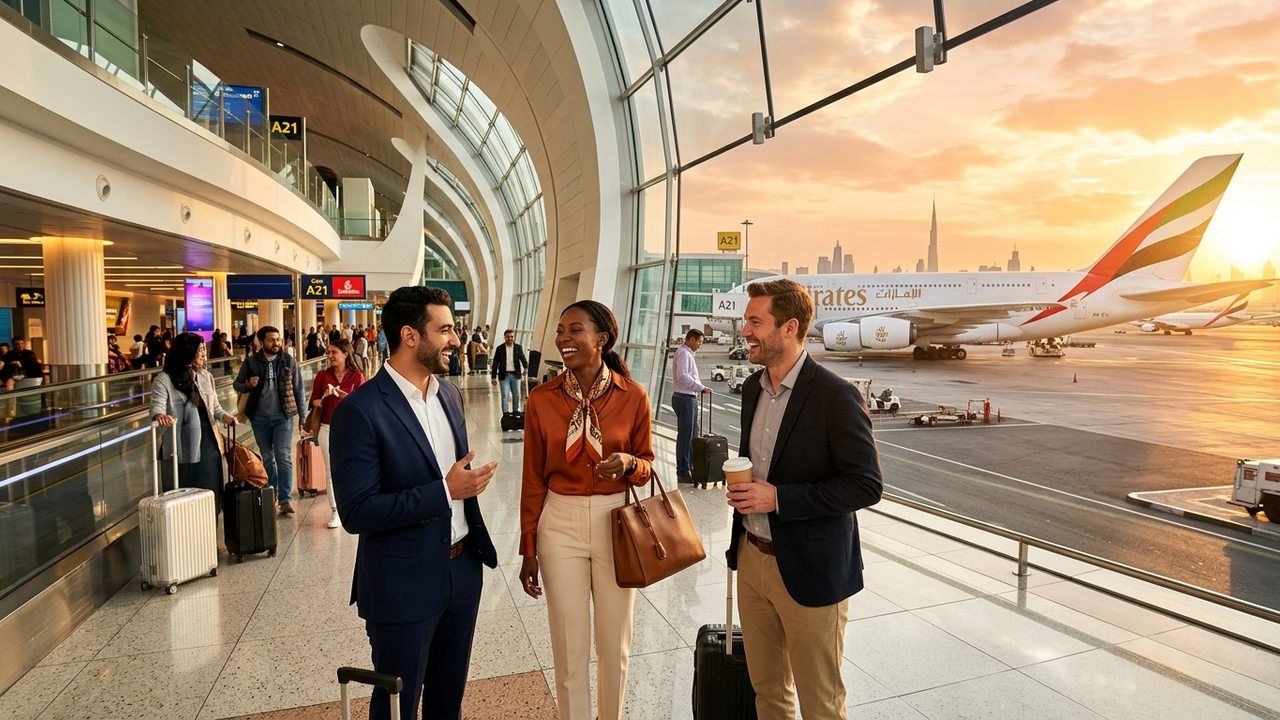
Image generated by AI
[Dubai, June 26, 2026] — Emirates is initiating a comprehensive restoration of its Airbus A380 operations across 11 international routes between late June and early August 2026, significantly boosting seat capacity from Dubai International Airport (DXB). This strategic redeployment follows a period of operational volatility caused by regional airspace disruptions linked to conflict involving Iran, as well as an extensive internal program to modernize the airline's flagship fleet.
The phased return of the double-decker aircraft is designed to meet surging long-haul demand across Europe, North America, Asia, and Australia. By replacing smaller Boeing 777 aircraft on several key corridors, the carrier is increasing the volume of passengers it can transport per flight, which is critical for maintaining connectivity during the peak Northern Hemisphere summer travel season.
Operational Shifts and Fleet Modernization in Dubai
The temporary withdrawal of the Airbus A380 from several routes was driven by two primary factors. Industry reports indicate that geopolitical instability in the Middle East forced a realignment of flight planning and aircraft allocation to ensure operational safety and efficiency. Simultaneously, the airline has been engaged in a massive cabin reconfiguration project.
This refurbishment involves converting high-density, two-class A380s into sophisticated three-class layouts. This transition is aimed at aligning the aircraft's interior with current market demands, specifically increasing the availability of premium cabins for corporate and luxury travelers while maintaining efficient economy seating. Consequently, passengers may notice variations in seat counts and cabin configurations on the same route as these upgraded aircraft are phased back into active service.
Phased Restoration of Superjumbo Services Across Europe
The first stage of the capacity expansion focuses heavily on the European market, where Dubai serves as a primary gateway for onward travel. Starting June 26, Düsseldorf is the first city to see the return of daily A380 service. This is followed closely by a wave of reinstatements on July 1 for several other major aviation hubs.
Notably, the airline has opted to maintain A380 operations to Barcelona throughout the summer, canceling a previously planned equipment change to ensure the Spanish tourism market remains well-served. The return of these aircraft provides thousands of additional weekly seats, benefiting both direct travelers and those connecting through the DXB hub.
Table 1: Emirates A380 Routes Returning (June 26 – July 1, 2026)
| Destination | Scheduled Return | Planned Frequency | Initial Aircraft Configuration |
|---|---|---|---|
| Düsseldorf | 26 June | Daily | 615-seat aircraft initially |
| Copenhagen | 1 July | Daily | 615 seats before reconfiguration |
| Frankfurt | 1 July | Daily | 519-seat aircraft |
| London Gatwick | 1 July | Daily | 517-seat aircraft |
| Manchester | 1 July | Daily | 468-seat aircraft |
| Munich | 1 July | Daily | 489-seat aircraft |
Strategic Value of High-Capacity Aircraft for Global Hubs
The deployment of the A380 is a calculated move to maximize passenger throughput without requiring additional takeoff and landing slots, which are often heavily restricted at major international airports. By utilizing the world's largest passenger aircraft, the airline can scale its capacity efficiently.
Table 2: Strategic Importance of the A380 to the Aviation Industry
| Factor | Importance for Travel Industry |
|---|---|
| High Passenger Capacity | Supports surging leisure and corporate travel demand |
| Premium Cabins | Attracts high-yield luxury and business segments |
| Hub Connectivity | Solidifies Dubai's status as a premier global transfer point |
| Tourism Growth | Increases international visitor arrivals at destination markets |
| Airport Efficiency | Higher passenger volumes utilizing existing slot allocations |
This capacity surge is expected to create a ripple effect across the tourism ecosystem, benefiting hotels, cruise terminals, and destination marketing organizations that rely on the steady flow of transit passengers through Dubai.
Expanding Long-Haul Reach to Australia, Asia, and North America
Following the European rollout, the airline will extend A380 services to long-haul destinations in late July and August. This timing aligns with the peak travel window for "Visiting Friends and Relatives" (VFR) and high-season leisure trips.
Perth is slated to regain the A380 on July 27, replacing the Boeing 777-300ER. This move restores a four-class configuration to the Western Australian route, significantly enhancing the premium experience. By August 1, four more global cities—Washington Dulles, Osaka Kansai, Prague, and Glasgow—will see the return of the superjumbo.
Table 3: Emirates A380 Routes Returning (Late July – August 2026)
| Destination | Planned Return Date | Planned Frequency | Aircraft Configuration |
|---|---|---|---|
| Perth | 27 July | Daily | Four-class, 468 seats |
| Glasgow | 1 August | Daily | 519 seats |
| Prague | 1 August | Daily | 569 seats |
| Osaka Kansai | 1 August | Daily | 468 seats |
| Washington Dulles | 1 August | Daily | 489 seats |
Regional Connectivity and the Glasgow Case Study
The return of the A380 to Glasgow highlights the importance of regional international connectivity. For over two decades, the Scottish gateway has served as a vital link for passengers traveling from the UK to the Asia-Pacific and Indian Ocean regions.
Data suggests a significant portion of Glasgow-based passengers use Dubai as a transit point to reach destinations such as Singapore, Bangkok, Tokyo, and Mauritius. The restoration of daily A380 flights to Glasgow provides a critical capacity boost that supports not only Scottish tourism but the broader connectivity of the UK's regional aviation network.
Economic Impact Analysis on the Travel Sector
The reinstatement of these flights is expected to provide a measurable lift to various sectors of the travel industry. The increase in "available seat kilometers" (ASK) allows for more competitive pricing and greater availability for tour operators and corporate travel managers.
Table 4: Industry-Wide Impact of A380 Network Restoration
| Industry Segment | Expected Benefit |
|---|---|
| Airlines | Increased available seat capacity on primary long-haul corridors |
| Airports | Higher passenger throughput and increased non-aeronautical revenue |
| Hotels | Growth in international arrivals and occupancy rates |
| Tour Operators | Expanded availability for high-capacity package holiday bookings |
| Corporate Travel | Greater inventory of premium cabin seats for business travelers |
| Tourism Boards | Enhanced ability to attract visitors from diverse global markets |
| Cruise Industry | Improved air-bridge connectivity for international cruise passengers |
Long-Term Implications for Global Aviation
The current fleet refurbishment and route restoration signal a long-term commitment to a "premium-heavy" growth strategy. By integrating Premium Economy and refreshed Business Class interiors, the airline is adapting to a post-pandemic travel landscape where passengers are more willing to pay for enhanced comfort on ultra-long-haul flights.
As the A380 returns to these 11 key cities, Dubai International Airport further cements its role as the central node of global aviation. The ability to swing capacity rapidly through aircraft swaps ensures that the hub can absorb seasonal demand spikes while maintaining a high standard of passenger experience. This operational flexibility will be the cornerstone of the airline's competitiveness as it navigates the complexities of global geopolitics and evolving traveler preferences.
Related Travel Guides
Disclaimer
This article is for informational and educational purposes only. It does not constitute legal, financial, or professional advice. While we strive to provide accurate and up-to-date information, travel policies, regulations, and conditions change rapidly. Always verify information with official sources before making travel decisions. Nomad Lawyer makes no representations about the accuracy, reliability, completeness, or suitability of the information provided. Readers should consult qualified professionals for advice specific to their circumstances. The views expressed in this article are those of the author and do not necessarily reflect the views of Nomad Lawyer.
Raushan Kumar
Founder & Lead Developer
Full-stack developer with 11+ years of experience and a passionate traveller. Raushan built Nomad Lawyer from the ground up with a vision to create the best travel and law experience on the web.
Learn more about our team →