
Dubai Hotel Occupancy Reaches 66% in August 2026 Defying Summer Desert Heat
Dubai hotels achieved a 66% occupancy rate in August 2026, welcoming 869,000 international overnight visitors and driving total room nights past 21.6 million.

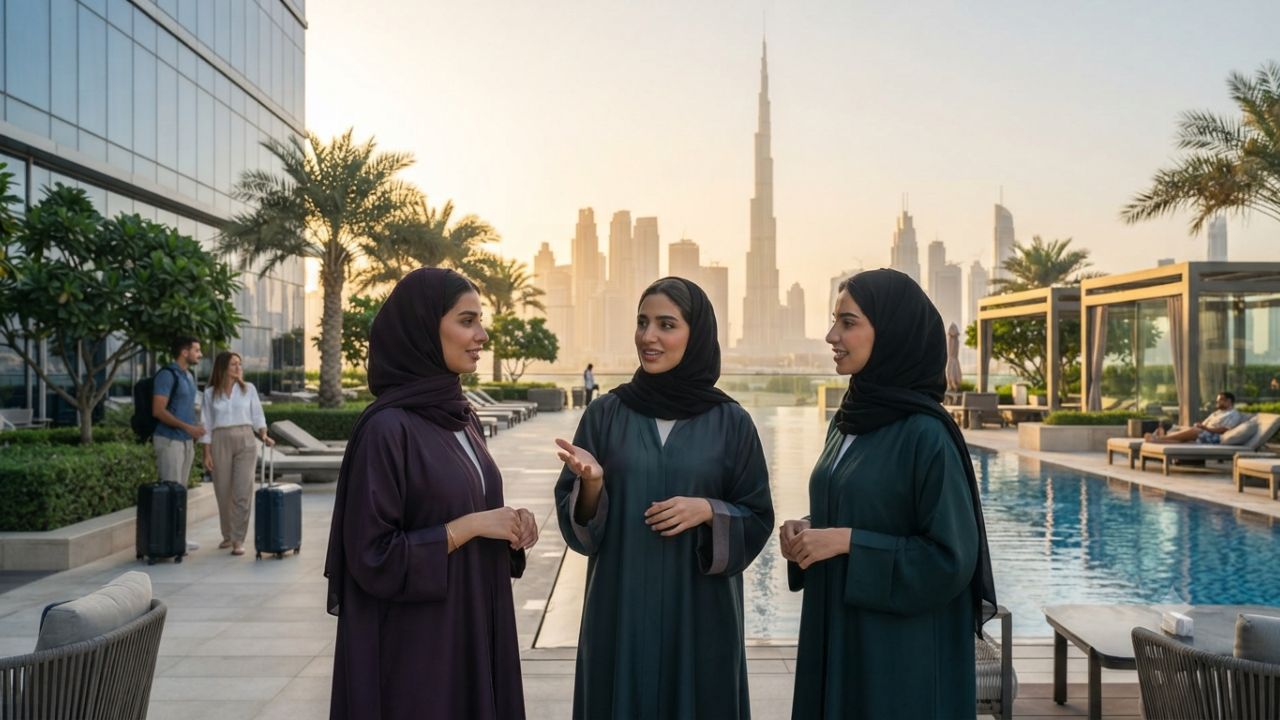
Image generated by AI
Dubai’s hospitality sector achieved an impressive 66% hotel occupancy rate in August 2026, defying traditional summer slowdowns across the Arabian Peninsula. Welcoming 869,000 international overnight visitors during the month, the emirate pushed total occupied room nights for the first eight months of 2026 to 21.61 million while expanding its total hotel inventory toward 149,000 rooms.
The mid-year performance represents a decisive six-month rebound from a low of 36% recorded in March 2026. Driven by aggressive promotional campaigns, curated domestic staycation packages, and robust air connectivity via Dubai International (DXB) and Dubai World Central (DWC), the city successfully turned peak summer heat into a high-volume travel period.
Dubai Hospitality & Tourism Key Performance Metrics (Jan–Aug 2026)
| Metric | Recorded Figure | Strategic Context |
|---|---|---|
| August 2026 Occupancy Rate | 66% | Up from 36% in March 2026 (Six-Month Peak) |
| August Overnight Visitors | 869,000 | Highest single-month arrival volume since February |
| Jan–Aug Occupied Room Nights | 21.61 Million | Cumulative volume across all star ratings |
| Total Hotel Inventory | ~149,000 Rooms | Expanding under Dubai Economic Agenda (D33) |
| Western Europe Source Market | 20% | Top international arrival region |
| South Asia Source Market | 17% | Supported by strong regional air route capacity |
| GCC Regional Market Share | 16% | Proximity driving weekend and short-break travel |
| CIS & Eastern Europe Share | 14% | Emerging source market growth |
| Domestic Staycation Growth | +25% | Summer local leisure push neutralizing heat dips |
| Tourism Sector Employment | 700,000+ Jobs | Direct and indirect workforce across UAE economy |
| DST Green Certification | 40%+ Properties | Implemented under Dubai Sustainable Tourism standard |
Domestic Staycations and Targeted Promotions Counter Summer Climate
Historically, extreme summer temperatures across the Middle East led to sharp drops in hotel occupancy as international leisure travelers favored cooler destinations. However, hospitality operators and tourism authorities across Dubai flipped this conventional pattern through aggressive promotional initiatives and bespoke luxury packages.
Domestic staycations jumped by more than 25% during the summer months, supported by world-class climate-controlled entertainment complexes, mega-malls, indoor theme parks, and resort pools. Upper Midscale properties performed exceptionally well, capturing average occupancy rates of nearly 66% and demonstrating that mid-tier accommodations are driving resilient guest volume alongside ultra-luxury resorts.
By diversifying property offerings across star ratings, developers in Dubai have successfully mitigated inflationary rate spikes, keeping the emirate competitive against rival international tourism hubs while preserving yields for asset owners.
Source Market Distribution: Western Europe and South Asia Lead Arrivals
Official visitor data for the January–August 2026 period reveals a broad international demographic feeding into Dubai’s hotel ecosystem:
- Western Europe (20%): Retained its position as the primary international source region, driven by consistent direct flight frequencies from key European hubs.
- South Asia (17%): Second-largest origin market, bolstered by expanded regional route capacity and short transit times.
- GCC Countries (16%): Regional travelers from neighboring Gulf states provided steady weekend demand, contributing high per-capita spending across retail and dining sectors.
- CIS & Eastern Europe (14%): Showed consistent visitor volume during shoulder seasons.
This diversified inbound traffic ensures that hotel performance remains stable even when specific geographic markets experience temporary economic shifts.
Infrastructure Expansion and Long-Term D33 Economic Vision
Dubai’s hotel room inventory is scaling rapidly toward 149,000 rooms, guided by the long-term targets of the Dubai Economic Agenda (D33). Government blueprints incentivize multi-billion-dollar foreign direct investment (FDI) into hotel construction, infrastructure upgrades, and smart-city technologies.
Aviation networks serve as the primary growth engine for this expanding inventory. Combined connectivity from Dubai International Airport (DXB) and Dubai World Central (DWC) connects the city to over 200 global destinations, allowing seamless passenger entry and rapid route restorations.
Furthermore, sustainability has become central to hospitality expansion. More than 40% of Dubai’s hotel properties have adopted certified green building standards and energy-saving protocols under the Dubai Sustainable Tourism (DST) framework. Hoteliers are integrating solar power, water recovery systems, and automated energy controls to lower operational carbon footprints without compromising luxury service standards.
With over 700,000 jobs directly and indirectly supported by travel and hospitality in Dubai, the sector remains a foundational driver of economic resilience and infrastructure growth across the wider United Arab Emirates.
Frequently Asked Questions
What was Dubai’s hotel occupancy rate in August 2026?
Dubai recorded a 66% hotel occupancy rate in August 2026, marking a significant recovery from a low of 36% in March 2026.
How many international visitors arrived in Dubai in August 2026?
Dubai welcomed 869,000 international overnight visitors in August 2026, representing the highest single-month arrival count since February.
What is the total hotel room inventory in Dubai?
Dubai's total hotel inventory is approaching 149,000 rooms, expanding continuously under the Dubai Economic Agenda (D33).
Which regions generated the most tourists for Dubai in 2026?
From January to August 2026, Western Europe accounted for 20% of international arrivals, followed by South Asia (17%), the GCC (16%), and CIS/Eastern Europe (14%).
How did domestic staycations impact summer hotel occupancy?
Domestic staycations increased by over 25% during peak summer months, supported by indoor entertainment venues and resort packages that neutralized hot weather conditions.
Related Travel Guides
Disclaimer
This article is for informational and educational purposes only. It does not constitute legal, financial, or professional advice. While we strive to provide accurate and up-to-date information, travel policies, regulations, and conditions change rapidly. Always verify information with official sources before making travel decisions. Nomad Lawyer makes no representations about the accuracy, reliability, completeness, or suitability of the information provided. Readers should consult qualified professionals for advice specific to their circumstances. The views expressed in this article are those of the author and do not necessarily reflect the views of Nomad Lawyer.
Preeti Gunjan
Contributor & Community Manager
A passionate traveller and community builder. Preeti helps grow the Nomad Lawyer community, fostering engagement and bringing the reader experience to life.
Learn more about our team →