
DRC Tourism Strategy 2026: Kinshasa, Kahuzi-Biega, and Yangambi Lead New Conservation Corridor
The Democratic Republic of Congo is restructuring its tourism landscape by integrating Kinshasa's cultural hubs with the conservation zones of Kahuzi-Biega and Yangambi to drive sustainable economic growth.

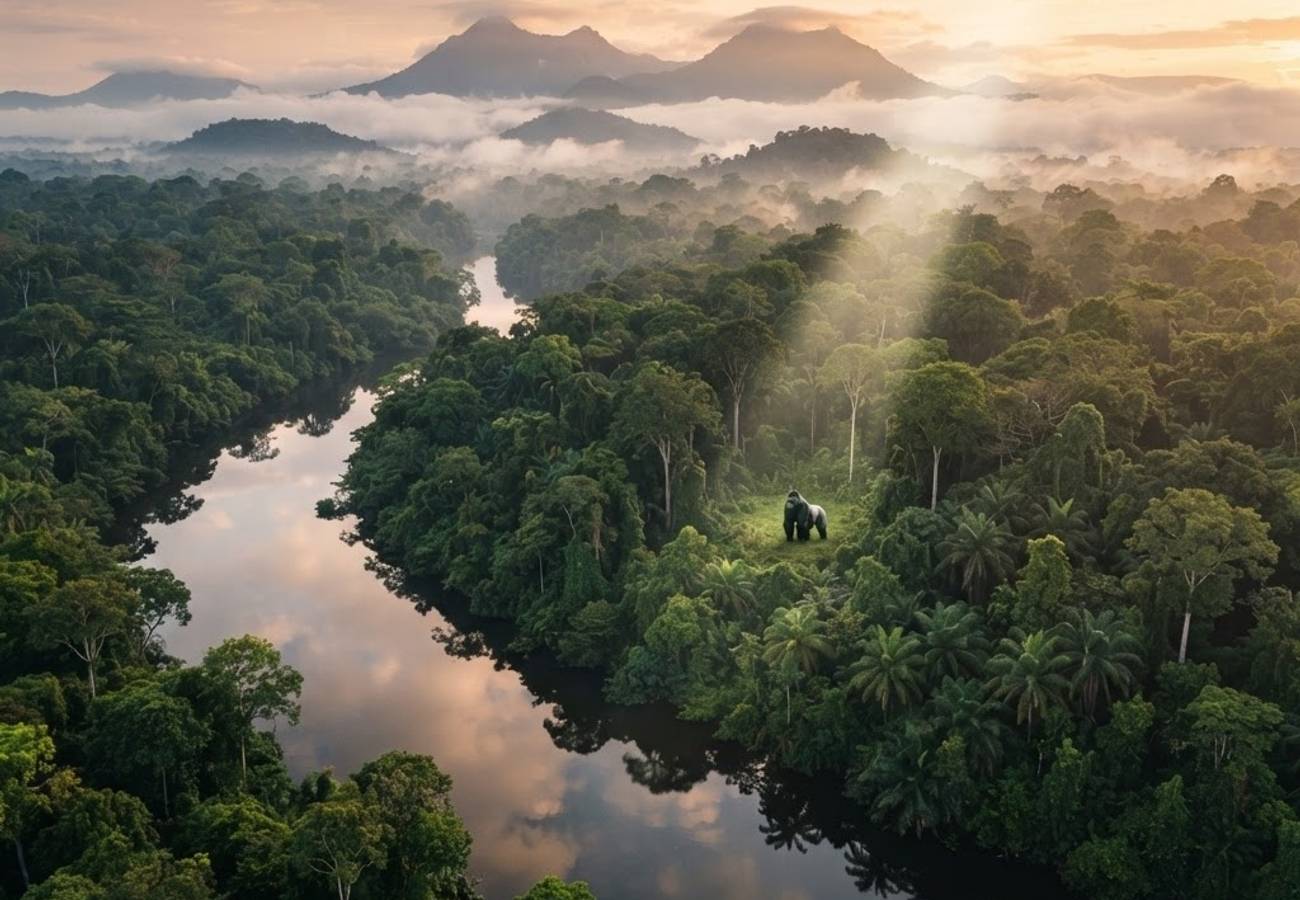
Image generated by AI
The Democratic Republic of Congo (DRC) is pivoting toward a specialized tourism model that links urban cultural hubs with remote conservation zones to monetize forest resources sustainably.
The government is currently aligning four strategic areas—Kinshasa, Kahuzi-Biega, Yangambi, and the Congo River—to move beyond traditional urban sightseeing. This shift prioritizes primate encounters, river-based transit, and the monetization of the Congo Basin rainforests.
Strategic Forest Monetization
In May 2026, the Council of Ministers evaluated a national strategy focused on the valuation, certification, and monetization of forest resources. This policy shift aims to transform the DRC’s vast natural wealth into managed visitor experiences. The objective is to replace high-volume tourism with low-impact trekking and community-based activities that preserve protected ecosystems.
Primates and Conservation Hubs
The DRC's tourism offering is anchored by two distinct primate experiences:
- Kahuzi-Biega National Park (South Kivu): A specialist destination for Grauer’s gorillas (eastern lowland gorillas). This remains a high-barrier entry point requiring trained trackers and rigorous security planning due to the volatile conditions in North and South Kivu.
- Lola ya Bonobo Sanctuary (Kinshasa): An accessible urban alternative providing education on bonobo conservation. This serves as a primary entry point for international arrivals before they venture into the interior.
The Yangambi Research Corridor
Yangambi, located near Kisangani, is transitioning from a purely scientific outpost to a nature-tourism destination. It is a central component of the European Union’s Green Corridor initiative.
This proposed 2,600-kilometre corridor connects the Atlantic coast and Kinshasa to eastern DRC. The EU initiative focuses on three "NaturAfrica" areas, including Yangambi, to integrate biodiversity conservation with inclusive economic development. A key logistical development in this region is the planned launch of pusher-boats on the Congo River to improve connectivity.
Cultural Identity and Music Tourism
Kinshasa is leveraging its status as a UNESCO Creative City of Music (designated in 2015) to attract cultural travelers. The focus is on Congolese rumba, which is listed on UNESCO’s Representative List of the Intangible Cultural Heritage of Humanity.
The city's music ecosystem—comprising recording studios, the National Institution of Arts, and neighborhood clubs—is being packaged into music-focused city tours. There is also an ongoing effort to coordinate with Brazzaville to create cross-border cultural itineraries.
DRC Regional Tourism Matrix
| Destination | Primary Attraction | Tourism Type | Key Feature |
|---|---|---|---|
| Kinshasa | Congolese Rumba / Lola ya Bonobo | Cultural & Urban | UNESCO Creative City of Music |
| Kahuzi-Biega | Grauer's Gorillas | Specialist Wildlife | Low-impact forest trekking |
| Yangambi | Sustainable Forestry | Research & Nature | EU Green Corridor / NaturAfrica |
| Kisangani | Congo River Access | Transit & Nature | Gateway to forest regions |
| Congo River | Riverine Landscapes | Multimodal Travel | Pusher-boat connectivity |
Why This Matters: Industry Analysis
From a logistical perspective, the DRC is attempting to solve a classic "last-mile" problem in tourism. By utilizing the Congo River as a multimodal transport spine, the government is reducing the reliance on unstable road networks.
For the travel industry, this represents a shift toward "Scientific Tourism." By integrating Yangambi’s research facilities into the itinerary, the DRC is targeting a higher-spending, niche demographic of educational travelers rather than mass-market tourists.
However, the disparity between the accessibility of Kinshasa and the volatility of South Kivu remains a significant hurdle. The "Information Gain" for operators here is the realization that the DRC cannot be marketed as a single destination, but rather as a series of disconnected "islands" of stability linked by river travel.
Forward Outlook
Expect a gradual increase in "Green Corridor" infrastructure, specifically the deployment of pusher-boats, which will redefine transit times between Kinshasa and Kisangani. Market trends suggest that as forest certification and monetization strategies mature, we will see more community-led conservancies appearing in the Congo Basin, shifting the economic benefit from central government agencies to local forest communities.
The DRC is betting that the intersection of UNESCO culture and rare primate conservation can overcome its systemic security challenges.
Related Travel Guides
Disclaimer
This article is for informational and educational purposes only. It does not constitute legal, financial, or professional advice. While we strive to provide accurate and up-to-date information, travel policies, regulations, and conditions change rapidly. Always verify information with official sources before making travel decisions. Nomad Lawyer makes no representations about the accuracy, reliability, completeness, or suitability of the information provided. Readers should consult qualified professionals for advice specific to their circumstances. The views expressed in this article are those of the author and do not necessarily reflect the views of Nomad Lawyer.
Preeti Gunjan
Contributor & Community Manager
A passionate traveller and community builder. Preeti helps grow the Nomad Lawyer community, fostering engagement and bringing the reader experience to life.
Learn more about our team →