
Dominican Republic Implements Conservation Tech at Bahía de las Águilas
The Dominican Republic is integrating PIT microchips and EarthRanger monitoring at Bahía de las Águilas to manage tourism growth and protect sea turtles.

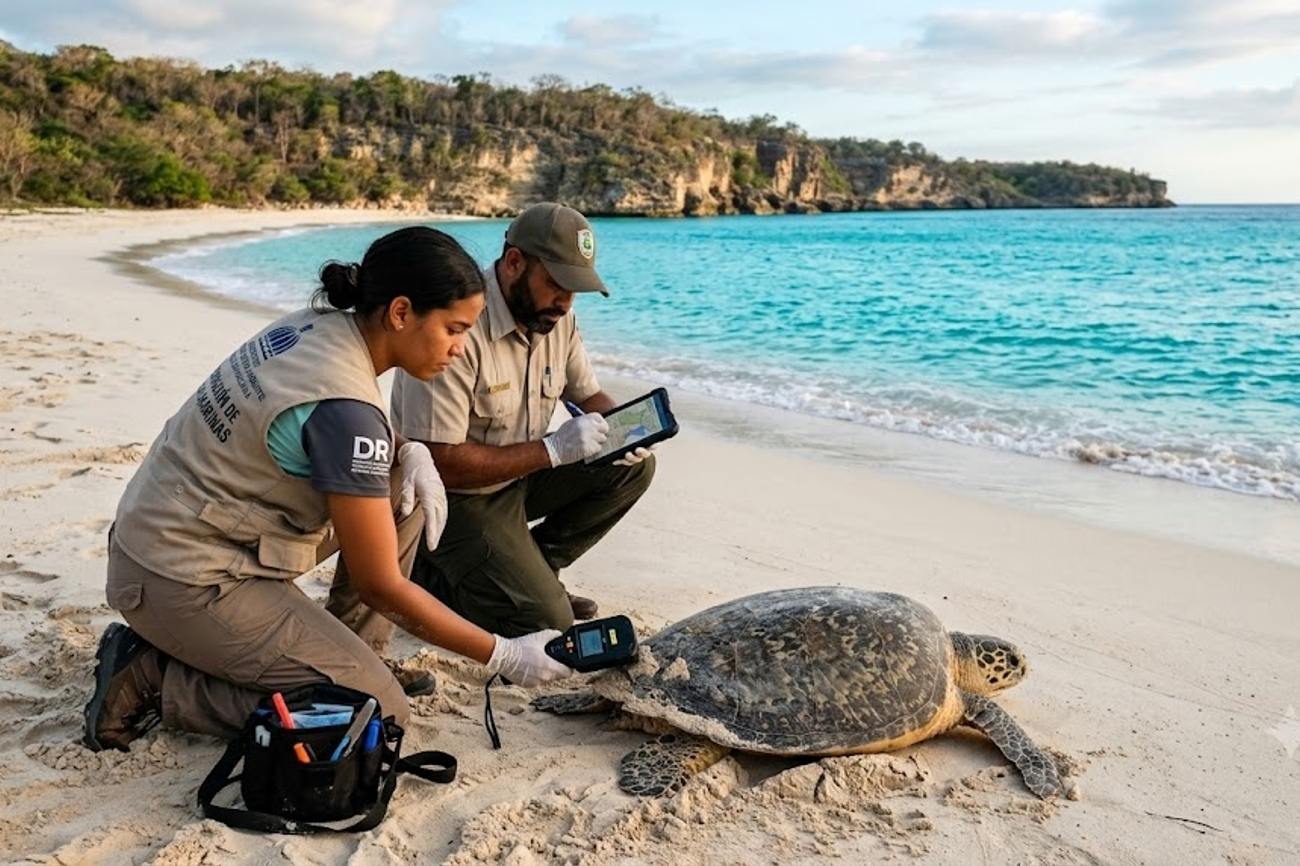
Image generated by AI
The Dominican Republic has launched a national pilot program at Bahía de las Águilas in Pedernales, integrating high-tech biological monitoring with destination management. Starting in June 2026, the Ministry of Environment and Natural Resources began deploying permanent PIT microchips and the EarthRanger real-time monitoring platform to track sea turtle populations and field operations.
This initiative is not a tourist-facing attraction. Instead, it serves as a critical data layer for government authorities. By digitizing the movement and health of species like the leatherback turtle (Dermochelys coriacea), the state is creating a structured intelligence system to mitigate the impact of imminent infrastructure growth in the region.
The technology deployment includes a mix of electronic and traditional methods:
- PIT Microchips: Provide permanent electronic identities for individual turtles to track repeat encounters.
- EarthRanger: A digital platform used to register night patrols, nesting activity, and strandings in real time.
- Biological Data: DNA sampling and biological records are being used to analyze regional connectivity and genetics.
The pilot has already documented three female leatherback turtles. Training for the system has been extended to coastal inspectors, park rangers, technical staff, and local volunteers.
This technical rollout coincides with a massive regional development push. The government’s strategy for Cabo Rojo and Pedernales includes the construction of the Cabo Rojo International Airport in Oviedo, a new cruise terminal, and extensive hotel and wastewater infrastructure.
The integration of this data is central to "carrying-capacity" modeling. Previous studies by the General Directorate of Public-Private Partnerships (DGAPP) have already used turtle nesting cycles to limit visitor numbers, applying a 58 per cent conservation adjustment to capacity calculations during peak nesting and hatchling emergence.
Key Facts Breakdown
- Launch Date: June 2026.
- Location: Bahía de las Águilas, Pedernales.
- Key Species: Leatherback turtles (Dermochelys coriacea).
- Primary Tech: PIT microchips and EarthRanger monitoring.
- Infrastructure Drivers: Cabo Rojo International Airport and new cruise terminal.
- Conservation Impact: 58 per cent capacity reduction applied during nesting periods in previous models.
Data Table: Technology Functions at Bahía de las Águilas
| Technology or Process | Verified Function | Travel-Technology Significance |
|---|---|---|
| PIT microchips | Permanent individual electronic identities | Long-term records of individual animals |
| EarthRanger | Real-time monitoring of patrols and nests | Operational data layer for area management |
| Metal tagging | Complements electronic ID | Continuity with established methods |
| DNA sampling | Research into genetics and connectivity | Ecological evidence for management decisions |
| Biological records | Captures individual animal data | Improved evidence for conservation managers |
| Night patrols | Documents nesting period activity | Establishes sensitive wildlife windows |
Capacity Modeling Data (2022 Study)
| Bahía de las Águilas Indicator | Physical Capacity | Real Capacity | Management Capacity |
|---|---|---|---|
| Standard beach zone, daily | 4,170 | 1,751 | 980 |
| VIP beach zone, daily | 10,538 | 4,426 | 2,547 |
| Combined daily total | 14,708 | 6,177 | 3,527 |
| Boat parking at La Cueva | 34 | 24 | 19 |
| Mirador trail simultaneous users | 62 | 40 | 28 |
Why This Matters
From a logistical perspective, this is not a wildlife project; it is a risk-management strategy for the tourism industry.
Our analysis of the data indicates that the Dominican government is moving away from static environmental quotas toward "decision intelligence." By linking real-time EarthRanger data with the DGAPP's carrying-capacity frameworks, the state can theoretically adjust tourist access based on actual biological activity rather than estimated calendars.
For developers and tour operators in Pedernales, this means that "carrying capacity" is a fluid variable. The 58 per cent conservation adjustment proves that biological data directly dictates the volume of paying customers allowed on the beach.
Industry Outlook
Expect the Cabo Rojo-Pedernales corridor to become a testing ground for "Dynamic Destination Management." As the international airport opens and cruise traffic increases, the government will likely transition from the 2022 static models to a digital visitor-cap system driven by the EarthRanger data stack. This represents a shift toward evidence-based tourism where ecological thresholds trigger immediate operational limits on visitor entry.
Internal Link Suggestions:
- Sustainable Tourism Trends in the Caribbean
- Impact of New International Airports on Regional Ecosystems
- The Evolution of Destination Carrying-Capacity Modeling
Related Travel Guides
Disclaimer
This article is for informational and educational purposes only. It does not constitute legal, financial, or professional advice. While we strive to provide accurate and up-to-date information, travel policies, regulations, and conditions change rapidly. Always verify information with official sources before making travel decisions. Nomad Lawyer makes no representations about the accuracy, reliability, completeness, or suitability of the information provided. Readers should consult qualified professionals for advice specific to their circumstances. The views expressed in this article are those of the author and do not necessarily reflect the views of Nomad Lawyer.
Raushan Kumar
Founder & Lead Developer
Full-stack developer with 11+ years of experience and a passionate traveller. Raushan built Nomad Lawyer from the ground up with a vision to create the best travel and law experience on the web.
Learn more about our team →