
Doha Follows Dubai and Other Leading Countries as Jordan Heritage Travel Expands in Petra
Doha Follows Dubai and Other Leading Countries as Jordan Heritage Travel Expands in Petra

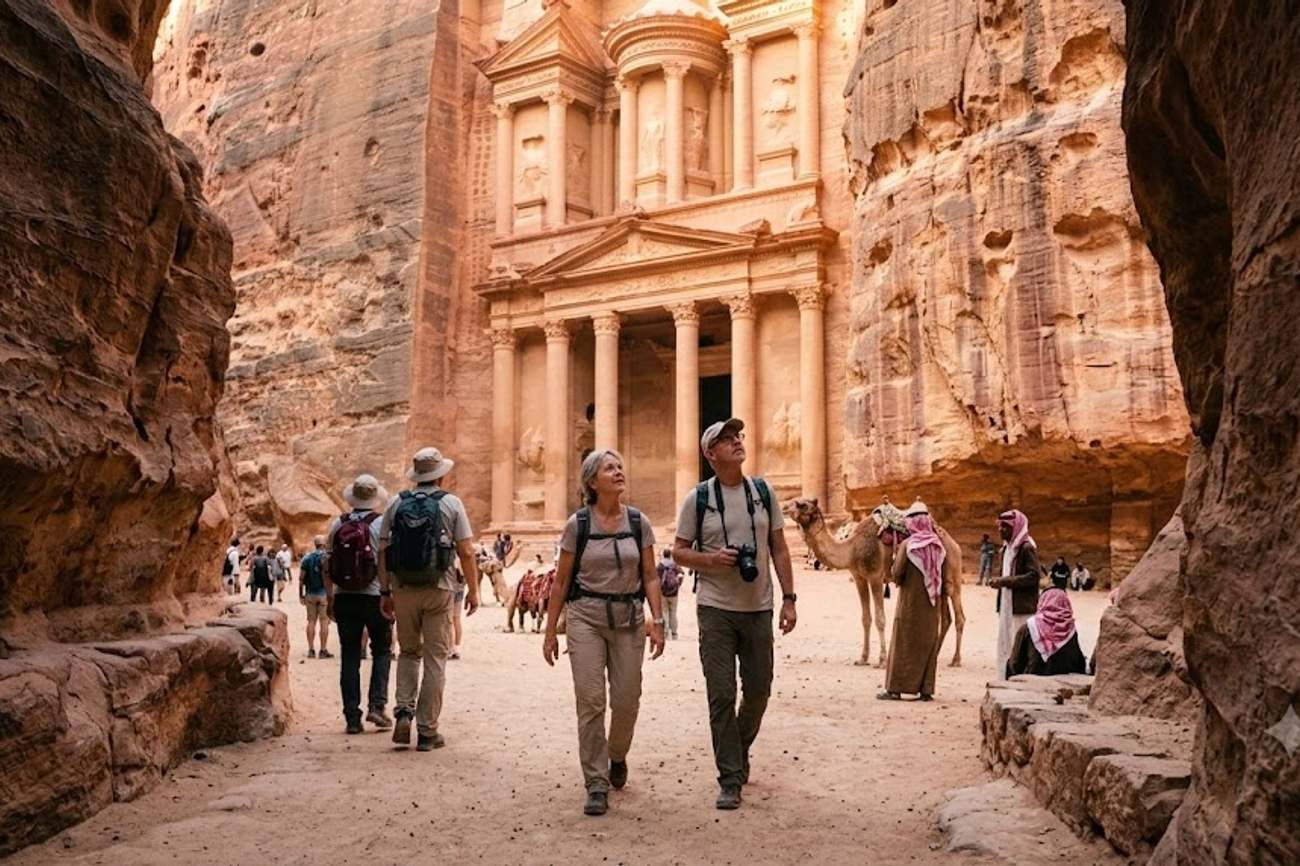
Image generated by AI
The shift toward multi-destination Middle Eastern itineraries has accelerated, with Doha joining the GCC-led push for trans-Gulf tourism packages in the final quarter of 2026. This strategic pivot marks a transition from the Gulf’s historical role as a transit hub to a curated gateway for heritage travel, specifically targeting the archaeological assets of Jordan. While the region previously relied on isolated luxury hubs, the integration of the Nabataean city of Petra into broader GCC itineraries signals a coordinated effort to diversify national economies through sustainable, culturally immersive tourism.
The Petra Growth Engine in Numbers
The current trajectory of Jordanian tourism is inextricably linked to the administrative overhaul of the Petra Development and Tourism Region Authority (PDTRA). On August 30, 2026, the Jordanian Cabinet ratified a new Administrative Organisation System for the PDTRA, specifically designed for the 2026 fiscal year. This legislative shift is not merely a bureaucratic update; it is a financial instrument intended to attract international capital by removing operational inefficiencies and streamlining the approval process for sustainable hospitality infrastructure.
The scale of the Petra Archaeological Park—covering hundreds of square kilometers—requires a governance model that can handle high-volume, high-net-worth traffic without degrading the site's physical integrity. By empowering the PDTRA, which has operated as an independent financial and administrative body since 2009, the Jordanian government is positioning the site to absorb the surge in arrivals generated by the "Doha-to-Petra" pipeline. This strategy aligns with the broader World Tourism Organization (UNWTO) goals of sustainable destination management, ensuring that the economic windfall of increased visitation is distributed among local populations rather than remaining concentrated in urban centers.
Comparative Context: The GCC Gateway Model
The current surge in Jordanian arrivals is a direct result of "The Dubai Effect"—a model where a primary hub uses aggressive aviation expansion to feed tourism into neighboring secondary markets. For two decades, Dubai utilized this strategy to establish itself as the regional anchor. Now, the State of Qatar is replicating this framework in the post-2022 World Cup era.
The data indicates a shift from single-destination trips to combined "Modern-Ancient" itineraries. Where travelers previously chose between the luxury of a GCC capital or the history of the Levant, they are now opting for seven-to-ten-day packages. This is supported by increased flight frequencies between Hamad International Airport (Doha), Dubai International (DXB), and Jordan's primary gateways: Queen Alia International Airport (Amman) and King Hussein International Airport (Aqaba).
The following table illustrates the shift in regional tourism strategy and the resulting impact on itinerary composition:
| Metric | Previous Model (Pre-2022) | Current Model (Q4 2026) | Trend Direction |
|---|---|---|---|
| Primary Trip Type | Single-City Hub (e.g., Doha only) | Multi-Destination (GCC + Jordan) | Diversification |
| Average Stay Duration | 3–5 Days | 7–10 Days | Increasing |
| Key Driver | Luxury/Shopping/Transit | Heritage/Authenticity/Culture | Value Shift |
| Primary Air Bridge | Global $\rightarrow$ Hub | Global $\rightarrow$ Hub $\rightarrow$ Regional | Network Expansion |
| Governance Focus | Site Maintenance | Investment-Ready Administration | Economic Scaling |
This movement is mirrored in global data provided by IATA, which shows a rising preference for regional "cluster" travel, where passengers utilize a primary hub to visit multiple nearby countries on a single visa or ticket.
Practical Traveler Advisory and Strategic Insights
The integration of Petra into GCC tourism packages changes the logistics and timing of visiting Jordan. For the individual traveler, the "Doha-Dubai-Amman" corridor is now the most efficient entry point into the region.
- Booking Windows: Because these multi-destination packages are targeted at high-net-worth individuals from North America, Europe, and Asia, premium accommodation near the Petra Archaeological Park is seeing higher occupancy rates. Travelers should book luxury desert camps and boutique hotels 12–16 weeks in advance to avoid the "package-tour" squeeze.
- Logistical Efficiency: The increased flight frequency between Doha and Amman reduces the need for long layovers. Travelers can now realistically split a 10-day trip: 3 days in Doha for modern art and gastronomy, followed by a short flight to Amman for the exploration of Petra and Wadi Rum.
- Entry Requirements: With the GCC promoting trans-Gulf itineraries, travelers should monitor for updated regional visa agreements that may simplify movement between Qatar, the UAE, and Jordan.
- Seasonality: The push for sustainable tourism means that the PDTRA may implement stricter visitor caps during peak windows. Booking "off-peak" slots or guided early-entry tours to the Treasury (Al-Khazneh) is now essential to avoid the crowds brought in by the new GCC itineraries.
Forward Projection: The Levant-Gulf Axis
Based on the August 30, 2026, restructuring of the PDTRA and the strategic pivot of Qatar Airways and Qatar Tourism, the trend is moving toward a permanent "Levant-Gulf Axis." We can expect the following developments over the next 24 months:
First, the "Sustainable Hospitality" mandate within the 2026 PDTRA system will likely lead to a surge in eco-luxury resorts surrounding the Petra region. These will not be traditional hotels but low-impact, high-cost dwellings that cater to the demographic currently visiting the GCC.
Second, we will likely see the introduction of "Heritage Passes"—integrated ticketing systems that combine entry to Doha's museums with the Petra Archaeological Park entry fees. This would further reduce the friction of multi-country travel.
Finally, the success of the Doha-Petra pipeline will likely encourage other GCC nations to form similar partnerships with other historical sites in the Levant, potentially expanding the model to include Lebanon or Iraq as stability allows. This represents a broader macroeconomic shift documented by the World Travel & Tourism Council (WTTC), where regional interdependence becomes a primary driver of GDP growth.
FAQ: Jordan-GCC Tourism Trends 2026
Will flight prices to Petra increase due to the GCC partnerships? Short-term prices may fluctuate, but increased flight frequencies between Doha, Dubai, and Amman typically lead to more competitive pricing options for travelers who book outside of peak holiday windows.
Is now a good time to visit Petra? Yes, provided you book in advance. The 2026 PDTRA reforms are aimed at improving visitor infrastructure, meaning the experience is becoming more streamlined, though more crowded due to the new GCC itineraries.
Which airlines offer the best connectivity for these combined trips? Qatar Airways and Royal Jordanian are the primary drivers of this trend, offering the most seamless connections between the Gulf hubs and Jordan's Queen Alia and King Hussein airports.
How does the 2026 PDTRA reform affect the average tourist? While the reform is administrative, it results in faster development of tourist facilities and better-managed crowds at the site, leading to a more professionalized and sustainable visitor experience.
The transition from transit hubs to heritage gateways is redefining the Middle East as a singular, cohesive destination.
Related Travel Guides
- Poland Surpasses Germany and More in Leading Orebić Tourism Growth as Croatia Sees Strong 2026 Visitor Demand
- Spain Is Now on the Path to Unlock More of Galicia Tourism as 14 New Routes Create a Unique Autumn Opportunity
- Oman Follows Sri Lanka as Asia’s Expanding Wellness Landscape Gains Momentum With Luxury Retreats and Ayurveda
Disclaimer
This article is for informational and educational purposes only. It does not constitute legal, financial, or professional advice. While we strive to provide accurate and up-to-date information, travel policies, regulations, and conditions change rapidly. Always verify information with official sources before making travel decisions. Nomad Lawyer makes no representations about the accuracy, reliability, completeness, or suitability of the information provided. Readers should consult qualified professionals for advice specific to their circumstances. The views expressed in this article are those of the author and do not necessarily reflect the views of Nomad Lawyer.
Preeti Gunjan
Contributor & Community Manager
A passionate traveller and community builder. Preeti helps grow the Nomad Lawyer community, fostering engagement and bringing the reader experience to life.
Learn more about our team →