
Discovery Saudi Capitalising Tourism on Vision 2030
Discovery Saudi Capitalising Tourism on Vision 2030

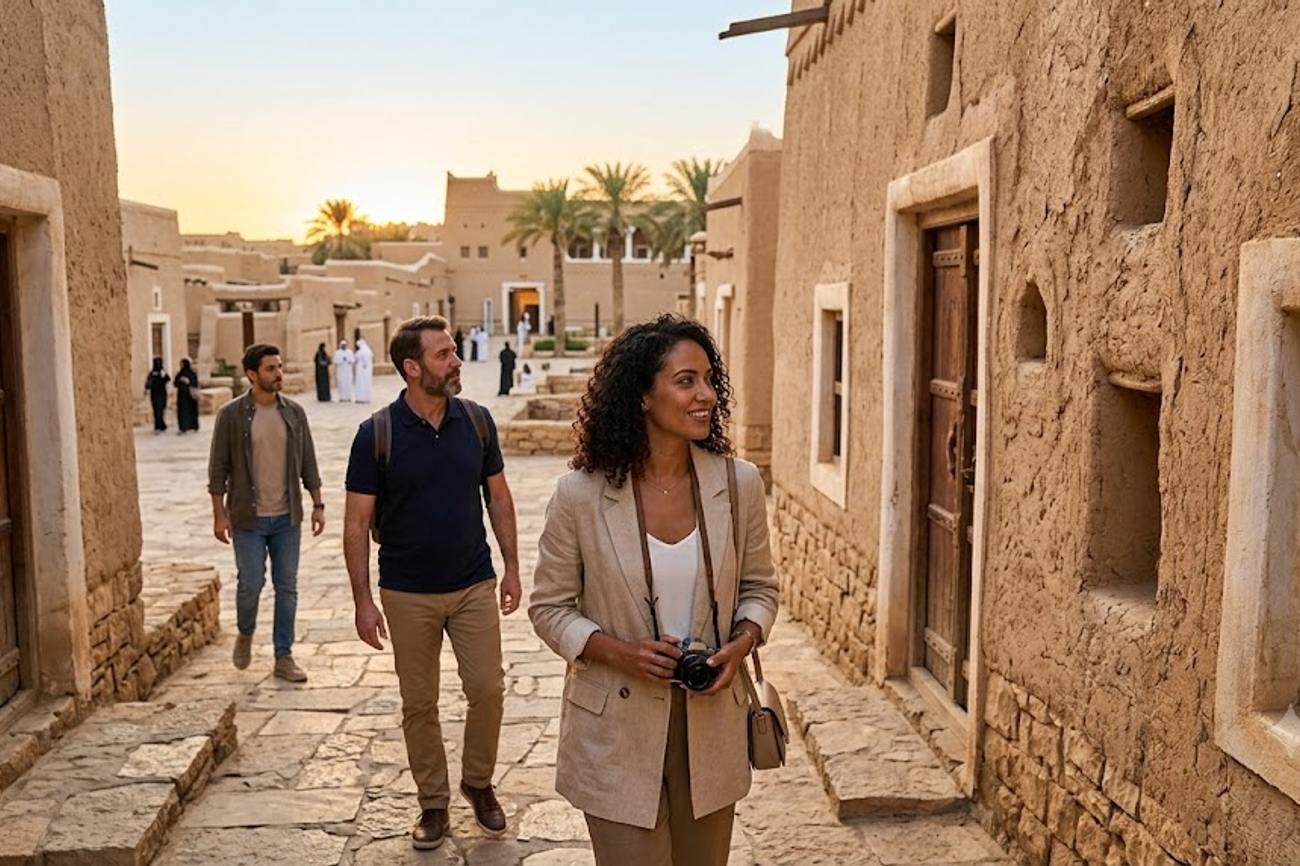
Image generated by AI
Saudi Arabia’s international visitor arrivals have surged from roughly 100,000 in 2019 to millions in the current cycle, representing one of the most aggressive market expansions in modern tourism history. This rapid scaling is now shifting from a phase of "opening the doors" to a phase of "strategic integration," where the Kingdom is no longer being marketed as a standalone curiosity but as a primary hub in multi-destination Middle Eastern circuits.
The Vision 2030 Expansion in Numbers
The current growth trajectory of Saudi Arabia is anchored in the Saudi Vision 2030 framework, a systemic overhaul of the national economy designed to reduce oil dependency. A critical component of this is the diversification of the tourism product. According to data from the World Travel & Tourism Council (WTTC), the Kingdom is aggressively targeting a massive increase in GDP contribution from the tourism sector.
Discovery Saudi, as a Destination Management Company (DMC), is operationalizing this growth by leveraging a 20-year regional footprint. The company’s expansion timeline serves as a proxy for the region's broader accessibility: starting in Jordan in 1994, expanding to the UAE in 1998, and now scaling aggressively within Saudi Arabia. This timeline indicates a strategic move toward "cluster tourism," where the Kingdom is bundled with Jordan, Bahrain, and the UAE to increase the average length of stay for international travelers.
The infrastructure supporting this growth is concentrated in several high-capital zones:
- The Red Sea Project: A luxury-tier development focusing on marine and nature-based tourism, designed to compete with established high-end coastal destinations.
- AlUla: A cultural anchor featuring the UNESCO-listed Hegra, shifting the value proposition from simple sightseeing to "experiential heritage" (hiking, stargazing, and ballooning).
- Diriyah: A heritage-centric urban development blending retail, dining, and history.
- Qiddiya: A massive investment in the "entertainment economy," focusing on sports, theme parks, and live events to capture the leisure segment.
Regional Integration vs. Isolated Destination Growth
Historically, Middle Eastern travel was fragmented, with tourists typically choosing either the luxury urbanism of Dubai or the historical depth of Jordan. The current trend, as evidenced by Discovery Saudi’s strategy, is the "Multi-Country Itinerary." By coordinating logistics across Saudi Arabia, the UAE, and Bahrain, DMCs are reducing the "friction of entry" for Western travelers who are hesitant to visit a single, unfamiliar market.
The shift toward these combined tours is particularly evident in source markets such as the United Kingdom, Italy, and the United States. Rather than selling a "Saudi trip," the industry is now selling a "Regional Odyssey." This approach mimics the successful integration of the Schengen Area in Europe, where the ease of movement between borders increases the overall market value of the region.
| Metric/Strategy | Previous Model (Pre-Vision 2030) | Current Model (Vision 2030 Integration) | Impact on Market Share |
|---|---|---|---|
| Itinerary Structure | Single-country / Isolated | Multi-country (KSA, UAE, Jordan, Bahrain) | Increased Avg. Length of Stay |
| Primary Appeal | Religious/Business | Luxury, Heritage, & Entertainment | Diversified Visitor Demographics |
| Market Reach | Regional/GCC | Global (UK, US, EU Expansion) | Higher International Arrivals |
| Product Focus | Traditional Sightseeing | Local Community & Experiential | Higher Per-Capita Spend |
| Supply Chain | Fragmented Local Vendors | Integrated Int'l Hotel/Airline Contracts | Improved Operational Control |
What This Means for Travelers
The transition from isolated tourism to integrated regional circuits creates several tangible advantages and requirements for the individual traveler. According to IATA data on regional connectivity, the increase in flight frequencies between GCC capitals is making these multi-stop trips more viable than ever.
1. Booking Windows and Logistics If you are planning a visit to the Kingdom in the next 12 to 18 months, the "bundled" approach is the most cost-effective method. Booking a multi-country package (e.g., Riyadh $\rightarrow$ AlUla $\rightarrow$ Dubai $\rightarrow$ Amman) through a DMC reduces the logistical burden of visas and internal transfers, which remain complex for first-time visitors.
2. Shift in Accommodation Strategy The entry of international hotel chains into the Red Sea and AlUla regions means that luxury travelers can now maintain brand loyalty and quality standards in remote areas. However, because these are high-demand, low-capacity zones, booking 4-6 months in advance is now mandatory for the Red Sea resorts.
3. Experiential Value Travelers should look for itineraries that include "community-based tourism." The trend is moving away from curated luxury bubbles toward authentic local interactions. This means including stays or tours that benefit local Saudi communities, which are now being integrated into official tourism programs to ensure sustainable growth.
The Trajectory of Saudi Tourism 2027-2030
Based on current investment patterns, the next three years will see a shift from "infrastructure build" to "experience optimization." The focus is moving beyond the construction of hotels to the creation of "destination narratives."
The expansion into European markets—specifically those that have been historically untapped—suggests that Saudi Arabia is attempting to move from a "bucket list" destination to a "repeat visit" destination. This requires a shift in the aviation strategy, moving from point-to-point flights to hub-and-spoke models that allow travelers to enter the region via Riyadh or Jeddah and distribute themselves across the GCC.
Furthermore, the integration of Qiddiya will likely trigger a surge in "event-based tourism." Much like the "Qatar effect" seen during the 2022 World Cup, the Kingdom is positioning itself to host global sporting and entertainment events that force a rapid increase in hotel occupancy and transportation demand over short windows. This will likely lead to extreme price volatility in Q4 of upcoming years, making early booking and flexible itineraries essential.
FAQ: Saudi Tourism Trends 2026
Will travel costs to Saudi Arabia increase? Yes, particularly in luxury zones like the Red Sea and AlUla. As demand from the US and EU grows and supply remains limited in these exclusive pockets, expect premium pricing for high-end accommodations and curated experiences.
Is now a good time to book a multi-country Middle East trip? Yes. The current integration of visas and the development of multi-country itineraries by DMCs like Discovery Saudi make this the most efficient time to visit Jordan, the UAE, and Saudi Arabia in one circuit.
Which regions are the most "travel-ready" for foreigners? Riyadh and the UAE are the most mature. However, AlUla and the Red Sea are now fully operational for luxury travelers, while Qiddiya is the primary area for those seeking entertainment and sports-centric travel.
Are there specific airlines expanding in this region? While specific carriers vary, the general trend is an increase in connectivity between Riyadh, Jeddah, Dubai, and Doha, facilitating the "cluster tourism" model mentioned in recent industry reports.
The Middle East is no longer a collection of isolated destinations; it is becoming a synchronized travel ecosystem.
Tags: Saudi-Vision-2030-Growth, GCC-Multi-Country-Itineraries, Red-Sea-Luxury-Tourism, AlUla-Cultural-Market-Share, Discovery-Saudi-Expansion-2026
Related Travel Guides
Disclaimer
This article is for informational and educational purposes only. It does not constitute legal, financial, or professional advice. While we strive to provide accurate and up-to-date information, travel policies, regulations, and conditions change rapidly. Always verify information with official sources before making travel decisions. Nomad Lawyer makes no representations about the accuracy, reliability, completeness, or suitability of the information provided. Readers should consult qualified professionals for advice specific to their circumstances. The views expressed in this article are those of the author and do not necessarily reflect the views of Nomad Lawyer.
Preeti Gunjan
Contributor & Community Manager
A passionate traveller and community builder. Preeti helps grow the Nomad Lawyer community, fostering engagement and bringing the reader experience to life.
Learn more about our team →