
Digital Payment Fragmentation Hinders Global Travel Spending Growth
A survey of 6,000 global travelers reveals a critical gap in cross-border payment interoperability and a shift toward experience-based spending.

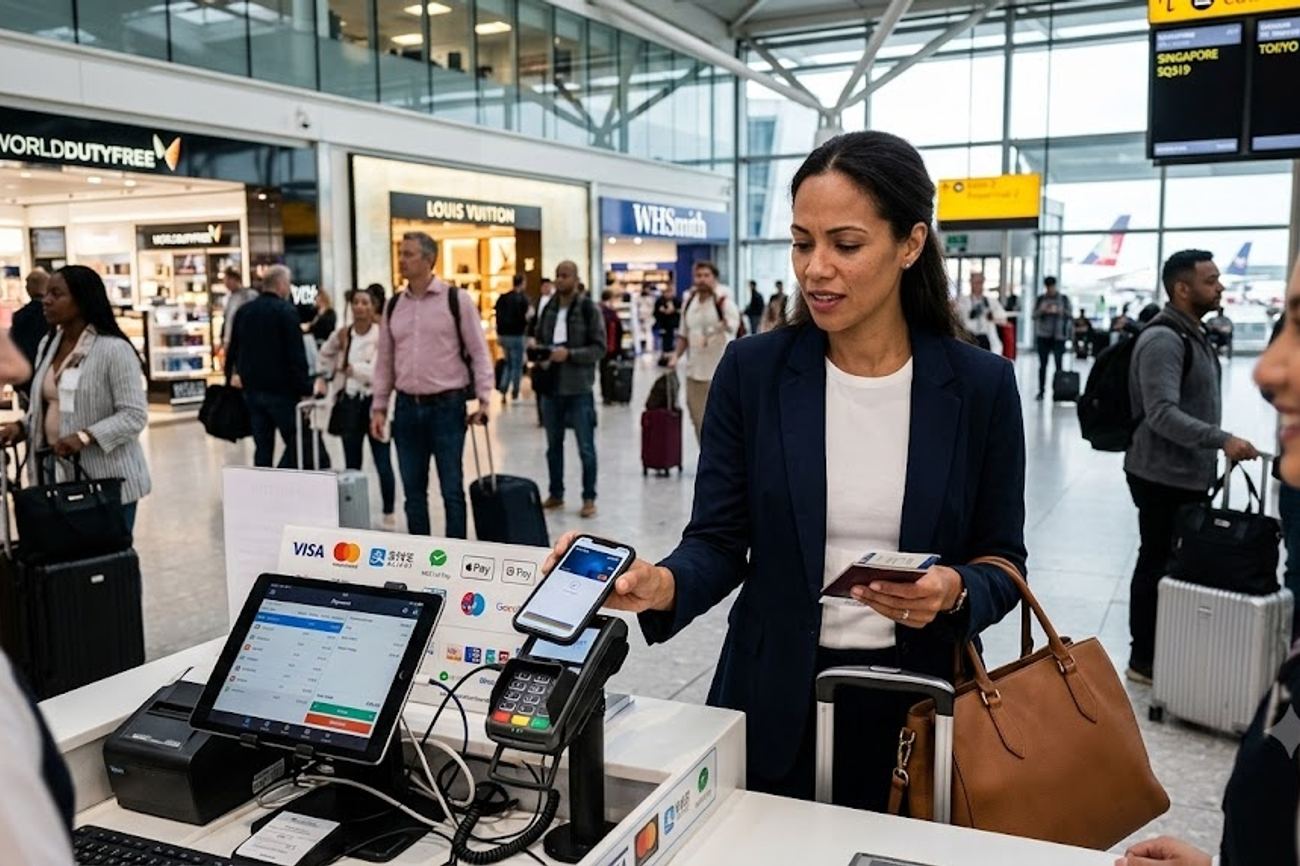
Image generated by AI
A new joint study by Alipay+ and S&P Global reveals that while 81.3% of travelers use AI for planning, fragmented payment infrastructures still force 25% of tourists to rely on cash.
The Core Development
International travelers are demanding a unified digital ecosystem, yet a significant gap persists between consumer expectations and merchant capabilities. A survey of 6,000 customers across Asia, Europe, and the United States indicates that while mobile payments are becoming the primary tool for daily spend, a lack of global interoperability creates friction at the point of sale.
The data shows a distinct shift in spending habits: tourists are abandoning shopping malls in favor of local, authentic experiences, making digital payment acceptance critical for small-scale independent vendors.
Key Facts Breakdown
- Payment Friction: 53% of travelers are uncertain if merchants will accept their preferred payment method; 54% have faced direct challenges accessing payment options abroad.
- Cash Reliance: 25% of consumers still carry cash as a backup due to system instability.
- Spending Shifts: 67% of travelers increased spending on food and beverage, while 66% increased spending on local attractions.
- Adoption Rates: 63% of consumers use mobile payments for the majority of their international transactions.
- AI Integration: 81.3% use AI for travel exploration; 73.2% would consider AI for bookings within 12 months.
- Trust Gap: Only 26% of users trust AI to handle autonomous financial transactions.
- Security Concerns: 62% of travelers worry about transaction security; 56% are concerned about exchange rates and hidden fees.
Travel Feature Demand
Travelers now view digital wallets as "super-apps" rather than simple payment tools. The following features are most desired:
| Desired App Feature | Consumer Interest (%) |
|---|---|
| Restaurant Reservations & Payments | 61% |
| Integrated Travel Booking | 58% |
| Attraction Tickets & Passes | 57% |
| Local Transportation Booking | 54% |
Why This Matters
From a logistical perspective, this data signals a pivot in how destinations must approach tourism infrastructure. The "Experience Economy" is now the primary driver of revenue, but this revenue is leaking because small, local vendors—the very people providing these "authentic" experiences—often lack the sophisticated payment rails required by international tourists.
For the aviation and hospitality sectors, the takeaway is clear: the "booking" phase is becoming commoditized by AI, but the "on-the-ground" phase is where the friction exists. If a traveler cannot seamlessly pay for a local cafe or a boutique tour via their mobile wallet, the total spend per visitor drops. The divide between NFC-based preference (US, UK, Germany) and QR-based preference (China, Malaysia, Thailand) means that "one size fits all" payment hardware is no longer sufficient for high-traffic tourist hubs.
Industry Outlook
Expect a surge in "Super-App" partnerships where payment providers integrate directly with local transport and booking APIs to eliminate the fragmented experience. We anticipate a shift toward transparent, real-time exchange rate displays within wallets to combat the 56% of users currently deterred by fee uncertainty. While AI will dominate the discovery phase, human-verified financial checkpoints will remain the standard until trust in autonomous transactions rises above the current 26%.
Internal Link Suggestions:
- Analyzing the rise of QR-code payments in Western markets
- The impact of AI on travel agency booking conversions
- Cross-border fintech trends for 2027
Related Travel Guides
Disclaimer
This article is for informational and educational purposes only. It does not constitute legal, financial, or professional advice. While we strive to provide accurate and up-to-date information, travel policies, regulations, and conditions change rapidly. Always verify information with official sources before making travel decisions. Nomad Lawyer makes no representations about the accuracy, reliability, completeness, or suitability of the information provided. Readers should consult qualified professionals for advice specific to their circumstances. The views expressed in this article are those of the author and do not necessarily reflect the views of Nomad Lawyer.
Raushan Kumar
Founder & Lead Developer
Full-stack developer with 11+ years of experience and a passionate traveller. Raushan built Nomad Lawyer from the ground up with a vision to create the best travel and law experience on the web.
Learn more about our team →