
Federal Aviation Administration Triggers Massive Denver Ground Stop as Severe Colorado Thunderstorms Unleash Unprecedented Travel Chaos and Flight Cancellations: Latest Airline News
A violent thunderstorm system across Colorado's Front Range forced the FAA to completely halt operations at Denver International Airport, sparking massive nationwide travel chaos.

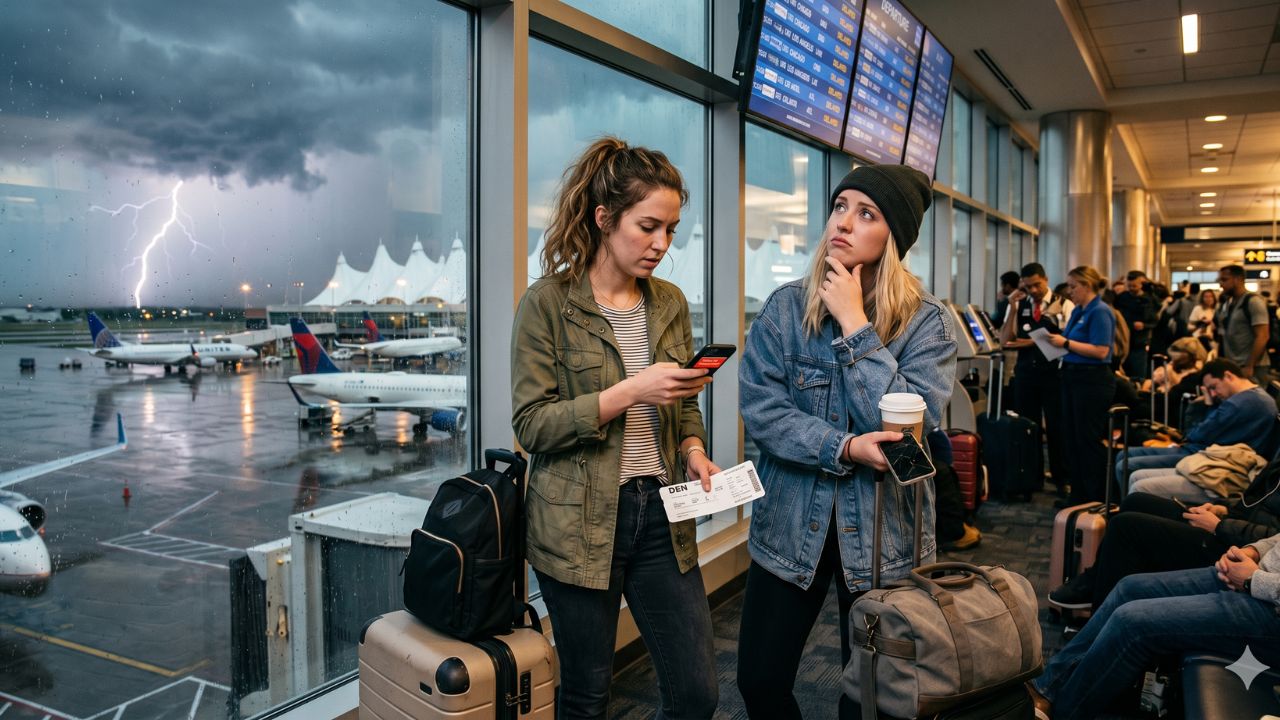
Image generated by AI
The fragile architecture of the United States domestic aviation network has suffered yet another devastating, weather-induced collapse. Delivering utterly horrifying airline news, the Federal Aviation Administration (FAA) was violently forced to issue an absolute, mandatory ground stop at Denver International Airport (DIA) as a severe, highly destructive thunderstorm system violently swept across Colorado’s Front Range between May 27 and May 28, 2026. This catastrophic meteorological event instantly triggered over 400 delayed flights and at least one total cancellation, plunging massive domestic carriers like United Airlines into complete operational gridlock. The rippling effects of this ground stop are actively devastating connected routes to Tokyo, Chicago, and New York, leaving tens of thousands of highly stressed tourists completely stranded and highlighting a terrifying escalation in nationwide airport disruptions.
The Anatomy of the Ground Stop: Why Denver Paralyzed the Nation
When massive, violent weather systems strike a highly critical central transit hub like Denver, the logistical fallout is immediate and brutally unforgiving. FAA meteorologists tracked an intense barrage of severe thunderstorms, extremely dangerous lightning strikes, and violent gusty winds slamming into the Denver metro area. In response, the FAA immediately activated a strict real-time traffic-management program, legally preventing any aircraft from departing to or arriving from DIA.
According to the latest aviation updates, this aggressive ground hold forced inbound aircraft into highly terrifying holding patterns, violently cascading into multi-hour delays for terminal gates, exhausted flight crews, and desperate connecting passengers. By the time the weather system began to clear, average delays heavily hovered around the 46-minute mark, though countless routes suffered exponentially longer delays. This specific catastrophe perfectly illustrates a terrifying statistical reality: the aviation authority officially classifies severe weather as the absolute largest single cause of modern airspace delays, responsible for a staggering 74% of all significant delays recorded over multiple consecutive years.
Section-Wise Breakdown: The National Ripple Effect
To truly comprehend how a localized Colorado thunderstorm instantly paralyzes the entire North American travel ecosystem, we must execute a section-wise breakdown of the massive aviation hubs heavily impacted by this specific ground stop.
Denver International Airport (DIA): The Epicenter of Chaos
As the absolute ground zero for this crisis, Denver International Airport descended into complete logistical anarchy. Passengers trapped inside the terminal reported agonizingly long waits at severely overcrowded gates, violently crashing airline apps during desperate rebooking attempts, and the total inability to reach corporate customer service. Because DIA operates as a massive connecting fortress for cross-country travel, hundreds of outbound evening flights were heavily delayed, causing massive blocks of travelers to violently miss their final connecting legs.
Atlanta, Chicago, and New York: The Domestic Domino Effect
The destruction at Denver did not remain isolated. Because U.S. carriers operate incredibly tight, interconnected schedules, an aircraft trapped in Colorado mathematically cannot execute its subsequent flights on the East Coast. In recent months, massive transit hubs in Atlanta, Chicago, and New York have already experienced terrifying spikes involving thousands of routine delays and flight cancellations. When the Denver ground stop hit, it poured gasoline on these already strained facilities, violently forcing major airlines to aggressively scrub flights in Chicago and New York simply because the required physical aircraft were trapped under a thunderstorm in the Rocky Mountains.
San Francisco International (SFO): Compounding the Crisis
Simultaneously, the West Coast was battling its own severe logistical nightmare. San Francisco International Airport experienced massive, high-velocity winds that independently triggered severe ground delay programs lasting for hours. This catastrophic convergence of extreme weather at both SFO and DIA entirely annihilated transcontinental flight reliability, generating hundreds of violently delayed flights and stranding crucial business travelers up and down the California coast.
Flight Details: Tracking the Real-Time Carnage
To explicitly quantify the massive operational decay triggered by this specific storm system, the following mandatory table explicitly documents the real-time performance snapshot of a critical international route directly severely affected by the Denver collapse:
| Airline | Route | Average Delay | On-Time % | Notes |
|---|---|---|---|---|
| United Airlines UA142 | Tokyo Narita ↔ Denver | ~29 minutes | ~80% | Shows typical delay patterns on international served routes |
Passenger Impact: Stranded Tourists and Billions Lost
For the average global traveler, the passenger impact of these relentless travel chaos events is absolutely devastating. When massive hubs completely lock down, tourists face a horrifying domino effect: brutally missed hotel reservations, the total loss of prepaid vacation days, and massive, unexpected out-of-pocket costs for emergency terminal survival.
From a macroeconomic perspective, industry experts explicitly estimate that unchecked flight delays and aggressive cancellations currently impose a catastrophic $34 billion annual strain directly onto the U.S. aviation sector and the wider national economy. This massive financial hemorrhage heavily includes completely lost airline revenue and devastating spillover effects violently harming local tourism and hospitality sectors. While global travel demand appears mathematically robust—with international arrivals shockingly reaching nearly 1.48 billion in 2025—these severe, highly unpredictable systemic travel delays actively threaten the very foundation of seamless international tourism.
Cross-Border Tourism: The International Fallout
This specific Denver ground stop violently disrupted massive cross-border travel patterns. Canada remains an absolute top source market for U.S. travel, and when DIA completely halts, highly lucrative transborder itineraries are instantly destroyed. Similarly, while Mexico continues to generate incredibly strong short-haul tourism, those travelers are becoming highly sensitive to the terrifying lack of U.S. connection reliability.
Consequently, highly valued European tourists from countries like the UK and Germany are now aggressively attempting to completely reroute their American itineraries, actively avoiding hubs heavily known for frequent delays. Combined with broader global disruptions—including massive geopolitical conflicts and severe jet fuel price pressures—these terrifying aviation issues have officially triggered inbound tourist volumes to slide by an alarming 15–20% in major international source markets like India.
What This Means for Travelers: Actionable Advice
As the 2026 severe weather season accelerates, domestic and international passengers must instantly adopt highly defensive travel tactics:
- Track the FAA: Aggressively utilize FAA status updates and proprietary airline apps long before heading to the airport; knowing a ground stop is active allows you to strategically delay your arrival at the chaotic terminal.
- Pad Your Arrival: During potential severe weather events, aggressively plan to arrive at the airport a minimum of 2–3 hours early to navigate collapsing security lines.
- Demand Your Rights: Understand that airlines frequently offer complete refunds, involuntary rebookings, or highly flexible travel waivers specifically during severe weather-related airport disruptions.
- Deploy Carry-On Survival Kits: Always aggressively pack massive battery chargers, heavy snacks, and essential medications in your carry-on luggage to physically survive agonizing multi-hour terminal waits.
FAQ: Denver Airport Ground Stop 2026
Why did Denver flights experience such massive delays? Extremely heavy thunderstorms, lightning, and dangerous gusty winds forced the FAA to legally enforce strict traffic-management protocols and a complete ground stop at DIA, violently halting all arrivals and departures.
How do these flight disruptions impact international tourism? Severe delays directly trigger missed connections and violently increase travel costs, causing extremely lucrative source markets like Canada, the UK, and Germany to heavily rethink routing through major U.S. transit hubs.
Can I get a financial refund for weather-related flight delays? Airlines frequently offer highly specific waivers or full refunds for weather-related delays, but exact policies vary wildly by carrier. Travelers must aggressively negotiate directly with airline customer service for specific rebooking options.
Industry Analysis: A $34 Billion Breaking Point
From a highly critical macroeconomic perspective, flight disruptions are no longer isolated, occasional inconveniences; they are massive, highly destructive structural pressures relentlessly crushing airlines and airports. The terrifying convergence of extreme weather volatility, severely outdated air traffic management constraints, and brutal capacity limits is actively destroying the reliability of U.S. aviation. If the broader travel industry refuses to rapidly adapt through highly advanced weather forecasting technology and massive infrastructure resilience, the $34 billion annual economic loss will aggressively multiply, deeply harming the long-term viability of the North American tourism sector.
Conclusion: Adapting to the New Reality of Travel
The devastating severe thunderstorms that violently locked down Denver International Airport on May 27-28, 2026, serve as a terrifying warning for the global travel sector. The immediate cascade of 400 delayed flights and the subsequent nationwide operational meltdown perfectly illustrate how fragile the American aviation network truly is. As massive carriers like United Airlines struggle to stabilize routes spanning from Tokyo to Chicago, passengers are left to bear the brutal emotional and financial costs of systemic travel chaos. Navigating the skies in 2026 now strictly requires immense tactical preparation, extreme flexibility, and a highly realistic understanding that the modern global aviation system operates perpetually on the absolute brink of total collapse.
Key Takeaways
- Massive Ground Stop: Severe thunderstorms across Colorado’s Front Range violently forced the FAA to issue a complete ground stop at Denver International Airport on May 27-28, 2026.
- 400+ Flights Impacted: The catastrophic weather event instantly triggered over 400 delayed flights, plunging massive domestic networks into complete logistical chaos.
- $34 Billion Strain: Severe weather remains the largest cause of delays (74%), contributing to a massive $34 billion annual strain on the U.S. aviation economy.
- Global Tourism Drop: Relentless U.S. hub delays are forcing international tourists from Canada, the UK, and Germany to aggressively reroute, contributing to a 15-20% drop in inbound tourism from markets like India.
- Nationwide Domino Effect: The Denver collapse violently compounded pre-existing severe delay issues at major hubs including Atlanta, Chicago, New York, and San Francisco.
Related Travel Guides
Disclaimer
This article is for informational and educational purposes only. It does not constitute legal, financial, or professional advice. While we strive to provide accurate and up-to-date information, travel policies, regulations, and conditions change rapidly. Always verify information with official sources before making travel decisions. Nomad Lawyer makes no representations about the accuracy, reliability, completeness, or suitability of the information provided. Readers should consult qualified professionals for advice specific to their circumstances. The views expressed in this article are those of the author and do not necessarily reflect the views of Nomad Lawyer.
Kunal K Choudhary
Co-Founder & Contributor
A passionate traveller and tech enthusiast. Kunal contributes to the vision and growth of Nomad Lawyer, bringing fresh perspectives and driving the community forward.
Learn more about our team →