
Denver International Airport Gridlock: 175 Flights Delayed as Commuter Chaos Strikes

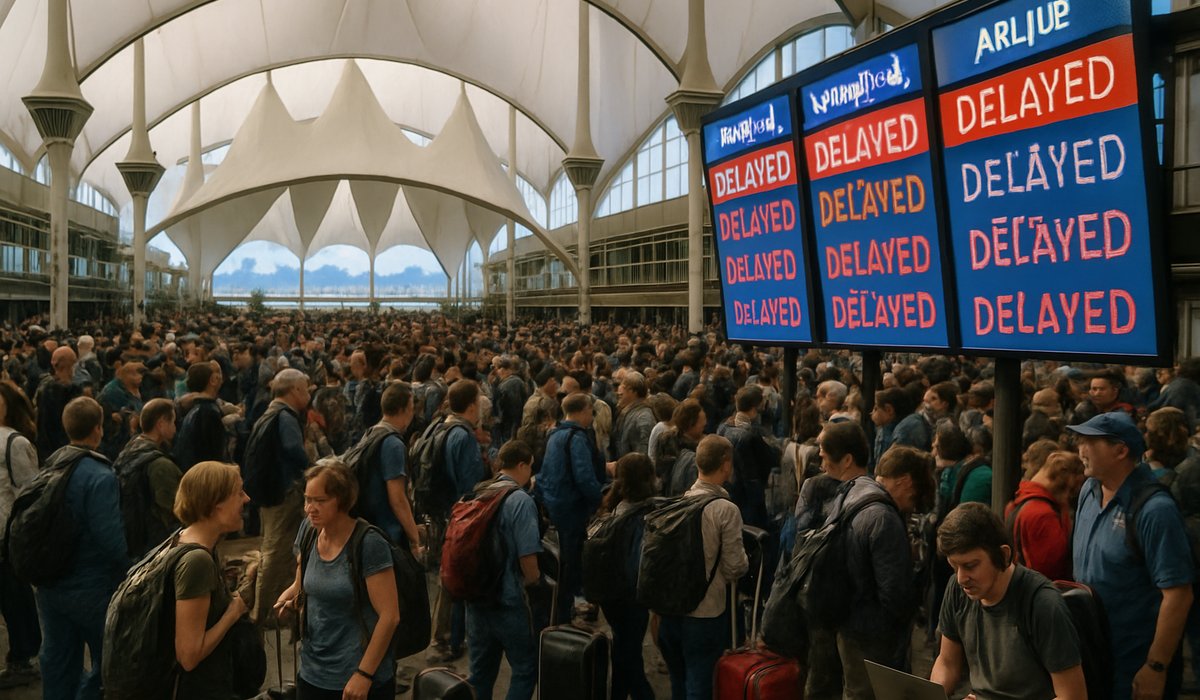
Image generated with AI
Quick Summary
- 175 flights delayed and 3 cancelled at Denver International Airport (DEN) in a major operational snarl
- Thousands of passengers across United Airlines, Southwest, and American Airlines were left stranded in crowded concourses
- The disruptions trace back to a combination of central U.S. weather fronts and ATC capacity restrictions
- Denver's role as a principal connecting hub means these delays will create knock-on effects coast-to-coast
- The FAA deployed Ground Delay Programs to throttle inbound traffic, ensuring safety over punctuality
At Denver International Airport (DEN), one of the most critical logistical hubs in the American aviation network, travel itineraries violently unraveled today. Real-time aviation tracking and official Federal Aviation Administration (FAA) data recorded a staggering 175 flight delays and 3 cancellations, catching thousands of passengers in a frustrating web of ground holds and schedule shifts.
The morning rush transformed into an endurance test. The typically efficient, sprawling concourses of DEN swelled with weary families, stressed business travelers, and anxious connecting passengers as departure boards lit up with rolling delays extending across almost every major domestic carrier.
FAA Data and the Mechanics of the Delay
The FAA’s live airport status monitors explicitly indicated restrictive operational conditions at Denver today. While the agency uses technical terminology like "delay conditions" and "Ground Delay Programs," the reality on the tarmac translated to aircraft held at gates, long lines at the de-icing pads or taxiways, and restricted inbound flow from origin airports nationwide.
These federally mandated slowdowns aren’t airline errors—they are deliberate safety protocols mapped against the "IATA delay codes." When traffic volume threatens to overwhelm runway pacing or regional air traffic control sectors, the FAA throttles the system. It is a necessary safety valve that unfortunately carries a high cost to passenger convenience.
The Root Causes: Weather Fronts and Sector Stress
Aviation analysts point to two interconnected issues suffocating Denver's operational flow today:
1. Central U.S. Weather Systems
The geography surrounding Denver often makes it highly susceptible to volatile spring weather. Severe weather fronts pushing across the central United States force pilots to deviate around enormous storm cells. These deviations require extra time, fuel, and vastly complicate the intricate spacing requirements managed by air traffic controllers. When high winds or sudden storm activity intersect with DEN’s approach paths, the FAA instantly reduces the "arrival rate" (the number of planes allowed to land per hour).
2. Air Traffic Management Bottlenecks
Operating in tandem with weather challenges is sheer volume. When a control tower or a regional radar sector nears structural capacity limits, ground stops are initiated. Planes attempting to fly to Denver from cities like Chicago or Los Angeles are ordered to remain parked at their origin gates rather than circling helplessly in Colorado airspace.
Coast-to-Coast Ripple Effects
Denver is not merely a destination; it is the structural lynchpin for transcontinental American travel. Dominant operators at the airport, specifically United Airlines and Southwest Airlines, utilize DEN to swap hundreds of thousands of passengers flying between the East and West coasts.
When 175 flights are delayed at a central hub of this magnitude, the failure is instantly exported nationwide. A delayed aircraft in Denver means a delayed departure for its subsequent flight out of San Francisco, which then causes a missed connection for a passenger waiting in Newark.
As cancellations creep into the ledger—3 outright flight scrubs reported today—entire routing chains are severed. Rebooking becomes a nightmare battle of attrition as passengers fight for limited seats on subsequent flights that are already flying at maximum seasonal capacity.
The Passenger Reality: Long Lines and Limited Options
Eyewitness accounts from inside the DEN terminals paint a grim picture of modern travel disruption. Customer service queues for major carriers snaked through the main terminal hall. Airline representatives worked frantically to process re-bookings, distribute vital meal vouchers, and—for those facing the harshest disruptions—secure overnight hotel accommodations.
However, with airlines prioritizing passengers facing tight connections or stranded unaccompanied minors, flexibility for the average traveler was a highly scarce commodity. Airline phone lines were frequently overwhelmed, leaving passengers to endlessly refresh carrier mobile apps in search of digital salvation.
What Should Travelers Do Now?
If your travel involves Denver International Airport in the immediate aftermath of this disruption, aggressive adherence to the following steps is vital:
- Do Not Rely on Airport Screens: Check your flight status directly via the FAA ATSCC portal or your airline’s mobile app before you even leave for the airport.
- Buffer Your Arrival: Ensure you are at DEN at least 2 hours before a domestic flight and 3 hours before international departures. TSA checkpoints will absolutely absorb the overflow crowds.
- Know Your Rights: While weather-related delays rarely entitle passengers to massive cash compensation under current U.S. regulations, airlines maintain strict duty-of-care policies regarding rebooking you on the next available flight. Demand clarity from ground staff regarding your options.
Source: Travel And Tour World / FlightAware
FAQ
Why did the FAA issue Ground Delays for Denver? The FAA typically utilizes Ground Delay Programs to safely space out arriving aircraft when an airport's operational capacity is reduced by adverse weather, high winds, or air traffic control volume constraints.
Are United and Southwest offering refunds for the Denver delays? Airlines are generally required by the DOT to offer refunds if a flight is outright cancelled and the passenger chooses not to travel. For delays, airlines focus on rebooking and providing vouchers depending on the length and cause of the disruption. Check directly with the carrier.
How long will the disruptions last at DEN? Disruptions at a major hub can take anywhere from 12 to 24 hours to fully flush out of the system, depending on how quickly airlines can reset aircraft rotations and crew schedules.
Related Travel Guides
Flight Delay Compensation USA: What Are Your Rights in 2026?
Navigating Denver International Airport: Lounges, Transit, and Tips
Disclaimer
This article is for informational and educational purposes only. It does not constitute legal, financial, or professional advice. While we strive to provide accurate and up-to-date information, travel policies, regulations, and conditions change rapidly. Always verify information with official sources before making travel decisions. Nomad Lawyer makes no representations about the accuracy, reliability, completeness, or suitability of the information provided. Readers should consult qualified professionals for advice specific to their circumstances. The views expressed in this article are those of the author and do not necessarily reflect the views of Nomad Lawyer.
Kunal K Choudhary
Co-Founder & Contributor
A passionate traveller and tech enthusiast. Kunal contributes to the vision and growth of Nomad Lawyer, bringing fresh perspectives and driving the community forward.
Learn more about our team →