
Denver Airport Delays: Southwest & United Cancellations
Denver International Airport faces major travel disruptions as Southwest and United cancel flights and delay over 200 operations.

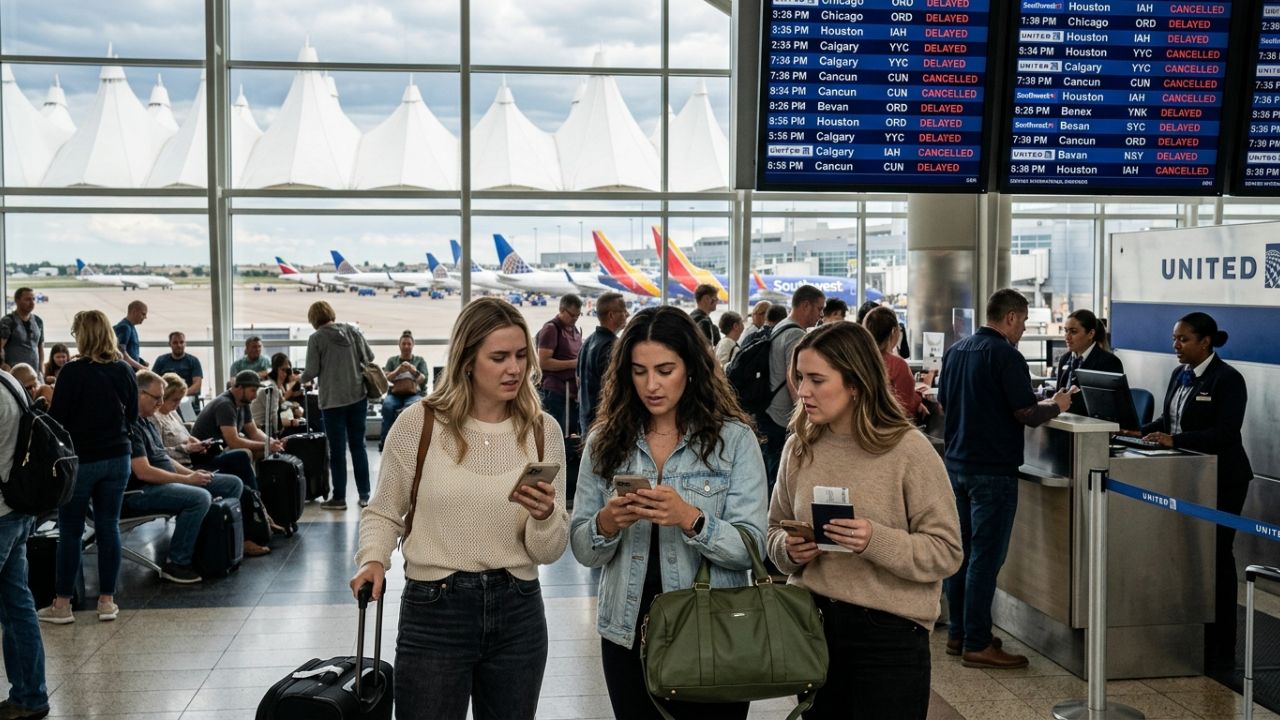
Image generated by AI
United States Experiences Massive Airline Cancellations as Denver International Airport Travel Disruptions Stall Southwest and United Flights, Urging Travelers to Stay Vigilant: New Travel Alert
Published on June 18, 2026
A sudden wave of flight cancellations and delays has triggered major Denver International Airport travel disruptions, forcing travelers to adjust plans during peak summer transits. Southwest and United Airlines have collectively grounded five flights and delayed more than 200 others, creating cascading delays that affect air hubs across the United States, Canada, Mexico, Puerto Rico, and Hawaii. Passengers must monitor real-time updates closely, contact carrier help desks, and remain flexible as airline crews and airport operators manage the operational backlog.
Quick Summary
- Carrier Cancellations: Southwest Airlines grounded four flights, and United Airlines cancelled one flight, totaling five cancellations.
- Widespread Delay Backlog: More than 200 flight delays occurred, with Southwest logging 149 and United recording 82 delayed operations.
- Geographic Ripple Effect: Disruptions at the Colorado hub spread across major and regional airports in the U.S., Canada, Mexico, and Puerto Rico.
- Passenger Advice: Aviation officials recommend checking airline mobile apps, staying calm, and exploring alternative transit modes.
- System Recovery: Terminal operators and airline crews are actively working to rebalance flight schedules and minimize passenger wait times.
According to flight tracking data from FlightAware, operational challenges at one of America's busiest aviation centers can rapidly destabilize the national travel grid. The convergence of peak summer passenger volumes and operational scheduling conflicts has placed immense pressure on airline dispatch systems. Because Denver serves as a critical connection hub for transcontinental flights, minor local backups immediately ripple outward, impacting connecting domestic and international flight corridors.
Event/Incident Details: The Scope of Denver International Airport Travel Disruptions
The flight scheduling problems at Denver International Airport (DEN) began mounting on June 18, 2026, primarily affecting the hub's two dominant carriers. Southwest Airlines bore the brunt of the cancellations, grounding four scheduled services, while United Airlines suspended one flight. Combined, the total cancellations remained low at five flights, but the delay numbers quickly escalated throughout the day. Southwest reported 149 flight delays, while United logged 82 delayed departures and arrivals.
To help passengers visualize the commercial impact, the table below breaks down the specific flight status statistics reported during the disruption period:
| Airline | Cancelled Flights | Delayed Flights | Dominant Issue |
|---|---|---|---|
| Southwest Airlines | 4 | 149 | Severe flight delay backlog |
| United Airlines | 1 | 82 | Schedule delays, single cancellation |
| Total Operational Impact | 5 | 231 | Network-wide scheduling backlog |
(Note: This data reflects initial reporting from FlightAware, and individual flight schedules remain subject to real-time adjustments as carriers work to clear the passenger backlog).
Risk/Impact of Denver International Airport Travel Disruptions
The primary danger of a bottleneck at a central hub like Denver is its rapid geographical expansion. Operational issues initially localized to Colorado quickly cascaded into major hubs and regional airports across North America, including Hawaii and U.S. territories.
The major risks and operational impacts of these delays include:
- Widespread Missed Connections: Passengers transiting through Denver experienced broken itineraries and missed onward flights.
- Extended Terminal Wait Times: Delayed departures caused passenger crowding inside concourses and check-in areas.
- Transcontinental Ripple Effects: Disruptions affected major hubs in Chicago, Indianapolis, Tucson, Dallas, Boston, Atlanta, Los Angeles, Las Vegas, Orlando, Minneapolis, Philadelphia, Phoenix, Seattle, San Francisco, Portland, Salt Lake City, San Diego, and Miami.
- International Network Strain: Delay backlogs spread to Canadian hubs like Vancouver and Montreal, as well as Mexican resort corridors like Cancun and Puerto Rico's San Juan Airport.
- Regional Transit Disconnections: Smaller feeder destinations such as Aspen, Bozeman, Spokane, Grand Junction, Casper, Wichita, Albuquerque, El Paso, Richmond, Pittsburgh, Jacksonville, Columbus, Nashville, Austin, Sacramento, Kansas City, Milwaukee, and Tulsa suffered delays due to displaced aircraft.
- Long-Distance Route Backups: Flights to remote U.S. destinations like Anchorage in Alaska and Honolulu in Hawaii faced scheduling adjustments.
What Authorities Are Saying
Airlines and aviation operators are emphasizing that schedule adjustments are crucial to maintain passenger safety during unexpected technical or logistical bottlenecks. According to guidelines from the Federal Aviation Administration (FAA), airline dispatchers must actively modify flight plans and crew duties to prevent fatigue and ensure safety compliance.
Southwest and United representatives have stated that their crews are working continuously to resolve the backlog and assist stranded travelers. Airline customer service departments are advising travelers to rely on real-time digital notifications rather than relying solely on airport information boards. Officials emphasize that passengers should review carrier policies, as they are entitled to rebooking assistance or compensation depending on the nature of the cancellation.
Practical Traveler Advice
For passengers caught in the Denver flight delays, taking proactive steps can help mitigate travel stress. Staying calm and using digital resources will expedite the rebooking process.
Travelers should follow these steps if their flight is cancelled or delayed:
- Stay calm and monitor updates: Check the airline's mobile app, text alerts, or email notifications for real-time flight status and automatic rebooking offers.
- Contact customer service immediately: Head to the airline's gate desk if you are at the airport. If the lines are long, try calling the airline's customer service number or using the online chat helper in the mobile app.
- Familiarize yourself with passenger rights: Review airline policies regarding flight disruptions. Under certain conditions, such as flights departing from the EU, passengers are legally entitled to compensation.
- Evaluate alternative transport modes: Ask the airline about the next available departure. If no immediate flights are open, research other carriers, or check for ground travel like trains and buses.
Broader Context
Denver International Airport serves as one of the busiest and most geographically central aviation hubs in the United States. Because of this strategic location, any operational slowdown at DEN has immediate consequences for the broader North American flight network. The airport connects major transcontinental corridors linking the East and West Coasts, Canada, Mexico, and the Caribbean. When major carriers like Southwest and United face scheduling pressure in Denver, it restricts seat availability and reduces travel flexibility across dozens of interconnected regional routes.
What to Expect Next / Looking Ahead
Travelers should anticipate continued pressure on seats and flight availability as operations normalize over the coming hours. Airline scheduling systems will prioritize rebooking stranded passengers, which may temporarily limit last-minute booking options on popular routes. Airport authorities and carrier crews will continue working in tandem to stabilize timetables and return the flight network to standard operating conditions.
Conclusion
Successfully navigating airport disruptions requires flexibility, patience, and timely information. By keeping a close eye on real-time flight trackers and knowing their consumer rights, passengers can reduce the impact of scheduling delays. Preparing alternative travel plans in advance remains key to managing peak-season air travel unpredictability.
FAQ: Denver International Airport Flight Disruptions 2026
Why are flights delayed and cancelled at Denver International Airport? Southwest and United Airlines are experiencing operational scheduling issues at the Denver hub, leading to five cancelled flights and over 200 delayed operations during the peak travel day.
How many flights were cancelled and delayed by Southwest and United? Southwest Airlines cancelled four flights and delayed 149 flights. United Airlines cancelled one flight and delayed 82 flights, bringing the totals to five cancellations and 231 delays.
Which destinations outside of Colorado are affected by these delays? The disruptions have spread to major airports across the United States, Canada, Mexico, Puerto Rico, and Hawaii, including cities like Chicago, Vancouver, Cancun, and San Juan.
What should I do if my flight through Denver is cancelled? Stay calm, check your airline's app for updates, contact customer service via phone or chat to avoid long queues, and review your rights regarding rebooking or compensation.
Are alternative transit options available for displaced passengers? Yes. Displaced travelers can ask their airline to rebook them on the next flight, check seat availability with other carriers, or look for alternative ground transport like trains and buses.
Related Travel Guides
LaGuardia Airport Flight Delays: United, Delta, and Southwest Cancellations
Washington DC Airspace Shutdown: Reagan National Airport Halts July 4 Flights
The 12 Best Travel Tips for Navigating Peak Holiday Airport Crowds, According to Reddit
Disclaimer
This article is for informational and educational purposes only. It does not constitute legal, financial, or professional advice. While we strive to provide accurate and up-to-date information, travel policies, regulations, and conditions change rapidly. Always verify information with official sources before making travel decisions. Nomad Lawyer makes no representations about the accuracy, reliability, completeness, or suitability of the information provided. Readers should consult qualified professionals for advice specific to their circumstances. The views expressed in this article are those of the author and do not necessarily reflect the views of Nomad Lawyer.
Kunal K Choudhary
Co-Founder & Contributor
A passionate traveller and tech enthusiast. Kunal contributes to the vision and growth of Nomad Lawyer, bringing fresh perspectives and driving the community forward.
Learn more about our team →