
Washington DC Airspace Shutdown: Reagan National Airport Halts July 4 Flights
A historic Washington DC airspace shutdown will halt all flights at Reagan National Airport on July 4 for Independence Day and America 250 events.

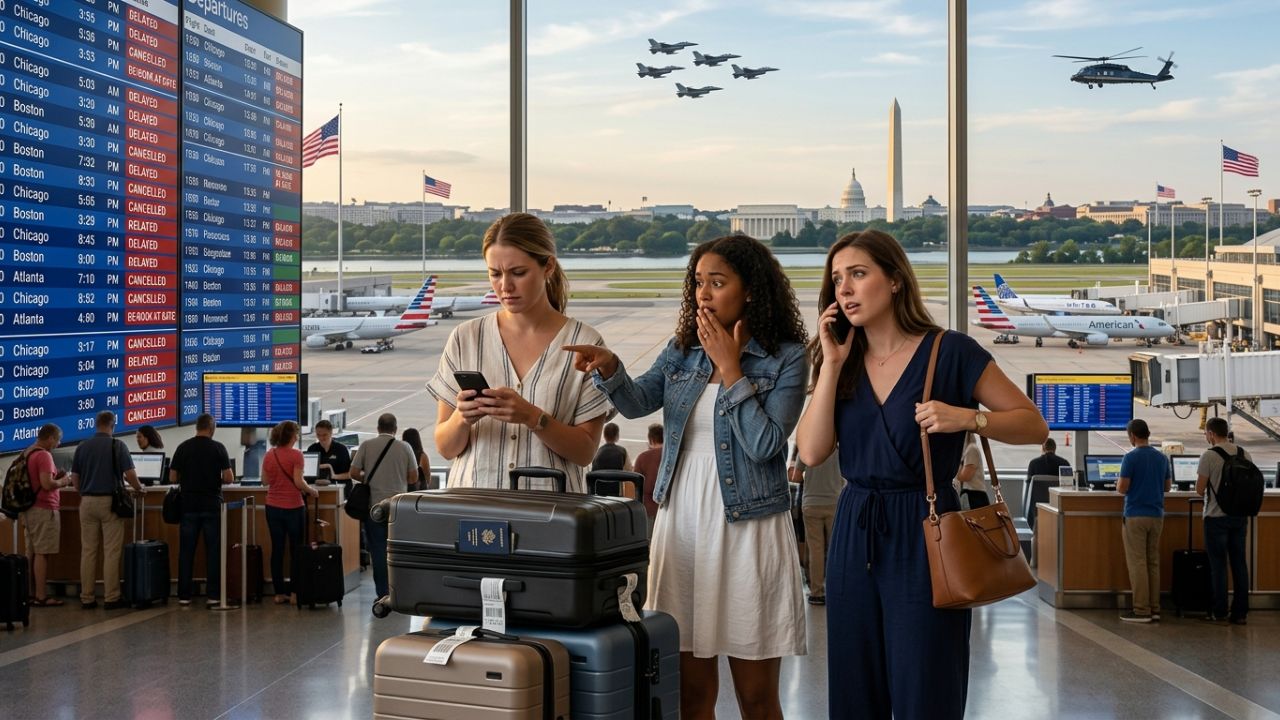
Image generated by AI
United States Enforces Severe Airspace Restrictions for July 4 Weekend, Urging Travelers to Prepare for Washington DC Airspace Shutdown: New Travel Alert
Published on June 18, 2026
A major Washington DC airspace shutdown will impact flight arrivals and departures at Ronald Reagan Washington National Airport (DCA) over the July 4 holiday weekend. To accommodate extensive America 250 national events, regulators are implementing strict operational restrictions. This security directive will affect passenger itineraries, airline schedules, and domestic flight connections across the United States.
Quick Summary
- Operational Suspensions: Ronald Reagan Washington National Airport will suspend all flight movements after midday on July 4.
- Early Holiday Restrictions: Airspace limitations begin on the afternoon of July 3, preventing select flight movements.
- America 250 Security: The temporary shutdown accommodates large-scale celebrations, including aerial flyovers and fireworks.
- Cascading Domestic Impact: Operational halts at this major U.S. capital hub will trigger ripple effects across national airline networks.
- Limited Terminal Access: Airport terminals, baggage handling, security checkpoints, parking, and concessions will remain open with reduced services.
Federal authorities are enacting these airspace closures to maintain safety over one of the most heavily monitored and restricted skyways in the country. Given the strategic role of this capital hub, even brief service suspensions can trigger cascading disruptions across the entire domestic aviation grid. As Washington, D.C. prepares for extended patriotic celebrations, the proximity of public gatherings and sky-based performances to key aviation corridors necessitates strict safety precautions.
Event/Incident Details: The Washington DC Airspace Shutdown
The phased implementation of the Washington DC airspace shutdown will start around the July 4 holiday window. Specifically, flight movements will face restrictions on Friday, July 3, 2026, when select early afternoon departures and arrivals will not be permitted. A full operational halt will take effect on Saturday, July 4, 2026, with all air traffic suspended after midday. Terminal activities and limited ground services will continue under these restrictions, but full flight operations will remain heavily restricted until Sunday, July 5, 2026.
To help travelers visualize the operational schedule during this restricted window, the table below outlines the primary times and anticipated service impacts:
| Date | Affected Hours | Restriction Level | Expected Impact on Passengers |
|---|---|---|---|
| July 3, 2026 | Early Afternoon | Select flight suspensions | Minor delays, early departure adjustments |
| July 4, 2026 | Midday to Late Evening | Complete airspace closure | Full flight halt at Reagan National Airport |
| July 5, 2026 | All Day | Ongoing residual constraints | Rebalancing schedules, recovery delays |
Airlines operating at Ronald Reagan Washington National Airport (DCA) are currently adjusting schedules to manage this restricted window. While terminal services such as ticketing, security checkpoints, and baggage handling remain operational, flight movements will cease during active closure blocks.
Risk/Impact of the Washington DC Airspace Shutdown
The temporary suspension of operations at a primary aviation gateway to the U.S. capital introduces significant risks and disruptions to commercial aviation. Because Ronald Reagan Washington National Airport plays a strategic role in domestic connectivity, minor disruptions here rapidly cascade across the national travel network.
The key operational risks and disruptions identified for the holiday period include:
- Widespread Flight Cancellations: Airlines will be forced to cancel or consolidate departures and arrivals scheduled during the active closure windows.
- Cascading Network Delays: Flights at surrounding airports and major U.S. airline corridors face delays as carriers reassign aircraft and adjust crew schedules.
- Severe Terminal Congestion: Fewer flights will operate during open windows, causing passenger volume to concentrate and increase wait times.
- Extended Ground Holding: Incoming flights may experience rolling operational pauses, holding patterns, or dynamic rerouting instructions.
- Reduced Last-Minute Booking Flexibility: The reduction in available seats will intensify pressure on booking systems and limit travel options.
- Luggage and Cargo Stalling: Baggage processing and cargo logistics may experience backlogs due to delayed flights and reduced ground-handling frequency.
What Authorities Are Saying
Aviation authorities and security agencies are prioritizing coordination to manage this complex airspace scenario. Officials highlight that the intermittent activation of controlled no-fly windows is necessary to balance public safety with national event logistics. Command centers are coordinating with event organizers and civil aviation bodies to minimize the duration of each closure.
According to regulatory guidelines from the Federal Aviation Administration (FAA), strict safety corridors must be maintained during low-altitude military flyovers and large-scale public fireworks. To manage the heavy passenger volumes during this period, the Transportation Security Administration (TSA) is preparing to process passengers during compressed operating windows. Airlines operating through the airport are already adjusting schedules and working through revised timetables to preserve essential connectivity into Washington, D.C. Carriers are advising passengers to monitor flight status actively, warning that dynamic airspace management could lead to last-minute timetable changes.
Practical Traveler Advice
To navigate the upcoming airspace restrictions and minimize travel disruption, passengers should take proactive measures. Planning ahead and staying informed are critical during peak summer travel periods.
Travelers are advised to follow these practical steps:
- Monitor flight status continuously: Check real-time airline updates, as schedules may shift with little advance notice.
- Arrive at the airport early: Allow extra time for parking, baggage drop-off, and security processing at the terminal.
- Maintain flexible itineraries: Prepare for potential flight delays, extended ground waits, or last-minute cancellations.
- Confirm rebooking alternatives: Verify if your airline offers flexible policies for travel between July 3 and July 5.
- Pack essential carry-on items: Keep medications, travel documents, and valuables in your cabin baggage in case of checked luggage delays.
Broader Context
The airspace restrictions coincide with the nationwide America 250 commemorations, which mark a historic milestone for the United States. Washington, D.C. will host multiple high-profile events, including ceremonies on the National Mall and surrounding government-adjacent areas. These celebrations will attract massive crowds, necessitating elevated security measures and strict airspace management.
The geographic proximity of Reagan National Airport to the National Mall makes it particularly vulnerable to security restrictions. Because the airport's flight corridors align close to these celebration zones, civilian flights must be paused to accommodate military flyovers and public fireworks displays. Even short-term restrictions in this highly sensitive airspace create widespread ripple effects across the national aviation network.
What to Expect Next / Looking Ahead
Full restoration of normal flight operations at the airport is expected after July 5. However, travelers should prepare for residual delays as airlines work to rebalance their schedules, reposition displaced aircraft, and clear passenger backlogs.
Airlines will prioritize rebooking affected travelers, though seat availability may remain limited immediately following the holiday weekend. Ground and air traffic systems will return to standard protocols once all America 250 aerial restrictions are officially lifted.
Conclusion
Navigating the temporary Washington DC airspace shutdown requires patience, preparation, and timely information. By monitoring real-time flight alerts and cooperating with airline instructions, travelers can successfully manage these holiday disruptions. Maintaining situational awareness will ensure a smoother journey during this historic national celebration.
FAQ: Washington DC Airspace Shutdown 2026
Why is Reagan National Airport facing an airspace shutdown for the July 4 weekend? The airport will suspend flight operations to ensure safety during the America 250 national celebrations, which include large-scale fireworks, public gatherings, and coordinated military aerial flyovers.
What are the exact dates and times of the Washington DC airspace shutdown? Airspace closures start early afternoon on July 3, with a complete flight halt after midday on July 4. Restrictions will continue to affect flights in a limited capacity until July 5.
Will the airport terminals remain open during the flight restrictions? Yes, the airport terminals will remain open. Passengers can access ticketing, baggage handling, security checkpoints, parking, and concessions, though actual flight arrivals and departures will be halted.
How will this shutdown affect connecting domestic flights? Because Ronald Reagan Washington National Airport is a major capital hub, the flight halt will cause cascading delays and schedule cancellations across the broader U.S. domestic aviation network.
What should passengers do if their flight is affected by the closure? Travelers should monitor real-time flight updates on their airline's app, arrive early at the airport, maintain flexible travel plans, and check for rebooking options with their carrier.
Related Travel Guides
Italy Confirms Nationwide Ground Handling Strike on June 26
US Urgent Travel Disruption Warning: American Airlines flight suspensions
The 12 Best Travel Tips for Navigating Peak Holiday Airport Crowds, According to Reddit
Disclaimer
This article is for informational and educational purposes only. It does not constitute legal, financial, or professional advice. While we strive to provide accurate and up-to-date information, travel policies, regulations, and conditions change rapidly. Always verify information with official sources before making travel decisions. Nomad Lawyer makes no representations about the accuracy, reliability, completeness, or suitability of the information provided. Readers should consult qualified professionals for advice specific to their circumstances. The views expressed in this article are those of the author and do not necessarily reflect the views of Nomad Lawyer.
Kunal K Choudhary
Co-Founder & Contributor
A passionate traveller and tech enthusiast. Kunal contributes to the vision and growth of Nomad Lawyer, bringing fresh perspectives and driving the community forward.
Learn more about our team →