
Delta and United Lead Return of Seatback Screens as American Airlines Retrofits 800+ Aircraft by 2028
Major carriers are reversing the 'screenless cabin' trend, with American Airlines announcing the restoration of seatback entertainment across 800+ narrowbody aircraft to meet evolving passenger demands.

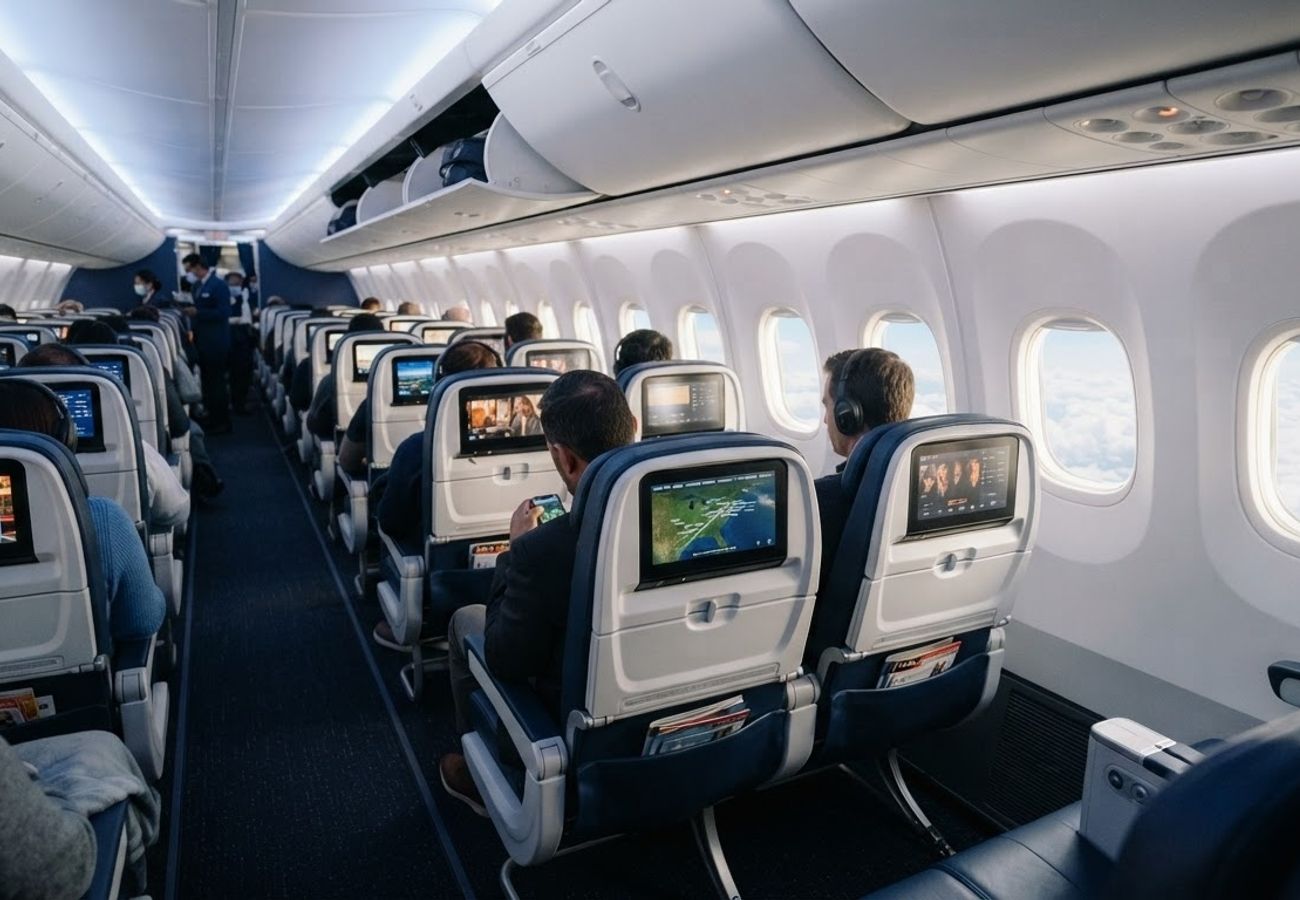
Image generated by AI
The "bring your own device" era is ending as American Airlines commits to restoring entertainment screens across more than 800 narrowbody aircraft. This industry pivot signals a return to dedicated hardware to solve the battery drain and ergonomics issues of personal streaming.
The Great Cabin Reversal
For a decade, the aviation industry bet on the smartphone. The logic was simple: passengers already owned high-resolution tablets and phones, so removing seatback screens would slash aircraft weight, reduce maintenance costs, and simplify wiring. However, the "screenless cabin" experiment is facing a massive correction.
The most definitive signal of this shift came in August 2026, when American Airlines announced a comprehensive plan to bring back seatback entertainment. The rollout is aggressive, with new narrowbody aircraft expected to feature integrated screens starting in 2028, followed by a fleet-wide retrofit program extending into the early 2030s.
This isn't just about movies. Delta and United are evolving the seatback from a simple television into a connected digital portal. These modern interfaces integrate Bluetooth audio, real-time flight tracking, and seamless device syncing, acknowledging that personal devices and built-in screens are complementary rather than competing technologies.
From 1988 Innovation to Digital Portals
The seatback screen is not a new luxury but a returning standard. The technology first debuted in 1988 via Northwest Airlines on a Boeing 747. That original "Airvision" system was a radical departure from the shared overhead monitors of the time, giving passengers their first taste of individual control. By 1991, Virgin Atlantic accelerated this trend, cementing the screen as a hallmark of long-haul service.
The current revival differs from the 1988 launch because the utility has expanded. For the modern visitor, the real impact is the removal of "digital friction." A dedicated screen eliminates the need to hold a heavy tablet for ten hours or worry about a dying battery during a transcontinental flight.
For premium carriers like Emirates, Qatar Airways, and Singapore Airlines, these systems remain non-negotiable. On long-haul routes, the screen serves as a critical tool for mental well-being, providing a hands-free way to track progress on flight maps and access comprehensive entertainment libraries without depleting personal device power.
Cultural & Environmental Value
The shift back to integrated hardware reflects a broader movement toward "intentional travel." By providing dedicated screens, airlines are reducing the reliance on fragmented personal tech, which often leads to a more cluttered and stressful cabin environment.
From a sustainability perspective, centralized entertainment systems can be more energy-efficient than hundreds of individual devices drawing power from limited onboard USB ports. Furthermore, these systems allow airlines to promote regional heritage and local tourism through curated content—introducing passengers to the culture of their destination before they even touch down.
Visitor Insider Tips
To maximize your experience in the new multi-screen cabin, keep these practical tips in mind:
- Audio Optimization: While screens are returning, high-quality audio is still personal. Always carry your own noise-canceling headphones with a 3.5mm jack; many new systems offer Bluetooth, but a wired connection remains the most stable for lag-free movie syncing.
- Battery Management: Use the seatback screen for heavy data tasks (movies, maps) to save your phone battery for arrival logistics, such as ride-sharing apps and digital immigration forms.
- The "Dead Zone" Strategy: On narrowbody flights, screens are often more reliable than onboard Wi-Fi for streaming. If the Wi-Fi is sluggish, switch to the aircraft's local server for a smoother 4K experience.
- Family Coordination: For those traveling with children, the return of screens means you no longer have to "sacrifice" the family tablet to one child. Use the built-in kids' zones to keep younger travelers occupied while maintaining your own device for work or navigation.
Tourism Outlook
The return of the screen marks a shift in how airlines view the "passenger journey." The flight is no longer just a transit phase but a curated part of the tourism experience. As American Airlines retrofits its 800+ aircraft, we can expect a standardized "digital baseline" across all major carriers.
The long-term impact will likely be a hybrid ecosystem: high-speed Wi-Fi for productivity on personal laptops, and high-resolution seatback screens for lean-back entertainment. This dual-screen approach caters to the diverse needs of the 2026 traveler, balancing the need for connectivity with the desire for comfort.
The sky is no longer a digital void, but a connected lounge where hardware finally catches up to passenger expectations.
Related Travel Guides
Disclaimer
This article is for informational and educational purposes only. It does not constitute legal, financial, or professional advice. While we strive to provide accurate and up-to-date information, travel policies, regulations, and conditions change rapidly. Always verify information with official sources before making travel decisions. Nomad Lawyer makes no representations about the accuracy, reliability, completeness, or suitability of the information provided. Readers should consult qualified professionals for advice specific to their circumstances. The views expressed in this article are those of the author and do not necessarily reflect the views of Nomad Lawyer.
Kunal K Choudhary
Co-Founder & Contributor
A passionate traveller and tech enthusiast. Kunal contributes to the vision and growth of Nomad Lawyer, bringing fresh perspectives and driving the community forward.
Learn more about our team →