
Delta Air Lines Trims US Domestic Routes to Prioritize Premium Hubs and International Growth in 2026
Delta Air Lines is strategically reducing domestic capacity in smaller US markets to reallocate resources toward high-yield premium hubs and an aggressive 2026 international expansion.

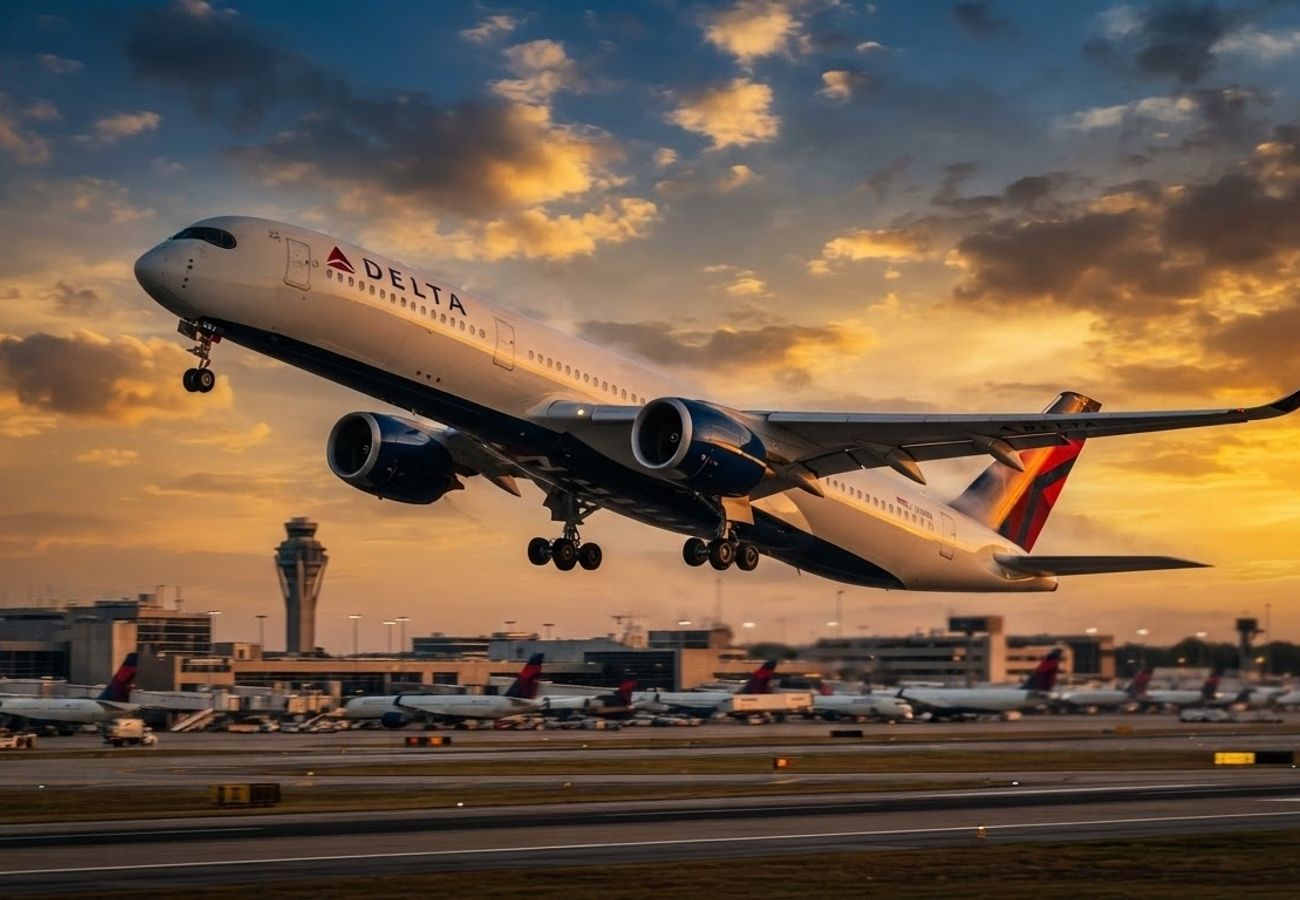
Image generated by AI
Delta is aggressively pivoting its network strategy, sacrificing low-yield domestic connectivity to capture the high-spending luxury travel market. This shift prioritizes "premium-heavy" hubs over smaller regional cities, fundamentally changing how mid-sized US markets connect to the global grid.
Strategic Pivot Toward High-Yield Markets
Delta Air Lines is currently executing a calculated rebalancing of its flight network. The carrier is quietly reducing or entirely removing select U.S. domestic routes, specifically those linking smaller and mid-sized cities to its primary hubs. This is not a sign of contraction, but rather a reallocation of finite resources—aircraft and crew—toward routes that generate higher revenue per seat.
The airline is increasingly targeting affluent leisure travelers and corporate business clients. By moving capacity away from "thin" domestic spokes, Delta is doubling down on long-haul international flights and hub-to-hub corridors where demand for premium cabins remains robust.
This strategy is further supported by Delta's joint ventures and alliances. When partner networks can sufficiently cover passenger demand, Delta is more inclined to trim overlapping services, particularly on routes that lack a strong mix of premium-class passengers.
Fleet Modernization and the Premium Product Shift
The restructuring of the network is mirrored by a shift in fleet procurement and cabin hierarchy. Delta is integrating more Airbus A321neo jets, which serve as the backbone of its next-generation narrowbody fleet. These aircraft allow the airline to deploy more premium seating on both domestic and short-haul international legs.
In a notable move in early 2026, Delta redefined its internal product structure for the U.S. and Canada. Delta Comfort was shifted into the economy segment, effectively distancing it from the "premium economy" designation. This move clarifies the distinction between standard economy and true premium experiences, such as Delta Premium Select and Delta One.
By focusing on monetization through paid upgrades rather than relying solely on status-based complimentary benefits, Delta is creating a feedback loop:
- High-Demand Routes: Receive newer aircraft, increased frequencies, and expanded premium cabins.
- Marginal Routes: Suffer from "downgauging" (smaller aircraft), reduced flight counts, or total cancellation.
Hub Dominance and International Expansion
The most aggressive growth is occurring at Delta's primary gateways, where the airline is strengthening its hold on high-traffic corridors.
Los Angeles (LAX) Expansion
Delta is reinforcing its position as the largest carrier at LAX. Key 2026 additions include:
- Increased flight frequencies to Chicago O’Hare.
- The launch of new long-haul service to Hong Kong in summer 2026.
Transatlantic and Leisure Growth
For the 2026 summer season, Delta and its joint venture partners are deploying their most extensive coordinated schedule to date. Seven new Delta-operated transatlantic routes are launching from Seattle, Boston, and New York (JFK) to high-end destinations, including:
- Rome, Italy
- Barcelona, Spain
- Nice, France
- Porto, Portugal
- Malta
- Sardinia, Italy
Additionally, Delta has launched its largest-ever seasonal Hawaii schedule. This includes a new Minneapolis–Maui route and the restoration of nonstop service between Boston and Honolulu, utilizing aircraft equipped with Delta One cabins to attract high-spend leisure travelers.
Impact on Passengers and the Competitive Landscape
The results of this strategic shift vary wildly depending on the traveler's location.
Hub-Based Travelers: Passengers in cities like Atlanta, New York, and Los Angeles will experience more choices, updated aircraft, and an expanded array of premium lounges and cabins.
Regional Travelers: Passengers in smaller communities face a more challenging environment. The loss of nonstop access to major hubs increases travel time and pushes these passengers toward low-cost carriers (LCCs) or rival legacy airlines.
Industry Implications: This move reflects a broader trend among US legacy carriers to abandon the "broad footprint" model in favor of "lucrative corridors." As Delta exits marginal markets, it creates an opening for LCCs to capture local demand with leaner cost structures. Simultaneously, it forces competitors to upgrade their own premium offerings to remain competitive on the high-stakes transcontinental and transatlantic routes.
Network Shift Summary 2026
| Focus Area | Strategic Action | Primary Goal |
|---|---|---|
| Small/Mid-Size US Cities | Route reductions & downgauging | Eliminate low-yield capacity |
| Major US Hubs (LAX, ATL, JFK) | Increased frequency & new routes | Solidify market dominance |
| International (Europe/Asia) | 7+ new transatlantic routes; HKG launch | Capture high-spend global travel |
| Fleet Strategy | Airbus A321neo integration | Increase premium seat density |
| Product Hierarchy | Delta Comfort $\rightarrow$ Economy | Clarify premium pricing tiers |
Key Takeaways
- Premium Prioritization: Delta is trading domestic breadth for premium depth, focusing on high-revenue passengers.
- Hub Concentration: Resources are being shifted toward LAX, JFK, Atlanta, and Minneapolis.
- International Aggression: Significant expansion into Europe (Sardinia, Malta, Porto) and Asia (Hong Kong) for 2026.
- Regional Decline: Smaller US cities are seeing a reduction in nonstop options as Delta optimizes for yield over coverage.
FAQ
Why is Delta cutting routes in smaller US cities? Delta is reallocating its limited fleet and crew to routes that generate higher profit, specifically targeting business and affluent leisure travelers who pay for premium cabins.
What are the new international destinations for 2026? Delta is adding routes to Rome, Barcelona, Nice, Porto, Malta, and Sardinia, as well as launching service to Hong Kong from LAX.
How has Delta Comfort changed? As of early 2026, Delta Comfort is categorized within the economy segment for US and Canada markets, rather than being marketed as a premium economy product.
The aviation industry is moving toward a "hub-and-spoke" model that favors the wealthy traveler over the regional commuter.
Related Travel Guides
Disclaimer
This article is for informational and educational purposes only. It does not constitute legal, financial, or professional advice. While we strive to provide accurate and up-to-date information, travel policies, regulations, and conditions change rapidly. Always verify information with official sources before making travel decisions. Nomad Lawyer makes no representations about the accuracy, reliability, completeness, or suitability of the information provided. Readers should consult qualified professionals for advice specific to their circumstances. The views expressed in this article are those of the author and do not necessarily reflect the views of Nomad Lawyer.
Preeti Gunjan
Contributor & Community Manager
A passionate traveller and community builder. Preeti helps grow the Nomad Lawyer community, fostering engagement and bringing the reader experience to life.
Learn more about our team →