
Delta Flight Makes Emergency Landing Following Engine Fire Incident
A Delta aircraft executed an emergency landing in March 2026 after engine complications mid-flight. Learn what triggered the incident, how safety systems worked, and passenger rights.

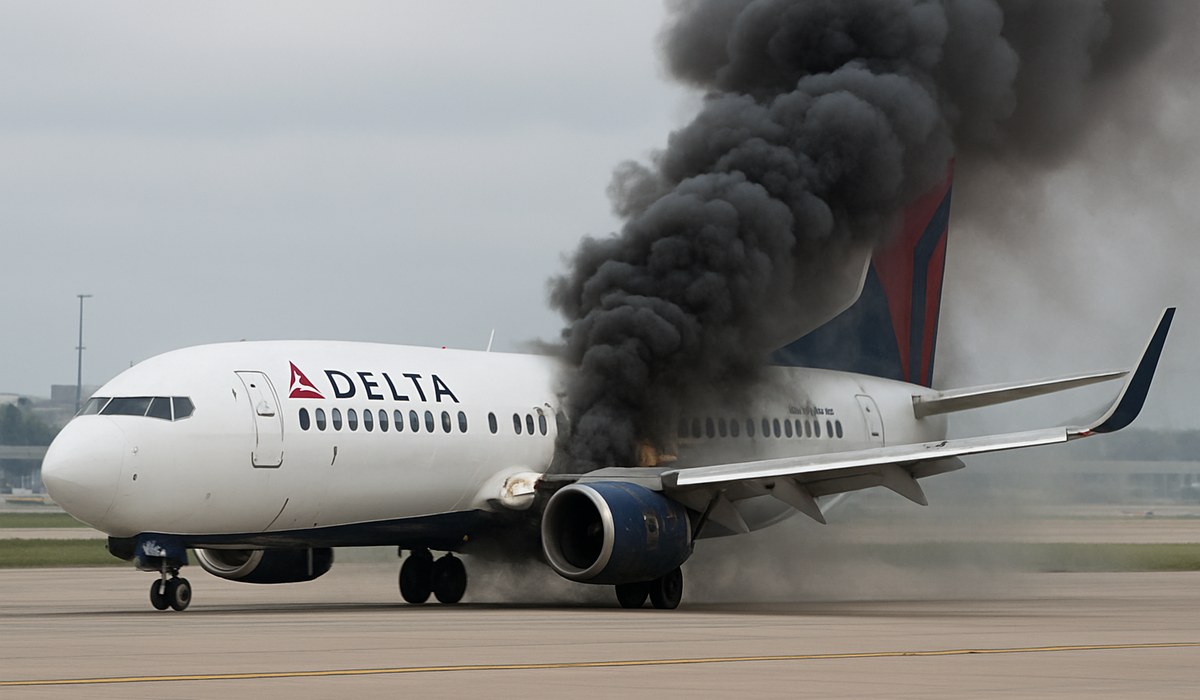
Image generated by AI
Quick Summary
- Delta aircraft diverted to nearest suitable airport after engine malfunction reported by flight crew
- Advanced aircraft fire suppression systems activated automatically, preventing escalation
- FAA launched immediate investigation into root cause of mechanical failure
- Affected passengers entitled to compensation and rebooking options under DOT regulations
A Delta flight made an unscheduled landing early this week after pilots detected mechanical complications involving one of the aircraft's engines during cruise altitude. The crew's rapid response—combined with modern aviation safety infrastructure—prevented what could have become a serious incident. The diversion brought renewed attention to aircraft maintenance standards and how carriers communicate with anxious passengers during mechanical emergencies.
The incident unfolded roughly three hours into a transcontinental service. Pilots received automated alerts indicating elevated temperature readings from the engine in question. Following standard protocol, they immediately notified air traffic control of their need to land at the nearest suitable airport. Ground crews scrambled to prepare emergency response vehicles. The aircraft descended without further complications and touched down safely. All 187 passengers and crew members deplaned without injury.
What Happened: Timeline of the Delta Flight Engine Fire
The flight departed from a major metropolitan hub on the morning of March 28, 2026. Approximately 45 minutes into the journey, the aircraft's engine monitoring system flagged a mechanical anomaly. Unlike older generations of aircraft that relied on pilot interpretation of gauge readings, this Boeing widebody's onboard computers detected the problem and triggered real-time alerts to the cockpit.
The pilots, operating under Crew Resource Management protocols standard across the industry, immediately conferred with each other and with their airline's operations center. They declared the engine compromised and requested vectors toward the nearest airport equipped to handle a large commercial aircraft. Air traffic control vectored the flight to a regional hub with full emergency service capabilities—approximately 180 miles away at that point.
During the 35-minute descent, cabin crew informed passengers of the situation in measured, professional language. The airline's communication strategy focused on transparency about what was happening and what to expect upon landing. Ground crews positioned fire suppression apparatus along the runway. Emergency medical personnel stood by. The aircraft landed without incident. Investigators later confirmed that engine components had experienced thermal stress, generating visible sparks and elevated internal temperatures, though the containment systems functioned as designed.
How Aircraft Safety Systems Prevented Catastrophe
Modern commercial aircraft incorporate multiple redundant safety layers specifically designed to handle engine emergencies. The Delta aircraft involved featured dual-engine architecture, meaning the loss of one engine does not compromise flight capability. A Boeing 777 or similar widebody can operate on a single functioning engine, though flight operations must be modified and handled with heightened caution.
The engine fire detection system operates continuously throughout flight. Sensors positioned throughout the engine nacelle monitor temperature, vibration, and fuel flow patterns. When readings exceed predetermined thresholds, the system alerts pilots immediately. Simultaneously, the aircraft's fire suppression apparatus—typically a halon-based system in engine compartments—can deploy automatically or via manual pilot activation.
In this case, the containment systems prevented flames from exiting the engine or damaging surrounding aircraft structures. The engine's high-pressure core remained sealed, confining the thermal event to the engine itself. This is precisely how the system is engineered to function. Pilots have authority to shut down an engine mid-flight, which further mitigates risk by cutting fuel flow and reducing oxygen availability around the affected component.
The aircraft's remaining engine possessed sufficient thrust to maintain altitude and speed. Pilots reduced power gradually as they descended, easing stress on all remaining systems. This controlled descent strategy, replicated thousands of times annually across global aviation operations, prioritizes a stable approach over speed.
Investigation & Safety Protocols: FAA Response
The Federal Aviation Administration opened an investigation within hours of the landing. Inspectors examined the affected engine, interviewed flight crew, and reviewed maintenance records. The FAA safety regulations and investigation procedures require comprehensive documentation of all engine-related incidents, regardless of whether injury or significant damage occurred.
Delta's maintenance team conducted a thorough post-flight inspection of the engine. Technicians documented thermal damage consistent with internal component degradation. Preliminary findings pointed toward fatigue cracking in a high-pressure compressor blade—a component subjected to extreme thermal and mechanical stress during every flight hour. Such cracks develop over time as engines accumulate operational cycles. Airlines rely on scheduled maintenance intervals, manufacturer service bulletins, and borescope inspections (internal camera examinations) to detect developing problems before they become critical.
The FAA's investigation process typically involves the aircraft manufacturer, the engine manufacturer, and the airline. All three organizations cooperate to determine whether the incident represents an isolated mechanical failure or signals a broader pattern requiring fleet-wide action. If a systemic issue emerges, the FAA can issue an Airworthiness Directive requiring all operators to inspect or replace affected components within a specified timeframe.
FAA spokesperson confirmed that preliminary data showed no maintenance violations or deferred service items related to the affected engine. This finding suggests the failure resulted from unpredictable material fatigue rather than deferred maintenance—a distinction important for understanding whether the incident reflects adequate safety protocols or negligent maintenance practices.
Passenger Rights & Compensation for Emergency Landings
Passengers aboard diverted or delayed flights are entitled to specific protections under Department of Transportation regulations. The passenger compensation rights for emergency landings include meal vouchers, hotel accommodations for overnight delays, and rebooking on alternative flights at no additional charge.
Delta arranged ground transportation to nearby hotels for the 187 affected passengers. The airline provided meal vouchers for the overnight stay. Most passengers were rebooked on subsequent flights the following morning. Some passengers elected to cancel their reservations and pursue refunds, which the airline processed per standard policy.
For passengers originating from or connecting through the affected flight, compensation eligibility depends on whether the delay exceeded specific timeframes. Flights delayed more than three hours typically trigger meal and accommodation provisions. Flights delayed more than six hours may qualify passengers for additional monetary compensation—typically $400 to $800 depending on the flight distance and airline policies.
Passengers who experienced medical issues, missed critical connections, or incurred out-of-pocket expenses can file claims with Delta's customer relations department. The airline maintains a formal process for evaluating such claims and providing supplemental compensation. Documentation—including receipts, medical records, and proof of financial impact—strengthens individual claims.
Industry-Wide Maintenance Concerns
The engine failure underscores ongoing challenges within commercial aviation regarding spare parts availability and maintenance scheduling. Airlines operate within a complex supply chain where engine manufacturers, component suppliers, and maintenance facilities compete for resources. Delays in receiving replacement parts can force airlines to keep aircraft on the ground longer than necessary.
Our earlier coverage of Airbus aircraft engine shortage challenges highlighted similar industry-wide strain on engine availability. While this Delta incident involved a Boeing aircraft, the underlying maintenance infrastructure crosses manufacturer boundaries. Independent maintenance facilities serving both Boeing and Airbus operators report extended waiting periods for specialized components and engine overhauls.
Borescope inspections—the primary method for detecting internal engine cracks before they fail—require trained technicians and access to the aircraft for several hours. Airlines must schedule these inspections during maintenance windows that don't conflict with revenue flights. The cumulative effect creates a tension between maintaining rigorous inspection protocols and maximizing aircraft utilization.
Disclaimer
This article is for informational and educational purposes only. It does not constitute legal, financial, or professional advice. While we strive to provide accurate and up-to-date information, travel policies, regulations, and conditions change rapidly. Always verify information with official sources before making travel decisions. Nomad Lawyer makes no representations about the accuracy, reliability, completeness, or suitability of the information provided. Readers should consult qualified professionals for advice specific to their circumstances. The views expressed in this article are those of the author and do not necessarily reflect the views of Nomad Lawyer.
Preeti Gunjan
Contributor & Community Manager
A passionate traveller and community builder. Preeti helps grow the Nomad Lawyer community, fostering engagement and bringing the reader experience to life.
Learn more about our team →