
Delta Air Lines Bets on Amazon LEO Over Starlink for 500 Jets: Inside the $1 Billion Connectivity Gamble
In a strategic pivot that could define in-flight internet for a decade, Delta Air Lines has selected Amazon's Project Kuiper LEO satellite system over SpaceX's Starlink for 500 aircraft. With deployment slated for 2028 and speeds up to 1 Gbps, the decision prioritizes AWS integration over immediate availability.

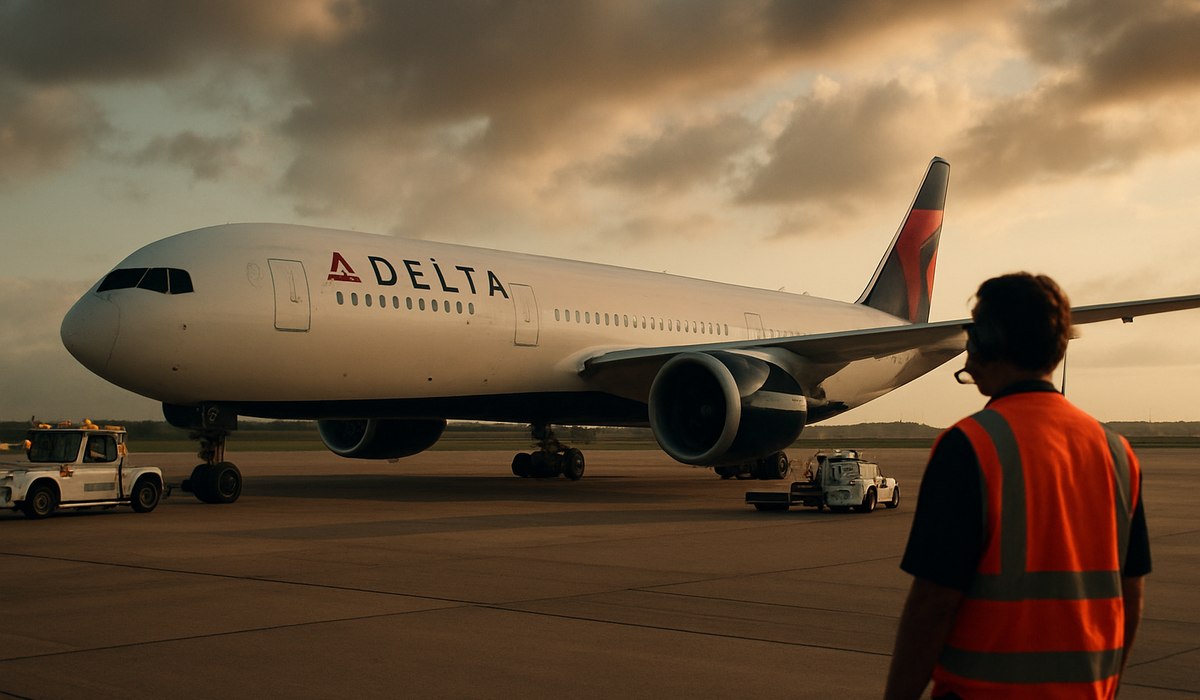
Image generated by AI
Delta Breaks from the Pack: Amazon LEO Selected Over Market-Leading Starlink
In a decision that has sent shockwaves through both the aviation and telecommunications sectors, Delta Air Lines has formally committed to equipping 500 of its aircraft with Amazon's Project Kuiper low-earth-orbit (LEO) satellite internet system—directly bypassing the market-leading SpaceX Starlink platform already being deployed by competitors. The move represents a calculated bet that long-term technological integration with Amazon's sprawling digital ecosystem will outweigh the short-term performance advantage Starlink currently delivers.
Delta's fleet-wide deployment of Amazon LEO is slated to begin in 2028, a timeline that acknowledges the system's still-evolving satellite constellation. JetBlue Airways has signaled similar interest, though conditionally—the carrier will only commit if Amazon LEO achieves full operational status by 2027. The strategic calculus is clear: Delta is trading immediate gratification for what it believes will be architectural superiority.
How Amazon LEO (Project Kuiper) Works
Amazon's Project Kuiper constellation operates fundamentally differently from the geostationary satellite systems that have historically plagued airline Wi-Fi with unbearable latency:
- Orbital Altitude: LEO satellites positioned between 367 and 391 miles above Earth, compared to 22,236 miles for traditional geostationary systems
- Latency Advantage: The dramatically closer proximity slashes signal round-trip time, enabling responsive browsing, video conferencing, and streaming
- Inter-satellite Links: High-speed optical mesh connections linking satellites together create a seamless coverage blanket without terrestrial handoff gaps
- Theoretical Speeds: Up to 1 Gbps per device, sufficient for an entire aircraft cabin simultaneously streaming HD content
The architectural difference is profound. While geostationary systems broadcast from 22,000+ miles away and suffer tortuous 600ms+ latency, Amazon LEO's sub-400-mile altitude dramatically compresses signal travel time, creating an internet experience that should feel genuinely terrestrial.
Why Delta Chose Amazon Over Starlink
Delta's CEO Ed Bastian articulated the strategic rationale in characteristically blunt terms: the decision is about cost-efficiency and technological alignment, not just speed. The deeper story involves Delta's existing relationship with Amazon Web Services (AWS), which already powers significant portions of Delta's digital infrastructure, from crew scheduling algorithms to predictive maintenance analytics.
By integrating Amazon LEO with AWS, Delta positions itself to:
- Unify its cloud computing, data analytics, and connectivity infrastructure under a single vendor ecosystem
- Negotiate bundled pricing that combines satellite bandwidth with cloud services
- Access Amazon's machine learning tools for real-time passenger experience optimization
- Reduce long-term vendor management complexity across its technology stack
The initial deployment plan covers approximately 40% of Delta's fleet, allowing a phased rollout that minimizes risk while Amazon LEO irons out expected early-constellation performance variability.
The Competitive Landscape: Who's Flying What
Delta's decision places it in a distinctly different camp from several major competitors who have already committed to Starlink:
| Airline | Connectivity Partner | Deployment Status | Fleet Coverage |
|---|---|---|---|
| United Airlines | Starlink | Active rollout | Expanding fleet-wide |
| Alaska Airlines | Starlink | Active rollout | Broad domestic fleet |
| Southwest Airlines | Starlink | Active rollout | Full fleet commitment |
| Delta Air Lines | Amazon LEO (Kuiper) | 2028 deployment | 500 aircraft (~40% fleet) |
| JetBlue Airways | Amazon LEO (conditional) | If operational by 2027 | TBD |
| American Airlines | Decision pending | Evaluating both | TBD |
The competitive dynamics create an immediate passenger experience gap. United, Alaska, and Southwest passengers are already streaming on Starlink's operational network, while Delta passengers must wait until 2028 for the promised upgrade.
Delta's Current Wi-Fi: The Interim Reality
Delta has offered free Wi-Fi across over 1,150 aircraft since 2023 through its partnership with T-Mobile. While this service satisfies basic browsing and messaging needs, it operates on older satellite infrastructure that delivers noticeably inferior performance compared to Starlink's capabilities.
Key interim limitations include:
- Higher latency on transpacific and intercontinental flights
- Inconsistent streaming quality during peak cabin usage
- Limited bandwidth for video conferencing applications
Transpacific routes are expected to receive upgraded free Wi-Fi later in 2026, but this stopgap measure still won't match the performance ceiling Delta's competitors are already offering on Starlink-equipped aircraft.
What Guests Get
- Free Wi-Fi today on 1,150+ Delta aircraft via T-Mobile partnership
- 1 Gbps Amazon LEO connectivity beginning 2028 deployment
- Seamless AWS-powered personalization including predictive entertainment recommendations
- Reduced dead zones as LEO mesh coverage eliminates traditional over-ocean connectivity gaps
- SkyMiles integration with potential bandwidth tier upgrades for elite frequent flyers
What This Means for Travelers
If you're choosing between airlines specifically for in-flight Wi-Fi quality in 2026 and early 2027, Delta is not currently your best option. United, Alaska, and Southwest passengers already enjoy Starlink's high-speed, low-latency connectivity, while Delta passengers are operating on transitional infrastructure that delivers adequate but distinctly non-premium internet performance.
However, if you're a Delta loyalist banking on long-term value, the Amazon LEO bet could potentially pay off spectacularly. The AWS integration promises something competitors can't easily replicate: a unified digital experience where your in-flight connectivity, entertainment preferences, loyalty status, and operational updates all flow through one intelligently optimized ecosystem. For now, patience is the price of that promise.
FAQ: Delta Amazon LEO vs Starlink
Why didn't Delta just choose Starlink like everyone else? Delta prioritized deep technological integration with Amazon Web Services over immediate speed gains. The airline already uses AWS extensively for its backend operations, and bundling satellite connectivity into that existing relationship offers significant long-term cost and operational advantages that a standalone Starlink contract wouldn't provide.
When will Delta passengers actually experience Amazon LEO? The initial aircraft installations are projected for 2028, covering approximately 40% of Delta's fleet. A full fleet-wide rollout timeline has not been publicly committed, and depends on Amazon successfully completing the Kuiper satellite constellation deployment.
Is Delta's current free Wi-Fi going away? No. Delta will continue offering free T-Mobile-powered Wi-Fi across its existing fleet until Amazon LEO installations begin, ensuring passengers retain basic connectivity throughout the transition period.
Related Travel Guides
In-Flight Wi-Fi Comparison 2026: Which Airlines Offer the Best Internet?
Delta SkyMiles Maximization: Getting Premium Value from the Loyalty Program
Starlink Aviation: How SpaceX Is Revolutionizing Air Travel Connectivity
Disclaimer
This article is for informational and educational purposes only. It does not constitute legal, financial, or professional advice. While we strive to provide accurate and up-to-date information, travel policies, regulations, and conditions change rapidly. Always verify information with official sources before making travel decisions. Nomad Lawyer makes no representations about the accuracy, reliability, completeness, or suitability of the information provided. Readers should consult qualified professionals for advice specific to their circumstances. The views expressed in this article are those of the author and do not necessarily reflect the views of Nomad Lawyer.
Raushan Kumar
Founder & Lead Developer
Full-stack developer with 11+ years of experience and a passionate traveller. Raushan built Nomad Lawyer from the ground up with a vision to create the best travel and law experience on the web.
Learn more about our team →