
Delta, Lufthansa, Air Canada, Emirates Suspend Middle East Routes Until October 2026 as Iran Conflict Closes Dubai, Doha, Abu Dhabi Hubs—30,000 Flights Canceled, 1-2 Million Stranded
Iran war forces closure of Dubai, Doha, Abu Dhabi airports. Delta, Lufthansa, Air Canada, Emirates cancel 30,000+ flights. 1-2 million passengers stranded until October 2026.

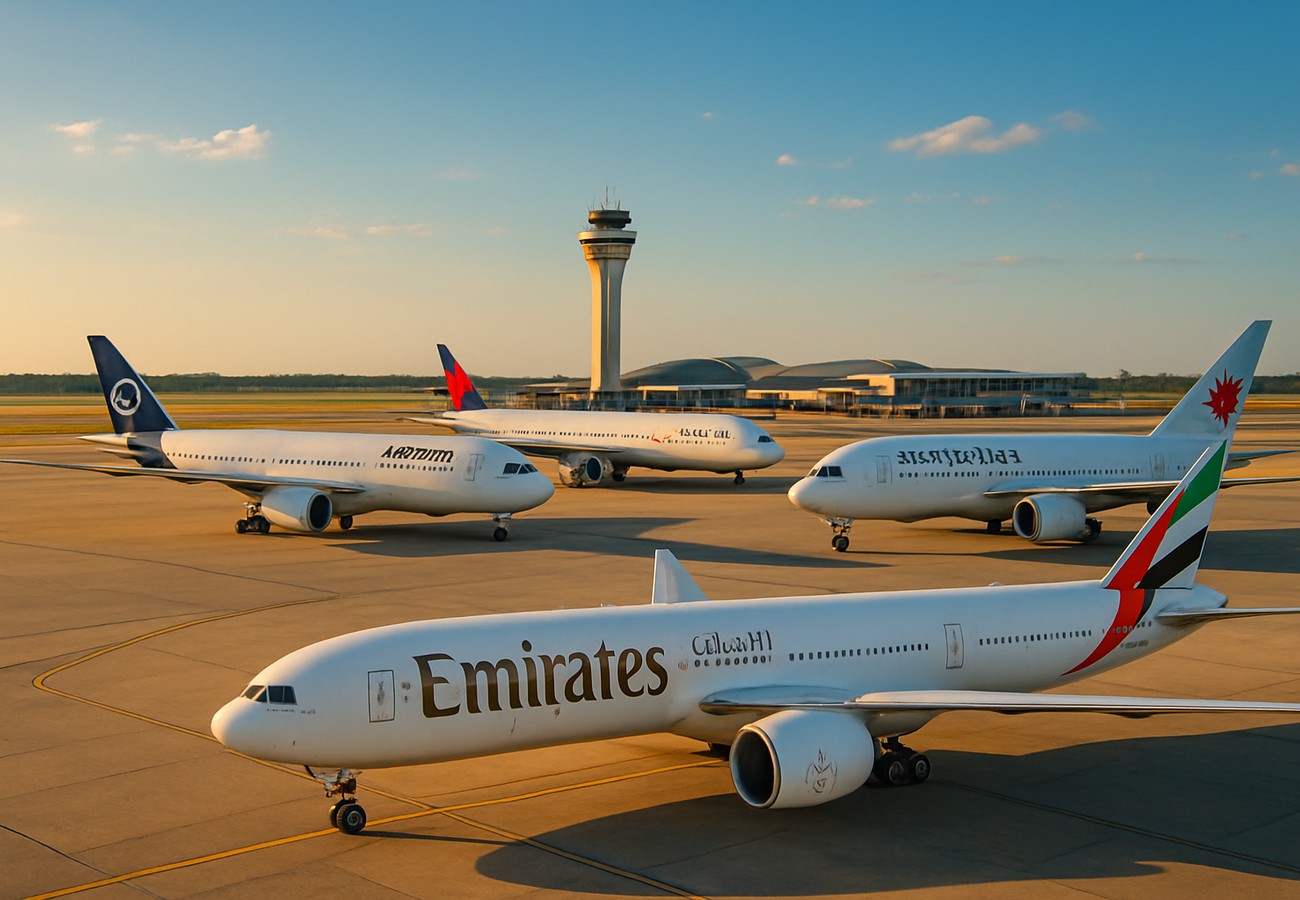
Image generated by AI
Global Aviation Crisis: Major Carriers Suspend Middle East Operations Through October 2026
The aviation industry faces unprecedented disruption as geopolitical tensions in the Middle East force the world's largest airlines to suspend operations across critical international hubs. Following U.S.-Israel strikes and Iranian retaliation in late February 2026, airspace closures over nine nations—from Iran to Bahrain—have triggered a cascade of cancellations affecting millions of travelers worldwide.
Delta Air Lines, Lufthansa Group, Air Canada, and Emirates lead the suspension list, with operations halted or severely restricted at three of the world's busiest aviation hubs: Dubai, Doha, and Abu Dhabi. The crisis has already resulted in over 30,000 flight cancellations and stranded 1-2 million passengers globally, with disruptions expected to persist until at least October 2026.
Major Airline Suspensions: Timeline and Scope
Delta Air Lines: Indefinite Tel Aviv Suspension
Delta has pulled all New York-Tel Aviv, Atlanta-Tel Aviv, and Boston-Tel Aviv flights indefinitely, citing ongoing safety risks. The carrier's Atlanta-Tel Aviv restart has been delayed to September 5, while Boston-Tel Aviv operations remain suspended beyond October. Over 1 million passengers globally are affected by these route suspensions.
The airline has issued waivers extending through February 2027, allowing affected passengers to rebook on alternative routes or receive refunds. However, reroutes through unaffected hubs add 1-2 hours of flight time and trigger additional fuel surcharges.
Lufthansa Group: Extensive Network Disruption Until October 24
Lufthansa Group—encompassing Swiss International Air Lines, Austrian Airlines, Brussels Airlines, ITA Airways, and Eurowings—has suspended operations to multiple critical destinations:
- Dubai and Tel Aviv: Suspended until May 31
- Abu Dhabi, Amman, Beirut, Dammam, Riyadh, Erbil, Muscat, and Tehran: Halted until October 24
Cargo routes have been adjusted slightly to accommodate the closures, but the group's vast European-Middle East network remains severely compromised. Detours to alternative routing add significant time and operational costs.
Air Canada: September 7 Resumption Target
Air Canada has canceled all Tel Aviv and Dubai routes until September 7, forcing Canadian passengers to reroute through European hubs. The carrier is offering full refunds or rebooking options, though alternative routings are limited and expensive.
Emirates: Reduced Schedule to 80 Destinations
Emirates, based in Dubai, operates under severe constraints with a reduced schedule serving only 80 destinations—down from its typical network of 150+. Partial airspace reopenings have allowed limited operations, but Tel Aviv, Erbil, and Amman remain completely blacked out.
The carrier has prioritized evacuations over leisure travelers, effectively halting most tourism-focused services from its home hub.
Flight Cancellations and Passenger Impact
Scale of Disruption
The initial weeks of the crisis saw over 20,000 flights axed, with an additional 30,000 cancellations projected through the summer season. Dubai International Airport, historically the world's busiest aviation hub by passenger traffic, currently manages zero daily flights in many categories.
Abu Dhabi and Doha airports operate on severely reduced schedules, with Qatar Airways gradually ramping to 120 destinations by mid-May—still far below normal capacity.
Regional Carrier Responses
- El Al (Israel): Canceled all departures through April 18, with slow expansion to 30 destinations
- Finnair: Skipping Doha until July 2, avoiding Iraq, Iran, and Syria airspace entirely
- flynas (Saudi Arabia): Suspended eight countries until April 15
- Wizz Air: Halted Medina operations indefinitely
Alternative Route Expansion
Airlines are pivoting to safer corridors:
- Cathay Pacific: Adding extra London, Paris, and Zurich flights
- Qantas: Boosting Rome and Paris services
- Singapore Airlines: Extending London Gatwick services
- Australia: Increasing Perth-Singapore to 10 weekly flights
- Japan Airlines: Adding Tokyo-London capacity
- Norway: Delaying Tel Aviv launches to June 15
Reroutes via Egypt or the Caucasus add 6-12 hours to journey times and increase fares by $200-$500 per ticket.
Major Airline Suspensions: April 2026 Status
| Airline | Suspended Destinations | Duration | Alternatives Offered |
|---|---|---|---|
| Delta | Tel Aviv (NYC, ATL, BOS) | Sep 5–Indefinite | Europe directs |
| Lufthansa Group | Dubai, Tel Aviv; Abu Dhabi, Riyadh, Amman, Beirut, Dammam, Erbil, Muscat, Tehran | May 31–Oct 24 | Istanbul, Central Asia |
| Air Canada | Tel Aviv, Dubai | Sep 7 | Paris, London reroutes |
| Emirates | Reduced regional schedule | Ongoing | 80+ destinations (limited) |
| Qatar Airways | Gradual resumption | Mid-May target | 120+ destinations |
| Cathay Pacific | Dubai, Riyadh | Jun 30 | Extra Europe flights |
| El Al | Israel departures | Through Apr 18+ | 30 destinations (slow expansion) |
| Finnair | Doha | Until Jul 2 | Iraq, Iran, Syria airspace avoided |
Note: This table reflects live airline announcements as of April 15, 2026. Verify all details directly with airlines before booking.
Jet Fuel Crisis Compounds Airline Woes
Strait of Hormuz Blockage Drives Fuel Costs
Disruptions to the Strait of Hormuz—through which approximately 21% of global petroleum transits—have caused jet fuel prices to double. This shortage forces major carriers to implement fleet reductions and capacity cuts.
Ryanair has warned of 10-20% summer schedule cuts across European routes, while U.S. carriers are trimming domestic overnight flights to offset fuel costs.
Rerouting Economics
Alternative routing via Egypt or the Caucasus increases operational costs significantly:
- Flight time extension: 6-12 additional hours
- Fare premiums: $200-$500 per passenger
- Fuel surcharges: Applied across all affected routes
Hospitality and Tourism Collapse
Hotel Occupancy Plummets
The hospitality sector faces catastrophic revenue losses:
- Dubai occupancy: Crashed from 85% to under 40%
- Riyadh luxury stays: Down 30%
- Qatar and Bahrain properties: Occupancy below 30%
- Dubai's Palm Jumeirah: Closed entire wings due to drone debris damage
Transit tourism, which typically accounts for 60% of Middle East hotel stays, has virtually evaporated.
Tourism Forecast Reversal
Middle East tourism projections have inverted dramatically:
- Previous forecast: +13% growth
- Current scenario: -27% decline in prolonged closure scenarios
Saudi Arabia loses Riyadh festival crowds, while Israel's beaches remain empty entirely.
Hospitality Adaptation Strategies
- UAE hotels: Slashing rates 20-50% to fill rooms
- Europe hotels: Seeing 15% demand spike as travelers reroute
- Paris and London: Filling rapidly with redirected bookings
- Bangkok properties: Offering Middle East refugee deals
- Dubai: Pushing staycation packages for local residents
Missile Interceptions and Safety Concerns
Airspace Debris and Infrastructure Damage
The UAE has intercepted 537 ballistic missiles since February 2026, with debris impacting critical infrastructure:
- Burj Al Arab: Direct debris impact
- Fairmont Palm: Structural damage
- Dubai runways: Littered with missile fragments
Travelers caught in affected areas have been forced to shelter in place, adding to the chaos and uncertainty.
Government Travel Warnings
The UK Foreign, Commonwealth & Development Office (FCDO) has issued "avoid all travel" alerts for:
- United Arab Emirates
- Qatar
- Bahrain
- Kuwait
These warnings have stranded approximately 200,000 British travelers, many unable to reach their destinations or return home.
Travel Insurance and Passenger Protections Surge
"Cancel for Any Reason" Insurance Demand Explodes
Travel insurance policies offering "cancel for any reason" coverage have seen demand spike 18 times normal levels as travelers seek protection against further disruptions.
Airline Waiver Programs
Major carriers have implemented extensive waiver programs:
- Delta: Waives change fees through February 2027
- United: Provides hotel vouchers for stranded passengers
- Emirates: Automatic refunds for canceled flights
- Lufthansa Group: Extended rebooking windows through October 24
Credit Card Benefits
Premium credit cards like Chase Sapphire offer additional protections, including trip cancellation insurance and emergency travel assistance.
Regional Traffic Shifts: Winners and Losers
Hub Diversification
Airlines are redirecting traffic to alternative hubs:
- Istanbul: Experiencing surge in European-Asia connections
- Mumbai: Gaining traffic from India-Europe routes
- Chinese airports: Handling Pacific crossing reroutes
- Singapore: Extending services to accommodate displaced passengers
Outbound Travel Declines
- India: Outbound travel down 15-25%
- China: Outbound travel down 15-25%
- UK: Stranded 200,000 travelers due to FCDO warnings
What This Means for Travelers
Immediate Actions
- Monitor flight status daily via FlightAware or official airline apps
- Check government travel warnings before booking Middle East destinations
- Purchase comprehensive travel insurance with "cancel for any reason" coverage
- Rebook proactively on alternative routes before capacity fills
- Verify all details directly with airlines before finalizing bookings
Alternative Destinations
Consider pivoting summer plans to:
- Greece: Unaffected by Middle East closures
- Bangkok: Offering competitive rates and increased capacity
- European hubs: Paris, London, Zurich experiencing high demand
- Southeast Asia: Alternative routing options via Singapore and Mumbai
Fare Expectations
- Rerouted flights: Expect $200-$500 premium over normal pricing
- European alternatives: May offer better value than Middle East connections
- Direct flights: Prioritize direct routing to avoid connection delays
Waiver and Refund Opportunities
- Check airline websites for extended waiver policies through February 2027
- Request full refunds if cancellations affect your travel dates
- Explore hotel vouchers and alternative routing options
- Document all communications for potential insurance claims
Outlook: When Will Operations Resume?
Phased Reopening Timeline
- May 31: Lufthansa Group targets partial resumption to Dubai and Tel Aviv
- July 2: Finnair plans Doha return
- September 5: Delta targets Atlanta-Tel Aviv restart
- September 7: Air Canada plans Tel Aviv and Dubai resumption
- October 24: Lufthansa Group full network restoration target
- October 2026: Expected end of widespread disruptions
However, these timelines remain contingent on geopolitical developments and remain subject to immediate change.
Capacity Recovery
Even as routes reopen, full capacity recovery is expected to take 6-12 months as airlines rebuild schedules, crew rotations, and aircraft positioning. Fares are likely to remain elevated through 2026.
Conclusion: Prepare for Extended Disruption
The closure of Dubai, Doha, and Abu Dhabi hubs represents the most significant aviation disruption since the COVID-19 pandemic. With 30,000+ flights canceled and 1-2 million passengers stranded, travelers must act decisively to protect their summer plans.
Key takeaways:
- Avoid Middle East connections until at least October 2026
- Reroute via Europe or Southeast Asia
Disclaimer
This article is for informational and educational purposes only. It does not constitute legal, financial, or professional advice. While we strive to provide accurate and up-to-date information, travel policies, regulations, and conditions change rapidly. Always verify information with official sources before making travel decisions. Nomad Lawyer makes no representations about the accuracy, reliability, completeness, or suitability of the information provided. Readers should consult qualified professionals for advice specific to their circumstances. The views expressed in this article are those of the author and do not necessarily reflect the views of Nomad Lawyer.
Kunal K Choudhary
Co-Founder & Contributor
A passionate traveller and tech enthusiast. Kunal contributes to the vision and growth of Nomad Lawyer, bringing fresh perspectives and driving the community forward.
Learn more about our team →