
Breaking Airline News: Delta Air Lines Deploys Massive Airbus A350 on Los Angeles-Hong Kong Route to Defeat Trans-Pacific Travel Chaos
Breaking airline news: Amidst catastrophic operational fragility, Delta Air Lines aggressively launches a massive daily nonstop Airbus A350 service between Los Angeles and Hong Kong, allowing travelers to completely bypass severe trans-Pacific travel chaos.

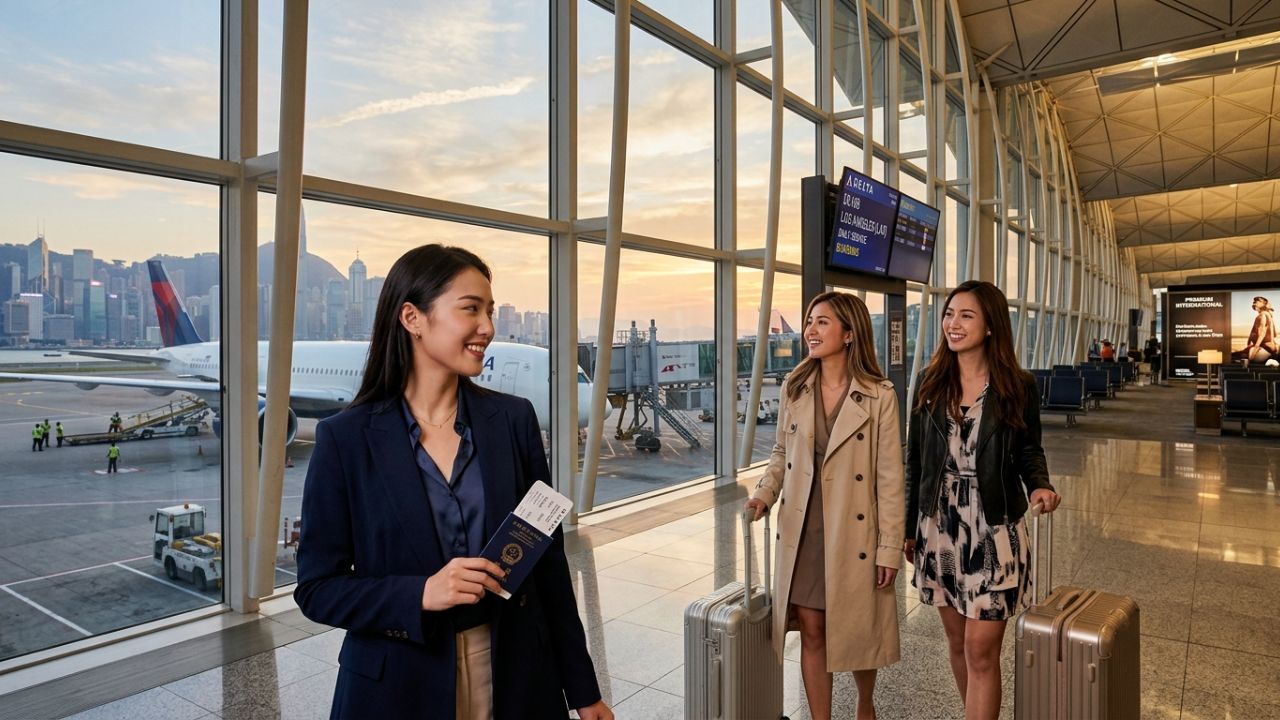
Image representing the intense strategic shift in global aviation as Delta Air Lines aggressively fortifies its trans-Pacific network, deploying the massive Airbus A350 on a daily nonstop route between Los Angeles and Hong Kong to allow passengers to entirely bypass the paralyzing travel chaos plaguing fragmented international transit networks.
Breaking Airline News: Delta Air Lines Deploys Massive Airbus A350 on Los Angeles-Hong Kong Route to Defeat Trans-Pacific Travel Chaos
As paralyzing terminal bottlenecks, sudden flight cancellations, and catastrophic operational fragility violently transform multi-hub international transit into a grueling endurance test, a highly strategic aviation expansion is offering desperate travelers a vital trans-Pacific escape route. In a massive logistical strike designed to completely bypass the severe airport disruptions currently plaguing highly fragmented connecting networks between North America and Asia, Delta Air Lines has officially announced an aggressive widebody capacity surge. Reacting to the explosive threat of global gridlock, the legacy carrier is heavily fortifying its West Coast operations by launching massive daily nonstop flights connecting Los Angeles International Airport directly to Hong Kong. By heavily deploying its flagship Airbus A350 aircraft onto this critical corridor, Delta guarantees that high-value leisure and corporate travelers can instantly escape the massive transit bottlenecks destroying the broader aviation grid, entirely eliminating the terrifying reliance on disjointed, highly vulnerable flight connections.
In a brutal demonstration of how highly vulnerable independent long-haul bookings remain to sudden operational shocks, passengers attempting to navigate across the Pacific have historically faced massive logistical nightmares when forced to transit through secondary, unstable Asian or North American hubs. When airspace congestion strikes, even minor operational delays trigger cascading flight cancellations, severing independent itineraries and stranding passengers thousands of miles from home without immediate recovery options. The new Delta Air Lines trans-Pacific expansion acts as an absolute defense mechanism against this threat. By aggressively injecting massive widebody capacity and establishing a highly secure, direct nonstop bridge, the airline has created a massive virtual fortress. This ensures that global passengers are protected by intense frequency and advanced fleet reliability, proving that escaping global travel chaos now requires intense corporate discipline to deploy flagship aircraft exactly where the transcontinental transit grid is failing.
Expanded Overview: The Anatomy of a Trans-Pacific Fortress
The terrifying reality of overwhelming passenger stress currently testing international gateways brutally exposes the extreme consequences of fragile, disconnected airline schedules. Because modern networks are deeply interconnected, the sudden loss of capacity at any localized transit hub forces the broader infrastructure to collapse. To combat this, massive direct-route expansions and flagship aircraft deployments serve as the ultimate strategic countermeasure, locking down highly lucrative passenger flows beneath a unified, high-volume corporate shield.
Section-Wise Breakdown: Decoding the Delta Air Lines Expansion
To fully comprehend the massive logistical defenses being erected by the aviation industry, corporate travel planners and frequent flyers must rigorously review exactly how this explosive schedule secures the trans-Pacific travel grid.
Los Angeles: Securing the American Pacific Gateway To understand the absolute severity of this strategic victory, one must look at the exact operational telemetry. Los Angeles International Airport (LAX) continues serving as the absolute primary operational base for this massive trans-Pacific expansion. The hub operates as one of the busiest, most heavily fortified international gateways in the United States, acting as a critical bridge to Asia-Pacific markets. To combat massive regional flight delays and secure outbound capacity, Delta uses LAX to execute this massive deployment. By funneling high-yield traffic directly onto nonstop flights out of Southern California, the airline deliberately bypasses chaotic secondary connecting hubs across the U.S. West Coast, creating a highly secure, point-to-point travel node that shields passengers from localized terminal meltdowns.
Hong Kong: The Indestructible Asian Bridge When commercial flight networks in volatile regions face collapse, centralized, heavily funded direct hubs become invaluable. Hong Kong remains one of the world’s most critical aviation, financial, and tourism fortresses. The aggressive return of daily nonstop services to this specific destination guarantees that travelers possess an indestructible gateway connecting them to mainland China, Southeast Asia, and Northeast Asia. By establishing this massive daily bridge, Delta ensures that American tourists, corporate investors, and diaspora families are entirely insulated from the massive logistical friction of utilizing fragmented regional Asian networks to reach their final destinations.
The Airbus A350 Fortress: Defeating the Chaos Crucially, this entire operation hinges on the deployment of Delta’s massive flagship aircraft. The airline has specifically selected the Airbus A350 to operate this highly critical route. The A350 acts as the ultimate flying fortress; designed for ultra-long-range operations, it offers extreme reliability and operational efficiency that drastically reduces the likelihood of mechanical delays. For premium passengers desperate to escape the physical toll of mass transit chaos, the aircraft delivers improved cabin pressure, larger windows, heavily reduced cabin noise, and highly advanced premium cabin products. This deployment guarantees that travelers remain physically and psychologically protected during the grueling trans-Pacific crossing.
Strategic Trans-Pacific Telemetry Matrix
To guarantee that travelers can aggressively track the specific intelligence regarding this massive operational expansion, the following matrix details the exact, verified data confirming Delta's strategic defense against global travel chaos.
| Strategic Operational Metric | Verified Route Expansion Data |
|---|---|
| Operating Carrier | Delta Air Lines |
| North American Fortress Hub | Los Angeles International Airport (LAX) |
| Asian Destination Gateway | Hong Kong |
| Operational Deployment Frequency | Daily nonstop flights |
| Strategic Fleet Deployment | Airbus A350 |
Data reflects the massive strategic network expansion designed to eliminate operational threats and global passenger disruption.
Passenger Impact and Industry Analysis
For the millions of passengers moving between North America and Asia, the effect of this massive capacity injection is overwhelmingly positive. A massive nonstop route expansion aggressively eliminates uncertainty; travel plans are violently protected from the cascading failures and sudden flight cancellations that plague capacity-starved connecting corridors. Corporate executives, technology sector professionals, and premium tourists expecting a highly reliable experience no longer face the terrifying prospect of navigating complex, independent transfers only to find their onward trans-Pacific flights severely delayed or severed.
The global aviation industry is currently witnessing a brutal reality: nonstop widebody dominance is now the ultimate competitive advantage. Aviation industry analysts confirm that carriers attempting to force long-haul passengers through massive, congested multi-stop itineraries are destined to suffer severe operational bottlenecks and massive brand damage. By aggressively deploying daily Airbus A350 flights directly between Los Angeles and Hong Kong, Delta establishes a massive benchmark for intercontinental transportation planning. This strategy guarantees that massive economic ties spanning finance, technology, and entertainment continue to recover and expand without falling victim to localized airport disruptions.
Conclusion: Surviving the Chaos
As the extremely critical global transit network braces for further instability driven by severe weather and sudden operational failures, this massive Delta Air Lines expansion represents a highly strategic victory for travelers. Passengers desperate to avoid sudden flight cancellations and the severe logistical nightmare of being stranded mid-journey must immediately execute aggressive booking strategies. Travelers must fiercely prioritize booking massive, direct widebody routes backed by legacy carriers, utilizing fortified bridge hubs like Los Angeles and Hong Kong to bypass the massive terminal gridlock plaguing vulnerable connecting gateways. This intelligence proves that surviving the modern era of commercial aviation relies entirely on anticipating sudden operational failures and flying exclusively on heavily fortified, nonstop intercontinental corridors.
Key Takeaways
- Massive Trans-Pacific Expansion: Delta Air Lines has aggressively launched nonstop flights connecting Los Angeles to Hong Kong.
- Fortified Fleet Deployment: The airline is exclusively utilizing the massive, highly advanced Airbus A350 to guarantee operational reliability.
- High-Frequency Defense: The route operates with daily nonstop frequencies, protecting travelers from the bottlenecks of multi-day layovers.
- Gateway Dominance: The operation relies entirely on utilizing LAX and Hong Kong as heavily fortified, indestructible aviation bridges.
- Passenger Survival: Stranded travelers must utilize direct, nonstop Airbus A350 itineraries to guarantee trans-Pacific connectivity and avoid the catastrophic travel chaos associated with highly fragmented, multi-stop global flights.
Related Travel Guides
Disclaimer
This article is for informational and educational purposes only. It does not constitute legal, financial, or professional advice. While we strive to provide accurate and up-to-date information, travel policies, regulations, and conditions change rapidly. Always verify information with official sources before making travel decisions. Nomad Lawyer makes no representations about the accuracy, reliability, completeness, or suitability of the information provided. Readers should consult qualified professionals for advice specific to their circumstances. The views expressed in this article are those of the author and do not necessarily reflect the views of Nomad Lawyer.
Kunal K Choudhary
Co-Founder & Contributor
A passionate traveller and tech enthusiast. Kunal contributes to the vision and growth of Nomad Lawyer, bringing fresh perspectives and driving the community forward.
Learn more about our team →