
Delays Snarl Flights at Washington Dulles as 100+ Services Disrupted
Over 100 flights disrupted at Washington Dulles International Airport on May 9, 2026 after air traffic control equipment failure triggers cascading delays across East Coast network during peak evening operations.

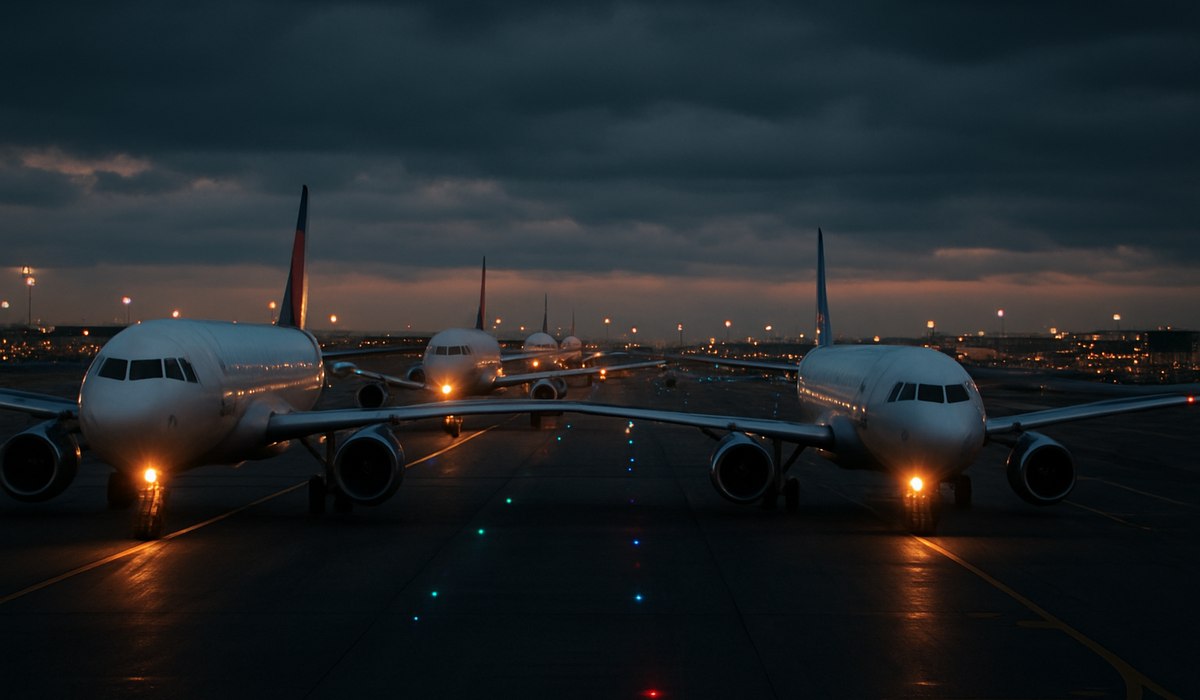
Image generated by AI
Major Air Traffic Systems Failure Cascades Through Washington Dulles
Over 100 flights faced significant disruptions at Washington Dulles International Airport on May 9, 2026, when a critical air traffic control equipment malfunction triggered widespread delays and operational chaos across the East Coast aviation network. The technical failure, occurring during peak evening travel hours, grounded departures, diverted inbound services, and left thousands of passengers stranded across multiple connecting hubs. The incident demonstrates how single-point infrastructure failures in the National Airspace System can ripple through interconnected airports and airline networks within minutes.
The equipment outage affected not only Dulles but also the two other major Washington-area airports—Ronald Reagan Washington National Airport and Baltimore/Washington International. Controllers managing traffic across the region implemented emergency protocols as the system failure unfolded, but the damage to flight schedules had already begun accumulating rapidly.
Equipment Outage Ripples Through Washington Airspace
The root cause stemmed from a failure in air traffic control systems managing operations across the Washington Terminal Radar Approach Control facility. According to Federal Aviation Administration advisories, the outage disabled radar and communication equipment that controllers depend on to sequence and separate aircraft. This forced the FAA to implement a ground stop affecting all departures bound for Dulles and flow restrictions on inbound traffic.
During the initial 90 minutes of the outage, no flights could depart from Dulles for destinations across the United States. Controllers worked from degraded systems while engineers worked to restore full functionality. The ground stop remained in effect until technicians completed repairs, after which controllers began working through the accumulated backlog of delayed flights.
Ground controllers at en route centers nationwide received instructions to hold departures destined for the Washington region. This created upstream delays at major hubs including Atlanta, Dallas-Fort Worth, Denver, and Chicago, as aircraft waiting for departure slots consumed gate space and crew time. For real-time tracking of how this incident unfolded, FlightAware showed departure delays exceeding three hours during peak disruption windows.
Ground Stop and Flow Restrictions Cascade Across Region
When air traffic systems fail, the FAA's standard response is implementing graduated restrictions to prevent further congestion. On May 9, controllers initiated a complete ground stop for Dulles departures around 5:45 p.m. Eastern Time. Twenty minutes later, the FAA expanded restrictions to include arrivals, effectively freezing all movement in and out of the airport.
Airlines operating hub connections through Dulles—primarily United Airlines and American Airlines—faced immediate cascading problems. Aircraft scheduled to arrive from connecting cities found themselves holding in the air, burning fuel while waiting for ground clearance. Some inbound flights were diverted to Baltimore Washington International or other regional airports to accommodate the massive queue.
Flow restrictions on other airports feeding Dulles meant that delays snarl flights throughout the network. A flight departing Miami for Dulles connection faced gate holds before departure. A San Francisco-bound passenger connecting through Dulles saw their transatlantic service affected by aircraft positioning problems. The FAA maintained restrictions for approximately three hours before declaring normal operations resumed around 8:45 p.m.
Visit the FAA's official status page for real-time information on any ongoing disruptions affecting your travel plans.
Airlines Scramble to Rebalance Aircraft and Crew
Once the ground stop lifted and flights began moving, airlines faced an enormous puzzle of repositioning aircraft and crews. Most flights that eventually departed from Dulles experienced delays of 90 minutes to three hours. Every minute of delay compounds crew scheduling challenges, as pilots and flight attendants approach Federal duty-time limits that prevent them from operating additional flights.
United Airlines and American Airlines, both with significant presence at Dulles, had to make difficult decisions about which flights would depart that evening versus which would be rebooked to May 10. Aircraft that arrived late found compressed turnaround windows—sometimes just 45 minutes instead of the scheduled 90 minutes—leaving ground crews scrambling to refuel, restock, and prepare cabins for the next departure.
Connecting passengers faced the highest degree of disruption. A passenger booked on a 4:15 p.m. departure from Dulles to London, connecting from Chicago, watched their aircraft delayed by equipment being out of position. Many connections became impossible to make, forcing airlines to rebook passengers onto different flights the following day, alternative routings through Newark or Boston, or competitive carrier services.
The complexity multiplied because Dulles serves as a major international hub with long-haul flights to Europe, Latin America, and Africa. A single delayed inbound aircraft from Frankfurt affects not just Dulles passengers but also crews and aircraft scheduled for outbound flights to multiple international destinations. By 11:00 p.m., cascading delays extended across evening and overnight flight schedules.
Operational Impact Extends Into Overnight Period and Following Day
The tight scheduling of modern aviation meant that delays originating in early evening operations extended their impact well into the overnight and next morning schedule. Aircraft that should have completed three rotations on May 9 had only finished one by midnight, forcing them into recovery positions on May 10.
Early morning flights on May 10 operated with aircraft arriving late from May 9 disruptions. A 5:45 a.m. departure to Los Angeles found its scheduled aircraft still in maintenance after arriving from a 11:15 p.m. inbound flight. Ground crews worked through the night to service aircraft, but the cascading impact was unavoidable.
Passengers on May 10 morning flights experienced secondary delays as the airline network worked to normalize schedules. Some flights remained cancelled as airlines made strategic decisions to operate only their most profitable or essential services until normal patterns resumed. Complete recovery typically takes 24-48 hours when disruptions of this magnitude occur during peak travel periods.
The incident highlighted why Dulles holds critical importance in the East Coast aviation ecosystem. When Washington Dulles services are disrupted, passengers across the entire continent experience ripple effects through connecting flights and aircraft rotations.
Key Disruption Data
| Metric | Value |
|---|---|
| Total Flights Affected | 106+ services |
| Maximum Departure Delay | 3+ hours |
| Ground Stop Duration | Approximately 3 hours |
| Airports Affected | Dulles, Reagan National, BWI |
| Peak Disruption Time | 5:45 p.m. - 8:45 p.m. EDT |
| Primary Cause | Air traffic control equipment failure |
| Passengers Impacted | Estimated 15,000+ |
| Recovery Time | 24-48 hours to full normalcy |
What This Means for Travelers
Air traffic disruptions of this magnitude create immediate challenges for travelers. Understanding your rights and options helps you navigate rebooking and compensation processes.
Traveler Action Checklist:
-
Verify flight status immediately – Check your airline's website or the FAA's status page for official information rather than relying on terminal announcements alone.
-
Contact your airline directly – Call the airline's customer service line to understand rebooking options. Airlines must offer flights on competing carriers if they cannot accommodate you within 24 hours.
-
Document everything – Save confirmation numbers, receipt copies, and time-stamped photos of delay announcements for potential compensation claims.
-
Request meal and accommodation vouchers – If delayed more than 3-4 hours, you're entitled to meals, refreshments, and hotel accommodations at carrier expense under DOT regulations.
-
Explore compensation eligibility – Under DOT rules, you may receive $400-$750 compensation for delays exceeding 3-5 hours, depending on flight distance.
-
Monitor live flight tracking – Use FlightAware to watch your rebooked flight's real
Disclaimer
This article is for informational and educational purposes only. It does not constitute legal, financial, or professional advice. While we strive to provide accurate and up-to-date information, travel policies, regulations, and conditions change rapidly. Always verify information with official sources before making travel decisions. Nomad Lawyer makes no representations about the accuracy, reliability, completeness, or suitability of the information provided. Readers should consult qualified professionals for advice specific to their circumstances. The views expressed in this article are those of the author and do not necessarily reflect the views of Nomad Lawyer.
Kunal K Choudhary
Co-Founder & Contributor
A passionate traveller and tech enthusiast. Kunal contributes to the vision and growth of Nomad Lawyer, bringing fresh perspectives and driving the community forward.
Learn more about our team →