
Delays snarl flights at Washington Dulles as 106 services disrupted
Over 100 flights face delays and three cancellations at Washington Dulles International Airport on May 9, 2026, affecting United, American, and Delta during peak Saturday travel window.

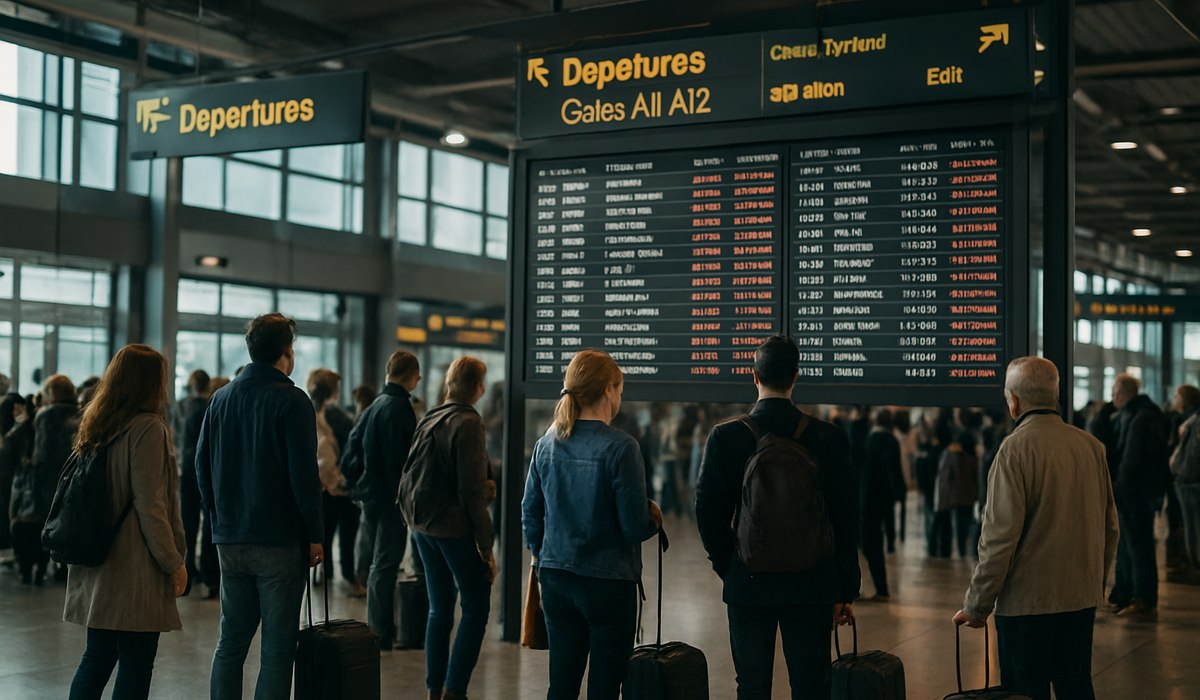
Image generated by AI
Major Operational Disruption Grounds 106 Flights at Washington Dulles
Washington Dulles International Airport experienced significant travel chaos on Saturday, May 9, 2026, as operational disruptions cascaded across the region's primary international gateway. Flight-tracking data revealed that 106 flights were delayed while three services faced outright cancellation, affecting major U.S. carriers including United Airlines, American Airlines, and Delta Air Lines. The disruption impacted both domestic and international routes during one of the busiest travel windows of the week, leaving hundreds of passengers scrambled for alternative bookings and updated information.
The delays ranged from modest 30-minute schedule adjustments to more severe ground holds exceeding 90 minutes on certain routes. Peak disruption concentrated in the late afternoon and early evening bank periods, when connection loads at this major hub typically reach maximum capacity.
Understanding the Cascade: Why Delays Snarl Flights Across Networks
When operational issues develop at a major hub like Washington Dulles, the ripple effects extend far beyond immediate passengers. The airport functions as a critical long-haul gateway for the Washington, D.C. region, handling hundreds of daily operations to domestic cities, Europe, the Middle East, and other international destinations. A disruption affecting even a small percentage of this volume creates compounding delays through aircraft repositioning challenges, crew duty-time limits, and missed connection windows.
Delays snarl flights at hubs because tight connection patterns depend on precise timing. When an inbound flight arrives late, the aircraft cannot immediately depart for its next scheduled service. Crews facing duty-time restrictions may require relief crews, further delaying departures. Ground handling, refueling, and security processes create additional recovery time requirements that can push evening departures well beyond their original departure windows.
Saturday's disruption demonstrated this cascading effect in real time. Early afternoon delays propagated through the system, creating bottlenecks for evening long-haul operations. Transatlantic flights, which require optimal timing to meet crew regulations and overnight airport operations at European destinations, faced particular strain as repositioned aircraft and crews fell behind schedule.
Visit FlightAware for real-time tracking of current flight status and estimated arrival times during operational disruptions.
Major U.S. Airlines Face Knock-On Effects and Passenger Rebooking Challenges
United Airlines, which maintains a significant hub operation at Washington Dulles, bore the heaviest impact from Saturday's disruption. Services to major domestic connection points including Chicago and New York experienced both late departures and late arrivals, with some regional feeder flights showing extended hold times. The tight connection patterns that make United's hub operations efficient also amplify disruption when schedules slip.
American Airlines and Delta Air Lines, operating smaller but still substantial schedules at Dulles, reported delayed services on select domestic routes. The three canceled flights, distributed across multiple carriers, forced passengers into rebooking situations that strained airline customer service operations during peak travel hours.
Ground times extended as aircraft repositioning requirements and crew availability constraints came into play. Some passengers faced the choice between lengthy delays on original routings or same-day rebooking on alternative flights with uncertain availability.
Hardest-Hit Routes: New York and Chicago Corridors Face Cascading Delays
New York-bound flights from Washington Dulles attracted particular attention from flight trackers, as these high-frequency corridors serve critical business markets and feed major transatlantic gateways. Multiple services posted revised departure times, with several flights showing delays approaching or exceeding 90 minutes. For passengers connecting from Washington to European, Middle Eastern, or African destinations via New York hubs, missed connection windows threatened overnight stranding.
Chicago services demonstrated similar disruption patterns, with multiple departures listed as delayed and ground times extending before pushback. Chicago's role as a major national transfer point meant that delays on Washington-Chicago flights propagated westbound, affecting connections to Midwest and West Coast destinations.
The sensitivity of the network became evident in how international flights felt pressure from domestic delays. Late-arriving aircraft needed for evening transatlantic departures faced repositioning challenges when earlier segments ran behind schedule. Evening international flights, particularly those serving Europe with tight crew duty windows, posted updated departure times frequently throughout the afternoon and into the evening.
Long-Haul International Services Confront Amplified Operational Strain
International travelers faced compounded challenges beyond simple flight delays. Transatlantic and other long-haul services experienced schedule slips exceeding one hour in some cases, creating cascading effects on outbound security processes, immigration procedures at destination airports, and onward international connections.
The operational physics of international aviation amplified Saturday's disruption. A transatlantic departure delayed by 90 minutes on the ground at Washington Dulles meant passengers might miss immigration windows, require rebooking on next-available flights, or arrive at European destinations with insufficient time for onward connections. Crew duty regulations governing transatlantic flight operations narrowed recovery windows further, as flight and rest time limitations prevented operators from simply extending flight times to recover delays.
For passengers with tight international connections, the situation became untenable. A passenger from Washington booked through to London with a connection in Frankfurt might face multiple rebooking scenarios, potential overnight hotel requirements, and lost business or leisure time.
Visit the [Federal Aviation Administration (FAA) website](https://www.faa.gov) for operational information and airport updates during disruption events.
Real-Time Tracking and Status Updates: Finding Current Flight Information
Flight-tracking dashboards provided the most current information regarding Saturday's operational situation at Washington Dulles. Real-time flight boards displayed constantly updating departure and arrival times, cancellation notices, and gate assignments. Airlines updated passenger notifications through mobile apps, website services, and airport customer service counters.
Passengers unable to reach airline customer service by phone—a common situation during major operational events—accessed airline websites and mobile applications for rebooking options. Many carriers offered standby lists and same-day rebooking to alternative flights with available capacity.
Airport operations information from FAA notices and airport authority communications provided context for disruption causes, estimated recovery times, and facility status.
What This Means for Travelers: Actionable Steps During Flight Disruptions
When delays snarl flights at major hubs like Washington Dulles, travelers need rapid response strategies to minimize disruption.
Traveler Action Checklist:
-
Check real-time status immediately: Use FlightAware, your airline's app, or airport displays to confirm current flight status rather than relying on original booking times.
-
Contact your airline proactively: Call customer service or message through the airline's mobile app rather than waiting for automated notifications, particularly if your flight appears delayed beyond 90 minutes.
-
Evaluate connection risks: If you have a connecting flight, calculate whether you can reasonably make the connection given your current delay. Request rebooking to later flights with comfortable buffer time before contacting the airline.
-
Know your passenger rights: U.S. Department of Transportation rules entitle passengers to accommodations (meals, hotels, rebooking) for airline-caused delays exceeding three hours on domestic flights. Document your situation, retain receipts, and file DOT complaints if appropriate.
-
Plan for overnight scenarios: During major disruptions, hotel availability near Dulles airport depletes quickly. If rebooking appears likely to slip into evening or next day, proactively search and book accommodations before inventory exhausts.
-
Monitor international gate and document requirements: For international travelers, confirm that destination immigration, customs, and documentary requirements remain feasible given revised arrival times.
-
Request meal and accommodation vouchers in writing: If your airline offers meal or hotel assistance during delays, request written confirmation with confirmation numbers to avoid reimbursement disputes later.
Visit the U.S. Department of Transportation Air Consumer Protection Division for detailed passenger rights information and complaint procedures.
Disclaimer
This article is for informational and educational purposes only. It does not constitute legal, financial, or professional advice. While we strive to provide accurate and up-to-date information, travel policies, regulations, and conditions change rapidly. Always verify information with official sources before making travel decisions. Nomad Lawyer makes no representations about the accuracy, reliability, completeness, or suitability of the information provided. Readers should consult qualified professionals for advice specific to their circumstances. The views expressed in this article are those of the author and do not necessarily reflect the views of Nomad Lawyer.
Raushan Kumar
Founder & Lead Developer
Full-stack developer with 11+ years of experience and a passionate traveller. Raushan built Nomad Lawyer from the ground up with a vision to create the best travel and law experience on the web.
Learn more about our team →