
Delays Snarl Flights at Washington Dulles on April 12, 2026
Delays snarl flights at Washington Dulles International Airport as 80 delays and four cancellations disrupted operations on April 12, 2026, affecting United, Delta, and international carriers during peak travel season.

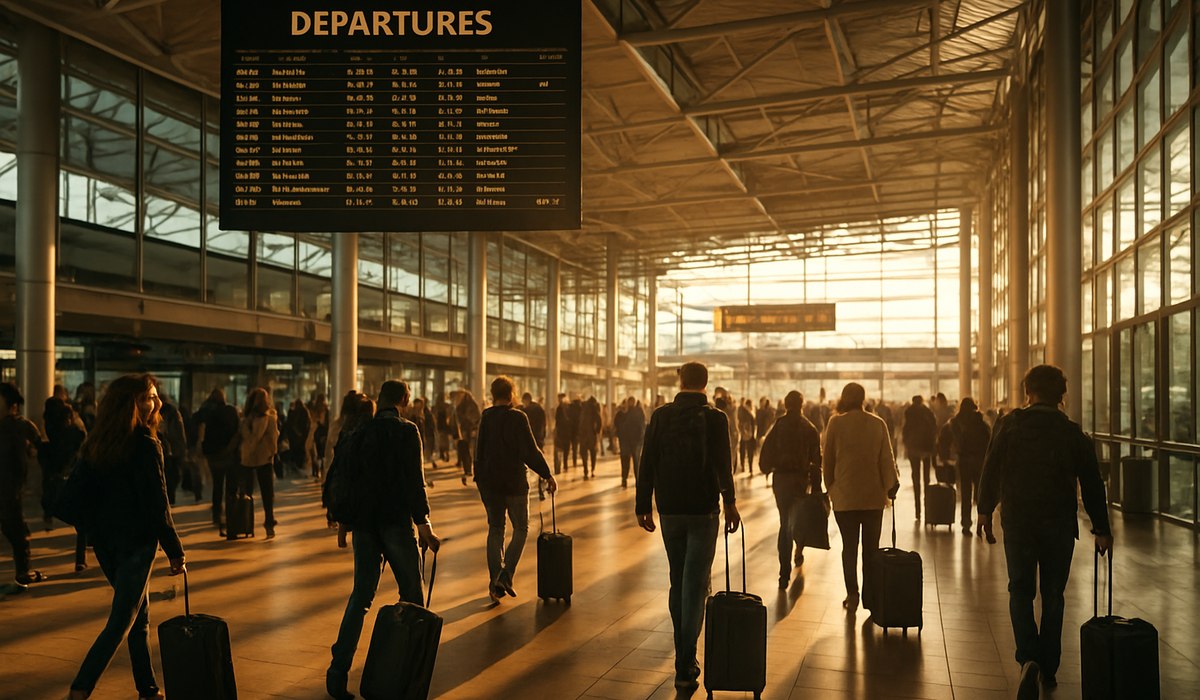
Image generated by AI
Major Disruption Strikes Washington Dulles International Airport
Washington Dulles International Airport experienced substantial operational strain on April 12, 2026, as approximately 80 flight delays and four cancellations rippled through one of the nation's busiest mid-Atlantic hubs. The disruption affected major carriers including United Airlines, Delta Air Lines, Frontier Airlines, and Lufthansa, snarling both domestic connections and long-haul international routes. Passengers faced extended wait times, missed connections, and uncertainty as delays cascaded through the afternoon and into the evening hours.
The scale of disruptions reflects broader challenges facing U.S. aviation during peak spring travel season. Washington Dulles serves as a critical nexus for both regional traffic and transatlantic operations, making it particularly vulnerable to operational bottlenecks that quickly compound across multiple flight waves.
Operational Strain Hits a Key Mid-Atlantic Hub
Washington Dulles regularly ranks among America's most congested airports, and April 12 demonstrated why the facility remains under persistent pressure. The roughly 80 delayed flights represented a significant portion of the day's schedule, even with the relatively modest cancellation count of four flights.
Airlines faced a difficult choice: maintain flight counts while accepting lower punctuality or aggressively trim schedules. The carrier decisions to keep flights operating—albeit late—suggest an industry-wide strategy to avoid further passenger frustration through cancellations. However, this approach shifted the burden onto travelers waiting in terminals with no certainty about departure times.
Delays snarl flights most severely during peak coordination windows when multiple waves of inbound and outbound services intersect. These concentrated periods create cascading effects where single delayed aircraft can disrupt dozens of subsequent rotations. Historical data from FlightAware consistently shows Washington Dulles appearing in disruption reports, underscoring systemic vulnerabilities in regional airspace capacity and ground operations.
Nationwide Pattern of April Disruptions
The Washington Dulles incident reflects a broader pattern of spring disruptions affecting U.S. aviation nationwide. April typically brings increased passenger volume as leisure travelers capitalize on spring break timing and early summer vacation planning. When combined with weather variability across the East Coast corridor, tight airline scheduling margins leave little room for operational flexibility.
Tracking data from multiple sources reveals thousands of delayed flights across the country during early-to-mid April 2026. This nationwide strain suggests that airline networks are operating near maximum capacity during peak travel periods. The Federal Aviation Administration reports that East Coast congestion amplifies sensitivity throughout the aviation system, with delays at major hubs like Washington Dulles, New York, and Philadelphia creating upstream and downstream consequences.
For remote workers and digital nomads who rely on predictable travel schedules, these patterns highlight the importance of building flexibility into itineraries during peak seasons. The cascading nature of modern aviation means that delays rarely remain localized to a single airport.
Contributing Factors: Weather and East Coast Congestion
Weather conditions and broader East Coast corridor congestion served as primary contributors to April 12 disruptions at Dulles. Spring weather patterns across the Atlantic seaboard create unpredictable conditions affecting both ground operations and airspace capacity. Moderate headwinds, marginal visibility conditions, or brief precipitation bursts can introduce slack into operations that cascades throughout an entire day's schedule.
Beyond weather, the Eastern seaboard experiences chronic capacity constraints during peak travel periods. Major hub airports in New York, Boston, Philadelphia, and the Washington area compete for limited airspace, creating bottlenecks that affect arrival sequences and ground slot availability. When one facility experiences delays, the ripple effects spread throughout the region within hours.
Aircraft rotation issues compound these challenges. When inbound flights arrive late, crews may exceed duty-time limits established by federal regulations, forcing additional delays or cancellations on subsequent legs. A single late-arriving aircraft can trigger a chain reaction affecting five or more subsequent flights as the airplane repositions through its daily schedule.
Check current conditions on the FAA's official website for real-time operational updates and expected delays.
United Airlines Bears Largest Disruption Share
United Airlines operates the largest schedule at Washington Dulles, maintaining a major hub with extensive domestic and international service. The carrier's dense flight network meant the airline absorbed a disproportionate share of April 12 disruptions, with delays affecting high-frequency domestic routes alongside longer international services.
United's transatlantic flights to Frankfurt, London, and other European gateways faced particular complexity. International departures must comply with crew duty-time regulations, slot restrictions, and connecting passenger guarantees. Even modest delays can cascade into significant complications for these operations, potentially requiring aircraft and crew repositioning that affects subsequent flights.
The airline's domestic network also experienced disruptions on trunk routes connecting major hubs like Chicago, Houston, and San Francisco. When Dulles-bound connecting flights arrive late, passengers miss onward connections, forcing rebookings onto later flights and potentially across multiple carriers.
Delta, Frontier, and Lufthansa Navigate Knock-On Effects
Delta Air Lines operates a smaller but strategically important schedule at Washington Dulles, with particular emphasis on connections to its major hubs in Atlanta and Cincinnati. Even modest delays in Dulles operations disproportionately affect Delta's connecting network, as the airline depends on precise timing for hub operations.
Frontier Airlines operates limited-frequency service at Dulles, meaning disruptions are particularly damaging to passengers who cannot easily access same-day alternatives. The ultra-low-cost carrier's schedule efficiency leaves minimal buffer time between flights, making delays especially disruptive.
Lufthansa's transatlantic operations between Washington and Frankfurt and Munich face distinct complications. International flights require regulatory clearances, crew certifications, and fuel planning calculated hours in advance. When ground delays extend beyond initial projections, airlines face costly decisions about holding aircraft at gates, requesting airspace slots, or declaring duty-time violations requiring crew changes.
Aircraft repositioning after disruptions typically requires 12-24 hours for networks to normalize. Operations personnel must navigate complex constraints involving aircraft availability, crew duty-time limits, and maintenance schedules to restore regular service patterns.
Domestic Hubs and International Gateways Feel Ripple Effects
Washington Dulles' disruption extended far beyond the immediate airport through its role as a regional connector hub. The airport serves as a critical connection point for passengers traveling to major U.S. destinations including Chicago, Denver, Houston, Los Angeles, San Francisco, and New York-area airports.
When Dulles departures leave late, inbound aircraft arrive out of sequence, disrupting subsequent connections and forcing passengers onto later flights. Travelers heading to secondary markets via Washington often found original itineraries unraveling as missed connections triggered rebooking requirements.
Internationally, Dulles functions as a primary U.S. gateway for European and Asian travel. Transatlantic services to London, Frankfurt, and Munich depend on reliable feed from domestic routes. Even modest delay increases create significant passenger accommodation demands, including hotel vouchers, meal reimbursement, and alternative transportation arrangements.
The airport's role in Asia-Pacific networks amplifies these effects. Flights continuing from European hubs to Middle East and Asian destinations miss onward connections, potentially stranding passengers for 24+ hours awaiting rebooking on subsequent services.
Live Flight Tracking and Passenger Notification
Real-time tracking data proved essential for passengers navigating April 12 disruptions. FlightAware provided minute-by-minute updates on departure delays, cancellations, and aircraft positions, allowing passengers to make informed decisions about ground transportation and accommodation.
Airlines maintained status updates through official channels, though notification delays sometimes lagged actual operational changes. Passengers using third-party tracking tools often received disruption information before official airline communications.
Dulles Airport Authority provided terminal information through digital signage and official channels, though information consistency sometimes varied across different notification systems. Passengers relying solely on airline text alerts occasionally missed important timing
Disclaimer
This article is for informational and educational purposes only. It does not constitute legal, financial, or professional advice. While we strive to provide accurate and up-to-date information, travel policies, regulations, and conditions change rapidly. Always verify information with official sources before making travel decisions. Nomad Lawyer makes no representations about the accuracy, reliability, completeness, or suitability of the information provided. Readers should consult qualified professionals for advice specific to their circumstances. The views expressed in this article are those of the author and do not necessarily reflect the views of Nomad Lawyer.
Kunal K Choudhary
Co-Founder & Contributor
A passionate traveller and tech enthusiast. Kunal contributes to the vision and growth of Nomad Lawyer, bringing fresh perspectives and driving the community forward.
Learn more about our team →