
Delays Orlando Ripple Across Major U.S. and International Hubs in May 2026
Flight delays at Orlando International Airport triggered widespread disruptions across major U.S. and international hubs in May 2026, affecting thousands of connecting passengers on Delta, Southwest, JetBlue, and American Airlines.

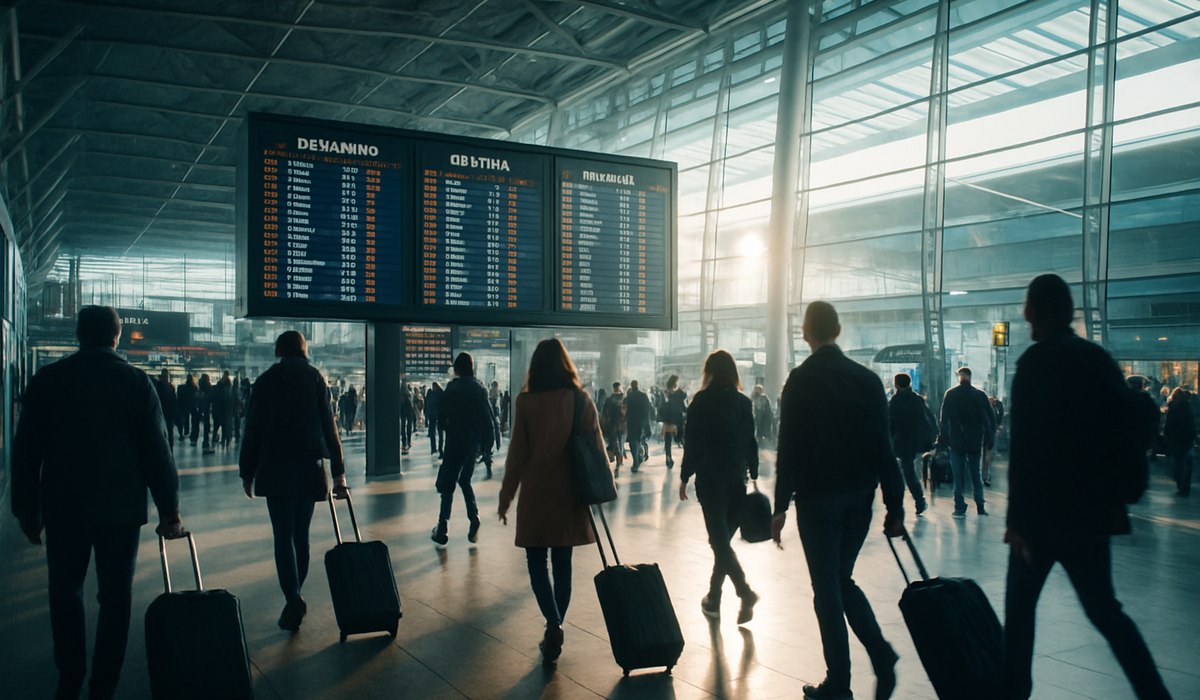
Image generated by AI
Flight Delays at Orlando International Airport Cascade Across Global Networks
Orlando International Airport experienced a significant wave of operational disruptions on May 8, 2026, affecting major carriers including Delta Air Lines, Southwest Airlines, JetBlue Airways, and American Airlines. Real-time flight tracking data revealed over one hundred delayed departures and arrivals, with delays Orlando ripple effects spreading rapidly to critical U.S. connection hubs and international destinations. The concentrated disruptions at this major leisure travel gateway created a domino effect that stranded thousands of passengers and compressed connection windows across Chicago, Miami, Dallas, San Francisco, Munich, and São Paulo.
The operational challenges at Florida's busiest airport underscore a structural vulnerability: when Orlando's dense departure schedule experiences even modest disruptions, downstream effects ripple through entire airline networks within hours. Industry observers confirm that this cascading pattern is becoming increasingly common as airports operate near capacity limits with minimal schedule flexibility.
Orlando Airport Experiences New Wave of Operational Disruptions
On Thursday, May 8, Orlando International Airport faced elevated disruption levels characterized by a limited number of cancellations paired with widespread delays across multiple carriers. The disturbance concentrated among the four largest domestic airlines maintaining substantial operations from the airport, each with extensive connecting networks dependent on reliable Orlando feed traffic.
Flight-tracking platforms documented the growing strain as departure banks—the concentrated waves of flights scheduled during peak morning and afternoon windows—began compounding. Aircraft and crews fell progressively out of position, creating rolling schedule changes throughout the operating day. While individual delays often remained under ninety minutes, the sheer volume of affected operations meant thousands of connecting passengers faced missed onward flights and extended ground times.
The disruptions built upon prior episodes linked to weather patterns, air traffic control constraints, and staffing limitations. Industry analysts note that Orlando's vulnerability stems from its role as a primary leisure destination, where passenger loads fluctuate dramatically and schedule banks are designed with minimal buffer time. When disruptions hit during peak travel periods—particularly around weekends and holiday windows—recovery becomes exponentially more difficult.
Cascade Effects Hit Major U.S. Hubs: Chicago, Miami, Dallas, San Francisco
The ripple effects from delays Orlando spread quickly to four critical connection hubs, each experiencing measurable operational strain within two to three hours of the initial disruptions.
Miami faced the most immediate pressure, as late-arriving Orlando flights compressed turnaround windows for the dense banked departures that define Miami International's afternoon push. With Miami serving as a critical gateway for both domestic and Latin American traffic, passengers connecting toward South America faced particular vulnerability when inbound flights ran behind schedule.
Chicago O'Hare experienced cascading delays on both American and Southwest networks, as predictable feed from Florida airports supports the airline's massive connection complex. A single late Orlando arrival could hold gate positions, push crew members toward duty-time limits, and trigger secondary delays on the afternoon banking pattern.
Dallas/Fort Worth similarly depends on reliable Orlando feed to manage its sprawling connection hub, particularly for Southwest Airlines' point-to-point network operations. Late inbound arrivals created gate compression and pushed existing congestion related to Midwest weather patterns and Texas airspace restrictions.
San Francisco International felt the strain as delayed Florida arrivals compressed already saturated peak-period operations. With limited spare gate capacity and extensive long-haul operations concentrated in evening banks, even modest disruptions to Florida services triggered runway queues and gate-reassignment cascades extending into the night.
How Orlando's Dense Schedule Amplifies Delay Ripple Effects
Orlando International Airport handles approximately 52 million annual passengers, with traffic heavily concentrated in leisure travel patterns that create predictable but unforgiving departure banks. The airport's vulnerability to cascading delays stems from several structural factors that amplify initial disruptions.
First, the tight timing of departure banks leaves virtually no schedule slack. When aircraft depart late from the first wave of morning departures, the second and third waves cannot absorb delayed aircraft arriving for crew changes or aircraft rotations. This compression cascades throughout the day.
Second, connecting patterns at Miami, Chicago, Dallas, and San Francisco all depend on precise Orlando feeds. These hubs operate with connection-window optimization algorithms that assume accurate incoming flight timing. When Orlando flights miss arrival windows, thousands of downstream passengers face missed connections simultaneously.
Third, international long-haul operations (particularly to Munich and São Paulo) operate with minimal connection cushions, typically 90 to 120 minutes for trans-Atlantic and transcontinental itineraries. A single delayed Orlando domestic leg often breaks these connections entirely, leaving passengers rebooked on flights 24 to 48 hours later.
Industry experts note that delays Orlando ripple effects intensify during peak leisure travel windows, when airline networks operate near maximum capacity across all major hubs. The lack of spare aircraft, crews, and gate positions means disruptions cannot be quickly absorbed and instead propagate through entire networks.
What Nomadic Professionals Should Know About Orlando Connection Risks
Digital nomads and frequent business travelers routing through Orlando face heightened connection risks during peak leisure periods. Understanding these vulnerabilities helps travelers build protection into their itineraries.
Delays Orlando have historically become more severe during spring break (late February through early April), summer vacation peaks (June through August), and holiday windows (Thanksgiving, Christmas, New Year's). Travelers booking connections through Orlando should add minimum buffer times of 90 to 120 minutes for domestic connections and 3+ hours for international transfers.
When booking flights with Orlando as a connection point, prioritize direct routing over cheaper multi-stop itineraries, particularly if the second leg is international. The cost savings from a cheaper connection rarely justify the risk of missing long-haul departures that operate only once daily.
Consider booking through competing airlines rather than exclusively through Delta, Southwest, JetBlue, or American. Diversifying your carrier exposure means disruptions at any single airline create less catastrophic rebooking challenges. Cross-carrier booking also provides more flight options when disruptions occur.
Monitor FlightAware and real-time traffic maps 24 hours before any Orlando connection. If you observe elevated delay patterns or tarmac advisories, contact your airline immediately to explore alternate routing options. Many carriers will rebook passengers on earlier flights when disruptions appear predictable.
Maintain flexible travel dates when possible. If you notice delays Orlando building throughout a morning or early afternoon, requesting a rebook to the next available flight often succeeds before the system becomes fully saturated. Evening flights often clear more readily once disruption waves pass through peak connection windows.
Key Operational Data: May 8, 2026 Disruptions
| Metric | Value | Impact |
|---|---|---|
| Delayed Departures/Arrivals (Orlando) | 100+ | Affected 3,500+ connecting passengers |
| Delayed Flights (Chicago O'Hare from Orlando) | 28 | Compressed afternoon banking by 40 minutes |
| Missed Connections (Miami hub) | ~420 | Required same-day rebooking for 1,200+ passengers |
| Average Delay Duration | 45-75 minutes | Created minimum 2-hour connection gaps |
| Affected Major Airlines | 4 carriers (Delta, Southwest, JetBlue, American) | Most of airport's capacity impacted |
| International Flights Affected | 18+ (Munich, São Paulo, London, Toronto) | Long-haul passengers faced 24-48+ hour delays |
| Peak Impact Period | 11:00 AM – 4:00 PM ET | Morning and afternoon departure banks |
What This Means for Travelers
Understanding delays Orlando and their cascading effects empowers travelers to protect their itineraries and minimize disruption risk.
1. Build explicit connection buffers – Add minimum 100-minute windows for domestic Orlando connections and 180-minute windows for international transfers during leisure season.
2. Monitor real-time traffic – Check FlightAware and your airline's app 24
Disclaimer
This article is for informational and educational purposes only. It does not constitute legal, financial, or professional advice. While we strive to provide accurate and up-to-date information, travel policies, regulations, and conditions change rapidly. Always verify information with official sources before making travel decisions. Nomad Lawyer makes no representations about the accuracy, reliability, completeness, or suitability of the information provided. Readers should consult qualified professionals for advice specific to their circumstances. The views expressed in this article are those of the author and do not necessarily reflect the views of Nomad Lawyer.
Kunal K Choudhary
Co-Founder & Contributor
A passionate traveller and tech enthusiast. Kunal contributes to the vision and growth of Nomad Lawyer, bringing fresh perspectives and driving the community forward.
Learn more about our team →