
Russian Airline's Boeing 737 Overshoots Runway Days After Restricting First Officer Landing Authority
Breaking airline news and aviation industry updates for 2026.

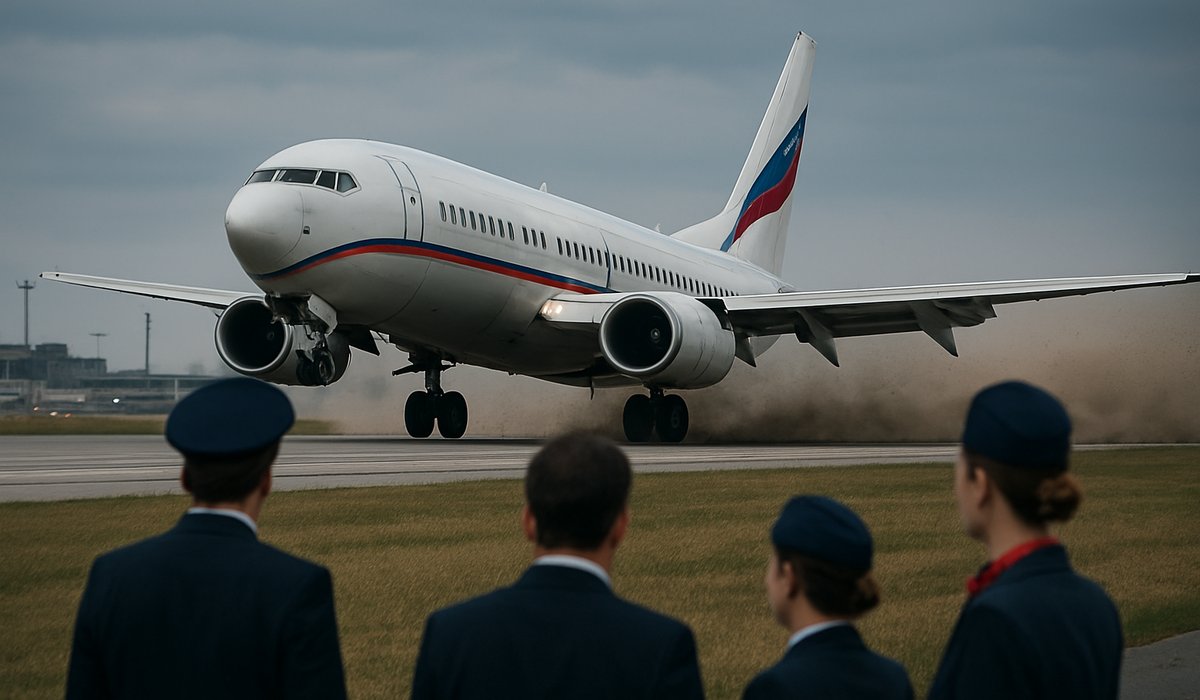
Image generated by AI
Russian Airline's Boeing 737 Overshoots Runway Days After Restricting First Officer Landing Authority
Safety concerns mount as S7 Airlines faces scrutiny following landing incident with 173 passengers aboard
Runway Incursion Raises Questions About Cockpit Procedures
A Boeing 737-800 belonging to S7 Airlines veered off the runway at Mirny Airport in Russia's remote Sakha (Yakutia) Republic on June 30, marking a significant safety incident that has intensified scrutiny of the carrier's operational protocols. Flight S7-5241, traveling from Novosibirsk's Tolmachevo International Airport, overran the tarmac with 173 passengers and six crew members aboard, though all individuals escaped without injury.
The aircraft came to rest beyond the runway's designated threshold, prompting immediate intervention by Russian aviation authorities who have launched formal investigations into the circumstances surrounding the landing mishap. The incident occurs at a particularly sensitive moment for the airline, coming mere days after the carrier implemented controversial restrictions limiting first officers' ability to execute landing procedures—a decision that has drawn attention to potential vulnerabilities in cockpit decision-making and crew resource management.
Growing Concerns Over Operational Safety Standards
The timing of this runway excursion has raised critical questions within aviation safety circles about the relationship between recent policy changes and operational execution. S7 Airlines' decision to restrict first officer landing authority represents an unusual measure that diverges from standard international aviation practices, where dual-qualified pilots maintain regulatory authority to perform all flight phases under appropriate supervision.
Industry observers have noted that such restrictions could create operational bottlenecks and place undue pressure on captain-led decision-making, particularly during time-sensitive landing procedures. The incident at Mirny Airport now serves as a tangible case study for aviation safety experts examining how procedural changes might influence real-world flight operations and crew coordination during critical phases.
Investigation Underway as Aviation Authorities Examine Multiple Factors
Russian aviation authorities are examining multiple factors that may have contributed to the runway overrun, including weather conditions, aircraft maintenance records, crew fatigue levels, and adherence to landing protocols. Preliminary reports suggest runway surface conditions at Mirny Airport may have played a role, though investigators have not yet released comprehensive findings.
The incident underscores ongoing challenges within Russia's aviation sector, which has faced increased operational pressures due to geopolitical circumstances and aircraft maintenance constraints. S7 Airlines, one of Russia's major domestic carriers, has maintained relatively robust safety records despite these external pressures.
FAQ: Understanding the Incident and Aviation Safety Implications
What is a runway overrun incident in aviation? A runway overrun occurs when an aircraft fails to stop within the designated runway length during landing, potentially resulting in excursions beyond safety zones. These incidents are classified as serious occurrences by aviation authorities worldwide.
Why would an airline restrict first officer landing authority? While airlines occasionally implement procedural limitations for training or operational reasons, such restrictions are uncommon in modern aviation and require careful justification under regulatory frameworks.
Could restricted landing procedures have contributed to this incident? While investigators examine all factors, the direct causal relationship remains under investigation. However, any procedural changes that alter standard cockpit responsibilities warrant thorough examination during accident investigations.
How do runway conditions affect landing safety? Surface contamination, improper maintenance, or degraded traction can significantly impact aircraft braking performance, particularly for heavy aircraft operating at Russian regional airports with variable conditions.
What regulatory oversight exists for domestic Russian airline operations? Russia's Federal Air Transport Agency oversees all commercial aviation operations, establishing safety standards and investigating serious incidents involving certificated operators.
Related Travel Guides
External Resources
Disclaimer
This article is for informational and educational purposes only. It does not constitute legal, financial, or professional advice. While we strive to provide accurate and up-to-date information, travel policies, regulations, and conditions change rapidly. Always verify information with official sources before making travel decisions. Nomad Lawyer makes no representations about the accuracy, reliability, completeness, or suitability of the information provided. Readers should consult qualified professionals for advice specific to their circumstances. The views expressed in this article are those of the author and do not necessarily reflect the views of Nomad Lawyer.
Preeti Gunjan
Contributor & Community Manager
A passionate traveller and community builder. Preeti helps grow the Nomad Lawyer community, fostering engagement and bringing the reader experience to life.
Learn more about our team →