
Dark Tourism and Streaming Culture: How Netflix and Ryan Murphy Turn Real Crime Scenes into Global Tourist Traps

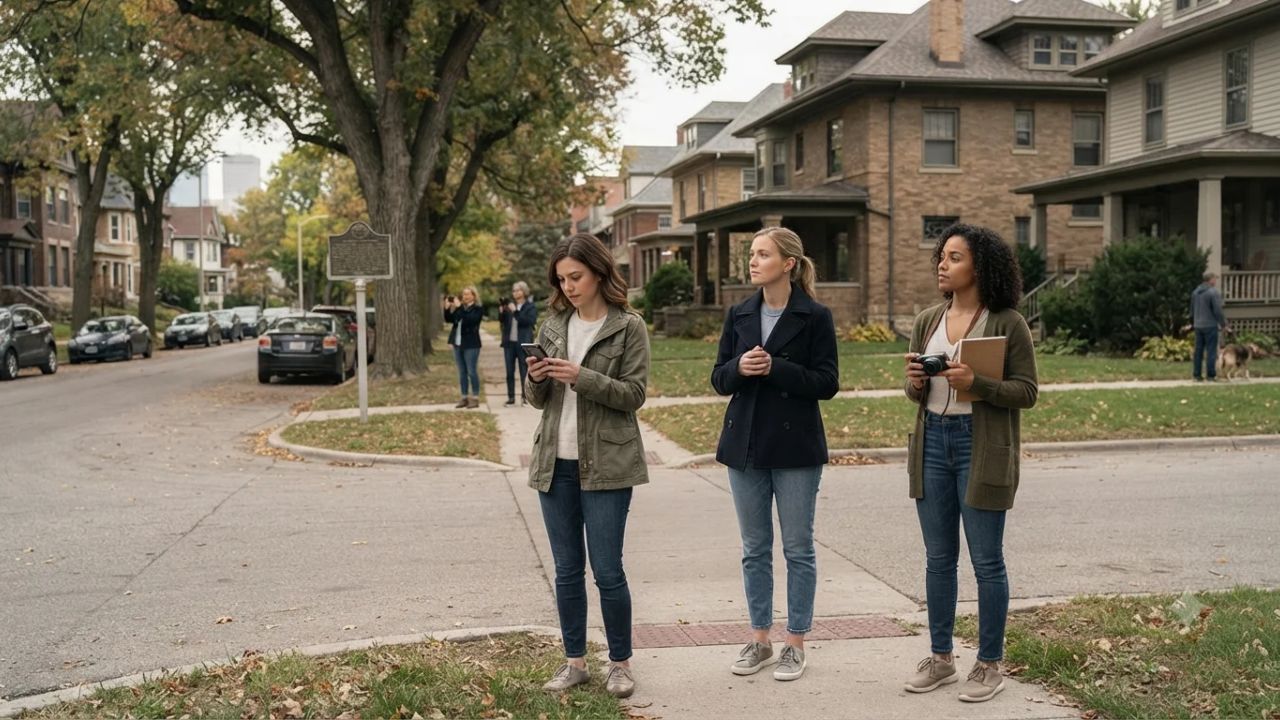
Image generated by AI
With global streaming networks broadcasting dramatized true-crime narratives into more than 260 million subscriber households simultaneously, digital media consumption is accelerating the conversion of real-world crime scenes into commercialized dark tourism destinations. Spurred by Ryan Murphy’s high-profile Monster anthology on Netflix, international leisure travelers are increasingly trading traditional resort getaways for self-guided pilgrimages to physical sites associated with notorious homicides, igniting intense civic conflicts over privacy, property rights, and community ethics.
Screen-Induced Thanatourism: How Streaming Algorithms Manufacture Pilgrimage Sites
Dark tourism—formally classified in academic literature as thanatourism, or travel directed toward locations historically marked by death, disaster, and human suffering—has transitioned from an obscure sociological curiosity into an expansive commercial phenomenon. Historically, sites of collective trauma underwent decades of cultural mediation and community memorialization before attracting formal visitor flows. Modern on-demand video streaming has collapsed that temporal buffer entirely.
When an episodic true-crime series trends globally, streaming algorithms transform localized residential tragedies into universally recognized pop-culture landmarks within days of release. Supported by promotional campaigns and viral social media geotagging, viewers make the leap from screen spectatorship to on-site exploration. Independent travelers and commercial tour operators converge on municipal administrative centers, historic courtrooms, and private residential avenues, seeking physical proximity to the narratives consumed on screen.
According to cultural heritage assessments recognized by United Nations Tourism, the sudden influx of screen-driven voyeurs places unprecedented strain on municipal governance. Unlike designated national historic sites or state-managed memorials that feature ticketing turnstiles, crowd control barriers, and interpretive plaques, streaming-induced destinations are often active, inhabited residential communities entirely unprepared for international tourism traffic. In destinations like Wisconsin, municipal organizations affiliated with Visit Milwaukee find themselves managing uncomfortable public inquiries about grim historical crimes that community stakeholders have spent decades attempting to heal and move past.
Geographic Coordinates of Infamy: Elm Drive to the Rust Belt
The geographic footprint of Ryan Murphy’s true-crime productions spans distinct American metropolitan centers, each responding differently to the arrival of curious travelers.
In Beverly Hills, California, the Mediterranean-style mansion on North Elm Drive associated with the 1989 Menendez family murders has become a focal point for true-crime influencers and tour operators. Despite the residence remaining private property occupied by successive private owners, convoys of sightseeing vans, rental cars, and pedestrians regularly crowd the residential avenue. To mitigate severe neighborhood disruption, the Beverly Hills Municipal Portal and local law enforcement have had to deploy targeted parking restrictions, prohibit commercial tour buses on narrow residential streets, and enforce strict anti-loitering ordinances.
In Milwaukee, Wisconsin, the physical reality diverges sharply from cinematic reconstructions. The Oxford Apartments complex on North 25th Street, where Jeffrey Dahmer committed the majority of his atrocities, was completely demolished in 1992 and remains an empty, fenced-off vacant lot. Nonetheless, morbid curiosity drives international visitors to the nondescript urban parcel, creating chronic distress for local residents who view the arrivals as an exploitative commercialization of racialized community grief.
Beyond contemporary urban centers, the anthology traces classic American folklore, such as the 1892 Borden murders in Fall River, Massachusetts. Administered under regional heritage frameworks recognized by the Massachusetts Office of Travel and Tourism, the Lizzie Borden house operates commercially as a private museum and bed-and-breakfast, illustrating how historical distance can eventually normalize the commercial packaging of violent crime. Parallel international production shoots in cinematic hubs such as Los Angeles soundstages and historic districts in Rome further blur the line between authentic historical tragedy and Hollywood entertainment.
| Location & Setting | Historical Crime Association | Current Physical Reality | Municipal & Community Response |
|---|---|---|---|
| Beverly Hills (Elm Drive, CA) | 1989 Menendez family homicides | Private residential home; no public access | Strict curb parking bans, police patrols against trespassing, tour bus restrictions |
| Milwaukee (North 25th St, WI) | 1990s Jeffrey Dahmer serial crimes | Demolished apartment building; vacant lot | Community resistance to commercial tours; preservation of neighborhood dignity |
| Fall River (Second St, MA) | 1892 Lizzie Borden ax murders | Commercialized private bed-and-breakfast & museum | Formal historical preservation; ticketed admissions and ghost tour licensing |
| Los Angeles & Rome | Soundstages and cinematic exterior doubles | Working commercial film sets and public piazzas | Standard filming permits; commercial location fees managed by municipal film offices |
Expert Analysis: Neighborhood Disruption, Property Devaluation, and Ethical Boundaries
The commercialization of private tragedy through streaming-driven dark tourism generates serious legal, economic, and ethical consequences that every traveler must consider.
For travelers booking this route, the direct consequence is an encounter with severe municipal restrictions, aggressive private security enforcement, and social hostility from local residents. Visiting an active private home featured in a true-crime dramatization is not equivalent to visiting a public monument. In residential enclaves like Beverly Hills, property owners routinely press criminal trespassing charges against sightseers who step onto driveways, peer through security gates, or photograph private courtyards with aerial camera drones.
The pricing pressure this creates means commercial tour operators packaging true-crime city excursions face escalating operating costs. Municipalities are raising commercial permitting fees, mandating high-liability commercial insurance, and designating residential neighborhoods off-limits to multi-passenger vans. Tour operators forced to reroute itineraries pass these regulatory costs directly to consumers through inflated ticket tariffs for specialized "true-crime" walking and driving excursions.
Fundamentally, screen-driven thanatourism highlights an unresolved ethical dilemma. While legitimate memorial tourism—such as visits to Auschwitz-Birkenau, the Hiroshima Peace Memorial, or the National September 11 Memorial—aims to educate the public and honor collective remembrance, streaming-induced crime voyeurism often lacks educational context. It converts traumatic human loss into an extension of entertainment consumerism. When visitors treat private tragedy as a social media backdrop, they inflict secondary trauma on surviving families and neighboring communities, demanding a conscious re-evaluation of ethical travel behavior in the streaming age.
Key Takeaways
- Streaming Catalyzes Dark Tourism: Netflix’s Monster anthology rapidly converts real-world crime scenes into globally recognized tourist traps, compressing historical reflection into instant travel demand.
- Beverly Hills Transit Friction: The Menendez mansion on Elm Drive faces persistent congestion from influencer traffic, prompting municipal parking bans and targeted police surveillance.
- Milwaukee Physical Absence: The former site of the Oxford Apartments in Milwaukee is a vacant lot demolished in 1992, highlighting the stark contrast between cinematic fiction and physical realities.
- Severe Civic Penalties: Travelers trespassing on private residential crime sites face criminal citations, police intervention, and intense community pushback.
- Urgent Need for Travel Ethics: Ethical travel requires recognizing the boundary between state-sanctioned educational memorials and the intrusive commercial exploitation of private tragedy.
FAQ: Streaming-Induced Dark Tourism 2026
What is dark tourism in the context of television shows?
Dark tourism refers to travel directed toward locations associated with death, tragedy, and violent historical events. Streaming television accelerates this trend by dramatizing real-world crimes, turning residential addresses and private neighborhoods into high-traffic destinations for true-crime enthusiasts.
Can travelers visit the Menendez home in Beverly Hills?
No. The mansion on Elm Drive in Beverly Hills is a private residence occupied by private owners. The property is strictly closed to the public, and local authorities actively enforce trespassing laws and residential parking prohibitions against sightseeing vehicles.
Is the Jeffrey Dahmer apartment building still standing in Milwaukee?
No. The Oxford Apartments complex on North 25th Street in Milwaukee was completely demolished in 1992. The location remains an empty, fenced-off lot, and local community leaders actively discourage voyeuristic tourism in the neighborhood.
How do cities regulate true-crime tourism?
Municipalities manage unwanted true-crime tourism by banning commercial tour buses from residential zones, establishing strict neighborhood parking permits, issuing civil fines for trespassing, and requiring commercial tour operators to obtain specialized municipal operating licenses.
[As streaming television blurs the boundary between cinematic entertainment and real-world trauma, true travel maturity lies in respecting where private tragedy ends and responsible exploration begins.]
Related Travel Guides
Disclaimer
This article is for informational and educational purposes only. It does not constitute legal, financial, or professional advice. While we strive to provide accurate and up-to-date information, travel policies, regulations, and conditions change rapidly. Always verify information with official sources before making travel decisions. Nomad Lawyer makes no representations about the accuracy, reliability, completeness, or suitability of the information provided. Readers should consult qualified professionals for advice specific to their circumstances. The views expressed in this article are those of the author and do not necessarily reflect the views of Nomad Lawyer.
Raushan Kumar
Founder & Lead Developer
Full-stack developer with 11+ years of experience and a passionate traveller. Raushan built Nomad Lawyer from the ground up with a vision to create the best travel and law experience on the web.
Learn more about our team →