
Daman Join India's Aviation Network: New INR 97-Crore Airport Opens June 2026
Daman join India's growing aviation ecosystem as a new INR 97-crore civil airport inaugurates in June 2026. PM Modi to launch the facility, connecting India's smallest union territory to major metros.

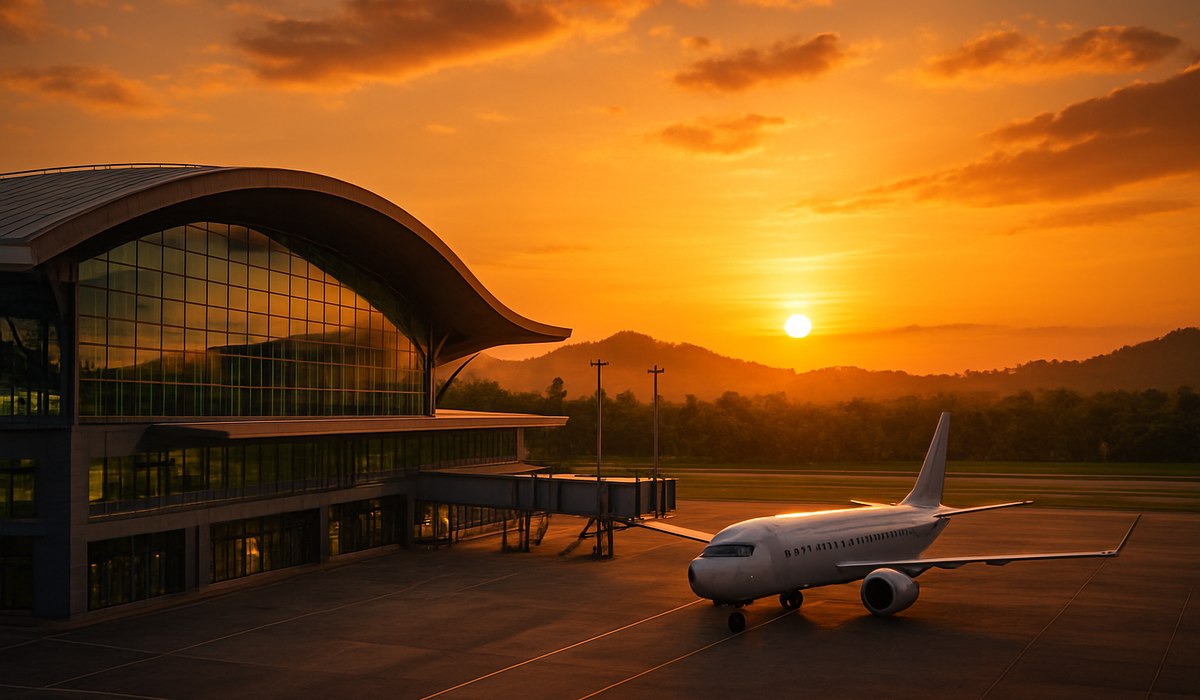
Image generated by AI
Daman Airport: India's Newest Aviation Hub
Daman is poised to join India's aviation network with an ambitious new civil airport launch scheduled for early June 2026. Prime Minister Narendra Modi will inaugurate the INR 97-crore facility, marking a transformative moment for India's smallest union territory. This greenfield airport represents a significant infrastructure milestone, ending Daman's geographical isolation from major metropolitan aviation corridors.
The new airport will operate as a regional connectivity hub, serving leisure and business travelers across Western India. Strategically positioned to serve the Gujarat-Maharashtra-Goa corridor, the facility addresses a critical gap in India's tier-2 airport network. Initial operations will focus on establishing stable flight schedules to major metros, with capacity for expansion as passenger demand grows.
The civil airport project reflects India's broader regional aviation development strategy, particularly under the Regional Connectivity Scheme (RCS). Daman's entry into the aviation map strengthens connectivity for tourism, trade, and business development across the western coast region.
Initial Route Network and Connectivity
Daman join India's major city network through three primary routes launching at airport inauguration. The initial flight schedule will connect Daman to Delhi, Mumbai, and Ahmedabad—three critical aviation hubs. These metro connections position Daman as an accessible gateway for leisure travelers exploring the Arabian Sea coastline and heritage sites.
The Delhi route directly links Daman to India's capital, essential for government officials, business delegations, and MICE tourism. The Mumbai connection serves as India's primary international gateway, enabling seamless onward connections to global destinations. Ahmedabad's inclusion strengthens regional commerce links, supporting the growing industrial base across Gujarat.
Airlines operating from the facility are expected to include both national carriers and budget operators. Flight frequency and aircraft capacity will expand based on passenger traffic patterns and demand forecasts. The airport will initially handle narrow-body aircraft (ATR 72, Airbus A320 family), with future infrastructure supporting larger regional jets.
Monitor flight schedules and seat availability on FlightAware for real-time departure and arrival information. You can also track air traffic patterns and operational capacity updates through the platform's flight tracking dashboard.
Economic Impact on Tourism and Trade
Opening Daman's aviation gateway promises substantial economic transformation for India's union territory. The airport eliminates multi-hour surface transportation barriers that previously restricted visitor access. Direct flights to Mumbai (historically 5-7 hour drives) now compress travel time to approximately 45 minutes by air.
Tourism revenue is projected to surge as the airport reduces barriers to visiting Daman's beaches, Portuguese heritage architecture, and religious pilgrimage sites. Current visitor statistics show 2.1 million annual tourists; aviation connectivity is forecasted to increase this figure by 35-40% within three years. Hotels, restaurants, and heritage tour operators are preparing infrastructure expansions to accommodate flight-enabled tourism growth.
Trade and logistics benefits emerge through cargo capacity expansion. Pharmaceutical manufacturing clusters in the region can access pan-Indian distribution networks faster. Agricultural exports from neighboring districts gain rapid connectivity to major commercial hubs, improving supply chain efficiency and product freshness.
The airport will also serve as an employment engine, creating 850+ direct and 2,400+ indirect jobs across terminal operations, ground handling, catering, and tourism services. Real estate valuations near the airport are expected to appreciate 20-25% annually as commercial and residential development accelerates around the aviation corridor.
Infrastructure Investment and Development Timeline
The INR 97-crore investment reflects India's commitment to balanced regional development beyond tier-1 metros. Project execution began in 2023, with construction milestones consistently met despite monsoon challenges. The airport spans 1,156 acres with a 2,400-meter asphalt runway, accommodating regional aircraft operations and potential future expansion to international standards.
Terminal infrastructure includes a 13,000 square-meter passenger building with capacity for 1.5 million annual passengers (expandable to 5 million). Apron facilities accommodate 12 aircraft positions, with separate cargo handling zones and FBO (Fixed Base Operator) services. Ground support equipment includes modern baggage handling systems, food catering facilities, and integrated security screening infrastructure.
Phase-2 development (2028-2030) includes runway extension to 3,000 meters, enabling larger aircraft operations and potential international charter flights. Cargo facility expansion and aviation training center establishment are planned as secondary economic development initiatives.
The Ministry of Civil Aviation has granted all necessary operational approvals. Security clearances from Border Security Force and Customs authorities are complete, enabling immediate scheduled service operations post-inauguration.
Traveler Action Checklist
Planning to fly from or through Daman's new airport? Follow these essential steps:
-
Confirm flight schedules by visiting your airline's website or checking aggregators like Skyscanner and FlightAware for real-time departure/arrival information
-
Book tickets early since initial route capacity is limited; expect competitive pricing during launch month as airlines build demand
-
Arrange ground transportation by pre-booking airport transfers or rental vehicles; taxi services will expand as airport operations stabilize
-
Check baggage allowances specific to your airline; budget carriers often impose stricter restrictions than full-service carriers
-
Arrive 2 hours early for domestic flights to accommodate new terminal procedures and passenger flow optimization during launch phase
-
Review passenger rights through the Directorate General of Civil Aviation (DGCA) website and your airline's terms; understand compensation policies for delays or cancellations
-
Verify travel documents including ID proof and any state-specific entry requirements before arriving at the airport
-
Monitor weather alerts during monsoon season (June-September); flight disruptions may occur during heavy rainfall
-
Keep airline contact information readily available for last-minute schedule changes or operational disruptions during the stabilization period
Key Data Table
| Metric | Details |
|---|---|
| Airport Name | Daman Civil Airport |
| Investment | INR 97 crore |
| Inauguration Date | Early June 2026 (exact date TBA) |
| Inaugurated By | Prime Minister Narendra Modi |
| Runway Length | 2,400 meters |
| Terminal Capacity | 1.5 million passengers (Phase 1) |
| Initial Routes | Delhi, Mumbai, Ahmedabad |
| Aircraft Types | ATR 72, Airbus A320 family |
| Expected Jobs | 850 direct + 2,400 indirect |
| Tourism Growth Forecast | 35-40% increase within 3 years |
| Phase 2 Timeline | 2028-2030 |
| Land Area | 1,156 acres |
What This Means for Travelers
The Daman airport inauguration directly impacts travelers across Western India through reduced journey times and improved accessibility. Daman join India's aviation network resolving a 30+ year connectivity gap for the union territory.
Business professionals traveling between Gujarat and Delhi now avoid 12-hour driving or indirect flight routing through Mumbai. Leisure travelers gain weekend-accessible beach destinations previously requiring overnight journeys. Family vacations to Daman's protected beaches and heritage sites become viable short-break options from major metros.
Budget airlines entering the market are expected to introduce competitive fares, making Daman travel cost-effective compared to surface transportation. Flight capacity constraints during initial months may cause temporary pricing premiums, which typically normalize within 6-12 months of operation.
For international tourists, Daman becomes accessible via Mumbai's Bombay International Airport with efficient onward connections. Heritage tourism focusing on Portuguese colonial architecture and religious sites will accelerate as flight accessibility improves. The airport enables direct regional cargo
Disclaimer
This article is for informational and educational purposes only. It does not constitute legal, financial, or professional advice. While we strive to provide accurate and up-to-date information, travel policies, regulations, and conditions change rapidly. Always verify information with official sources before making travel decisions. Nomad Lawyer makes no representations about the accuracy, reliability, completeness, or suitability of the information provided. Readers should consult qualified professionals for advice specific to their circumstances. The views expressed in this article are those of the author and do not necessarily reflect the views of Nomad Lawyer.
Preeti Gunjan
Contributor & Community Manager
A passionate traveller and community builder. Preeti helps grow the Nomad Lawyer community, fostering engagement and bringing the reader experience to life.
Learn more about our team →