Egypt Cultural Revival and $34B Tourism Surge: Grand Egyptian Museum, Sphinx Airport Expansion, and 2030 Growth Blueprint

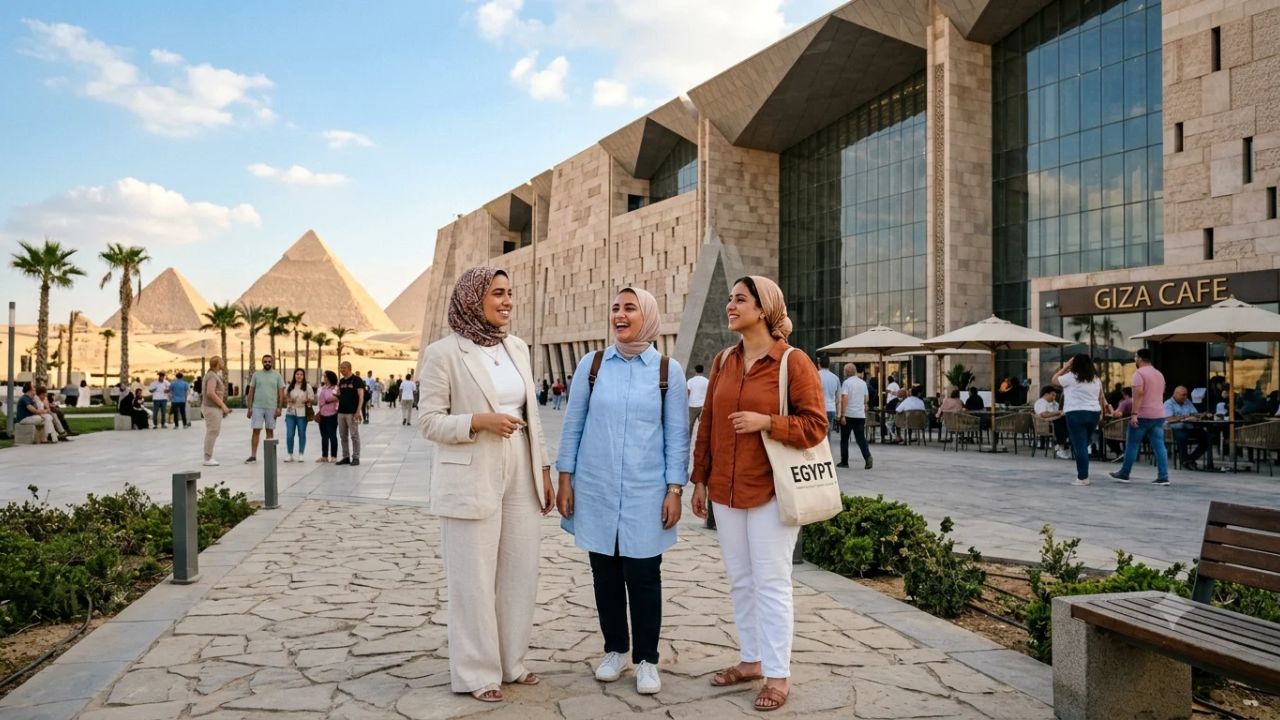
[CAIRO, Oct 22, 2026] — Egypt’s national travel and cultural heritage economy has achieved historic milestones, generating over $34 billion in international visitor receipts and accelerating an ambitious master plan to double hotel capacity to 500,000 rooms and welcome 30 million annual visitors by 2030.
[!NOTE]
Egypt's Tourism Transformation: Key Benchmarks & Data
- $34 Billion Economic Output: International visitor spending has surpassed all pre-pandemic records, anchoring foreign capital inflows and supporting localized supply chains.
- Targeting 30 Million Visitors by 2030: A national economic roadmap aims to double national hotel inventory from 240,000 baseline rooms to nearly 500,000 units, backed by an active pipeline of 35,000 upscale and luxury keys under construction.
- The Grand Egyptian Museum (GEM) Anchor: Houses the Middle East's largest antiquities conservation center across 19 specialized laboratories and displays the complete 5,000-piece King Tutankhamun collection in a dedicated 7,000-square-meter gallery.
- Sphinx International Airport (SPX) Expansion: Upgraded to process over 1.2 million passengers annually on Cairo's western flank, slashing transit times to the Giza Plateau by over 50% and offering non-stop connections to Luxor and Aswan.
- Northern Coast Diversification: Strategic multi-billion-dollar investments along the Mediterranean waterfront in El Alamein and Ras El-Hekma shift tourism flows beyond the traditional Nile and Red Sea corridors.
- Extended Dwell Times & Electronic Visas: Cultural visitor stays have expanded from an average of 5 nights to over 8 nights, supported by streamlined e-Visas for 180+ nations and 5-year multi-entry permits.
The transformation of Egypt’s visitor economy represents a comprehensive realignment of heritage preservation, aviation corridors, and high-yield hospitality. Rather than relying on traditional rapid-turnaround sightseeing circuits, national authorities are pairing world-class cultural institutions like the Grand Egyptian Museum with dedicated transportation networks, electric urban mass transit, and contemporary lifestyle amenities.
          EGYPT STRATEGIC TOURISM & HERITAGE GEOGRAPHY (2026-2030)

  MEDITERRANEAN COASTAL ENCLAVES         CAIRO & GIZA HERITAGE CORRIDOR
  • El Alamein (Year-round luxury)       • Grand Egyptian Museum (GEM)
  • Ras El-Hekma Mega-Resorts           • Giza Plateau & Pyramids Complex
  • El Alamein International Airport     • Sphinx Int'l Airport (1.2M Cap.)
  +------------------+                   +------------------+
                     \                                     /
                      \                                   /
                       v                                 v
          +-------------------------------------------------------------+
          |             INTEGRATED NATIONAL TRANSIT MATRIX              |
          |  • Cairo Metro Line 4: Direct to Giza Pyramids Station      |
          |  • Point-to-Point Flights: Sphinx direct to Luxor / Aswan   |
          |  • High-Speed Regional Rail Linking Red Sea to Mediterranean|
          +-------------------------------------------------------------+
                       /                                 \
                      /                                   \
                     v                                     v
  UPPER NILE ARCHAEOLOGICAL HUBS         RED SEA & SINAI RESORTS
  • Luxor: Valley of the Kings           • Sharm El-Sheikh & Hurghada
  • Aswan: Abu Simbel Access             • Year-Round Marine Diving
  • Sustainable River Cruise Fleets      • Wellness & Coastal Leisure
The $34 Billion Milestone: Macroeconomic Scale and Hospitality Growth
Surpassing historical earnings benchmarks, Egypt’s tourism sector generated more than $34 billion in direct foreign visitor expenditure over the past year. This revenue surge has created substantial stability across national foreign currency reserves, generating thousands of specialized careers across hospitality management, archaeological restoration, civil transport, and culinary arts.
Economic analysts note that this financial expansion is driven by a structural change in visitor behavior. Travelers are staying longer, spending more on localized experiences, and seeking higher tiers of accommodation. Each newly built hotel room generates approximately 1.5 direct and indirect jobs across supporting agricultural supply chains, furniture manufacturing, and transport services.
| Operational Indicator | Pre-Expansion Baseline | Current Performance | 2030 Strategic Milestone |
|---|---|---|---|
| Annual International Receipts | ~$13–$14 Billion | Exceeding $34 Billion | $45+ Billion Projected |
| Annual Visitor Volume | ~14.9 Million | Fast-Tracking Targets | 30.0 Million Arrivals |
| Operating Hotel Rooms | 240,000 Keys | Expanding Across Hubs | ~500,000 Keys Nationwide |
| Active Hotel Pipeline | ~10,000 Keys | 35,000 Luxury Keys | Phased City/Coast Launches |
| Average Cultural Stay Length | 5 Nights | Exceeding 8 Nights | 10–12 Nights Integrated Tours |
| Sphinx Airport Annual Capacity | Early Pilot Operations | 1.2+ Million Passengers | 3.0+ Million Expansion |
The Grand Egyptian Museum: Engineering Heritage Conservation
Standing adjacent to the pyramids on the Giza Plateau, the Grand Egyptian Museum (GEM) serves as the primary architectural and institutional anchor of the country's cultural renaissance. Spanning nearly 500,000 square meters, the complex represents the largest museum in the world dedicated to a single civilization.
       GRAND EGYPTIAN MUSEUM (GEM) CONSERVATION & DISPLAY INFRASTRUCTURE

  +-------------------------------------------------------------------------+
  |              19 SPECIALIZED CONSERVATION LABORATORIES                   |
  |     Connected by a 200-meter subterranean climate-controlled corridor    |
  |  • Wood & Organic Materials Lab      • Stone & Heavy Colossi Lab        |
  |  • Textiles & Ancient Papyrus Lab    • Non-Invasive Diagnostic Scanning |
  +------------------------------------+------------------------------------+
                                       |
                                       v
  +-------------------------------------------------------------------------+
  |                  PERMANENT EXHIBITION GALLERIES                         |
  |  • Over 100,000 Catalogued Ancient Artifacts under Micro-Climate Control|
  |  • 7,000 m² Dedicated King Tutankhamun Gallery (Complete 5,000 Pieces)  |
  |  • Interactive Augmented Reality & Digital Narrative Systems            |
  +------------------------------------+------------------------------------+
                                       |
                                       v
  +-------------------------------------------------------------------------+
  |                  PUBLIC LIFESTYLE & EVENT SPACES                        |
  |  • Fine Dining Culinary Pavilions Overlooking the Giza Pyramids         |
  |  • Luxury Retail Arcades Supporting Authentic Egyptian Craftsmanship    |
  |  • Conference Facilities & Contemporary Art Spaces (Art d'Égypte)       |
  +-------------------------------------------------------------------------+
The Subterranean Science of Preservation
Beyond its towering glass atrium and grand staircase, the GEM houses the Middle East’s most advanced antiquities restoration center. Connected along a 200-meter subterranean transit spine, the complex includes 19 specialized laboratories tasked with stabilizing, cleaning, and reconstructing ancient treasures.
Using micro-climate monitoring systems, laser-cleaning apparatus, and non-destructive diagnostic imaging, conservation specialists care for more than 100,000 catalogued artifacts. These state-of-the-art facilities ensure that fragile organic materials—such as ancient woven linens, 3,000-year-old wooden funerary beds, and gold leaf inlays—are protected from thermal stress and humidity fluctuations.
The Complete Tutankhamun Collection in a Unified Space
A historic exhibition achievement at the GEM is the unified display of King Tutankhamun’s complete funerary treasure. Discovered in 1922 by Howard Carter in the Valley of the Kings, the collection comprises more than 5,000 individual artifacts.
Previously dispersed across cramped rooms in the historic Tahrir Square museum and various regional repositories, the entire collection is now assembled in a custom-engineered 7,000-square-meter gallery. Visitors walk through chronologically arranged displays containing the young pharaoh's gilded state chariots, intricately carved alabaster perfume vessels, jewelry, and iconic gold burial mask. Augmented reality headsets and interactive touch interfaces provide deep historical context without cluttering the physical display pedestals.
Strategic Aviation and Transit Infrastructure
Massive international arrivals require seamless physical movement. To prevent urban congestion from degrading the visitor experience, transport authorities have overhauled the aviation and transit networks connecting Cairo with the country's ancient monuments.
          WESTERN CAIRO TRANSIT REDIRECTION SYSTEM

  INTERNATIONAL FLIGHTS ARRIVING IN EGYPT
  +-------------------------------------------------------------+
  |               SPHINX INTERNATIONAL AIRPORT (SPX)            |
  |           • 1.2+ Million Annual Passenger Handling          |
  |           • Direct Western Cairo Highway Links              |
  +------------------------------+------------------------------+
                                 |
                 +---------------+---------------+
                 |                               |
                 v                               v
  +-----------------------------+ +-----------------------------+
  | DIRECT HERITAGE ACCESS      | | DOMESTIC AIR CIRCUITS       |
  | • 50%+ Shorter Transfer Time| | • Point-to-Point to Luxor   |
  | • Direct to Giza Plateau    | | • Point-to-Point to Aswan   |
  | • Direct Gateways to GEM    | | • Completely Bypasses       |
  |   Avoiding Central Traffic  | |   Downtown Cairo Road Grids |
  +-----------------------------+ +-----------------------------+
The Rise of Sphinx International Airport (SPX)
Located strategically on the western desert perimeter of the Cairo metropolitan area, Sphinx International Airport (SPX) has evolved into a premier international entry portal. Expanded to handle more than 1.2 million passengers annually, the airport sits within easy reach of the Giza Plateau and the Grand Egyptian Museum.
This specialized aviation hub delivers decisive operational benefits:
- Bypassing Urban Choke Points: International charter and scheduled flights arriving at Sphinx allow passengers to transfer directly to hotels in Giza or the GEM complex within 20 minutes, cutting traditional transfer times from Cairo International Airport (CAI) on the eastern side of the city by more than 50%.
- Point-to-Point Archaeological Circuits: Domestic airlines have established daily regional routes linking Sphinx directly to Luxor, Aswan, and Abu Simbel. Cultural tourists can land in Giza, explore the pyramids, fly south to the Nile Valley, and return home without ever navigating downtown Cairo traffic.
Cairo Metro Line 4: Direct Rail to the Pyramids
Complementing regional air connectivity is the construction of Cairo Metro Line 4, frequently termed the "Pyramids Line." Designed with high-capacity electric rolling stock, this dedicated mass transit corridor links central Cairo and Old Cairo directly to the Giza Pyramids Station situated at the foot of the plateau.
Line 4 provides substantial environmental and operational advantages:
- Traffic Decongestion: Diverts thousands of tour buses, taxis, and private passenger vehicles away from the crowded Al-Haram and Faisal corridors each day.
- Emission Abatement: Replacing fossil-fuel combustion engines with electric rail transit significantly lowers atmospheric emissions and airborne particulates around open-air limestone and sandstone monuments.
- Affordable Traveler Mobility: Offers international independent travelers a fast, budget-friendly transit option connecting the historic Islamic Cairo quarter with the ancient pharaonic monuments.
Geographic Diversification: Expanding Beyond the Nile
A central vulnerability of historic tourism in Egypt was geographic concentration. Over 80% of visitor foot traffic historically crowded into two distinct corridors: the Nile River Valley (Cairo, Luxor, Aswan) and the southern Red Sea diving resorts (Hurghada, Sharm El-Sheikh).
To disperse visitor density, stimulate private real estate investments, and build a resilient year-round economy, national planning agencies have developed high-end coastal enclaves along the Mediterranean shoreline.
EGYPT'S GEOGRAPHIC TOURISM DIVERSIFICATION BLUEPRINT
| Entity / Route | Metrics | Operational Status |
|---|---|---|
| Destination Enclave | Primary Focus & Infrastructure | Strategic Economic Role |
| Giza & West Cairo | Grand Egyptian Museum, Sphinx | Global flagship cultural tourism, |
| Airport, Cairo Metro Line 4 | extended museum dwell time, luxury. | |
| Mediterranean Coast: | High-end beachfront resorts, | Year-round international luxury |
| El Alamein | yacht marinas, El Alamein Int'l | vacations, paired heritage/coastal |
| Airport direct charters | holiday itineraries. | |
| Mediterranean Coast: | Multi-billion-dollar sovereign | Global mega-destination, foreign |
| Ras El-Hekma | joint ventures, luxury coastal | direct investment (FDI), ultra- |
| communities, eco-resorts | luxury hospitality assets. | |
| Upper Nile Valley | Luxor, Aswan, Abu Simbel, | Classical archaeological circuits, |
| (Nile River) | hybrid solar river cruises | historical preservation corridors. |
| Red Sea & Sinai | Diving enclaves, marine parks, | High-volume leisure, water sports, |
| eco-lodges, wellness centers | international charter hubs. |
The Mediterranean Riviera: El Alamein and Ras El-Hekma
Capital expenditure along the northern Mediterranean coastline has transformed pristine desert shorelines into luxury travel destinations:
- New El Alamein City: Backed by the expansion of El Alamein International Airport, this metropolis features modern coastal towers, championship golf courses, cultural complexes, and superyacht marinas. European charter flights now connect major cities directly to Egypt’s Mediterranean coast during summer months.
- Ras El-Hekma Development: Backed by substantial multi-billion-dollar sovereign investments from Gulf financial partners, Ras El-Hekma is designed as an ultra-luxury, sustainable tourism city. With turquoise waters and white sandy beaches rivaling the Greek Cyclades or the Italian Amalfi Coast, the destination offers high-net-worth travelers an upscale Mediterranean alternative combined with Egyptian cultural hospitality.
By linking northern coastal beach packages with Sphinx Airport cultural excursions, international tour operators can market balanced "Pyramids and Riviera" holidays under a unified booking.
Digital Site Management: Protecting Heritage from Overcrowding
Surging visitor arrivals create profound preservation challenges. Uncontrolled foot traffic, elevated humidity from human respiration inside enclosed tombs, and unauthorized contact can accelerate stone decay across ancient monuments.
To safeguard these irreplaceable assets, heritage authorities have implemented digital visitor flow systems across the Giza Plateau, Old Cairo, and Upper Egypt.
       AUTOMATED SITE MANAGEMENT & PRESERVATION FEEDBACK LOOP

  TICKETING & ACCESS CONTROL
  +-------------------------------------------------------------+
  |              ONLINE DIGITAL BOOKING PLATFORMS               |
  |  • Strict Hourly Entry Quotas Enforced Across Sites         |
  |  • Dynamic Caps on Subterranean Tomb Entry (Valley of Kings)|
  +------------------------------+------------------------------+
                                 |
                                 v
  ON-SITE MONITORING & FLOW
  +-------------------------------------------------------------+
  |           CONTACTLESS GATES & INFRARED SENSORS              |
  |  • Real-Time Footfall Tracking at Pyramid Passageways       |
  |  • Automated Queue Pacing (40%+ Ticketing Speed Increase)   |
  +------------------------------+------------------------------+
                                 |
                                 v
  SITE PRESERVATION OUTCOME
  +-------------------------------------------------------------+
  |              CONSERVATION IMPACT MITIGATION                 |
  | Controlled Humidity Levels • Elimination of Bottlenecks     |
  | Enhanced Visitor Safety • Preservation of Fragile Masonry   |
  +-------------------------------------------------------------+
Timed Ticketing and Contactless Gates
Modern automated ticketing portals now require visitors and tour operators to reserve specific entry time slots. Contactless access turnstiles have cut transaction times and queue wait periods by over 40%, eliminating the disorderly bottlenecks that previously plagued site entrances.
Inside fragile enclosed structures—such as the burial chambers of the Great Pyramid of Khufu or the painted tombs of Nefertari and Tutankhamun in Luxor—infrared environmental sensors monitor real-time visitor density, temperature, and relative humidity. When humidity thresholds approach levels that could degrade ancient plasters, digital systems alert site managers to pause entries until air-handling systems restore optimal conditions.
Immigration Modernization: E-Visas and Five-Year Entry Permits
Administrative entry barriers have been dismantled to stimulate spontaneous getaways and corporate travel. The Egyptian government has extended its electronic visa (e-Visa) portal to citizens of more than 180 countries, allowing travelers to secure entry clearance online within days of departure.
Key policy enhancements include:
- Five-Year Multi-Entry Visas: Tailored for frequent corporate travelers, digital nomads, and affluent property owners, this visa class allows repeated visits with stays of up to 90 days per trip, generating sustained economic activity.
- Enhanced Transit Visas: Airline passengers booking stopovers in Cairo through national carriers can secure special transit visas at the airport, enabling 8-to-48-hour excursions to the Grand Egyptian Museum and the pyramids during long-haul intercontinental layovers.
Enhancing Visitor Dwell Time Through Cultural Lifestyles
To elevate total visitor spending, tourism authorities are actively pairing ancient monuments with contemporary fine dining, bespoke retail, and international contemporary art exhibitions.
Initiatives such as Art d’Égypte have placed world-renowned contemporary sculptures and interactive installations against the limestone backdrop of the Giza Pyramids and the courtyards of the Citadel of Saladin. These high-profile cultural exhibitions attract global art collectors, creative industry leaders, and media organizations, elevating the country’s profile far beyond traditional sightseeing tours.
Data collected from international visitor surveys confirms the economic effectiveness of this approach:
- Extended Length of Stay: The average duration of a cultural heritage trip in Egypt has grown from 5 nights to over 8 nights per visitor.
- Elevated Daily Expenditure: Travelers engaging in combined cultural and contemporary lifestyle programs spend up to 35% more per day than standard budget excursion travelers.
- Local Economic Integration: Spending is channeled directly into private boutique hotels, contemporary art galleries, artisan craft workshops, and high-end Egyptian culinary concepts.
The 2030 Roadmap: Scaling Toward 30 Million Annual Visitors
Accommodating the projected influx of 30 million annual visitors by 2030 requires sustained multi-sector discipline. The ongoing development program focuses on three key infrastructure pillars:
- Doubling Lodging Capacity: Expanding total national accommodation from the current baseline of 240,000 operational rooms to nearly 500,000 fully equipped units. An active pipeline of 35,000 upscale and luxury keys is currently under construction in Cairo, the Mediterranean Riviera, and Upper Egypt.
- Expanding High-Speed Passenger Rail: The multi-phase high-speed electric rail network under construction will connect the Red Sea port of Ain Sokhna to Alexandria, New El Alamein, and Marsa Matrouh, enabling travelers to cross from the Red Sea to the Mediterranean coast in under four hours.
- Decarbonizing River Tourism: Phasing out diesel river cruise vessels on the Nile between Luxor and Aswan in favor of hybrid-electric and solar-assisted ships, protecting the fragile ecology of the Nile River while offering silent, eco-conscious cruising.
Frequently Asked Questions (PAA)
What is the Grand Egyptian Museum (GEM) and what are its key attractions?
The Grand Egyptian Museum (GEM), located adjacent to the Giza Plateau, is the world's largest museum dedicated to an ancient civilization. Its key attractions include the complete 5,000-piece treasure collection of King Tutankhamun displayed together for the first time in a 7,000-square-meter gallery, and the Middle East's largest antiquities conservation center with 19 specialized laboratories preserving over 100,000 artifacts.
How does Sphinx International Airport (SPX) improve travel to Egypt's monuments?
Located on western Cairo's perimeter with a capacity of over 1.2 million passengers annually, Sphinx International Airport provides direct access to the Giza Plateau and the GEM while completely bypassing downtown Cairo's heavy traffic. This reduces transfer times by over 50% and allows travelers to fly non-stop on domestic routes to Luxor and Aswan.
What are Egypt's official tourism targets for 2030?
Egypt aims to welcome 30 million international tourists annually by 2030. To support this influx, the government is expanding national hotel capacity from 240,000 rooms to nearly 500,000 operational units, with approximately 35,000 upscale and luxury keys currently under construction.
How does Egypt balance high tourist numbers with monument conservation?
Authorities have introduced automated digital ticketing systems that enforce daily access caps and hourly entry quotas at major sites like the Giza Pyramids and Valley of the Kings. Inside enclosed tombs, infrared environmental sensors monitor humidity and temperature in real time to prevent stone decay caused by excessive foot traffic.
How has visa access changed for international travelers visiting Egypt?
Egypt has expanded its electronic visa (e-Visa) program to citizens of over 180 countries worldwide. It has also introduced a 5-year multi-entry visa option and specialized short-term transit visas that encourage airline passengers on long layovers to explore archaeological landmarks.
Related Travel Guides
- SriLankan Airlines Launches Global Network Expansion: Perth, China, and Africa Routes, Fleet Leases, and oneworld Codeshares Drive Tourism Push
- Greece and UAE Forge $10 Billion Strategic Investment Alliance: 3-Year Agreement Unlocks Luxury Tourism, Energy, and Third-Country Market Expansion
- Middle East & North Africa Tourism and Heritage Discussions
This article is for informational purposes. Flight routes, passenger regulations, visa rules, and transit advisories are subject to change by airlines and aviation authorities. Readers are advised to verify schedules and travel documentation with relevant carriers and border agencies before departure.
Related Stories

Puerto Rico and Grenada Lead Caribbean Tourism Renaissance for 2027 Across Culture, Conservation, and Record Growth
Thailand Tourism Slowdown Tests Small Businesses as Kingdom Pivots to High-Yield Travel and Secondary Provinces