Curaçao and Caribbean Tourism Growth: Benchmarking Five-Year Stayover Trends and Fall Escapes

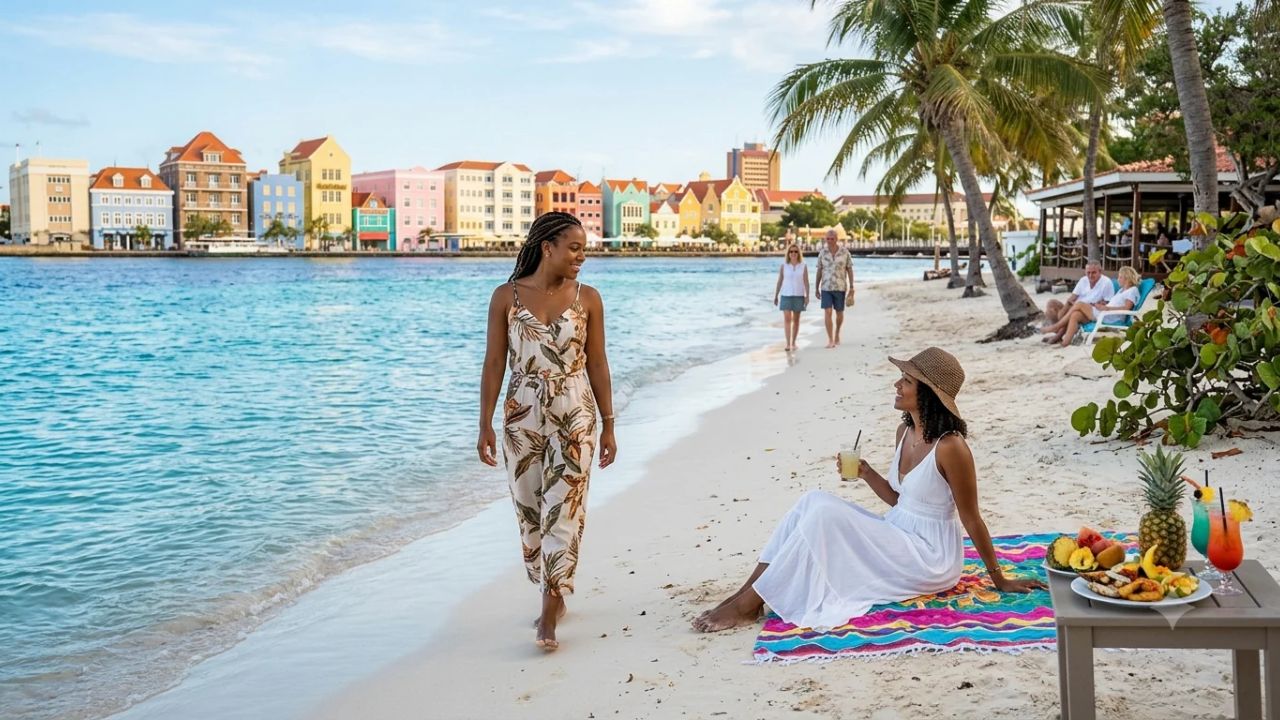
Curaçao's historic capital Willemstad illustrates the island's unique intersection of Dutch colonial heritage, vibrant waterfront commerce, and surging international stayover tourism.
WILLEMSTAD, November 1, 2026 — Caribbean tourism is undergoing a structural realignment as international travelers seek high-yield fall escapes, with Curaçao posting an all-time high of 788,427 stayover visitors in 2025, outpacing traditional seasonal patterns and challenging regional benchmarks set by Aruba, the Dominican Republic, and The Bahamas. The post-pandemic resurgence across the Caribbean basin has transitioned from a volatile recovery phase into an era defined by strategic capacity management, air route diversification, and a pronounced traveler pivot toward destinations offering authentic cultural heritage alongside traditional coastal leisure.
[!NOTE] Official statistical registries from regional tourism authorities illustrate marked divergence in travel volume metrics: while stayover figures represent high-spending overnight guests occupying hotel inventory and local services, aggregate arrival counts in destinations like The Bahamas and Saint Lucia are heavily weighted by cruise transit passengers who spend only daylight hours ashore.
CARIBBEAN TOURISM VOLUME SPECTRUM: STAYOVER VS. CRUISE (2025)
| Column 1 |
|---|
| Destination Stayover Arrivals Cruise / Sea Arrivals Total Foreign Arrivals |
| Curaçao 788,427 ~146,000+ ~934,000+ |
| Aruba (Proj.) 1,450,500 ~600,000+ ~2,050,000+ |
| Barbados 727,310 ~650,000+ ~1,377,000+ |
| Saint Lucia 426,676 668,086 1,136,111 |
| The Bahamas 1,688,794 10,811,077 12,499,871 |
The Post-Pandemic Rebound: Macroeconomic Forces Shaping Caribbean Travel
The trajectory of Caribbean tourism between 2021 and 2026 highlights an extraordinary economic transformation. Following the unprecedented border closures and operational restrictions of 2020 and 2021, island economies across the archipelago faced severe fiscal pressures, prompting national tourism boards to rethink their commercial strategies. Early recovery phases in 2021 and 2022 were initially driven by pent-up leisure demand from North American and European feeder markets. However, the durable expansion observed through 2025 and into 2026 reflects structural improvements in long-haul aviation connectivity, strategic bilateral marketing agreements, and targeted investments in upscale accommodation assets.
Airlift development has played an indispensable role in unlocking autumn travel demand across non-traditional seasonal windows. Traditionally, Caribbean tourism experienced pronounced cyclical troughs between September and November, coinciding with the Atlantic hurricane season and the transition between summer family travel and the winter peak. Island nations located below the hurricane belt, specifically the Leeward Antilles comprising Aruba, Bonaire, and Curaçao, have capitalized on their southern geographical positioning to market guaranteed warm weather and calm marine conditions during autumn months. Concurrently, legacy and low-cost carriers from the United States, Canada, and Western Europe have expanded point-to-point frequencies into secondary Caribbean gateways, diminishing reliance on congested regional transfer hubs.
Beyond logistical accessibility, macroeconomic consumption patterns among international visitors have shifted substantially. Affluent travelers are increasingly prioritizing multi-night cultural engagement, architectural discovery, and authentic regional gastronomy over insular, all-inclusive resort enclaves. This structural pivot has favored mid-sized territories capable of delivering diverse urban, ecological, and maritime excursions within manageable geographic boundaries. Curaçao, with its preserved UNESCO World Heritage urban landscape in Willemstad and protected western national parks, has emerged as a prime beneficiary of this demographic evolution.
Five-Year Tourism Performance: Analyzing Caribbean Stayover Benchmarks
A thorough examination of official statistical returns released by regional tourism ministries demonstrates the uneven velocity of post-pandemic expansion across the Caribbean. Because reporting methodologies differ among jurisdictions, separating multi-day stayover visitors from temporary cruise ship arrivals is essential for accurate economic modeling and consumer planning.
| Destination and Measure | 2021 Official | 2022 Official | 2023 Official | 2024 Official | 2025 Official | Reporting Authority |
|---|---|---|---|---|---|---|
| Curaçao (Stayover Visitors) | 265,000 | Annual Report Ref. | 582,409 | 700,249 | 788,427 | Curaçao Tourist Board (CTB) |
| Aruba (Stayover Visitors) | 806,531 | 1,100,997 | 1,260,402 | 1,432,975 | 1,450,500 (Proj.) | Aruba Tourism Authority (ATA) |
| The Bahamas (Air & Sea Combined) | 2,100,618 | 7,000,706 | 9,654,838 | 11,216,972 | 12,499,871 | Bahamas Ministry of Tourism |
| Barbados (Stayover Visitors) | Official Series | Official Series | Official Series | Revised Series | 727,310 | Barbados Statistical Service (BSS) |
| Saint Lucia (Total Arrivals) | Unlisted Series | 729,063 | 1,036,066 | 1,202,481 | 1,136,111 | Saint Lucia Central Statistical Office |
The statistical ascent of Curaçao is particularly striking when measured across the complete five-year evaluation window. In 2021, when pandemic border restrictions, mandatory PCR testing, and international route curtailments suppressed cross-border transit, Curaçao recorded 265,000 stayover arrivals. During that benchmark year, the island also handled 146,213 cruise passenger calls and 7,124 day-trippers. Overnight visitors registered an average length of stay of 10.8 nights, sustaining an island-wide hotel occupancy rate of 51.1%.
By 2023, Curaçao had surged past its historical records to log 582,409 stayover arrivals, expanding further to 700,249 overnight visitors in 2024. The official 2025 return of 788,427 stayover arrivals marks a nearly three-fold increase compared with 2021 levels. This rapid expansion reflects aggressive market diversification initiatives conducted by the Curaçao Tourist Board, which successfully expanded inbound flight capacity from the United States, South America (notably Colombia and Brazil), and the Netherlands, offsetting historical reliance on seasonal charter operations.
Aruba has maintained an equally aggressive growth trajectory, leveraging its long-established reputation as a premier resort hub. The Aruba Tourism Authority documented 806,531 stayover visitors in 2021, crossing the one-million threshold in 2022 with 1,100,997 overnight arrivals. Steady annual increments brought the volume to 1,260,402 in 2023 and 1,432,975 in 2024. In its corporate planning projections, the authority targeted 1,450,500 stayover arrivals for 2025. Aruba's high base volume illustrates the scale of its developed hospitality sector, which features a dense concentration of high-rise and low-rise international brand properties concentrated along Palm Beach and Eagle Beach.
In Barbados, the national tourism recovery reached 727,310 stayover visitors in 2025, according to annual figures published by the Barbados Statistical Service. A closer examination of the monthly arrival series illustrates the extreme seasonal elasticity that characterizes the eastern Caribbean. In September 2025, during the height of the regional low season, Barbados recorded 34,042 stayover arrivals. By December 2025, as the winter peak commenced, monthly stayover traffic more than doubled to 78,210 arrivals. This contrast highlights the substantial operational challenges Caribbean hoteliers face in managing workforce staffing, operational inventory, and revenue yield across shifting seasonal boundaries.
Stayover Versus Cruise Tourism: Unpacking Economic Yield and Infrastructure Pressure
The distinction between stayover tourists and cruise transit passengers represents one of the most critical analytical divides in modern Caribbean tourism economics. While total arrival statistics are frequently deployed in political discourse to demonstrate headline sector vitality, the economic multiplier generated by an overnight stayover guest vastly outstrips that of a daytime maritime passenger.
The Bahamas presents the most vivid illustration of this structural divergence. In 2025, the destination celebrated a historic record of 12,499,871 foreign arrivals by air and sea. However, a granular breakdown reveals that maritime cruise passengers accounted for 10,811,077 of these visitors, representing roughly 86.5% of total foreign entries. Air arrivals, which encompass stayover guests occupying hotel rooms, rental villas, and family guesthouses, totaled approximately 1,688,794. While cruise calls generate essential head taxes, port handling revenues, and localized retail spending in downtown Nassau and private island enclaves, overnight visitors generate sustained room taxes, frequent multi-day dining expenditures, vehicle rental revenues, and diverse retail transactions across the archipelago.
STRUCTURAL COMPARISON: VISITOR VALUE PROFILES
| Economic Metric Stayover Overnight Tourist Cruise Day-Transit Passenger |
|---|
| Average Length of Stay 6.5 to 10.8 nights 4 to 8 hours ashore |
| Accommodation Yield Direct RevPAR & Room Levies Zero direct room expenditure |
| Gastronomy Footprint Daily breakfasts, lunches, Incidental street food / |
| and fine dining dinners minor beverage purchases |
| Local Transport Car rentals, private taxis, Coordinated motorcoach or |
| and public bus transit pedestrian port strolls |
| Infrastructure Impact Sustained utility demand, Intense short-duration peak |
| distributed road network load crowding at port gateways |
| Local Economy Capture High (direct SME engagement) Concentrated (port shops) |
Saint Lucia reflects a parallel dynamic within the Windward Islands. The island documented 1,136,111 total arrivals in 2025, following a peak of 1,202,481 in 2024 and 1,036,066 in 2023. Of the 2025 aggregate, stayover arrivals constituted 426,676 visitors, while cruise ship passengers numbered 668,086, with the remainder representing yachting and regional transit travelers. For national infrastructure planners, accommodating over 660,000 cruise visitors requires modern deep-water berthing docks at Castries and Point Seraphine, whereas supporting 426,000 stayover guests requires high-grade road networks connecting the southern international gateway at Hewanorra to resort corridors in Soufrière, Rodney Bay, and Cap Estate.
Understanding these structural differences enables international travelers to evaluate destination atmosphere accurately. Islands with high cruise-to-stayover ratios often experience intense daylight congestion in capital harbors and popular natural landmarks, followed by rapid quietude once vessels depart in the late afternoon. Conversely, destinations like Curaçao, where stayover volume (788,427) substantially exceeds cruise transit footfall, sustain vibrant evening dining corridors, extended retail hours, and an authentic community atmosphere throughout the week.
Comparative Island Profiles: Distinct Travel Personas Across the Caribbean Basin
Choosing an autumn Caribbean getaway requires aligning individual traveler expectations with the unique geographic, cultural, and operational identity of each island. While the regional marketing narrative often homogenizes the Caribbean into uniform sun, sand, and sea imagery, the six leading destinations offer profoundly distinct guest experiences.
| Destination | Primary Traveler Segment | Suggested Geographical Base | Iconic Gastronomic Specialty | Distinctive Landscape Highlight |
|---|---|---|---|---|
| Curaçao | Cultural heritage, diving, independent road exploration | Willemstad (Punda or Pietermaai) | Stobá (slow-simmered stew), Keshi Yena | Coral limestone sea coves, Shete Boka blowholes |
| Aruba | Resort leisure, watersports, nightlife, wellness | Palm Beach or Eagle Beach | Keshi Yena, grilled red snapper | Cacti-strewn desert terrain, Arikok National Park |
| Barbados | Heritage tours, culinary discovery, Atlantic surf | South Coast or Saint James | Flying fish with Cou-Cou, fish cakes | Rugged Bathsheba coast, historic sugarcane estates |
| Jamaica | Music immersion, adventure eco-tours, resort stays | Negril or Montego Bay | Jerk pork and chicken, ackee and saltfish | Blue Mountains, cascading river waterfalls |
| Dominican Rep. | Full-scale all-inclusive luxury, colonial history | Punta Cana or Santo Domingo | Mangú with los tres golpes, Sancocho | Colonial City cathedrals, expansive sandy shores |
| The Bahamas | Island-hopping, yachting, clear-water marine life | Nassau or The Exumas | Fresh conch salad, cracked conch fritters | Shallow sandbars, turquoise ocean shallows |
| Saint Lucia | Romance, botanical hiking, dramatic volcanic scenery | Soufrière or Rodney Bay | Green fig and saltfish, cocoa tea | The Pitons volcanic spires, sulfur springs caldera |
Aruba: High-Efficiency Resort Infrastructure and Arid Coastlines
Aruba represents the benchmark for master-planned Caribbean beach tourism. Operating outside the southern edge of the Atlantic hurricane belt, the island delivers exceptionally consistent arid weather, minimal rainfall, and cooling trade winds. Accommodations are concentrated along two distinct strips: the High-Rise zone of Palm Beach, populated by international hotel towers, vibrant beach bars, and extensive water-sport concessions; and the Low-Rise zone of Eagle Beach, known for expansive ivory sands and boutique properties.
Beyond the shoreline, Arikok National Park encompasses nearly twenty percent of Aruba's total land area, featuring dramatic limestone caves, rugged quartz hills, and crashing northern surf unsuitable for swimming but ideal for off-road safari excursions. Gastronomy centers on traditional Aruban dishes such as keshi yena—a savory casserole of spiced minced meat, olives, capers, and raisins baked inside a shell of Gouda or Edam cheese—alongside fresh Atlantic seafood. Aruba is exceptionally well-suited for travelers seeking predictable luxury, reliable resort infrastructure, and safe, straightforward self-drive exploration.
Barbados: Heritage Legacies, Atlantic Drama, and Platinum Coastline
Barbados combines British colonial architectural traditions with vibrant West Indian cultural energy. The island's western shoreline, frequently termed the Platinum Coast, features sheltered Caribbean waters, ultra-luxury villas, and tranquil resorts catering to discerning international clientele. In contrast, the eastern coastline around Bathsheba faces the powerful swells of the Atlantic Ocean, creating world-renowned surfing conditions at the Soup Bowl and dramatic coastal photography backdrops framed by massive limestone boulders.
Bridgetown and its historic Garrison, recognized as a UNESCO World Heritage site, offer extensive military and mercantile history, while the southern fishing hub of Oistins serves as the island's premier social gathering point on Friday evenings, where locals and visitors gather for freshly grilled flying fish, tuna, and cou-cou (a cornmeal and okra accompaniment). Barbados appeals strongly to independent travelers who appreciate rich culinary heritage, botanical gardens, and refined hospitality services.
Jamaica: Musical Identity, Lush Topography, and Culinary Authenticity
Jamaica commands a unique position in global culture, extending far beyond conventional resort tourism through its profound musical, sporting, and artistic contributions. Travel experiences in Jamaica divide naturally between its primary coastal corridors: Negril on the western tip, celebrated for its seven-mile stretch of white sand and legendary cliffside sunset gatherings; and Montego Bay, home to major all-inclusive resort complexes, international golf courses, and the country's busiest aviation gateway at Sangster International Airport.
Discerning visitors often expand their itineraries into the interior, exploring the cooler elevations of the Blue Mountains, home to world-renowned coffee estates, or visiting Kingston to explore the Bob Marley Museum and the National Gallery of Jamaica. The island's culinary identity is assertive and globally celebrated, defined by authentic jerk seasoning smoked over allspice wood, savory meat patties, and the national breakfast dish of ackee and saltfish. Jamaica suits active travelers seeking sensory intensity, dynamic cultural interaction, and diverse ecological microclimates.
Dominican Republic: Vast Hospitality Scale and Historic Urban Roots
As one of the Caribbean's geographic and demographic giants, the Dominican Republic operates on a scale unmatched by smaller island neighbors. The eastern province of Punta Cana is home to one of the world's densest concentrations of comprehensive all-inclusive resort properties, supported by Punta Cana International Airport, which handles millions of overseas holidaymakers annually. These resort enclaves provide self-contained leisure ecosystems with championship golf, multi-pool complexes, and private beach access.
Conversely, the capital city of Santo Domingo provides an entirely different dimension of travel. As the oldest continuously inhabited European settlement in the Americas, its Colonial City (Zona Colonial) presents cobblestone plazas, sixteenth-century cathedrals, and restored palace residences housing contemporary boutique hotels and art galleries. Iconic national dishes include mangú (seasoned mashed green plantains served with fried salami, eggs, and cheese) and sancocho (a hearty seven-meat stew reserved for celebratory gatherings). The destination rewards visitors who carefully match their base to their preferences, whether seeking secluded resort relaxation or deep historical exploration.
The Bahamas: Archipelago Diversity and Marine Wonders
Comprising over 700 islands and thousands of cays spanning hundreds of miles of shallow turquoise waters, The Bahamas delivers an unparalleled marine playground. Nassau, situated on New Providence Island, functions as the commercial, political, and cruise heart of the nation, connected by bridge to Paradise Island and its sprawling entertainment complexes. Nassau provides deep-water cruise berths, historical fortresses, and extensive duty-free shopping districts.
However, the true geographic character of The Bahamas emerges across the Family Islands, or Out Islands. The Exumas present electric-blue waters, secluded sandbars accessible only by shallow-draft boats, and renowned marine parks. Eleuthera and Harbour Island showcase pink-sand coastlines, historic New England-style clapboard cottages, and high-end boutique hideaways. Culinary traditions revolve around the sea, with fresh conch salad prepared to order using lime juice, fiery goat peppers, and crisp vegetables. Navigating the archipelago requires strategic planning and domestic flight arrangements, making it best suited for marine enthusiasts and multi-stop travelers.
Saint Lucia: Dramatic Volcanic Topography and Romance
Saint Lucia is immediately distinguished by its dramatic vertical geography. Rising sharply from the Caribbean Sea along the southwestern coast, the Gros Piton and Petit Piton form iconic volcanic spires that have established the island as a global benchmark for romance and wellness tourism. The landscape around Soufrière features lush rainforests, drive-in volcanic sulfur springs, and mineral-rich mud baths, alongside luxury eco-resorts featuring three-walled open-air architecture framing views of the peaks.
The northern district surrounding Rodney Bay and Gros Islet contrasts with the mountainous south, offering sheltered yacht marinas, calm swimming beaches, and lively street parties. The national dish of green fig (unripened bananas) and salted codfish highlights the island's Creole heritage, complemented by traditional cocoa tea brewed from local cacao beans. Saint Lucia caters particularly well to couples, adventure hikers, and wellness seekers seeking untamed natural scenery.
Curaçao in Focus: Architecture, Marine Ecosystems, and Dutch-Caribbean Heritage
Among southern Caribbean choices, Curaçao presents an exceptionally balanced destination profile. The island's cultural and visual identity is anchored in Willemstad, divided into two historic waterfront quarters—Punda and Otrobanda—flanking the entrance to Sint Anna Bay. The iconic Handelskade streetscape, with its gabled Dutch colonial facades painted in vibrant pastels of ochre, cobalt, and terracotta, stands as a living testament to three centuries of Atlantic trade. Linking the two districts is the Queen Emma Bridge, a floating wooden pontoon bridge affectionately known as the "Swinging Old Lady," which swings open multiple times daily to permit container vessels and cruise liners entry into Schottegat harbor.
STRUCTURAL PROFILE: CURAÇAO VISITOR ASSETS
| Category / Entity | Details / Impact |
|---|---|
| Urban Heritage | Willemstad UNESCO site, Pietermaai gastronomic quarter |
| Marine Conservation | Coral reef drop-offs reachable directly from the shoreline |
| Geographic Shield | Sits south of the Atlantic hurricane belt; year-round calms |
| Culinary Fusion | Dutch, Afro-Caribbean, Sephardic Jewish, and Latin influences |
| Transportation Model | Self-drive car rental network with accessible coastal highways |
Beyond the architectural splendor of Willemstad, Curaçao's coastline is defined by dozens of secluded limestone coves (bokas) and intimate sandy bays (playas) carved into the rugged coral terraces of the western tip (Banda Bou). Unlike destinations where beach access is dominated by extensive hotel enclosures, many of Curaçao's finest beaches, such as Grote Knip, Cas Abao, and Playa Porto Mari, remain public or require only minor environmental conservation entry fees. The island's surrounding coral reefs are among the healthiest in the Caribbean, dropping off steeply into deep blue waters just meters from the sand, allowing exceptional shore diving and snorkeling without requiring boat charters.
The island's cultural fabric is equally reflected in its distinct culinary traditions. Rooted in Afro-Caribbean, Dutch, Latin American, and Sephardic Jewish influences, local dining centers around authentic open-air markets such as Plasa Bieu in downtown Punda. Diners gather at communal wooden picnic tables to savor karni stobá (slow-cooked beef stew seasoned with local herbs), kabritu stobá (braised goat stew), and sop'i kadushi (cactus soup crafted from the native candle cactus). The local food scene seamlessly bridges casual roadside snèks serving cold Polar beer and pastechi (fried savory pastries) with sophisticated dining establishments occupying converted eighteenth-century mansions in Pietermaai.
Strategic Fall Itinerary: A Comprehensive Seven-Day Curaçao Blueprint
To experience Curaçao's rich balance of cultural history, natural reserves, and coastal leisure during an autumn getaway, a structured seven-day itinerary allows independent travelers to navigate the island efficiently without excessive transit fatigue.
| Expedition Phase | Daily Geographic Focus | Primary Activities & Cultural Sites | Recommended Dining & Practical Logistical Guidance |
|---|---|---|---|
| Day 1: Arrival & Orientation | Willemstad Historic Core | Check in to accommodation; introductory sunset walk across Queen Emma Bridge | Dine along Pietermaai waterfront; secure local currency or verify card acceptance |
| Day 2: Architectural Discovery | Punda & Otrobanda Districts | Guided walking tour of Handelskade, Kura Hulanda Museum, and Mikvé Israel-Emanuel | Authentic lunch at Plasa Bieu (stobá); observe maritime pontoon bridge operations |
| Day 3: Western Coastal Splendor | Banda Bou (West Coast) | Morning swimming at Grote Knip; coastal cliff photography; visit historic landhuizen | Casual lunch at seaside cafe; carry high-protection reef-safe mineral sunscreen |
| Day 4: Marine Immersion | Playa Porto Mari & Daaibooibaa | Snorkeling along the double reef; underwater photography; afternoon beach relaxation | Sample grilled lionfish to support reef conservation; observe local marine guidelines |
| Day 5: Rugged Northern Wilderness | Shete Boka National Park | Explore Boka Tabla cavern blowholes; hike rocky volcanic limestone terraces | Pack abundant drinking water and sturdy hiking shoes; strictly avoid ocean swimming |
| Day 6: Coastal Leisure & Heritage | Cas Abao Beach & Landhuis Chobolobo | Morning lounging at Cas Abao; afternoon tour of the historic Blue Curaçao distillery | Dinner in converted plantation house; sample traditional keshi yena and local liqueurs |
| Day 7: Souvenirs & Departure | Punda Floating Market & Hato Airport | Purchase local Dutch cheeses and crafts; final seaside espresso; return rental vehicle | Complete online airport customs declarations early; allow two hours for departures |
This route emphasizes independent vehicle mobility. While organized excursions are readily available, renting a passenger car directly at Hato International Airport grants complete freedom to explore secluded western beaches and northern national parks at your own pace, avoiding peak tour bus arrivals.
Cross-Border Travel Logistics, Entry Requirements, and Seasonal Planning
Executing a seamless autumn journey to Curaçao or any peer Caribbean destination demands careful attention to contemporary administrative and logistical requirements. The regulatory landscape has shifted toward digital pre-clearance systems, making advance preparation essential for smooth border processing.
| Regulatory Domain | Operational Requirement for Curaçao | Regional Caribbean Benchmark Comparison |
|---|---|---|
| Digital Immigration Clearance | Mandatory online Digital Immigration (DI) Card filed 7 days prior | Aruba uses online ED-Card; Bahamas uses digital immigration forms |
| Passport & Validity Terms | Minimum 6 months validity from departure date | Universal across Caribbean jurisdictions; blank pages required |
| Currency & Financial Media | Netherlands Antillean Guilder (ANG); US Dollars accepted | Aruba uses Aruban Florin; Eastern Caribbean Dollar (XCD) in Saint Lucia |
| Automotive Navigation | Right-hand drive; international or domestic driver's license valid | Barbados and Jamaica operate on the left-hand side of the roadway |
| Meteorological Risk Management | Low hurricane probability; occasional brief tropical convective showers | Northern Caribbean requires flexible airfare and comprehensive travel insurance |
Curaçao requires all international air arrivals to complete its official Digital Immigration (DI) Card via its secure government portal prior to boarding their departure flight. This paperless process replaces historical physical entry cards, allowing border authorities to verify passport information and customs declarations digitally. Arriving travelers should retain a digital copy or printed confirmation on their mobile devices for verification at airport check-in desks.
Financial management on the island is notably straightforward. While the official legal tender is the Netherlands Antillean Guilder (ANG)—scheduled to transition to the new Caribbean Guilder alongside Sint Maarten—United States Dollars are universally accepted across supermarkets, restaurants, hotels, and fuel stations at standard fixed exchange rates. Major international credit and debit cards operating on Visa and Mastercard networks are processed across virtually all commercial establishments, minimizing the need to carry substantial amounts of physical paper currency.
Driving standards follow standard continental rules, with vehicles operating on the right side of the road. Roadway signs adhere to international European standards. While major highways linking Willemstad to Hato International Airport and the western districts are fully paved, rural secondary access tracks leading to remote northern coastal viewpoints consist of unpaved, packed dirt and coral gravel, warranting cautious driving and adequate tire clearance.
Long-Term Outlook: Sustainable Tourism Management and Island Carrying Capacity
As Caribbean tourism expands toward new historical records, destination authorities face the delicate challenge of balancing aggressive visitor growth with ecological preservation and community welfare. Curaçao's achievement in attracting nearly 800,000 stayover visitors in 2025 demonstrates immense commercial vitality, but it concurrently introduces emerging infrastructure challenges regarding municipal water desalinization capacity, electrical grid stability, waste management, and affordable housing availability for local residents in popular urban quarters like Pietermaai and Scharloo.
The vulnerability of Caribbean marine habitats adds urgency to sustainable management frameworks. The surge in coastal tourism directly impacts sensitive coral reef ecosystems through physical diver contact, boat anchor scouring, and the biochemical toxicity of traditional sunscreens containing oxybenzone and octinoxate. Regional governments are progressively implementing mandatory coral-safe sunscreen regulations and expanding marine protected areas (MPAs) funded through dedicated environmental conservation levies attached to tourist entries.
For the international traveler, choosing a fall escape in the Caribbean today involves considering the broader economic and ecological footprint of one's journey. By selecting destinations that prioritize overnight stayover visitors, supporting locally owned culinary establishments, respecting fragile coastal habitats, and planning trips outside peak holiday surges, travelers actively contribute to the enduring cultural and environmental resilience of these extraordinary island communities.
Related Travel Guides
This article is for informational purposes. Flight routes, passenger regulations, visa rules, and transit advisories are subject to change by airlines and aviation authorities. Readers are advised to verify schedules and travel documentation with relevant carriers and border agencies before departure.
Related Stories
Belize Tourism Board Appoints FINN Partners for Global Rebrand Across US and Major European Markets
Türkiye Expands Slow Tourism Network to 29 Cittaslow Towns Across Seven Regions as Inbound Arrivals Near 35 Million in 2026