
Cruise Ship Gemini Detained in Greece: Miray Cruises Financial Collapse Exposes Eastern Mediterranean Industry Vulnerabilities in 2026
The detention of cruise ship Gemini in Greece reveals mounting financial instability at Miray Cruises, threatening crew welfare and reshaping Mediterranean cruise tourism operations.

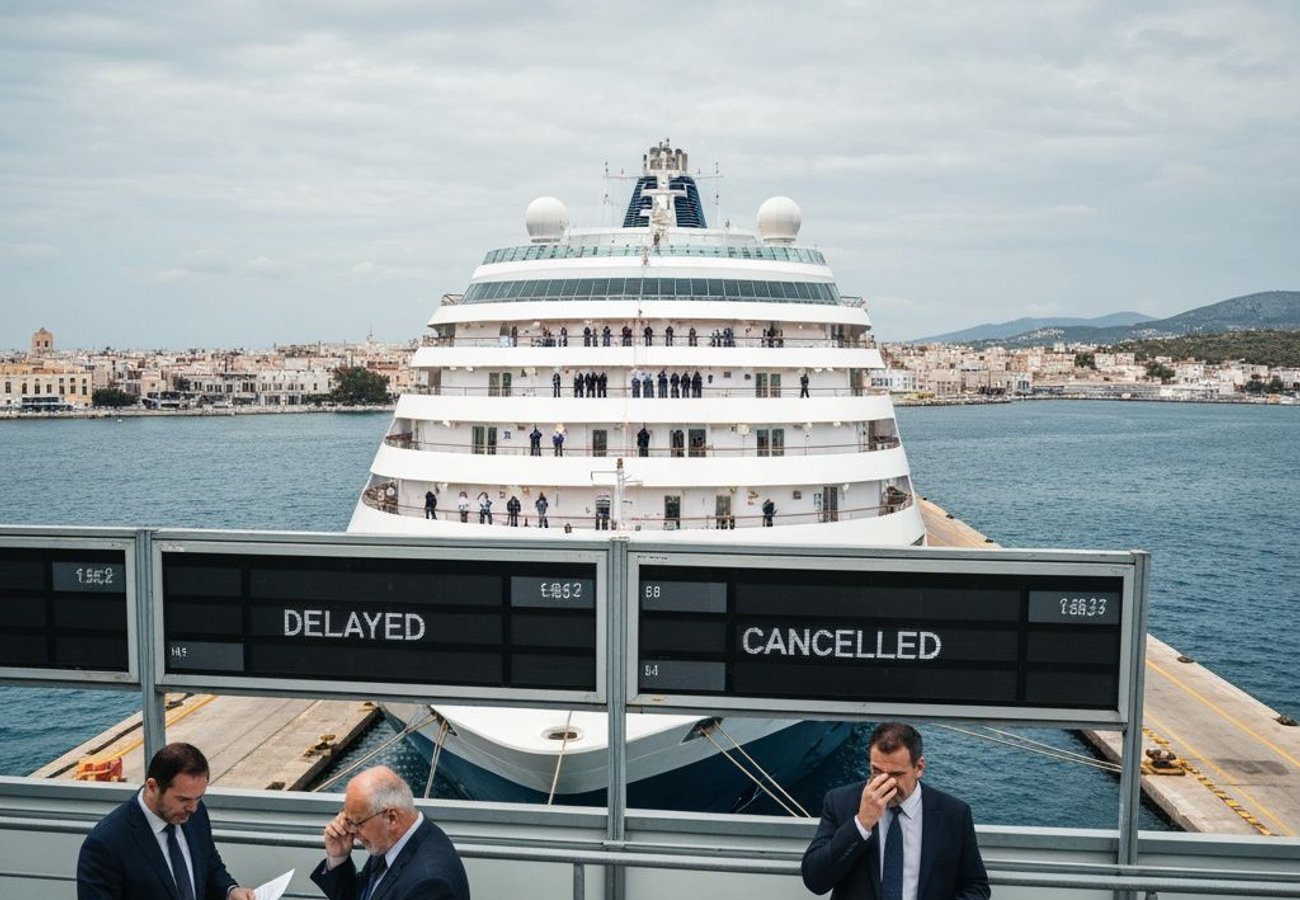
Image generated by AI
A Cruise Industry Crisis Unfolds Off the Greek Coast
The Gemini, a 1992-built cruise vessel managed by Miray Cruises, sits stranded off the Karistos coast of Greece—held by court order due to mounting unpaid debts owed to DenizBank, a Turkish financial institution. What began as a routine summer 2026 deployment has transformed into a cautionary tale about financial fragility within the cruise industry and the cascading operational failures that follow.
The seizure represents more than a single vessel problem. It's a harbinger of structural vulnerabilities plaguing smaller cruise operators navigating high-cost seasonal markets.
The Operational Collapse: Summer Season Derailed
The Gemini was positioned to launch its Eastern Mediterranean cruise season in late May 2026, offering short itineraries spanning Greece and Turkey, with extended sailings pushing into the Black Sea region, including ports in Russia and Georgia. The vessel was also scheduled for repositioning voyages between Mediterranean and Red Sea markets.
That never happened.
The operational suspension has fractured planned regional cruise routes that typically generate critical seasonal revenue flows. Port cities across Greece, Turkey, and beyond now face unexpected gaps in cruise traffic during peak summer months.
A Debt Crisis With Multiple Creditors
The detention stems from more than just DenizBank's claims. Insurance providers, maritime service companies, and tug operators have all filed competing financial demands against Miray Cruises. These overlapping liabilities created a perfect storm of enforcement action.
Adding complexity: the Gemini underwent a controversial re-flagging from the Bahamas to Cameroon and subsequently lost its classification with Bureau Veritas, the international maritime certifier. These regulatory complications further undermine the vessel's operational legitimacy within international maritime frameworks.
Reddit: "When a ship loses Bureau Veritas classification, you know there are serious structural problems beyond just money." — r/maritime
The Human Cost: 25 Crew Members in Crisis
Approximately 25 crew members remain trapped onboard the Gemini under deteriorating conditions. Reports indicate wage arrears stretching back two months or longer—some cases suggesting even more extensive payment delays.
The situation is dire. Fuel shortages. Dwindling provisions. Crew members discussing vessel abandonment due to prolonged uncertainty and zero resolution timeline. These conditions violate basic crew welfare standards increasingly scrutinized by global maritime regulators.
This crew predicament reflects a persistent gap in governance across financially distressed cruise operations—an issue gaining international regulatory attention through organizations like the International Maritime Organization.
Miray Cruises: A Company in Freefall
The Gemini detention represents the latest chapter in Miray Cruises' accelerating financial deterioration since late 2025.
The company previously captured headlines with its ambitious "Life at Sea" residential cruise concept—a venture that collapsed spectacularly in November 2023 following funding failures and ship acquisition problems. Since then, the company has spiraled through delayed payments, cancelled operations, and shrinking deployment capacity.
This is not a temporary cash flow issue. This is structural insolvency.
Mediterranean Ports Face Supply Shock
Key Eastern Mediterranean and Black Sea destinations depend on seasonal cruise traffic. Bodrum, Mykonos, Rhodes, Alexandria, Istanbul, and Piraeus typically capitalize on summer cruise volumes to drive local tourism economies.
The Gemini's suspension creates immediate supply gaps for mid-sized vessels catering to niche itineraries. Regional tourism economies will feel the impact across accommodations, restaurants, shore excursions, and local services that cruise passengers typically patronize.
The Broader Industry Picture: Growth Amid Fragmentation
Despite this specific crisis, the cruise tourism sector continues demonstrating strong long-term expansion potential, particularly across Mediterranean, Aegean, and emerging Black Sea routes. Industry analysts note that while smaller operators face volatility, the sector's long-term outlook remains fundamentally positive.
Key growth drivers include:
Rising European and Mediterranean demand for multi-destination itineraries Expansion of mid-sized and expedition cruise segments Growing interest in affordable short-haul cruise vacations Emergence of destination-led cruise hubs in Greece, Turkey, and Croatia Strong leisure travel rebound continuing post-pandemic
However, the Gemini case crystallizes an emerging divide: large, financially resilient cruise corporations versus smaller operators lacking liquidity buffers. This market bifurcation will likely reshape industry structure over the next decade.
Regulatory Tightening: The Inevitable Response
Expect accelerated industry focus on financial transparency, crew protection standards, and vessel compliance frameworks. Cruise operators now face mounting pressure to demonstrate:
Clear liquidity management protocols for seasonal operations Enforceable crew wage protection mechanisms Stable flag-state registration practices Robust debt risk mitigation structures Enhanced regulatory oversight of vessel classification standards
These accountability measures will become central to future cruise industry governance, particularly in regions dependent on seasonal cruise tourism patterns. Organizations like the International Labour Organization are increasingly monitoring crew welfare compliance across flagged vessels.
A Market at an Inflection Point
The Gemini situation doesn't derail global cruise tourism's expansion trajectory. Demand continues rising across Europe, the Mediterranean, and emerging Asian and Middle Eastern cruise markets. The key structural shift will favor consolidated operators managing long-term deployments while smaller companies either consolidate, restructure, or exit high-cost routes entirely.
The cruise industry's future isn't darker—it's just more selective about who survives. Financial prudence, regulatory compliance, and operational discipline will separate enduring operators from those facing detention orders off Greek coastlines.
The ships that sail smoothly are those built on solid financial foundations.
Related Travel Guides
Disclaimer
This article is for informational and educational purposes only. It does not constitute legal, financial, or professional advice. While we strive to provide accurate and up-to-date information, travel policies, regulations, and conditions change rapidly. Always verify information with official sources before making travel decisions. Nomad Lawyer makes no representations about the accuracy, reliability, completeness, or suitability of the information provided. Readers should consult qualified professionals for advice specific to their circumstances. The views expressed in this article are those of the author and do not necessarily reflect the views of Nomad Lawyer.
Preeti Gunjan
Contributor & Community Manager
A passionate traveller and community builder. Preeti helps grow the Nomad Lawyer community, fostering engagement and bringing the reader experience to life.
Learn more about our team →