
Costa Rica Leads Americas' Agritourism Explosion: Farm Stays and Coffee Trails Reshape Global Travel in 2026
Costa Rica spearheads a continental agritourism boom across seven nations, as farm stays, coffee plantations, and sustainable rural tourism redefine how travelers experience the Americas in 2026.

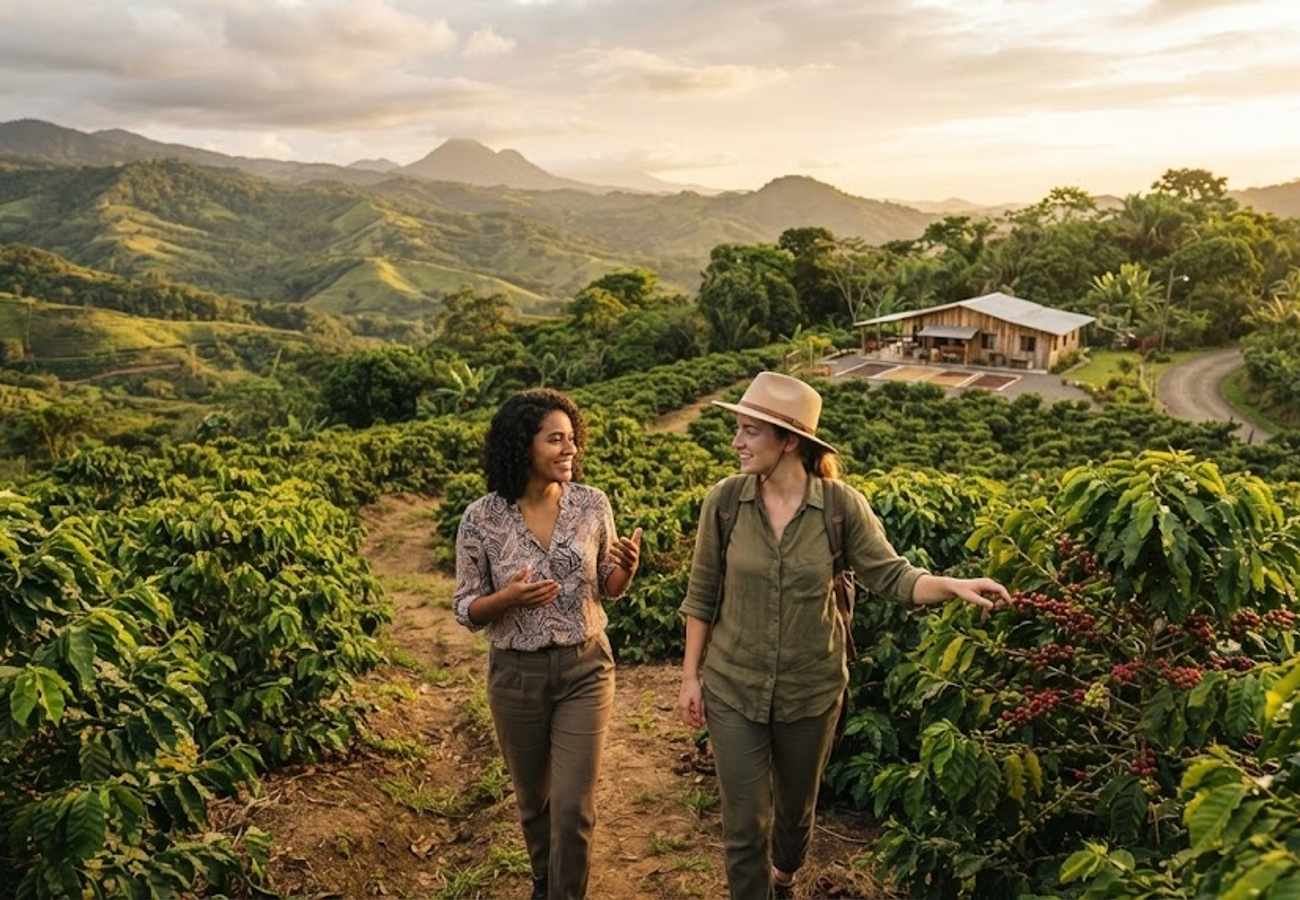
Image generated by AI
The Continental Shift: When Farms Became Destinations
Something seismic is happening across the Americas. Seven nations—Costa Rica, the United States, Canada, Mexico, Argentina, Brazil, and Colombia—are simultaneously experiencing an agritourism explosion that's fundamentally rewriting how millions of travelers spend their money and time.
This isn't a niche trend. This is a complete repositioning of rural landscapes from agricultural production zones into full-fledged tourism destinations. And Costa Rica is leading the charge, positioning itself as the continental gold standard for integrating sustainability with authentic farm-based experiences.
Reddit: "I spent a week at a Costa Rican coffee plantation doing farm work and tastings. It cost less than a resort week and changed how I think about travel." — r/travel
Why Agritourism Exploded Right Now
The catalyst is unmistakable: modern travelers are exhausted by generic resort culture. They're craving authenticity, connection, and purpose—especially among millennial and Gen-Z visitors who now comprise the largest travel demographic.
Farm stays, coffee plantation tours, vineyard visits, and sustainable agricultural experiences answer precisely what this cohort demands: memorable encounters with real people, working landscapes, and tangible environmental impact.
Governments noticed. Tourism ministries across the Americas recognized that agritourism distributes visitor spending away from congested urban centers and overcrowded beach destinations. Rural communities suddenly became economically viable without requiring massive infrastructure investment.
The result? A simultaneous pivot across the continent toward agricultural tourism as a primary economic driver.
Costa Rica's Masterclass in Agritourism Leadership
Costa Rica didn't stumble into this leadership position—it engineered it.
The country systematically combined its internationally recognized sustainability model with direct-access agricultural experiences. Visitors can now tour organic coffee plantations in the Central Valley, learn biodiversity conservation on working farms, explore pineapple operations, and participate in harvests while staying in family-run rural accommodations.
What distinguishes Costa Rica from competitors is integration depth. Rather than bolting tourism onto existing agriculture, Costa Rica fused both into a unified value proposition: education meets agriculture meets environmental stewardship meets cultural immersion.
Visitors aren't passive observers. They're participants in genuine farming operations, learning directly from multigenerational agricultural families. This authenticity—impossible to manufacture—drives premium pricing and repeat visitation.
The United States: Scaling Agritourism Maturity
The United States operates one of the world's most sophisticated agritourism ecosystems, with thousands of working farms now welcoming international visitors for harvest festivals, educational programs, vineyard tours, and farm-to-table dining experiences.
California, Texas, Vermont, Oregon, and New York lead this charge, leveraging existing tourism infrastructure and destination marketing expertise to attract year-round rural visitors.
The American advantage lies in sophistication. U.S. farms combine working agricultural operations with professional hospitality, strong digital marketing, and regulatory frameworks supporting farm businesses earning secondary tourism revenue. A visitor can harvest grapes at a Napa Valley operation one day and sleep in on-site luxury accommodations that evening.
This scalability demonstrates that agritourism succeeds not through sacrifice of farming efficiency but through complementary revenue diversification.
Canada's Maple-to-Wine Agricultural Tourism Growth
Canada integrated agritourism into national tourism strategy by showcasing maple syrup farms, wineries, berry operations, dairy facilities, and Indigenous agricultural experiences across Ontario, British Columbia, and Quebec.
The Canadian model emphasizes seasonal variation. Maple syrup tourism drives winter visitation. Summer berry farms attract families. Autumn wine harvests appeal to cultural travelers. This year-round calendar prevents the feast-or-famine economics that plague seasonal tourism destinations.
Indigenous partnerships amplify authenticity. Visitors don't just experience Canadian agriculture—they encounter the continent's original agricultural traditions through educational frameworks emphasizing cultural respect and economic reciprocity.
Mexico, Argentina, Brazil, and Colombia: The Southern Acceleration
Mexico capitalizes on its globally dominant food culture through tequila tourism, coffee plantation experiences, cacao farm operations, and traditional agricultural communities that showcase centuries of farming heritage. Visitors participate in harvest cycles, learn production methods, and purchase directly from producers.
Argentina attracts international travelers through iconic estancias (working ranches), world-class vineyards, and authentic gaucho experiences that combine gastronomic tourism with agricultural authenticity. Argentine agritourism particularly appeals to visitors seeking multi-day immersive experiences beyond standard wine tastings.
Brazil strengthens agritourism through coffee plantation lodges, cattle ranch experiences, and rural accommodations positioned as wellness and cultural education destinations rather than conventional hotels.
Colombia transformed its internationally recognized coffee-growing regions into fully developed tourism destinations offering plantation tours, cupping experiences, processing facility access, and extended stays in coffee-growing communities. The Colombian coffee tourism model proves that single-commodity regions can develop sophisticated tourism ecosystems.
The Economic Mathematics Behind the Boom
Agritourism creates multiplier effects that exceed conventional tourism calculations.
A coffee plantation visitor books accommodations, meals, transportation, and guide services. But they also purchase directly from farmers, supporting agricultural communities beyond seasonal employment. They visit local markets, hire local guides, and spend money in rural towns previously invisible to international tourism economics.
For farmers specifically, agritourism provides reliable secondary income during agricultural off-seasons. This income diversification strengthens farming operation viability, particularly for smaller producers struggling with commodity price volatility.
According to tourism research on agritourism sustainability, farm-based tourism creates five to seven ancillary jobs for every direct tourism position, multiplying economic impact across rural regions.
What Travelers Actually Want (And Why Authenticity Commands Premium Pricing)
Agritourism's acceleration reveals a fundamental truth: contemporary travelers willingly pay premium rates for genuine experiences they cannot simulate at home.
A standard resort week costs equivalent to a week-long farm stay, but the farm stay includes: education from working farmers, meals using on-site ingredients, genuine cultural encounter, environmental contribution, and verifiable impact on rural livelihoods. That psychological value—knowing your spending directly supports agricultural families—drives premium pricing acceptance.
This willingness to pay explains why agritourism operates on superior profit margins compared to conventional hospitality. Visitors are purchasing meaning, not just accommodation.
Sustainability as the Competitive Advantage
Every featured nation—Costa Rica, United States, Canada, Mexico, Argentina, Brazil, Colombia—emphasizes sustainable agricultural practices within tourism marketing.
This alignment strengthens both agriculture and tourism. Sustainable farming operations attract environmentally conscious international visitors willing to pay premium rates. Simultaneously, tourism revenue funds sustainability investments that might otherwise exceed farmer budgets.
The result: sustainable agriculture becomes economically viable at scale, creating positive environmental feedback loops rather than tourism-driven environmental degradation.
What Happens Next: Consolidation and Regulation
As agritourism matures, expect industry consolidation. Currently fragmented farm operations will increasingly partner with professional tourism operators who manage bookings, marketing, and hospitality operations while farmers maintain agricultural focus.
Governments will implement agritourism certification standards, ensuring quality consistency and preventing the dilution that kills emerging industries through inadequate experiences.
International investment capital will flow toward agritourism operators in premier locations. This professionalization will strengthen the sector while potentially reducing small-farmer participation unless cooperative structures preserve community involvement.
Technology integration will accelerate. Agritourism platforms now connect global visitors with farm operations, reducing geographic barriers and increasing visitor accessibility to rural destinations.
The Verdict: Agriculture Becomes Tourism Infrastructure
The Americas' agritourism explosion represents something deeper than tourism trend. It reflects fundamental economic repositioning where agriculture evolves from commodity production into tourism infrastructure.
Rural communities transition from marginalized economic positions into destination status. Farmers become hospitality entrepreneurs without abandoning agriculture. Visitors access authentic experiences that generate measurable impact on communities they visit.
This model works because it solves multiple problems simultaneously: tourism overcrowding in urban centers, rural economic stagnation, traveler authenticity hunger, and sustainability integration.
The question isn't whether agritourism grows. It's whether existing destinations can accommodate rapidly accelerating visitor demand while maintaining authenticity and community benefit.
Costa Rica proved the model works—now the Americas is proving it scales.
Related Travel Guides
Disclaimer
This article is for informational and educational purposes only. It does not constitute legal, financial, or professional advice. While we strive to provide accurate and up-to-date information, travel policies, regulations, and conditions change rapidly. Always verify information with official sources before making travel decisions. Nomad Lawyer makes no representations about the accuracy, reliability, completeness, or suitability of the information provided. Readers should consult qualified professionals for advice specific to their circumstances. The views expressed in this article are those of the author and do not necessarily reflect the views of Nomad Lawyer.
Kunal K Choudhary
Co-Founder & Contributor
A passionate traveller and tech enthusiast. Kunal contributes to the vision and growth of Nomad Lawyer, bringing fresh perspectives and driving the community forward.
Learn more about our team →