
Corporate Travel Boom Tightens Hotel Supply in Bogotá: Room Rates Climb in 2026
A surge in global corporate travel is colliding with leisure tourism growth, driving up hotel occupancy and room rates in Bogotá and other major business hubs throughout 2026.

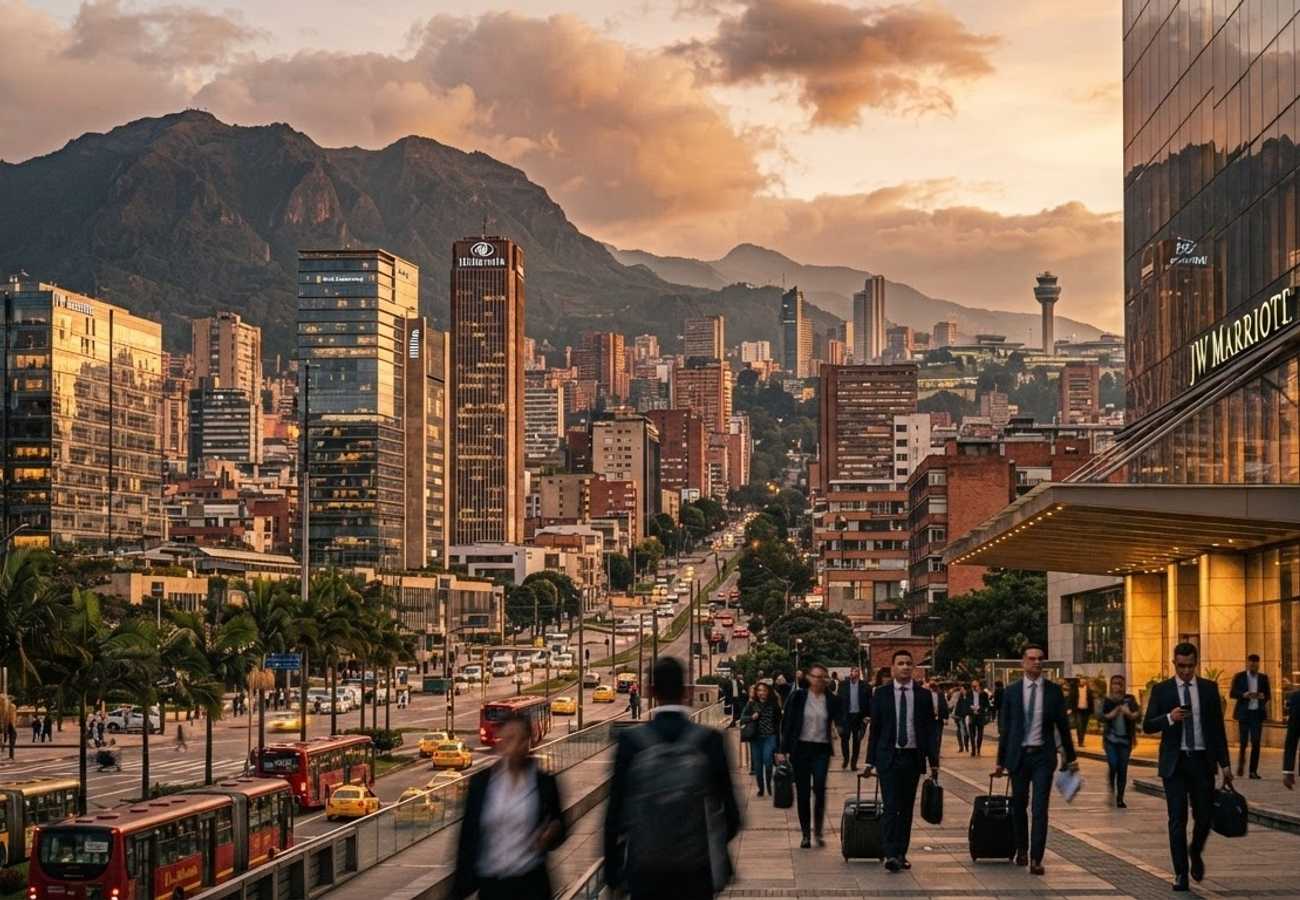
Image generated by AI
A sharp rebound in global corporate travel is colliding with a parallel surge in leisure tourism in 2026, creating a supply crunch in business hubs like Bogotá and driving up room rates worldwide.
The global corporate travel sector has entered a new expansion phase. According to projections from the Global Business Travel Association, global business travel spending is expected to grow by approximately 8 percent in 2026. This follows a 6.6 percent increase in 2025, pushing annual expenditures well beyond the last pre-pandemic peak.
This growth is not a simple return to old "road warrior" habits. Instead, it represents a normalization of work-related travel. Companies are now reporting travel volumes at or above 2019 levels, driven by a renewed emphasis on face-to-face commercial activity, international events, and major trade fairs.
A critical shift in behavior is the consolidation of meetings. Businesses are now packing more objectives into fewer, longer trips. This creates concentrated pressure on established corporate corridors, particularly in gateway cities that serve as both financial centers and tourism magnets.
Bogotá: The Intersection of Finance and Tourism
Bogotá serves as a primary case study for this supply-demand collision. As Colombia's chief financial center and a hub for Andean foreign investment, the city has seen a massive influx of international hotel brands. However, demand is now outpacing that capacity.
Data from Bogotá’s tourism observatory and district tourism institute reveals the following:
- Visitor Projections: The city expects more than 15 million visitors in 2026, an increase from over 14 million in 2025.
- Occupancy Rates: Hotel occupancy hovered between 59 and 60 percent in the early months of 2026, consistently beating the national average.
- Market Drivers: Significant growth in passenger arrivals at El Dorado International Airport and double-digit growth in tourism jobs.
- Key Demographics: International arrivals are dominated by business travelers from the United States, Mexico, and Venezuela.
This demand is most acute in the financial center and the corridors surrounding El Dorado International Airport. Travel buyers report that preferred hotels frequently reach full capacity during regional summits and trade conferences, forcing corporate travelers into secondary neighborhoods.
The Rise of "Bleisure" and Overlapping Demand
The pressure on Bogotá’s inventory is intensified by the "bleisure" trend—the blending of business and leisure travel. Data from major online travel agencies in 2025 and 2026 shows a marked increase in travelers extending their stays around client visits or conferences into the weekends.
This shift eliminates the traditional "weekend dip" that hotels previously used to offer discounted corporate blocks or attract domestic tourists. Higher-end properties, which appeal to both segments, are seeing more intensive use of available capacity. Even when monthly occupancy percentages show slight year-on-year dips, the total number of nights stayed is trending upward.
Global Ripple Effects in Corporate Gateways
The supply squeeze is a global phenomenon. Similar dynamics are appearing in technology and financial hubs across Asia, Europe, and North America.
In the United States, cities like San Francisco and Chicago are seeing pronounced price spikes during conference seasons. Even mid-scale properties are commanding premium rates as consultants and exhibitors compete for limited inventory near convention districts.
In Europe and Asia, average prices in several capitals have now surpassed pre-pandemic levels. The 2026 calendar—packed with international tournaments, entertainment tours, and business expos—has led travelers to book rooms much further in advance, stripping away the flexibility typically required for last-minute corporate itineraries.
Corporate Adaptation Strategies
To combat volatility and rising costs, organizations are shifting their travel management strategies:
- Early Block Booking: Companies are securing room blocks through preferred partners months in advance of known high-demand windows.
- Geographic Diversification: Travel managers are steering employees toward emerging business districts or secondary neighborhoods to avoid the price peaks of the city center.
- Logistical Trade-offs: In Bogotá, firms are increasingly weighing the cost of rooms in secondary areas against the transit time to meeting venues.
Bogotá Tourism & Corporate Demand Metrics (2025-2026)
| Metric | 2025 Data | 2026 Projection/Actual | Trend |
|---|---|---|---|
| Total Visitors | 14 Million+ | 15 Million+ | Increasing |
| Early 2026 Occupancy | N/A | 59% - 60% | Above National Avg |
| Global Biz Travel Spend Growth | 6.6% | ~8% | Accelerating |
| Primary Source Markets | US, Mexico, Venezuela | US, Mexico, Venezuela | Stable |
Why This Matters
From a logistical perspective, this shift signals the end of the "flexible corporate booking" era. For travelers on the Bogotá route, the real impact is a loss of spontaneity; the ability to book a high-quality hotel near the financial district on short notice has effectively vanished during peak weeks.
Our analysis of the route map suggests that as "bleisure" becomes the standard, the distinction between corporate and leisure pricing will disappear. Hotels are no longer offering "corporate discounts" on weekends because leisure demand is now high enough to sustain full rates. This means corporate travel budgets for 2026 and 2027 must be adjusted upward to account for a permanent increase in the floor price of urban hospitality.
Industry Outlook
Expect a surge in the development of "satellite" business hotels. As the cores of cities like Bogotá become saturated, we anticipate a shift in investment toward the outskirts of financial districts, supported by improved transport links. Furthermore, corporate travel managers will likely move toward "all-in" contract pricing with hotel chains to hedge against the volatility of event-driven price spikes.
The era of the budget-friendly last-minute business trip is over; strategic procurement is now the only way to ensure availability.
Related Travel Guides
Disclaimer
This article is for informational and educational purposes only. It does not constitute legal, financial, or professional advice. While we strive to provide accurate and up-to-date information, travel policies, regulations, and conditions change rapidly. Always verify information with official sources before making travel decisions. Nomad Lawyer makes no representations about the accuracy, reliability, completeness, or suitability of the information provided. Readers should consult qualified professionals for advice specific to their circumstances. The views expressed in this article are those of the author and do not necessarily reflect the views of Nomad Lawyer.
Kunal K Choudhary
Co-Founder & Contributor
A passionate traveller and tech enthusiast. Kunal contributes to the vision and growth of Nomad Lawyer, bringing fresh perspectives and driving the community forward.
Learn more about our team →