
Global Conflicts Hit 75-Year High in 2026: How Rising Geopolitical Tensions Are Reshaping International Travel and Aviation
Record-breaking conflict levels across 15+ nations are forcing airlines, hotels, and tourism boards to fundamentally rethink travel safety, routing, and destination marketing strategies in 2026.

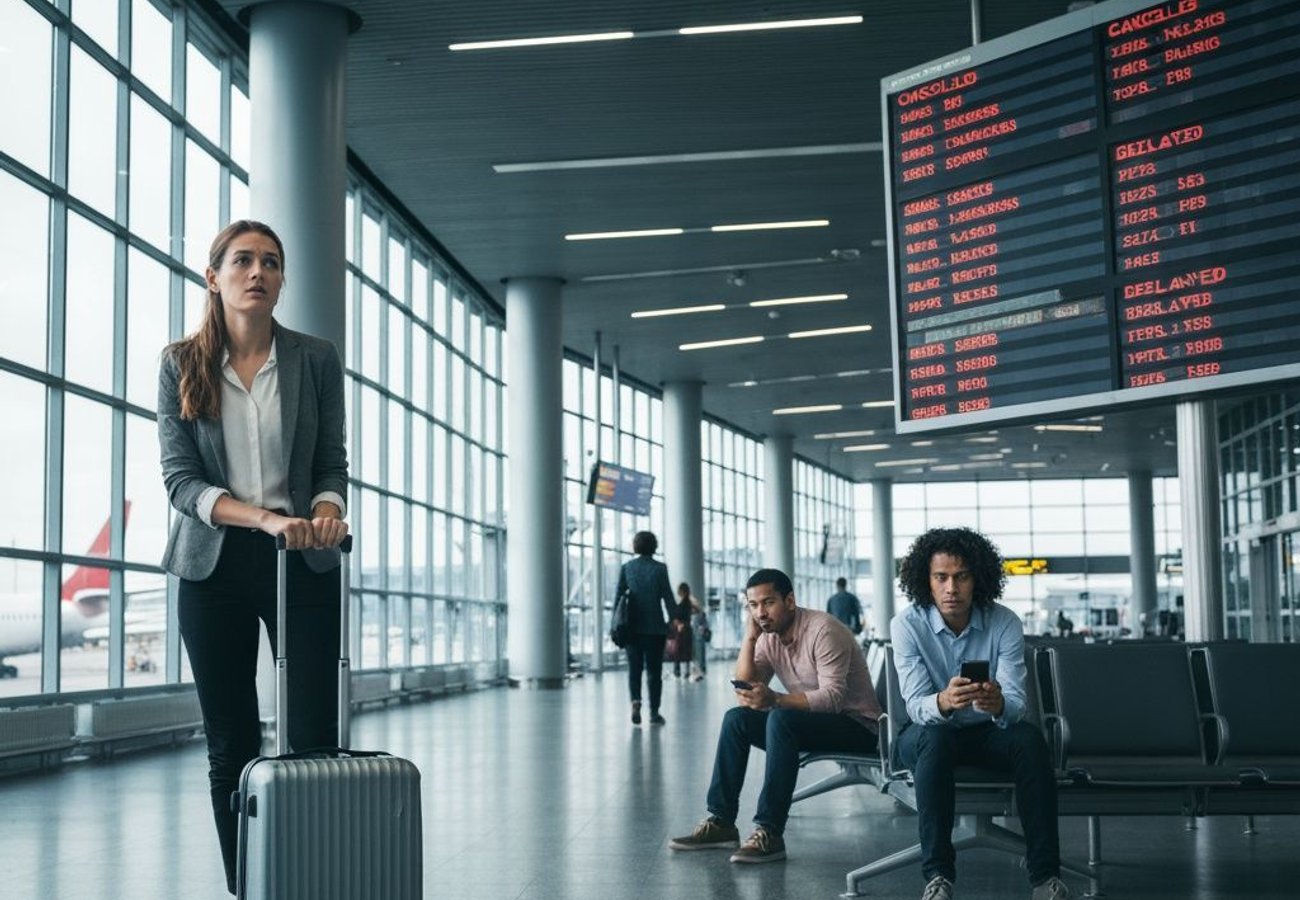
Image generated by AI
The global travel industry is facing a sobering reality. 65 active state-based conflicts were recorded in 2025—the highest number since 1946—marking a watershed moment for airlines, hotels, tourism authorities, and the 1.4 billion people who travel internationally each year. With approximately 245,000 battle-related deaths documented and 76,500 civilian casualties, the data paints a stark picture of a world increasingly divided by violence. Nations from Afghanistan to Yemen—spanning Africa, Asia, the Middle East, and Eastern Europe—are now simultaneously grappling with major security crises, fundamentally reshaping how the travel ecosystem operates.
What makes this moment especially consequential: the tourism industry is simultaneously attempting its post-pandemic recovery. The expansion of conflicts across 35 countries is creating a new calculus for every stakeholder. Airlines are diverting flights. Hotels are fortifying security protocols. Travelers are reconsidering destinations. Insurance premiums are climbing. The cascading effects are already visible across booking platforms, aviation networks, and destination competitiveness rankings.
The Numbers Don't Lie: Conflict Is at a 75-Year Peak
The scale of global instability is unprecedented in modern times. Between 1946 and 2024, the world had never seen more than 53 concurrent state conflicts. In 2025, that ceiling was shattered.
Consider the hard data: 8 interstate wars (nation-against-nation combat) are now active simultaneously. The previous norm hovered around 2-3. This matters because interstate conflicts typically involve larger military operations, longer supply chains, more airspace restrictions, and broader regional economic disruption—all factors that directly impact international aviation and tourism mobility.
Reddit: "I was supposed to visit three countries in Southeast Asia next month. My travel advisor just called me about route diversions and price hikes. The geopolitical situation is making budget travel nearly impossible." — r/backpacking
The countries most directly affected include Russia, Ukraine, Syria, Yemen, Sudan, Israel, Lebanon, Iran, Afghanistan, Pakistan, India, Ethiopia, Rwanda, Cambodia, and Thailand. These 15 nations collectively represent diverse geographic regions, tourism markets, and strategic aviation corridors—meaning disruptions ripple globally.
How Conflict Is Rewriting Aviation Strategy
Airlines operate on razor-thin margins. A single airspace closure forces cascading route recalculations that affect fuel costs, flight times, crew scheduling, and passenger pricing. The current conflict landscape is creating multiple simultaneous airspace management crises.
The Russia-Ukraine conflict continues reshaping European aviation. Airlines have permanently rerouted traffic away from Eastern European airspace, adding hours to flights and millions in fuel costs annually. These aren't minor adjustments—they're structural changes to how commercial aviation operates on the continent.
The escalating tensions in the Middle East are affecting connectivity between Europe, Asia, and Africa. Traditional flight corridors over Iran, Iraq, and Syria now require expensive detours. For airlines operating between London and Delhi, or Frankfurt and Bangkok, the operational overhead has increased substantially. Some carriers are absorbing costs; others are passing them directly to passengers through fuel surcharges.
Check real-time IATA aviation safety guidance for the latest airspace restrictions and operational updates.
Airlines are also grappling with insurance complications. Liability coverage for aircraft operating near conflict zones demands premium pricing. For carriers with extensive networks in Asia and the Middle East, insurance costs have climbed 15-25% year-over-year.
| Aviation Impact Area | Current Status |
|---|---|
| Active Airspace Restrictions | 12+ corridors affected |
| Airlines Rerouting | 40+ carriers implementing diversions |
| Average Flight Time Increase | 2-4 hours (select routes) |
| Fuel Cost Surge | 15-25% premium |
| Passenger Demand Volatility | High unpredictability |
Africa and Asia: The Conflict Epicenters Reshaping Tourism
The data identifies Africa as the most conflict-affected continent, with active crises in Ethiopia, Rwanda, Sudan, and ongoing tensions across the Sahel. Asia follows closely with conflicts spanning Myanmar, Pakistan, Afghanistan, and parts of India. These regions are also home to some of the world's fastest-growing tourism markets and most culturally rich destinations.
The problem: international travelers often apply regional risk assessments rather than evaluating specific destinations individually. When conflicts erupt in Ethiopia or Sudan, neighboring Kenya, Tanzania, and Uganda—perfectly stable tourist destinations—experience booking declines by 20-40% simply due to regional perception risk.
Tourism boards are fighting back with hyper-localized safety communication campaigns, but the challenge is real. A single terror attack or military escalation in one country can suppress tourism demand across an entire region for months.
The Traveler Confidence Crisis Is Already Here
Modern travelers have instant access to real-time news, satellite imagery, and government travel advisories. They're also more cautious than ever. Post-pandemic travel demand remains strong globally, but decision-making has become extraordinarily fluid. A breaking news story about airspace closures, military operations, or security incidents can trigger immediate booking cancellations—often before traditional media has fully processed the information.
This has created a new dynamic: flexibility is now a competitive advantage. Tour operators offering flexible cancellation policies, hotels providing travel insurance bundles, and airlines expanding rebooking options are seeing customer loyalty advantages. Conversely, rigid booking policies are becoming deal-killers for risk-conscious travelers.
The cruise industry—particularly lines operating Eastern Mediterranean and Southeast Asian itineraries—is actively recalculating port schedules and route patterns. Some cruises that previously visited 6-8 ports are now condensing to 3-4 to avoid conflict-adjacent zones.
How Tourism Businesses Are Adapting in Real Time
The industry is not passive. Here's what's happening across sectors:
Tour Operators are building dynamic itineraries with built-in flexibility. Instead of fixed, multi-country routes, they're offering modular experiences that can be adjusted 48-72 hours before departure based on security conditions.
Hotels are enhancing crisis management protocols and guest communication frameworks. Major international chains are investing heavily in real-time security monitoring, staff training, and transparent communication with guests about local conditions.
Tourism Boards are shifting away from generic destination marketing toward security-focused brand positioning. Thailand, for example, is actively differentiating itself from neighboring Myanmar by emphasizing tourism infrastructure resilience and safety protocols in marketing campaigns.
Travel Insurance Providers are expanding coverage options and tightening geopolitical risk assessments. Premium pricing for travelers visiting conflict-adjacent regions is becoming normalized.
See World Health Organization travel advisories for health and safety travel guidance.
The Long Game: Tourism Will Adapt, But Strategy Must Evolve
History shows the travel industry is remarkably resilient. It survived pandemics, economic collapses, and terrorism. The current wave of record-breaking conflicts represents another challenge, but not an existential threat—provided stakeholders adapt intelligently.
The destinations that will thrive are those demonstrating:
- Transparent security communication backed by data and third-party validation
- Infrastructure resilience including backup systems, redundant transportation options, and crisis protocols
- Flexible business models that absorb geopolitical volatility without passing all risk to consumers
- Regional differentiation strategies that don't allow conflicts in neighboring countries to suppress tourism demand
Airlines investing in route flexibility, predictive risk modeling, and real-time contingency planning will gain competitive advantages. Hotels prioritizing guest safety and transparent communication will capture market share from competitors. Destinations that actively counter negative regional perceptions through localized marketing will recover demand faster.
The 2026 travel landscape will reward adaptability, innovation, and strategic foresight. Complacency, rigid thinking, and passive risk management will be punished by market forces.
The question isn't whether tourism survives record-high global conflicts—it's which businesses and destinations thrive while others struggle to keep pace.
Related Travel Guides
Disclaimer
This article is for informational and educational purposes only. It does not constitute legal, financial, or professional advice. While we strive to provide accurate and up-to-date information, travel policies, regulations, and conditions change rapidly. Always verify information with official sources before making travel decisions. Nomad Lawyer makes no representations about the accuracy, reliability, completeness, or suitability of the information provided. Readers should consult qualified professionals for advice specific to their circumstances. The views expressed in this article are those of the author and do not necessarily reflect the views of Nomad Lawyer.
Preeti Gunjan
Contributor & Community Manager
A passionate traveller and community builder. Preeti helps grow the Nomad Lawyer community, fostering engagement and bringing the reader experience to life.
Learn more about our team →