
Corporate Travel Surge Tightens Hotel Supply in Bogotá: Latin American Room Rates Climb in 2026
A massive rebound in corporate travel is colliding with a tourism surge in Bogotá, driving hotel occupancy to critical levels and increasing room rates across Latin America.

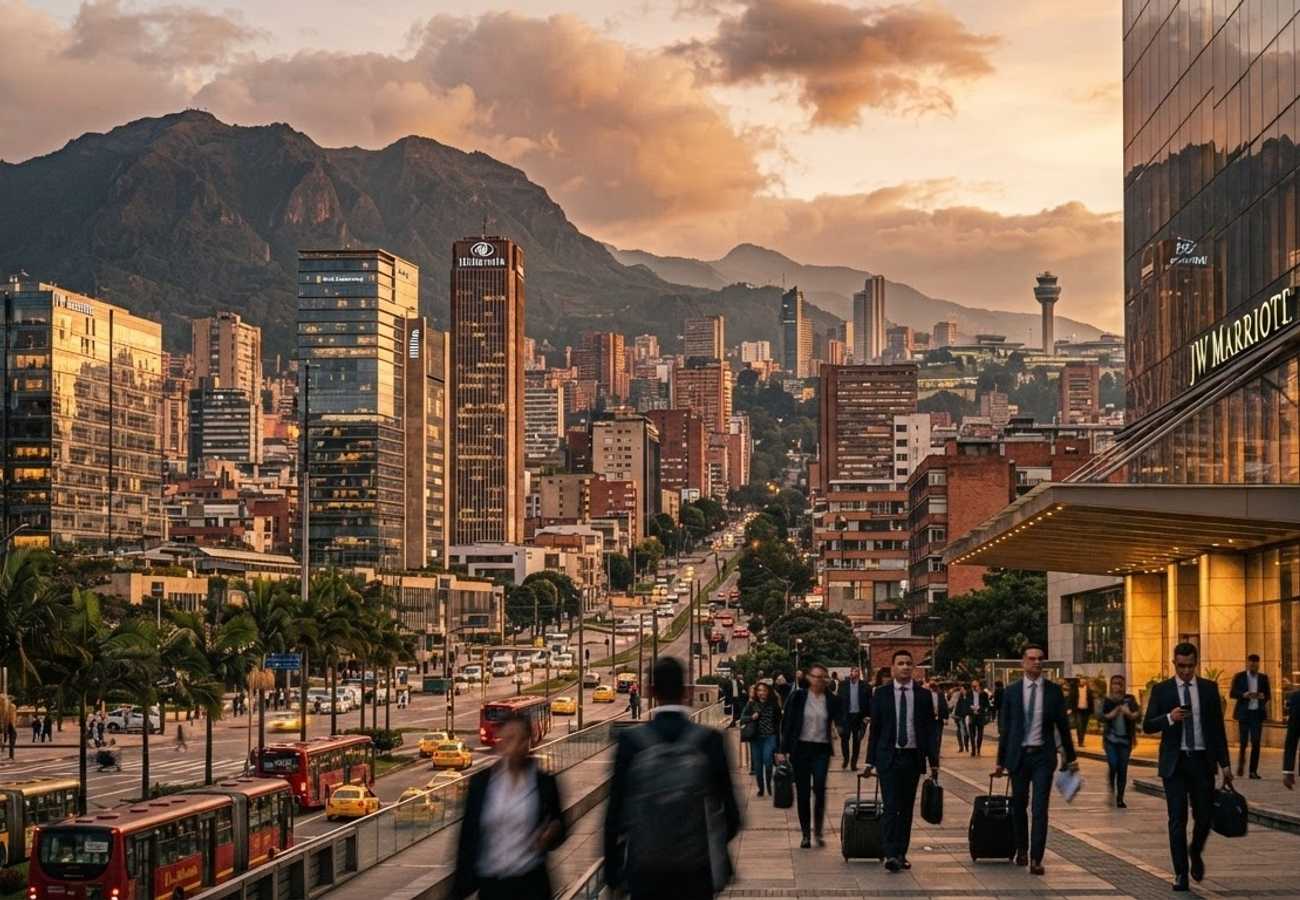
Image generated by AI
Corporate travel spending is returning to—and in some regions surpassing—pre-pandemic levels in 2026, leaving cities like Bogotá struggling to house a simultaneous surge of business executives and leisure tourists.
The Corporate Collision in Bogotá
A powerful intersection of high-value business activity and a rebounding tourism sector is creating a "seller's market" for hospitality in Bogotá. The Colombian capital has become a primary case study for a global trend where demand recovery is simply outstripping the pace of new hotel construction.
The pressure is driven by a wave of foreign investment in 2026, specifically targeting software, IT services, and corporate professional services. This influx of project teams and leadership executives requires extended-stay and upscale accommodations, which are now competing directly with a rapidly expanding leisure market. Official mid-2026 data reveals that tourism employment in Bogotá grew by approximately 10 percent, while jobs in travel agencies and accommodation nearly doubled.
This demand is most acute in the city's primary economic arteries: the financial corridor along Calle 72, the diverse district of Chapinero, and the historic center. For the visitor, the real impact is a shrinking window of availability and a significant increase in the difficulty of securing preferred corporate rates, particularly during conference peaks.
Regional Pressure: Latin America's Rate Hike
Bogotá is not an isolated case; it is the epicenter of a broader regional shift. Data from the Global Business Travel Association (GBTA) and CWT indicate that Latin America is experiencing some of the fastest hotel rate increases globally.
Regional forecasts for 2026 project average daily rates (ADR) to climb by 5 to 6 percent, with some specific markets exceeding 7 percent annual growth. While cities like Rio de Janeiro and Buenos Aires are seeing the largest year-over-year jumps, Bogotá and Santiago maintain a steady upward trajectory.
The World Travel & Tourism Council (WTTC) supports this outlook, forecasting that travel and tourism GDP in Central and South America will grow by about 4.1 percent in 2026, outpacing the global average. This growth is further fueled by international visitor spending, which is projected to rise at double-digit rates in several South American markets.
The Supply Gap and Corporate Strategy
Despite new projects in the pipeline, the relief for Bogotá's hotel shortage is delayed. High financing costs and regulatory hurdles mean many planned properties will not open in time to alleviate the constraints forecast for late 2026 and 2027.
Corporate travel managers are now forced to pivot their strategies to survive this squeeze. Common adjustments include:
- Diversification: Moving away from traditional upscale hotels toward midscale and extended-stay options.
- Advanced Booking: Implementing stricter policies that require reservations months in advance for high-demand hubs.
- Allocation Clauses: Renegotiating contracts to secure guaranteed room blocks during critical project milestones, sacrificing flexibility for certainty.
Visitor Insider Tips for Bogotá
Navigating a tightened hotel market requires a local approach. To avoid the price spikes of Calle 72 and Chapinero, consider these strategies:
- The Neighborhood Pivot: Look toward the Usaquén district. While still popular, it offers a different pace and a variety of boutique stays that can be more resilient to the corporate surges seen in the financial center.
- Timing the Visit: Avoid the "Conference Crunch." Check the city's major convention calendar (Corferias) before booking. If a major trade show is in town, rates can double overnight.
- Dining Local: Skip the hotel restaurants in the financial district. Head to local estaderos for authentic Ajiaco (a traditional potato and chicken soup) to support the local economy and avoid "tourist pricing."
- Cultural Etiquette: In business settings, punctuality is valued, but social interactions are warm. A few minutes of personal conversation before diving into business is standard Colombian professional etiquette.
Tourism Outlook
The long-term trajectory for Bogotá suggests a permanent shift toward higher-value tourism. As the city cements its status as a tech and IT hub for the Americas, the demand for "bleisure" (combined business and leisure) travel will likely sustain high occupancy levels. The challenge for the city's tourism department and regional conservation bodies will be to manage this growth without eroding the cultural heritage of the historic center or overloading urban infrastructure. Until the construction pipeline catches up, Bogotá will remain a high-cost, high-demand destination.
Plan early, stay flexible, and embrace the local rhythm of the Colombian capital.
Related Travel Guides
Disclaimer
This article is for informational and educational purposes only. It does not constitute legal, financial, or professional advice. While we strive to provide accurate and up-to-date information, travel policies, regulations, and conditions change rapidly. Always verify information with official sources before making travel decisions. Nomad Lawyer makes no representations about the accuracy, reliability, completeness, or suitability of the information provided. Readers should consult qualified professionals for advice specific to their circumstances. The views expressed in this article are those of the author and do not necessarily reflect the views of Nomad Lawyer.
Raushan Kumar
Founder & Lead Developer
Full-stack developer with 11+ years of experience and a passionate traveller. Raushan built Nomad Lawyer from the ground up with a vision to create the best travel and law experience on the web.
Learn more about our team →