
Global Rail Failures 2026: Power Outages and Derailments Disrupt UK and Australian Commuter Networks
Power failures in Manchester, a derailment in Sussex, and wiring faults in Sydney have left thousands of commuters stranded, exposing critical vulnerabilities in global rail infrastructure during 2026 peak travel seasons.

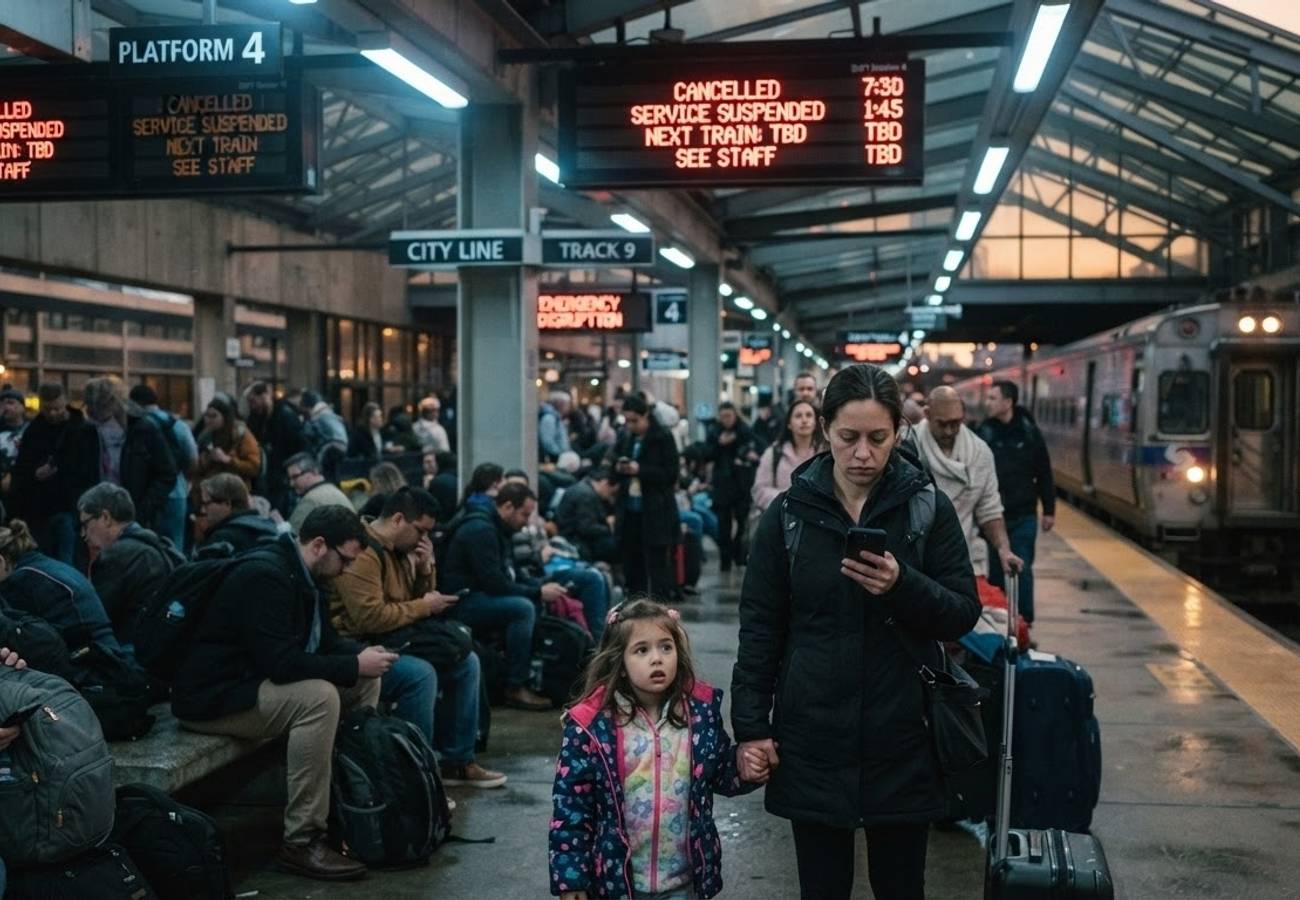
Image generated by AI
Critical infrastructure failures across the UK and Australia have stranded thousands of passengers, revealing a systemic fragility in high-density commuter corridors during the 2026 peak travel season.
Systemic Failures Across Major Rail Corridors
Recent weeks have seen a surge in operational collapses across three distinct geographic hubs. From brief power surges to catastrophic mechanical failures, the ripple effects have extended far beyond the immediate sites of the incidents.
North West England: The Single Point of Failure
In North West England, a 90-second power failure at a signalling and communications centre near Manchester triggered two consecutive days of regional paralysis. Because the Manchester rail operating centre centralizes control for both regional and long-distance operators, the brief outage forced signals to red across a vast area.
The result was a cascade of cancellations and displaced rolling stock. Even after power was restored, the displacement of staff and trains meant that services remained erratic into the following day. This incident highlights a growing industry concern: the transition from local signal boxes to centralized hubs increases efficiency but creates "single points of failure."
Southern England: The Lewes Derailment
On 13 August, the UK network suffered a more severe physical failure near Lewes in Sussex. A Southern service traveling from London Victoria to Eastbourne derailed, with three carriages ending up on their side.
British Transport Police confirmed that multiple passengers were trapped and sustained injuries of varying severity. The incident occurred during the high-demand summer window, severely complicating route planning for National Rail as they prepared for the late August bank holiday.
Sydney, Australia: Overhead Wiring Collapse
On 14 August, Sydney’s urban rail system faced an evening peak collapse when overhead wires fell onto a South Coast Line service between Redfern and Erskineville. The resulting power cut immobilised three trains, forcing the emergency evacuation of hundreds of commuters along the tracks.
While all six affected lines were restored by the following day, the event has reignited debates in New South Wales regarding the reliability of ageing overhead power systems under heavy daily loads.
Critical Incident Summary
| Location | Date | Primary Cause | Immediate Impact |
|---|---|---|---|
| Manchester, UK | August 2026 | 90-sec Power Failure | Regional network halt; 2-day disruption |
| Lewes, UK | 13 August 2026 | Derailment | 3 carriages overturned; multiple injuries |
| Sydney, AUS | 14 August 2026 | Wiring Failure | 3 trains immobilised; hundreds evacuated |
| Washington D.C., USA | 16-26 Oct 2026 | Planned Maintenance | 9-day First Street Tunnel closure |
Why This Matters: The Logistics of Fragility
From a logistical perspective, these incidents demonstrate that modern rail networks are operating with zero margin for error. Our analysis of these events suggests three primary systemic risks:
- Centralization Risks: The Manchester outage proves that while centralized signalling centres reduce overhead, they amplify the impact of a single technical glitch. A 90-second fault causing a 48-hour recovery period is an unacceptable ratio for critical infrastructure.
- The "Peak Load" Trap: These failures coincided with the August holiday surge. In Spain, for instance, the 15 August Assumption Day holiday saw Barcelona’s rail hubs and El Prat airport operating at maximum capacity. When a rail link fails during these windows, there is no "overflow" capacity. Passengers cannot simply book another train or flight because every alternative is already full.
- Cascading Displacement: The primary delay is rarely the fault itself, but the "displacement" of assets. When trains stop between stations, the crews and rolling stock are out of position for the next day's schedule, turning a one-day glitch into a multi-day recovery operation.
Industry Outlook
The immediate future of rail travel will be defined by a tension between necessary modernization and short-term chaos.
In the United States, Amtrak is implementing a high-impact resilience measure from 16 to 26 October 2026, involving a total shutdown of the First Street Tunnel in Washington, D.C. (A-Interlocking). While this nine-day interruption will disrupt services to Virginia and North Carolina, it is a calculated move to replace ageing track components and prevent the kind of unplanned failures seen in the UK and Australia.
Expect further "planned instability" as operators worldwide shift toward aggressive infrastructure replacement to avoid the catastrophic reputational and operational costs of unplanned derailments and power collapses.
The era of "invisible maintenance" is over; commuters must now prepare for scheduled shutdowns to avoid systemic collapses.
Related Travel Guides
Disclaimer
This article is for informational and educational purposes only. It does not constitute legal, financial, or professional advice. While we strive to provide accurate and up-to-date information, travel policies, regulations, and conditions change rapidly. Always verify information with official sources before making travel decisions. Nomad Lawyer makes no representations about the accuracy, reliability, completeness, or suitability of the information provided. Readers should consult qualified professionals for advice specific to their circumstances. The views expressed in this article are those of the author and do not necessarily reflect the views of Nomad Lawyer.
Naina Thakur
Contributor & Travel Specialist
Travel enthusiast and legal writer covering visa regulations, responsible tourism, and cultural journeys across global destinations.
Learn more about our team →